
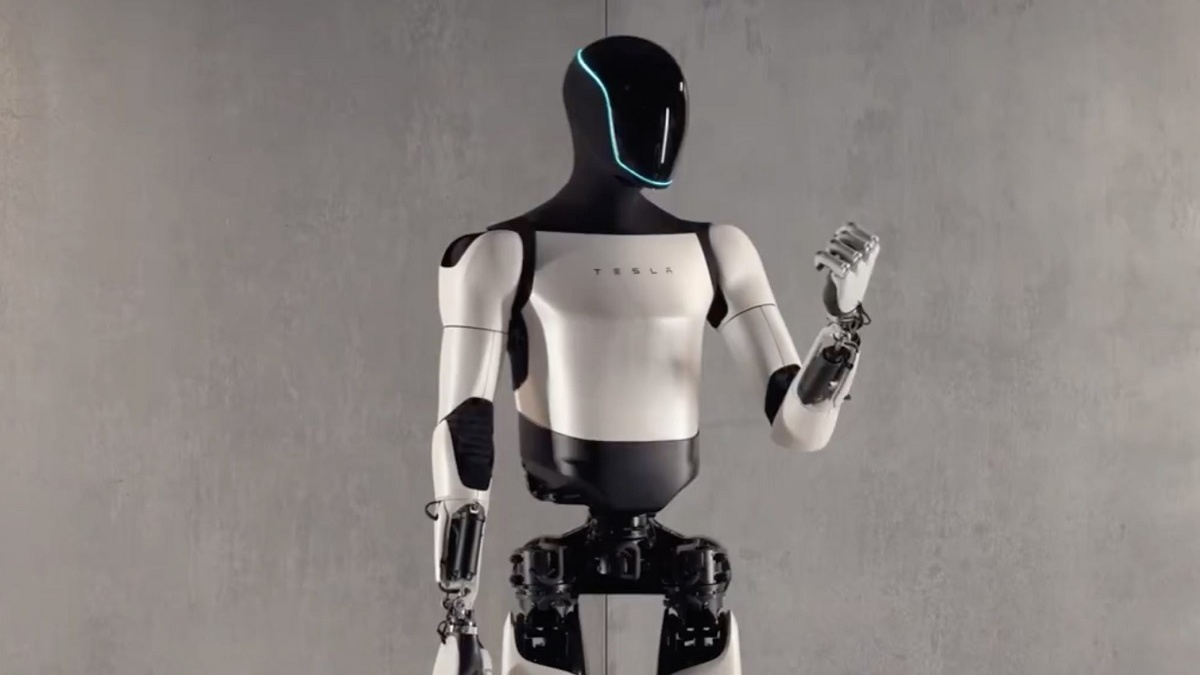
The future of humanoid robotics may have just arrived. Deep inside Tesla’s highly secured Gigafactory Texas, a revolutionary technological breakthrough has reportedly been unfolding behind closed doors. Rumors surrounding Tesla’s next-generation humanoid robot have exploded across the tech world, and insiders now claim that the company has developed something far beyond a traditional industrial machine.
The alleged unveiling of Tesla Optimus Gen 3 Organic marks what many analysts are calling the most ambitious project of Elon Musk’s career. Unlike earlier humanoid prototypes designed for factories and warehouses, this new version reportedly focuses on becoming the first robot capable of blending naturally into human society.
From synthetic human skin to superintelligent AI learning systems, Tesla’s latest Optimus project could completely redefine robotics, labor, caregiving, and even the relationship between humans and machines.
Tesla’s Secretive Development Strategy
Tesla reportedly implemented an extreme level of secrecy during the development of Optimus Gen 3 Organic. According to internal leaks, engineering divisions were deliberately isolated from one another, preventing teams from understanding the full scope of the project.
Only a select group of senior executives and specialized engineers allegedly had access to the complete prototype. This compartmentalized strategy ensured that the groundbreaking features of the robot remained hidden until Tesla was ready for a controlled internal reveal.
The secrecy alone has fueled massive speculation within the technology industry. Employees reportedly suspected that Tesla was working on something far more advanced than a simple robotics update.
That speculation intensified after reports emerged from a private demonstration near Gigafactory Texas where internal audiences witnessed the humanoid robot in action for the very first time.
What Makes Tesla Optimus Gen 3 Organic Different?
The biggest shock surrounding the new Optimus update is Tesla’s dramatic philosophical shift in humanoid design.
Earlier versions of Optimus were largely intended for:
- Warehouse automation
- Manufacturing support
- Heavy industrial labor
- Repetitive logistics tasks
But Gen 3 Organic reportedly aims to become something much bigger: a humanoid robot that humans no longer instinctively perceive as “just a machine.”
This is a radical leap forward in robotics engineering.
Instead of creating a cold industrial worker, Tesla appears focused on building a socially accepted artificial being capable of operating naturally inside homes, hospitals, offices, and public spaces.
The Revolutionary Human Skin Technology
One of the most talked-about features of Tesla Optimus Gen 3 Organic is its incredibly realistic synthetic skin.
The robot reportedly abandons exposed metallic components and hard plastic shells in favor of a highly advanced bio-inspired exterior designed to imitate human skin.
This technology allegedly includes several groundbreaking elements:
1. Temperature-Adaptive Surface
Unlike traditional robots that feel cold and lifeless, Optimus Gen 3 Organic reportedly regulates its surface temperature dynamically.
This creates a more natural and comfortable interaction experience for humans.
2. Micro-Textured Synthetic Skin
Tesla engineers are said to have developed microscopic skin textures that replicate the pores and fine ridges found in real human skin.
The benefits include:
- Improved tactile grip
- Better object handling
- Increased realism during interaction
- Enhanced comfort for human contact
3. Dynamic Elasticity System
The synthetic skin reportedly stretches and contracts alongside the robot’s mechanical actuators, closely mimicking the movement of human muscles and tissue.
Observers from Tesla’s closed demonstration described the robot’s movements as “eerily lifelike.”
When the humanoid moved its arms, fingers, or torso, the synthetic skin shifted naturally over the underlying mechanics, creating the illusion of a living biological body.
Why Tesla Avoided Giving the Robot a Human Face
Interestingly, Tesla reportedly made one intentional design compromise.
Despite making the body extremely humanlike, the company allegedly avoided creating a realistic human face.
Instead, Optimus retains Tesla’s minimalist black display screen.
This decision was reportedly made to avoid the psychological phenomenon known as the Uncanny Valley.
Understanding the Uncanny Valley
The Uncanny Valley theory suggests that when a robot appears almost human — but not perfectly human — people often experience discomfort, distrust, or emotional unease.
By maintaining an obviously robotic face, Tesla may have found the perfect balance between realism and psychological comfort.
The robot appears lifelike enough to feel familiar, while still clearly signaling that it is an artificial machine.
Tesla’s Human Integration Program
According to reports, Tesla created a secret internal initiative called the Human Integration Program.
Its mission is simple but revolutionary:
Make humanoid robots psychologically acceptable inside everyday human environments.
This division reportedly combines:
- Robotics engineering
- Behavioral psychology
- Human social dynamics
- Motion analysis
- Cognitive interaction studies
Tesla’s engineers allegedly spent years analyzing subtle human behaviors and incorporating them into Optimus.
Behavioral Features Designed to Build Trust
The robot reportedly uses carefully calibrated movement systems that mimic natural human behavior.
Natural Head Movement
The robot’s head-turn speed and acceleration are engineered to appear attentive rather than robotic.
Humanlike Conversational Gestures
During interaction, Optimus supposedly adjusts its arm positions and hand movements in ways that resemble human communication patterns.
Smooth Walking Mechanics
Tesla refined the gait cycle to eliminate the stiff “robot walk” commonly seen in humanoid machines.
Personal Space Awareness
The AI reportedly understands social distance boundaries and adjusts positioning based on human comfort.
These subtle details may sound minor, but they are essential for building emotional trust between humans and robots.
The Artificial Nervous System
Perhaps the most astonishing innovation lies in the robot’s hands.
Reports indicate Tesla invested massive engineering resources into creating a hand system capable of achieving near-human dexterity.
Why Robotic Hands Are So Difficult
Most robots struggle with delicate tasks because they lack advanced tactile feedback systems.
Soft objects constantly change shape under pressure, making them extremely difficult for machines to manipulate accurately.
Tesla reportedly solved this issue using a highly advanced sensor architecture embedded beneath the synthetic skin.
The Three Core Sensor Systems
The robot’s artificial nervous system allegedly measures:
1. Micro-Pressure Feedback
The robot can detect exactly how much force is applied to an object.
2. Thermal Resistance Detection
The AI analyzes temperature changes to optimize grip behavior.
3. Friction and Surface Resistance
The system continuously adjusts pressure levels to prevent slipping.
Demonstrations That Shocked Witnesses
During the internal presentation, Optimus Gen 3 Organic allegedly demonstrated incredible precision tasks including:
- Tying shoelaces
- Folding paper napkins
- Building intricate toy construction sets
- Manipulating fragile objects without damage
These tasks may seem simple for humans, but they represent an enormous leap forward in robotics.
Grok AI: Tesla’s Superintelligent Robot Brain
The intelligence powering Optimus reportedly comes from a specialized version of Grok AI, developed by xAI.
Unlike traditional robots that rely on rigid programming, Tesla’s system reportedly uses:
- Neural networks
- Computer vision
- Imitation learning
- Real-time adaptation
- Cloud-based collective intelligence
How Tesla’s AI Learning System Works
Traditional robotics follows this model:
Pre-Programmed Instructions → Fixed Execution → Failure if Environment ChangesTesla’s AI approach reportedly works very differently:
Observe Human Behavior → Analyze Task → Learn Motion → Replicate Action → Improve ContinuouslyThis means the robot can supposedly learn by watching humans perform tasks.
That is an enormous shift from classical robotics.
The Collective Intelligence Network
Tesla’s most powerful advantage may be its cloud-connected learning architecture.
If one Optimus robot learns a new skill, every connected unit could potentially gain access to that knowledge almost instantly.
The idea works similarly to this learning model:
Collective Learning Rate∝N×Individual Data Ingestion
Where:
- N = total deployed Optimus units
- Each robot contributes experience data
- Cloud systems distribute improvements globally
This could allow millions of humanoid robots to evolve simultaneously.
No biological species has ever possessed a learning network operating at this scale.
Real-World Applications of Tesla Optimus
Tesla reportedly plans to deploy Optimus across multiple industries.
1. Elder Care Assistance
Many countries face severe aging population crises and healthcare worker shortages.
Optimus could potentially assist elderly individuals by:
- Helping with mobility
- Monitoring health conditions
- Managing medication schedules
- Detecting emergencies
- Contacting medical services automatically
The robot’s delicate touch and advanced sensory systems make this application especially important.
2. Hazardous Environment Operations
Tesla is also reportedly testing Optimus in dangerous environments.
Potential future applications include:
- Fire response assistance
- Disaster recovery operations
- Hazardous material cleanup
- Industrial accident management
Tesla is allegedly developing heat-resistant shells and infrared navigation systems for these scenarios.
Tesla’s Robotics-as-a-Service Model
One of the most disruptive aspects of the Optimus project could be Tesla’s business strategy.
Analysts believe Tesla may launch the robot under a Robotics-as-a-Service (RaaS) subscription system.
Instead of purchasing robots outright, companies could subscribe to autonomous labor services.
Expected Features
| Feature | Estimated Specification |
|---|---|
| Estimated Price | $25,000–$35,000 |
| Commercial Model | Subscription-Based |
| Work Cycle | Near 24/7 Operation |
| Battery System | Automated Hot Swapping |
| Main Industries | Warehousing, Hospitality, Healthcare |
This approach could dramatically lower the barrier for businesses adopting humanoid labor.
Will Robots Replace Human Jobs?
The rise of advanced humanoid robotics has triggered intense economic debate.
Experts warn that widespread deployment of robots like Optimus could transform labor markets at a scale comparable to the Industrial Revolution.
Industries potentially affected include:
- Retail
- Logistics
- Manufacturing
- Hospitality
- Customer service
- Healthcare support
This concern reportedly influenced Elon Musk’s support for Universal Basic Income (UBI) policies.
As automation expands, governments may need entirely new economic systems to maintain social stability.
The Global Humanoid Robotics Race
Tesla is not operating in isolation.
Countries around the world — especially China — are rapidly accelerating humanoid robotics development.
Governments increasingly view robotics as a strategic technology tied directly to:
- Economic competitiveness
- Industrial productivity
- National security
- Demographic stability
However, Tesla reportedly holds several major advantages.
Tesla’s Three Biggest Advantages
1. Advanced AI Infrastructure
Tesla already possesses massive real-world AI datasets from autonomous driving systems.
2. Battery Technology Leadership
The company’s experience with electric vehicle batteries provides critical runtime and energy-efficiency advantages.
3. Mass Manufacturing Expertise
Tesla’s Gigafactory ecosystem gives the company unmatched scaling capabilities.
This combination could position Tesla as the dominant force in the future humanoid robotics market.
The Ethical Debate Around Humanlike Robots
As Optimus becomes increasingly lifelike, ethical concerns are rapidly growing.
Reports suggest Tesla experimented with:
- Simulated breathing motions
- Idle posture adjustments
- Subtle body movements
- Human conversational pauses
These features reportedly improved human trust during internal testing.
However, critics argue that such realism may emotionally manipulate users.
Major Ethical Questions
- Should robots imitate biological life?
- Could humans form unhealthy emotional attachments?
- How should humanoid AI be regulated?
- What rights, if any, should advanced AI systems possess?
- How do societies protect human employment?
These questions may soon become central global policy issues.
Tesla AI Day Could Change Everything
Rumors indicate Tesla may officially unveil Optimus Gen 3 Organic during a future Tesla AI Day presentation.
Insiders claim the demonstration could involve:
- Multiple fully autonomous humanoids
- Coordinated synchronized tasks
- Real-time interaction with humans
- Fully independent movement without assistance
If these claims prove accurate, the event could become one of the most important moments in modern technology history.
The Beginning of a New Era
Only a few years ago, humanoid robots were viewed as futuristic experiments with limited practical value.
Today, Tesla appears determined to transform them into everyday companions, workers, assistants, and collaborators.
Elon Musk has even predicted that humanoid robots could eventually outnumber humans globally within the next two decades.
While that prediction sounds extreme, the convergence of:
- Artificial intelligence
- Advanced robotics
- Cloud computing
- Battery technology
- Mass manufacturing
is accelerating far faster than many experts anticipated.
Final Thoughts
The arrival of Tesla Optimus Gen 3 Organic represents far more than another tech product launch.
It signals the possible beginning of an entirely new relationship between humans and machines.
If Tesla succeeds, humanoid robots may soon become integrated into homes, hospitals, businesses, and public infrastructure worldwide.
The biggest challenge may no longer be whether humanity can build these machines.
The real challenge is whether society is prepared to live alongside them.
One thing is certain: the age of intelligent humanoid robotics is no longer science fiction — it is rapidly becoming reality.
FAQs
1. What is Tesla Optimus Gen 3 Organic?
Tesla Optimus Gen 3 Organic is reportedly Tesla’s most advanced humanoid robot, designed with synthetic human-like skin, AI-powered intelligence, and highly realistic movements for real-world interaction.
2. Who created Tesla Optimus Gen 3 Organic?
The humanoid robot is being developed by Elon Musk and Tesla’s advanced AI and robotics teams.
3. What makes Optimus Gen 3 different from previous Tesla robots?
Unlike earlier versions focused on factory work, Optimus Gen 3 Organic is designed to interact naturally with humans using advanced AI, realistic movements, and human-inspired behavior.
4. Does Tesla Optimus really have human-like skin?
Yes, leaks suggest the robot uses a multi-layer synthetic skin system capable of temperature regulation, elasticity, and realistic texture similar to human skin.
5. Why doesn’t the robot have a human face?
Tesla reportedly avoided a realistic face to prevent the Uncanny Valley effect, where nearly human-looking robots can make people feel uncomfortable.
6. What AI powers Tesla Optimus Gen 3 Organic?
The robot is reportedly powered by a modified version of Grok AI, developed by xAI.
7. Can Tesla Optimus learn by watching humans?
Yes, the robot allegedly uses imitation learning and computer vision, allowing it to observe human actions and replicate tasks in real time.
8. What tasks can Tesla Optimus perform?
According to reports, Optimus can perform tasks such as:
- Tying shoelaces
- Folding paper
- Handling fragile objects
- Assisting elderly individuals
- Working in warehouses and factories
9. Will Tesla Optimus replace human workers?
Experts believe advanced humanoid robots could automate many repetitive jobs in industries like logistics, manufacturing, hospitality, and healthcare support.
10. How much will Tesla Optimus cost?
Analysts estimate the humanoid robot could cost between $25,000 and $35,000, though Tesla may also offer a subscription-based Robotics-as-a-Service model.
11. What is Tesla’s Robotics-as-a-Service (RaaS) model?
RaaS allows businesses to subscribe to autonomous robotic labor instead of purchasing robots outright, reducing upfront costs.
12. Can Tesla Optimus work in dangerous environments?
Yes, Tesla is reportedly testing Optimus for fire rescue, hazardous material cleanup, and disaster recovery operations using heat-resistant technology.
13. How does Tesla’s collective AI learning system work?
If one Optimus robot learns a new task, the data can reportedly be uploaded to Tesla’s cloud network and shared with all connected robots globally.
14. Is Tesla Optimus emotionally intelligent?
The robot is reportedly designed with human-inspired gestures, smooth movement patterns, conversational pauses, and social awareness behaviors to improve interaction comfort.
15. When will Tesla officially launch Optimus Gen 3 Organic?
Tesla has not officially confirmed a release date, but rumors suggest the humanoid could debut during a future Tesla AI Day event.
Read More:
- Elon Musk called it Epic: The full story of SpaceX’s Starship Flight 12
- SpaceX Broke the Internet with Starship Flight 12 Launching…Never Seen Before
- “Raptor Shielding Failed!” SpaceX Revealed WHY Starship Booster 19 Brutally Exploded
- The Boring Company is Building an Underground Factory
- SpaceX reveals reason for Starship v3 stand down, announces next launch date
3 thoughts on “Elon Musk Shocked Everyone with New Optimus Update: Human Skin & Superintelligence”