
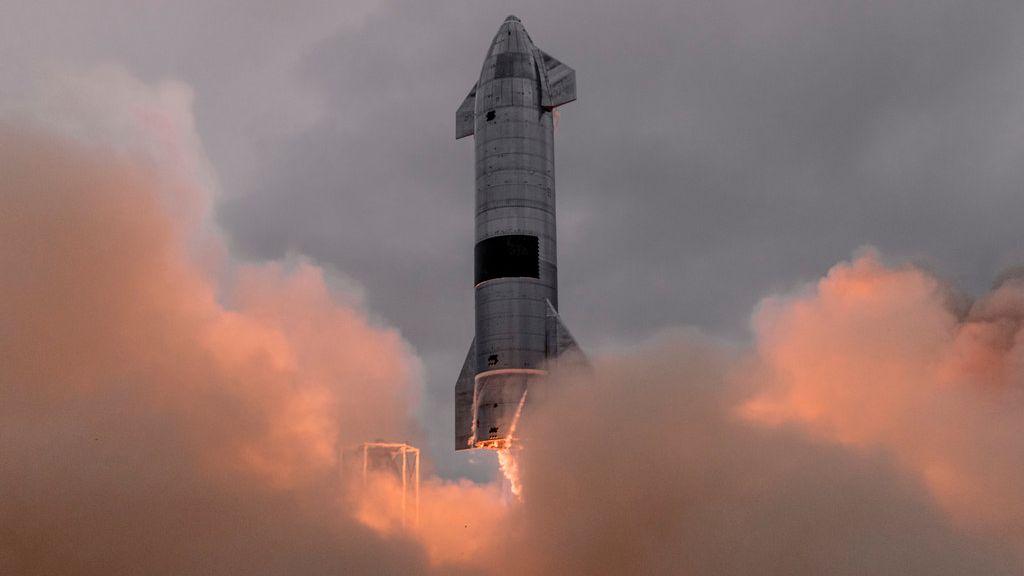
The world of space exploration is once again buzzing with excitement. From SpaceX’s latest Starship testing progress to groundbreaking missions by NASA and renewed ambitions from Roscosmos, humanity is pushing deeper into the cosmos.
In this in-depth blog, we explore the latest developments surrounding Starship Booster 19 (B19), the upcoming Dragonfly mission to Titan, and Russia’s bold return to Venus exploration. Let’s dive into everything you need to know.
Starship Booster 19: From Delays to Ignition Success
A Week of Delays and Technical Challenges
After arriving at the launch pad, Starship Booster 19 faced multiple delays that left enthusiasts and experts concerned. Test windows slipped repeatedly, and uncertainty grew when the booster was briefly removed from the pad.
Initially, speculation pointed toward launchpad-related issues. However, later reports suggested a faulty engine sensor, which forced engineers to halt progress despite earlier successful fueling tests.
This kind of issue is not unusual in complex aerospace systems. For a massive rocket like Starship, even a minor sensor malfunction can halt operations entirely to ensure safety and reliability.
Fixing the Problem: A Rapid Turnaround
Fortunately, the engineering team at SpaceX acted quickly. Within a short timeframe:
- Engine guard plates were removed
- Repairs were completed
- Booster 19 was reinstalled on the launch pad
Soon after, preparations resumed for another major milestone—fueling and ignition testing.
Fueling Test and Ignition Spark: A Crucial Breakthrough
On March 15th, SpaceX conducted its third fueling test in just one week. The process included:
- Full loading of liquid oxygen
- Partial loading of methane
- A 30-minute fueling sequence
Then came the most exciting moment.
Shortly after fueling, observers noticed a brief spark in the flame trench. While not a full static fire, slowed footage strongly suggested a single-engine ignition test.
This test likely served to:
- Verify the igniter system
- Confirm that the sensor issue was fully resolved
- Ensure safe propellant handling
The result? A successful ignition validation.
Why This Ignition Test Matters
The Importance of Igniter Reliability
In rocket science, ignition is everything. A failure at this stage can result in mission delays—or worse, catastrophic failure.
By successfully completing this ignition test, SpaceX has:
- Validated engine startup systems
- Reduced risk for the upcoming static fire
- Confirmed readiness for further testing
This step brings Booster 19 significantly closer to flight readiness.
Static Fire Test: The Next Big Milestone
The static fire test is one of the most critical phases before launch. During this test:
- Engines are fired while the rocket remains anchored
- Engineers analyze thrust, vibration, and system performance
- Final adjustments are made before flight
Current schedules suggest:
- Primary test date: March 16
- Backup dates: March 17–18
With all systems checked, the probability of success is estimated at around 90%.
A Unique Challenge: Only 10 Engines Installed
One unusual detail about Booster 19 is that it currently has only 10 engines installed, rather than the full set of 33.
This creates unique challenges:
- Uneven force distribution during ignition
- Higher stress on individual engines
- Limited ability to simulate full-flight conditions
Despite this, the test remains crucial for validating core systems before scaling up.
What Happens After the Static Fire?
Even after a successful static fire, Booster 19 still has a long journey ahead:
- Return to the Mega Bay for inspection
- Potential modifications or upgrades
- Installation of additional engines
- Final preparations for launch
Time is becoming a critical factor. Without a successful test soon, the next Starship flight timeline could face delays.
NASA’s Dragonfly Mission: Exploring Titan Like Never Before
While SpaceX focuses on Mars, NASA is setting its sights on Titan, the largest moon of Saturn.
Why Titan Is So Important
Titan is one of the most intriguing worlds in our solar system. It features:
- Thick atmospheric clouds
- Lakes of liquid hydrocarbons
- Complex organic chemistry
Scientists believe Titan may hold clues to the origins of life.
Meet Dragonfly: A Flying Robotic Explorer
NASA’s Dragonfly mission is unlike anything we’ve seen before.
Instead of a traditional rover, Dragonfly is a:
- Rotorcraft (flying drone-like vehicle)
- Capable of moving between multiple locations
- Designed to explore Titan’s diverse terrain
This innovative approach allows scientists to study multiple environments rather than being limited to a single landing site.
Powered by Nuclear Energy
One of Dragonfly’s most important features is its nuclear power system.
Why nuclear?
- Titan receives very little sunlight
- Solar panels would be inefficient
- Nuclear systems provide consistent energy
This makes Dragonfly capable of long-duration exploration in extreme conditions.
Assembly and Testing Progress
Engineers at the Johns Hopkins Applied Physics Laboratory have begun assembling the spacecraft.
Key milestones include:
- Integration of the electronics module (the “brain”)
- Testing of power distribution systems
- Ongoing system-level validation
The project is expected to continue testing through 2027.
Launch Timeline and Mission Plan
Dragonfly is scheduled to:
- Launch in 2028
- Travel aboard a Falcon Heavy
- Land on Titan and begin exploration
Once deployed, it will:
- Fly between multiple sites
- Analyze chemical composition
- Study atmospheric and surface conditions
Building on the Success of Ingenuity
Dragonfly follows the success of Ingenuity, the first aircraft to fly on another planet.
However, Dragonfly goes much further:
- Larger size (comparable to a small car)
- Longer operational lifespan
- More advanced scientific instruments
With a budget of approximately $3.35 billion, it represents a major investment in planetary science.
Russia’s Venera-D Mission: A Return to Venus
Meanwhile, Roscosmos is planning a historic return to Venus.
A Legacy of Firsts
During the Cold War era, the Soviet Union achieved remarkable success with its Venera program.
The most notable milestone:
- Venera 7 became the first spacecraft to land on another planet in 1970
Despite extreme conditions, it transmitted valuable data back to Earth.
What Is Venera-D?
The upcoming Venera-D mission aims to continue this legacy.
Planned features include:
- Orbiter
- Lander
- Possible atmospheric balloon
The mission is currently targeted for 2036.
Scientific Goals
Venera-D will focus on:
- Studying Venus’s atmosphere
- Searching for possible microbial life
- Investigating chemical anomalies
Recent studies have suggested the presence of:
- Phosphine
- Ammonia
These chemicals could potentially indicate biological processes, though the evidence remains debated.
Why Venus Matters Again
Venus has re-emerged as a key target for exploration because:
- It’s similar in size to Earth
- It may have once had habitable conditions
- Its atmosphere could hold clues to planetary evolution
A successful mission could transform our understanding of habitability beyond Earth.
The Bigger Picture: A New Era of Space Exploration
These three developments highlight a broader trend:
1. Rapid Progress in Rocket Technology
Companies like SpaceX are accelerating innovation with reusable rockets and rapid testing cycles.
2. Advanced Planetary Missions
Organizations like NASA are developing sophisticated spacecraft capable of exploring distant worlds in unprecedented ways.
3. Global Competition and Collaboration
Agencies like Roscosmos are reviving historic programs while contributing to the global exploration effort.
Final Thoughts: All Eyes on the Static Fire
The successful ignition test of Starship Booster 19 marks a critical turning point. With the static fire test imminent, the next few days could define the timeline for the next Starship launch.
At the same time:
- Dragonfly is moving closer to unlocking Titan’s secrets
- Venera-D promises to reignite Venus exploration
We are witnessing a moment where multiple spacefrontiers are advancing simultaneously.
The coming years could answer some of humanity’s biggest questions:
- Are we alone in the universe?
- How do planets evolve?
- Can humans become a multi-planetary species?
For now, all eyes remain fixed on the launch pad, waiting for the roar of engines and the next giant leap forward.
FAQs
1. What is Starship Booster 19 (B19)?
Starship Booster 19 is a Super Heavy rocket booster developed by SpaceX as part of its fully reusable Starship launch system designed for missions to orbit, the Moon, and Mars.
2. Why was Booster 19 delayed during testing?
The delays were mainly caused by a faulty engine sensor, which required the booster to be removed from the pad for inspection and repairs before testing could continue.
3. What is a static fire test in rocket launches?
A static fire test is when a rocket’s engines are ignited while the vehicle remains secured to the ground, allowing engineers to verify performance before an actual launch.
4. Did Starship Booster 19 successfully ignite its engines?
Yes, a brief ignition test was observed, likely involving a single engine, confirming that the igniter system is functioning properly after repairs.
5. How many engines does Booster 19 currently have installed?
Booster 19 currently has 10 engines installed, although the full Super Heavy configuration includes up to 33 engines.
6. Why is engine count important for Starship testing?
The number of engines affects thrust distribution and structural stress, making full-engine tests essential for accurately simulating launch conditions.
7. When will the Starship static fire test happen?
The static fire test was expected around mid-March, with backup dates scheduled shortly after, depending on weather and technical readiness.
8. What happens after a successful static fire test?
After a successful test, the booster will undergo inspection, possible upgrades, and final preparations before being cleared for flight.
9. What is NASA’s Dragonfly mission?
The Dragonfly mission by NASA is a rotorcraft-based spacecraft designed to explore Titan, the largest moon of Saturn.
10. Why is Titan an important target for exploration?
Titan is rich in organic molecules and hydrocarbon lakes, making it a key location to study conditions that may resemble early Earth and the building blocks of life.
11. How is Dragonfly different from traditional space probes?
Unlike traditional landers or rovers, Dragonfly is a flying rotorcraft, allowing it to travel between multiple locations on Titan’s surface.
12. Why does Dragonfly use nuclear power instead of solar energy?
Titan receives very little sunlight, so nuclear power provides a reliable and continuous energy source for long-term exploration.
13. When will the Dragonfly mission launch?
Dragonfly is scheduled to launch no earlier than 2028 aboard a Falcon Heavy.
14. What is the Venera-D mission?
Venera-D is a planned mission by Roscosmos aimed at exploring Venus using an orbiter, lander, and possibly an atmospheric balloon.
15. Why is Venus being explored again?
Venus is being revisited due to its Earth-like size and potential past habitability, as well as recent interest in possible atmospheric biosignatures.
16. What was the significance of Venera 7?
Venera 7 was the first spacecraft to successfully land on another planet and transmit data back to Earth in 1970.
17. Could there be life on Venus or Titan?
While no life has been confirmed, both worlds are considered promising for studying prebiotic chemistry and potential microbial environments, making them top targets for future research.
Read More:
- Elon Musk’s TERAFAB project: Everything you need to know
- Tesla launches amazing new feature for shared vehicles
- Tesla reveals various improvements to the Semi in new piece with Jay Leno
- Elon Musk New Confirmations Tesla Cybercab Robotaxi & INSANE Terafab Project
- SpaceX Did Something Never Done before on Booster V3 Test! Dream Chaser Incoming
1 thought on “Starship Booster 19 finally Ignited Raptor 3 after Fixing Problems! Ready Firing in Hours”