
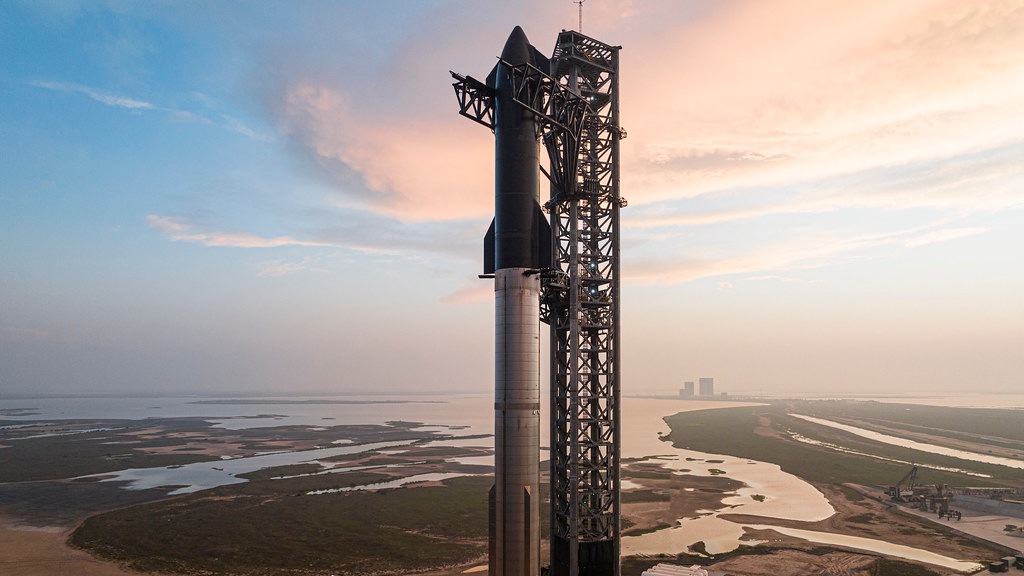
The pace of innovation at SpaceX continues to redefine the global space industry. At the heart of this transformation is the company’s rapidly evolving Starship program at the famous Starbase facility in Texas. Every week brings another breakthrough, another challenge, and another lesson in how modern rocket development works in real time.
Recently, the aerospace community closely watched the preparations for Starship Flight 12, one of the most anticipated test flights in the company’s history. What initially looked like a major setback during the Wet Dress Rehearsal (WDR) quickly turned into a showcase of SpaceX’s engineering agility. Within hours, teams identified the problem, replaced hardware, and prepared for another attempt.
But this story is bigger than one launch rehearsal. It reflects the growing momentum of the commercial space race, where companies like Rocket Lab are gaining traction, and entirely new industries such as orbital debris cleanup are becoming essential for the future of humanity in space.
What Happened During Starship Flight 12’s Wet Dress Rehearsal?
The excitement around Flight 12 intensified on May 9th when Ship 39 (S39) was fully stacked atop its massive booster. This marked a major milestone before launch preparations could move forward.
A Wet Dress Rehearsal is one of the most critical tests before liftoff. During this process, engineers load enormous quantities of super-chilled liquid methane and liquid oxygen into the rocket systems. It simulates nearly every step of launch day except the actual ignition of the engines.
Normally, spectators at Starbase expect to see the rocket covered in frost due to the cryogenic temperatures. However, something unusual happened.
The expected frosting never appeared.
Shortly afterward, officials issued an abort for the test.
For a moment, concerns spread throughout the aerospace community. Was there a problem with the rocket itself? Had a major delay emerged for Flight 12?
Fortunately, the issue turned out to be far less severe than feared.
The Real Problem: Ground Support Equipment Failure
Instead of a rocket malfunction, engineers traced the issue to the Ground Support Equipment (GSE) on the launch tower.
This distinction is important because GSE issues are often easier and faster to fix compared to problems involving rocket engines or structural systems.
The Tri-Vent Pipe Issue
Teams discovered that a tri-vent pipe system, consisting of three manifolds, was causing serious gas dispersion complications.
The system produced excessive ice buildup around several key components, including:
- The famous “chopsticks” tower arms
- The Quick Disconnect (QD) arm
- Critical plumbing and vent systems
In cryogenic operations, even small ice accumulations can create dangerous operational risks. Frozen blockages may interfere with propellant flow, sensor readings, or moving tower equipment.
A launch worth millions of dollars can be scrubbed by what appears to be a relatively minor plumbing issue.
SpaceX’s Rapid Solution: Switching to a Uni-Vent Design
What happened next perfectly demonstrated why SpaceX has become known for its aggressive iteration strategy.
Within hours, crews at Starbase began replacing the problematic hardware.
The Uni-Vent Upgrade
The old tri-vent system was swapped out for a uni-vent configuration.
This new design uses a single outlet rather than three separate dispersion paths.
The benefits include:
- Higher exhaust velocity
- Better directional control of gas flow
- Reduced ice accumulation
- Improved thermal management
- Lower risk of frozen obstructions
This seemingly simple modification could significantly improve future launch reliability.
The rapid repair allowed SpaceX to immediately schedule another WDR test window for May 11th, with backup opportunities extending through May 13th.
That kind of turnaround speed is almost unheard of in traditional aerospace operations.
Why These “Growing Pains” Matter
Some observers see repeated testing delays as a sign of trouble. However, in the context of the Starship program, these setbacks are actually part of the development philosophy.
SpaceX Builds Fast and Learns Fast
Unlike legacy aerospace companies that rely heavily on simulations and slower development cycles, SpaceX embraces rapid real-world testing.
This approach allows engineers to:
- Discover weaknesses early
- Iterate hardware rapidly
- Improve systems continuously
- Reduce long-term operational risk
The lessons learned from this Ground Support Equipment issue will not only help Starbase but also influence the design of future launch infrastructure.
Florida’s Future Starship Launch Pads Benefit Too
The importance of these fixes extends beyond Texas.
SpaceX is actively building new Starship launch facilities in Florida, where future missions will support:
- Deep space exploration
- Satellite deployment
- NASA lunar missions
- Mars preparation missions
By identifying operational weaknesses now, engineers can implement better solutions into upcoming launch towers before they become active.
This dramatically improves efficiency across the company’s expanding launch network.
Will the WDR Problem Delay Starship Flight 12?
The biggest question remains:
Will Flight 12 Be Delayed?
At the moment, the answer appears to be not significantly.
SpaceX has extended the launch window through May 21st, giving engineers flexibility if additional adjustments are needed.
However, current industry expectations suggest a likely launch date around May 17th.
That timeline could still shift depending on:
- Additional WDR results
- Regulatory approvals
- Weather conditions
- Hardware inspections
- Final engine checks
Still, the rapid fix strongly suggests SpaceX intends to maintain momentum rather than push the mission far into the future.
Why Flight 12 Is So Important
Flight 12 represents far more than another test launch.
It is a crucial stepping stone toward several major objectives:
1. Achieving Stable Orbit Operations
Future Starship flights are expected to attempt:
- Full orbital insertion
- Long-duration spaceflight
- Controlled reentry operations
- Payload deployment testing
Success in Flight 12 directly influences the schedule for those milestones.
2. Supporting NASA’s Artemis Program
NASA selected Starship as the lunar lander for the Artemis missions.
That means every successful Starship improvement contributes to humanity’s return to the Moon.
3. Enabling Mars Colonization Goals
Elon Musk has repeatedly emphasized that Starship is central to long-term Mars ambitions.
To reach that future, SpaceX must demonstrate:
- Rapid reusability
- Reliable launch cadence
- Orbital refueling capability
- Safe landing systems
Flight 12 is another essential step toward those goals.
Parallel Progress: Starbase Never Stops
One of the most fascinating aspects of Starbase is that development never focuses on just one vehicle.
Even while Flight 12 preparations continue, multiple future systems are already moving through production.
Ship 40 (S40) Advances Quickly
Cryogenic Testing Success
Ship 40 (S40) recently completed its first cryogenic tests at the Massey’s testing site.
The turnaround time was remarkably fast.
After testing, S40 returned to Mega Bay 2 for:
- Post-test inspections
- Engine integration
- Structural evaluations
- Final preparation work
This demonstrates how SpaceX maintains a continuous production pipeline.
Booster 20 (B20) Gets Extra Attention
Following previous booster-related incidents, engineers appear to be taking a more cautious approach with Booster 20 (B20).
That includes:
- Additional inspections
- More gradual rollout procedures
- Expanded testing protocols
This balanced strategy shows that SpaceX is willing to slow specific processes when necessary while still maintaining overall development speed.
Flight 14 Hardware Already Arriving
Perhaps the clearest sign of SpaceX’s relentless pace is the arrival of hardware for Flight 14 before Flight 12 has even launched.
Components for:
- Booster 21 (B21)
- Ship 41 (S41)
are already appearing at assembly areas.
This “assembly line” approach is fundamentally changing how rockets are developed.
Instead of building one vehicle at a time, SpaceX now operates more like a high-speed manufacturing system.
Rocket Lab Is Becoming a Serious Competitor
While SpaceX dominates headlines, other aerospace companies are rapidly evolving as well.
One of the most important developments came from Rocket Lab.
Rocket Lab Secures Historic Launch Contracts
On May 7th, Rocket Lab announced the largest deal in company history.
The agreement includes launches for both:
- Electron
- Neutron
between 2026 and 2029.
This is a major indicator that commercial demand for launch services continues to surge.
Why Neutron Matters
The upcoming Neutron rocket is designed to compete in the medium-lift reusable rocket market.
It aims to provide:
- Reusability
- Lower launch costs
- Rapid deployment capabilities
- Satellite constellation support
Rocket Lab CEO Peter Beck stated that customer demand for Neutron is growing rapidly.
The Unique “Hungry Hippo” Design
One of Neutron’s most interesting features is its unusual fairing system nicknamed the “Hungry Hippo.”
Unlike traditional payload fairings that separate entirely during launch, Neutron’s fairing opens while remaining attached to the rocket.
Potential advantages include:
- Simplified recovery
- Faster reuse
- Lower operational complexity
- Reduced refurbishment costs
Combined with the new Archimedes engines, Neutron could become a powerful competitor in the commercial launch market.
The Growing Orbital Debris Crisis
As launch frequency increases worldwide, another challenge is becoming impossible to ignore:
Space junk.
Earth orbit is becoming increasingly crowded with:
- Defunct satellites
- Rocket fragments
- Collision debris
- Abandoned hardware
Current estimates suggest there are over 130 million pieces of debris orbiting Earth.
Even tiny fragments can travel at speeds exceeding 17,000 mph, posing catastrophic risks to spacecraft.
Debris Removal as a Service (DRAAS)
A fascinating new industry is emerging to address this challenge.
Companies like:
- Portal Space Systems
- Paladin Space
are working together on orbital debris cleanup technologies.
Their concept is known as:
Debris Removal as a Service (DRAAS)
This could become one of the most important commercial space sectors of the next decade.
How the Cleanup Technology Works
The mission will use:
Starburst Spacecraft
A maneuverable orbital vehicle designed for debris interception missions.
Triton Capture Payload
A specialized capture system capable of collecting multiple small debris objects during a single mission.
The system focuses primarily on objects under one meter in size.
Why Multi-Object Capture Is Revolutionary
Traditional debris removal concepts are extremely expensive because they target one object at a time.
The new approach changes the economics dramatically.
Benefits include:
- Lower mission costs
- Greater debris removal efficiency
- Scalable cleanup operations
- Improved orbital safety
If successful, this technology could become essential for maintaining safe space operations in the future.
First Mission Scheduled for 2026
The first operational Starburst cleanup mission is currently planned for the SpaceX Transporter 18 mission in late 2026.
That mission could mark the beginning of a completely new era in orbital sustainability.
Starbase Represents the Future of Spaceflight
The events surrounding Flight 12 reveal a deeper transformation occurring within the aerospace industry.
We are no longer living in an age where rocket launches happen only occasionally.
Instead, the industry is moving toward:
- Continuous launch operations
- Rapid hardware iteration
- Reusable launch systems
- Commercialized orbital infrastructure
- Industrial-scale space access
At Starbase, rocket development increasingly resembles a high-speed manufacturing process rather than a traditional aerospace project.
Why SpaceX’s Engineering Philosophy Is Changing Aerospace Forever
The rapid WDR troubleshooting demonstrated something critical:
Speed matters.
In traditional aerospace culture, fixing a launch issue might take weeks or months.
At SpaceX, engineers identified the problem, swapped hardware, and scheduled another test almost immediately.
That operational philosophy provides several advantages:
Faster Learning Cycles
Frequent testing accelerates engineering progress.
Lower Long-Term Costs
Rapid iteration can reduce expensive redesigns later.
Higher Launch Frequency
The company can maintain aggressive mission schedules.
Competitive Pressure
Other aerospace firms must now adapt to similar speeds.
The Next Few Weeks Could Be Historic
If Flight 12 launches successfully, it could trigger a chain reaction for the remainder of the year’s Starship schedule.
Future missions may include:
- Stable orbital flights
- In-space refueling tests
- Advanced reentry experiments
- Payload deployment demonstrations
- Preparations for lunar missions
Every successful launch moves humanity closer to becoming a true spacefaring civilization.
Final Thoughts
The recent events at Starbase perfectly capture the modern era of space exploration.
A failed Wet Dress Rehearsal could have become a major setback. Instead, SpaceX transformed it into an opportunity for rapid improvement and operational learning.
At the same time, the broader space industry continues evolving rapidly:
- Rocket Lab is expanding aggressively
- Orbital debris removal is becoming commercialized
- Launch cadence is accelerating globally
- Reusable rockets are reshaping economics
The future of spaceflight is no longer theoretical.
It is happening right now — in real time — on the launch pads of Texas, inside orbital cleanup startups, and across a fiercely competitive commercial space economy.
And if SpaceX can keep solving problems at this speed, the countdown toward a fully reusable interplanetary future may be moving faster than anyone imagined.
FAQs
- What is SpaceX’s Starship Flight 12?
Starship Flight 12 is one of SpaceX’s most anticipated test missions, designed to advance the company’s goals for reusable space travel, orbital operations, and future Mars missions. - What happened during the Wet Dress Rehearsal (WDR) for Flight 12?
During the WDR, engineers noticed the rocket was not developing the expected frost buildup, leading SpaceX to abort the test and investigate the issue. - What caused the WDR problem?
The issue was traced to the Ground Support Equipment (GSE), specifically a problematic tri-vent pipe system on the launch tower, not the rocket itself. - Why is a Wet Dress Rehearsal important?
A WDR simulates nearly every step of launch day by loading cryogenic propellants into the rocket systems, helping engineers identify potential issues before liftoff. - What is Ground Support Equipment (GSE)?
GSE includes the launch tower systems, fueling infrastructure, vent systems, and hardware used to support rocket operations before launch. - What was wrong with the tri-vent pipe system?
The tri-vent system caused excessive gas dispersion and dangerous ice buildup around critical launch tower components like the chopsticks arms and QD arm. - How did SpaceX fix the issue so quickly?
SpaceX replaced the tri-vent system with a new uni-vent design that improved gas flow control and reduced ice accumulation within hours. - What are the advantages of the uni-vent design?
The uni-vent configuration offers higher exhaust velocity, improved thermal management, reduced icing, and lower risk of frozen obstructions. - Will the WDR issue delay Starship Flight 12?
Current expectations suggest only a minor delay, with a likely launch target around May 17th, depending on testing and approvals. - Why is Starship Flight 12 so important for SpaceX?
Flight 12 is a critical step toward orbital missions, reusable launch systems, NASA Artemis support, and long-term Mars colonization goals. - How does SpaceX’s development philosophy differ from traditional aerospace companies?
SpaceX focuses on rapid real-world testing and fast iteration instead of relying primarily on lengthy simulations and slower development cycles. - What is Ship 40 (S40)?
Ship 40 is another Starship vehicle currently undergoing cryogenic testing, inspections, and engine integration as part of SpaceX’s continuous production pipeline. - Why is Rocket Lab becoming an important competitor?
Rocket Lab is expanding rapidly with major launch contracts and development of its reusable Neutron rocket for medium-lift missions. - What is the “Hungry Hippo” fairing design on Neutron?
It is Rocket Lab’s unique payload fairing system that opens while remaining attached to the rocket, simplifying recovery and reuse. - What is orbital debris cleanup, and why does it matter?
Orbital debris cleanup involves removing dangerous space junk from Earth’s orbit to protect satellites and spacecraft from collisions. - What is Debris Removal as a Service (DRAAS)?
DRAAS is a new commercial space industry focused on scalable orbital cleanup missions using specialized spacecraft and capture systems to remove multiple debris objects efficiently.
Read More:
- Sodium-Ion Battery 2026: 175Wh/kg, $19/kWh, -20°C retention—Is Tesla’s 4680 in trouble?
- Tesla launches its solution to rare but relevant Supercharger problem
- Trump’s invite for Elon just reshuffled Tesla’s big Signature Delivery Event
- Legendary investor Ron Baron says Tesla and SpaceX stock buys will continue
- SpaceX and Google mull massive partnership on Musk’s orbital data dream: report