
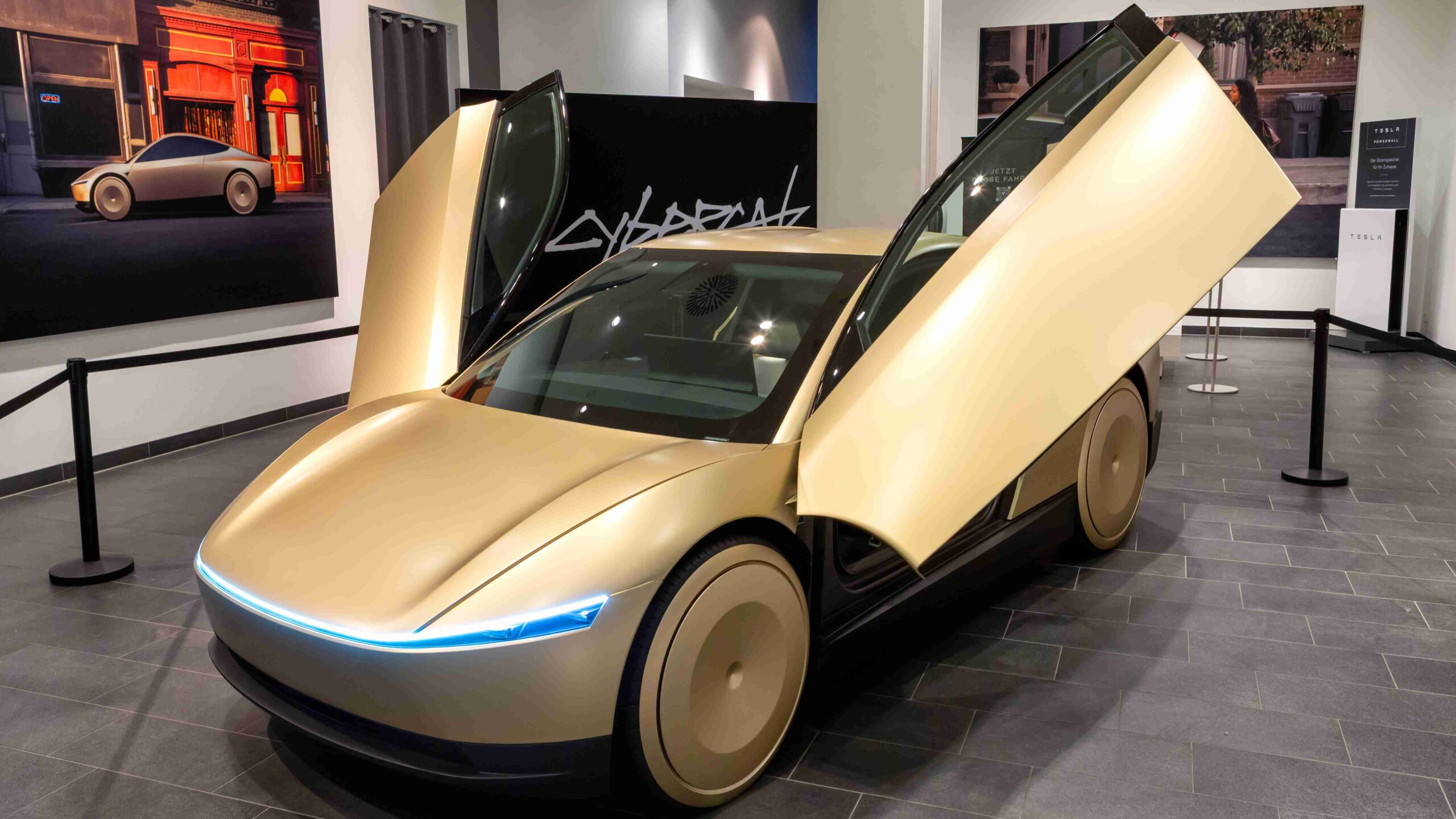
The global automotive and artificial intelligence industries are undergoing a dramatic transformation, with Tesla leading the charge. Once recognized primarily as an electric vehicle manufacturer, Tesla is rapidly evolving into a powerful force in robotics and AI innovation. From the mass production of the highly anticipated Cybercab robotaxi to major advancements in Full Self-Driving (FSD) software and a strategic partnership with Intel, the company is redefining the future of transportation.
This comprehensive blog explores Tesla’s latest developments, including production updates, the future of autonomous driving, and the broader implications for the global technology landscape.
The Cybercab Revolution: Mass Production Begins
Tesla’s long-awaited Cybercab, a purpose-built robotaxi, has officially entered the mass production phase. Recent sightings at the Giga Texas facility suggest a clear transition from prototype testing to large-scale manufacturing.
Observers have reported dozens of Cybercab units parked across multiple lots, indicating that Tesla is preparing for widespread deployment. This marks a significant milestone for both Tesla and the autonomous vehicle industry.
A Rapid Increase in Production
Earlier reports suggested that only a limited number of test vehicles existed. However, the sudden increase in volume demonstrates Tesla’s readiness for aggressive scaling. This shift reflects growing confidence in both hardware systems and AI software.
The Cybercab is no longer just a concept—it is becoming a real-world product.
The Steering Wheel Debate: Vision vs Regulation
One of the most discussed aspects of the Cybercab is its intended lack of a steering wheel and pedals—a concept strongly promoted by Elon Musk.
Why Steering Wheels Are Still Present
Despite this vision, many Cybercab units currently include visible steering wheels due to regulatory requirements.
- Safety standards require human supervision
- Legal frameworks are still evolving
- Transitional design ensures compliance
This highlights a major challenge: technology is advancing faster than regulations.
Engineering Efficiency: The Shift to Front-Wheel Drive
The Cybercab appears to use a Front-Wheel Drive (FWD) system, a departure from Tesla’s traditional Rear-Wheel Drive (RWD) and All-Wheel Drive (AWD) setups.
1. Cost Efficiency
FWD systems are simpler, cheaper, and easier to produce, supporting Tesla’s goal of an affordable robotaxi.
2. Increased Interior Space
This design enables:
- A flat floor layout
- A more spacious cabin
- Improved passenger comfort
3. Improved Stability
FWD offers better traction and control, especially in challenging weather conditions.
This reflects Tesla’s shift toward efficiency-focused mobility solutions.
FSD Version 14.3: A Significant Advancement
Tesla’s Full Self-Driving (FSD) software acts as the core intelligence system behind the Cybercab. The latest update, Version 14.3, represents a major step forward in autonomous driving technology.
Key Improvements in FSD 14.3
AI Compiler Redesign
Tesla has rebuilt its AI compiler, resulting in:
- 20% faster response times
- Better real-time processing
- Higher system efficiency
More Natural Driving Behavior
Users report:
- Smoother acceleration and braking
- Reduced phantom braking
- Improved handling of complex traffic scenarios
Enhanced Parking Capabilities
- Predictive parking detection
- Fluid maneuvering
- Better navigation integration
These upgrades bring Tesla closer to fully autonomous driving.
Looking Ahead: FSD Version 15
Tesla is already preparing for the next breakthrough—FSD Version 15.
A New Level of AI Capability
According to Elon Musk, this version will feature:
- 10 billion parameters
- Advanced machine learning models
- Improved handling of edge cases
Safety Expectations
Version 15 is expected to deliver superhuman driving safety, even in unsupervised environments. While skepticism exists, the scale of improvement suggests a major technological leap.
The Ethical Challenge of Autonomous Driving
Autonomous vehicles introduce not only technical challenges but also ethical concerns.
The Perception Gap
Even if AI systems save lives overall, public perception often focuses on failures rather than success.
Human vs Machine Expectations
Human drivers cause accidents due to:
- Distraction
- Fatigue
- Impairment
Yet society tolerates human error while expecting near-perfect performance from machines. This creates a double standard that may slow adoption.
End of an Era: Model S and Model X Discontinued
Tesla is discontinuing its flagship models—the Tesla Model S and Tesla Model X—marking the end of a significant chapter.
Reasons for the Shift
- Aging technology
- Changing market demand
- Focus on next-generation platforms
A Strategic Pivot
Tesla is now prioritizing:
- Robotaxi networks
- Artificial intelligence development
- Humanoid robotics
This marks a shift from luxury vehicles to scalable AI solutions.
Terafab: A Strategic Partnership with Intel
Tesla has partnered with Intel to develop the Terafab semiconductor facility.
A $25 Billion Initiative
This project aims to deliver:
- 1 terawatt of compute capacity annually
- Support for AI training
- Infrastructure for robotics and automation
Strategic Benefits
- Reduced reliance on global supply chains
- Faster technology scaling
- Strengthened domestic manufacturing
This initiative is critical for powering Tesla’s future AI ecosystem.
Tesla’s Transformation: From Automaker to AI Leader
Tesla is evolving into a multi-industry leader focused on:
Core Areas
- Autonomous transportation
- Robotics and automation
- AI infrastructure development
This positions Tesla at the forefront of the next technological revolution.
Conclusion: The Dawn of the Robotaxi Era
Tesla’s direction is clear—the future lies in autonomous mobility, AI systems, and intelligent infrastructure.
With Cybercab production underway, rapid progress in FSD software, and major investments in semiconductor technology, the company is building a fully autonomous ecosystem.
The robotaxi era is no longer a vision—it is becoming a reality.
As Elon Musk continues to push innovation forward, the future of transportation will be defined not by human drivers, but by intelligent machines.
FAQs
1. What is the Cybercab robotaxi?
The Cybercab is an upcoming fully autonomous vehicle developed by Tesla, designed specifically for robotaxi services without the need for a human driver.
2. Has Cybercab mass production started?
Yes, recent reports suggest that mass production of the Cybercab has begun at Giga Texas, indicating Tesla’s move toward large-scale deployment.
3. Does the Cybercab have a steering wheel?
Currently, some Cybercab units include a steering wheel due to regulatory requirements, but Elon Musk has stated that future versions will remove manual controls once laws permit.
4. What makes the Cybercab different from other Tesla cars?
Unlike traditional Tesla vehicles, the Cybercab is built specifically for autonomous ride-hailing, focusing on AI driving, cost efficiency, and passenger comfort.
5. What is Tesla’s Full Self-Driving (FSD)?
Full Self-Driving (FSD) is Tesla’s advanced AI-based driving software that enables vehicles to navigate roads, traffic, and parking with minimal or no human input.
6. What is new in FSD Version 14.3?
FSD 14.3 includes improvements like:
- Faster response time (20% improvement)
- More human-like driving behavior
- Enhanced parking and navigation capabilities
7. What is expected from FSD Version 15?
FSD Version 15 is expected to feature:
- A 10 billion parameter AI model
- Improved decision-making abilities
- Potential for fully unsupervised driving
8. Is autonomous driving safer than human driving?
Statistically, autonomous driving systems aim to be safer than human drivers by reducing errors caused by fatigue, distraction, and intoxication.
9. Why is Tesla discontinuing Model S and Model X?
Tesla is discontinuing the Tesla Model S and Tesla Model X to focus on robotaxis, AI technologies, and future mobility solutions.
10. What is the Terafab project?
The Terafab project is a semiconductor initiative involving Tesla and Intel to produce high-performance chips for AI and robotics.
11. How much will the Cybercab cost?
Tesla aims to make the Cybercab affordable, with an estimated price target of under $30,000, making robotaxi services more accessible.
12. Where is Cybercab being manufactured?
The Cybercab is being produced at Tesla’s Giga Texas facility, one of the company’s most advanced manufacturing plants.
13. What is front-wheel drive (FWD) in Cybercab?
Front-Wheel Drive (FWD) means the vehicle’s engine powers the front wheels, offering benefits like lower cost, better traction, and more interior space.
14. What is Tesla’s long-term vision?
Tesla aims to become a leader in:
- Autonomous transportation
- Artificial intelligence
- Robotics and automation
15. When will fully autonomous robotaxis be available?
While no exact date is confirmed, Elon Musk suggests that fully autonomous robotaxis could become widely available once regulatory approvals and technology maturity align.
Read More:
- SpaceX is keeping the Space Station alive again this weekend
- Tesla is using a redesigned Cybertruck battery cell to mitigate Semi challenges
- Elon Musk’s Tesla Bot Gen 3 April Launch Event Coming
- Elon Musk drops a bomb regarding Tesla Model S, X inventory
- Tesla Supercharger for Business exposes jaw-dropping ROI gap between best and worst locations
1 thought on “Cybercab Robotaxi Mass Production Finally Begin”