
The roadmap for humanity’s return to the Moon has undergone a dramatic transformation. What was once envisioned as a bold lunar landing mission is now being reshaped into a more calculated, step-by-step approach. NASA’s Artemis program, particularly Artemis III, is no longer just about reaching the Moon quickly—it’s about getting there safely, sustainably, and successfully.
This strategic pivot reflects deeper realities: technical challenges, evolving partnerships, and a growing global race led by players like SpaceX and China.
The Artemis II Prelude: Lessons from Deep Space
Before understanding the shift in Artemis III, we must look at Artemis II, which laid the groundwork for this new direction.
A Mission That Tested Human Limits
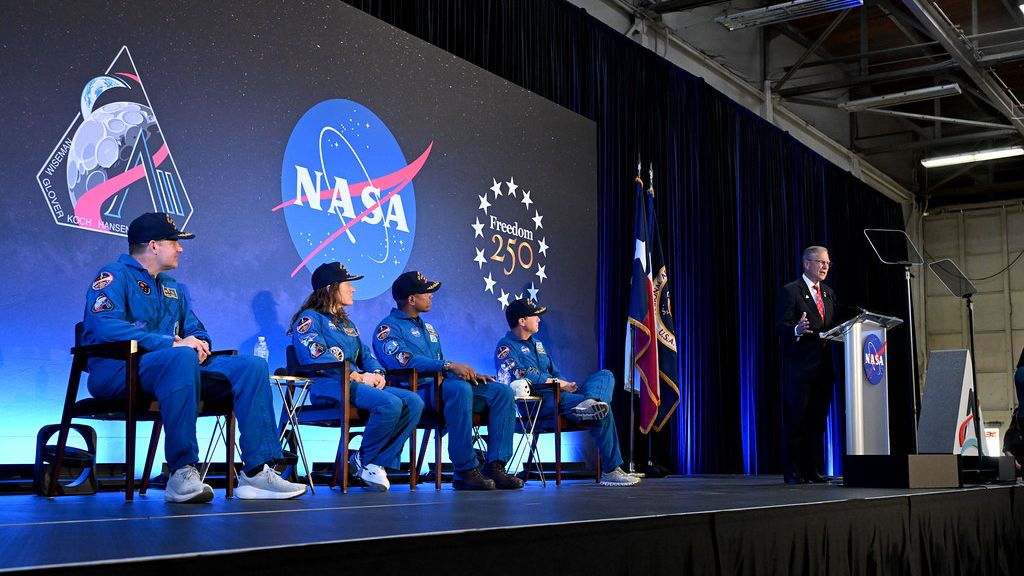
Crewed by astronauts including Reed Wiseman, Victor Glover, Christina Koch, and Jeremy Hansen, Artemis II was designed as a lunar flyby mission—humanity’s return to deep space since Apollo.
But things didn’t go as planned.
The $30 Million Toilet Problem
Just hours into the mission, the Orion spacecraft experienced a failure in its Universal Waste Management System. A malfunction in the urine suction fan forced astronauts to improvise solutions while orbiting far from Earth.
Even more surprisingly, urine froze in external vent lines due to extreme temperatures. The crew solved this by rotating the spacecraft to face the Sun—using solar heat to thaw the system.
These incidents may sound minor—but they revealed something critical: deep space is unforgiving.
The Artemis III Pivot: Reality Over Ambition
Originally planned as a historic lunar landing in 2027, Artemis III has now been restructured into a Low Earth Orbit (LEO) testing mission.
This is not a retreat—it’s a strategic recalibration.
1. The “Skill Decay” Warning
Space missions require precision, coordination, and constant readiness. Experts like Jared Isaacman have warned that infrequent launches lead to declining expertise.
- One launch every 3 years = loss of operational sharpness
- Target: one mission every ~10 months
By shifting Artemis III to LEO, NASA aims to build a consistent launch cadence and keep teams mission-ready.
2. Hardware Hurdles and Refueling Complexity
A major challenge lies in Starship HLS, developed by SpaceX.
Unlike traditional spacecraft, Starship requires:
- 8 to 15 tanker launches
- Orbital refueling using cryogenic methane and liquid oxygen
- Precise fuel transfer in microgravity
This has never been done at this scale.
Additionally, managing fuel boil-off in space remains a huge engineering challenge.
Conclusion: A 2027 Moon landing using this system is currently unrealistic without proper testing.
3. Safety and System Integration
The Aerospace Safety Advisory Panel raised concerns about combining too many untested technologies into one mission.
Key risks included:
- Docking between Orion and Starship in lunar orbit
- Life-support system reliability
- Complex mission sequencing
By testing these in Earth orbit first, NASA significantly reduces mission risk.
The SpaceX Factor: From Partner to Powerhouse
One of the biggest shifts in the Artemis program is the rising dominance of SpaceX.
Cost vs Capability
NASA’s Space Launch System (SLS):
- Cost: ~$4 billion per launch
- Limited launch frequency
SpaceX alternatives:
- Falcon Heavy: ~$150 million per launch
- Starship: Fully reusable, scalable
This cost difference is impossible to ignore.
A New Mission Architecture
Future mission concepts may include:
- Falcon Heavy launching Orion into LEO
- Docking with a Starship “space tug”
- Starship pushing Orion toward the Moon
This hybrid approach offers:
- Lower costs
- Greater flexibility
- Reduced fuel constraints
Elon Musk’s Silent Influence
While Elon Musk has remained relatively quiet, his company is becoming the backbone of lunar exploration.
Estimates suggest SpaceX could handle 80–90% of mission operations in future Artemis missions.
The Geopolitical Clock: China’s Steady Rise
While NASA adapts, China is advancing with precision through its Chinese Lunar Exploration Program (CLEP).
Milestones Achieved
- Chang’e 3: First successful landing
- Chang’e 4: First-ever far-side landing
- Chang’e 6: Returned lunar samples
These missions revealed surprising findings—such as extended volcanic activity on the Moon.
Next Targets: Lunar South Pole
Upcoming missions:
- Chang’e 7 (2026)
- Chang’e 8 (2028)
Focus: Exploring and preparing the South Pole, the most valuable region on the Moon.
The Lunar Gold Rush: Why the Moon Matters
The renewed race to the Moon isn’t symbolic—it’s economic and strategic.
Water Ice: The Fuel of the Future
Found in permanently shadowed craters:
- Can be split into hydrogen and oxygen
- Enables space-based refueling stations
- Supports long-term human presence
Helium-3: Clean Energy Potential
A rare isotope with massive potential:
- Could power nuclear fusion
- Highly efficient and low radiation
- Just 25 tons could power a country like the U.S. for a year
This makes the Moon a potential energy goldmine.
Building the Future: Artemis IV and Beyond
The next major milestone is Artemis IV, now targeted for 2028.
What Artemis IV Will Achieve
- First crewed lunar landing of the modern era
- Deployment of advanced infrastructure
- Testing of next-gen spacesuits (XEVA)
“Test Like You Fly” Philosophy
NASA requires:
- Full uncrewed demonstrations
- Autonomous landings
- System validation before human missions
This ensures maximum safety and reliability.
Economic Impact: Space is Big Business
The Artemis program is not just about exploration—it’s fueling economic growth.
Key Figures
- $23.8 billion generated in 2023
- ~96,000 jobs supported
- Major boost to regions like Florida’s Space Coast
This proves that space exploration drives real-world economic value.
Conclusion: A New Era of Exploration
The shift in Artemis III represents a turning point in human spaceflight.
Instead of rushing to plant a flag, NASA is:
- Building sustainable systems
- Leveraging private innovation
- Preparing for long-term lunar presence
With SpaceX as a central force and global competition intensifying, the Moon is no longer just a destination—it’s the foundation of humanity’s future in space.
This time, we’re not going back to the Moon just to visit.
We’re going to stay.
FAQs
1. What is Artemis III?
Artemis III is part of NASA’s Artemis program, originally planned to land humans on the Moon. It has now been shifted to a Low Earth Orbit testing mission to improve safety and mission readiness.
2. Why did NASA change the Artemis III plan?
NASA adjusted the mission due to technical challenges, safety concerns, and delays in key systems, especially those involving SpaceX’s Starship.
3. When will humans return to the Moon under Artemis?
The first crewed lunar landing is now expected with Artemis IV, currently targeted for around 2028.
4. What is Low Earth Orbit (LEO)?
Low Earth Orbit is the region of space about 160 to 2,000 kilometers above Earth, where spacecraft can be tested more safely before deep-space missions.
5. What role does SpaceX play in Artemis missions?
SpaceX is responsible for developing the Starship HLS, which will transport astronauts from lunar orbit to the Moon’s surface.
6. Why is Starship important for lunar missions?
Starship is a fully reusable spacecraft capable of carrying large payloads and supporting long-duration missions, making it essential for sustainable Moon exploration.
7. What challenges does Starship face?
Starship must overcome major hurdles such as orbital refueling, fuel storage (boil-off), and complex docking maneuvers, all of which are still being tested.
8. What is the Space Launch System (SLS)?
The Space Launch System is NASA’s powerful rocket designed to send astronauts and cargo beyond Earth orbit.
9. Why is the SLS controversial?
The SLS has faced criticism due to its high cost (around $4 billion per launch) and slower launch frequency compared to commercial alternatives.
10. How does Falcon Heavy compare to SLS?
The Falcon Heavy is significantly cheaper (around $150 million per launch) and offers more flexibility, making it an attractive alternative.
11. What did Artemis II teach NASA?
Artemis II highlighted real-world issues in deep space, including life-support failures and system integration challenges.
12. Why is the Moon’s South Pole important?
The South Pole contains water ice and valuable resources, making it a key target for future missions and long-term lunar bases.
13. What is the Chinese Lunar Exploration Program (CLEP)?
The Chinese Lunar Exploration Program is China’s long-term initiative to explore and potentially colonize the Moon.
14. What are Chang’e missions?
China’s Chang’e missions are a series of robotic missions that have successfully orbited, landed, and returned samples from the Moon.
15. What is Helium-3 and why is it important?
Helium-3 is a rare isotope found on the Moon that could be used for clean nuclear fusion energy, making it highly valuable for future energy solutions.
16. Is the Artemis program still on track?
Yes, while timelines have shifted, NASA’s Artemis program is progressing with a stronger focus on safety, sustainability, and long-term lunar presence.
Read More: