
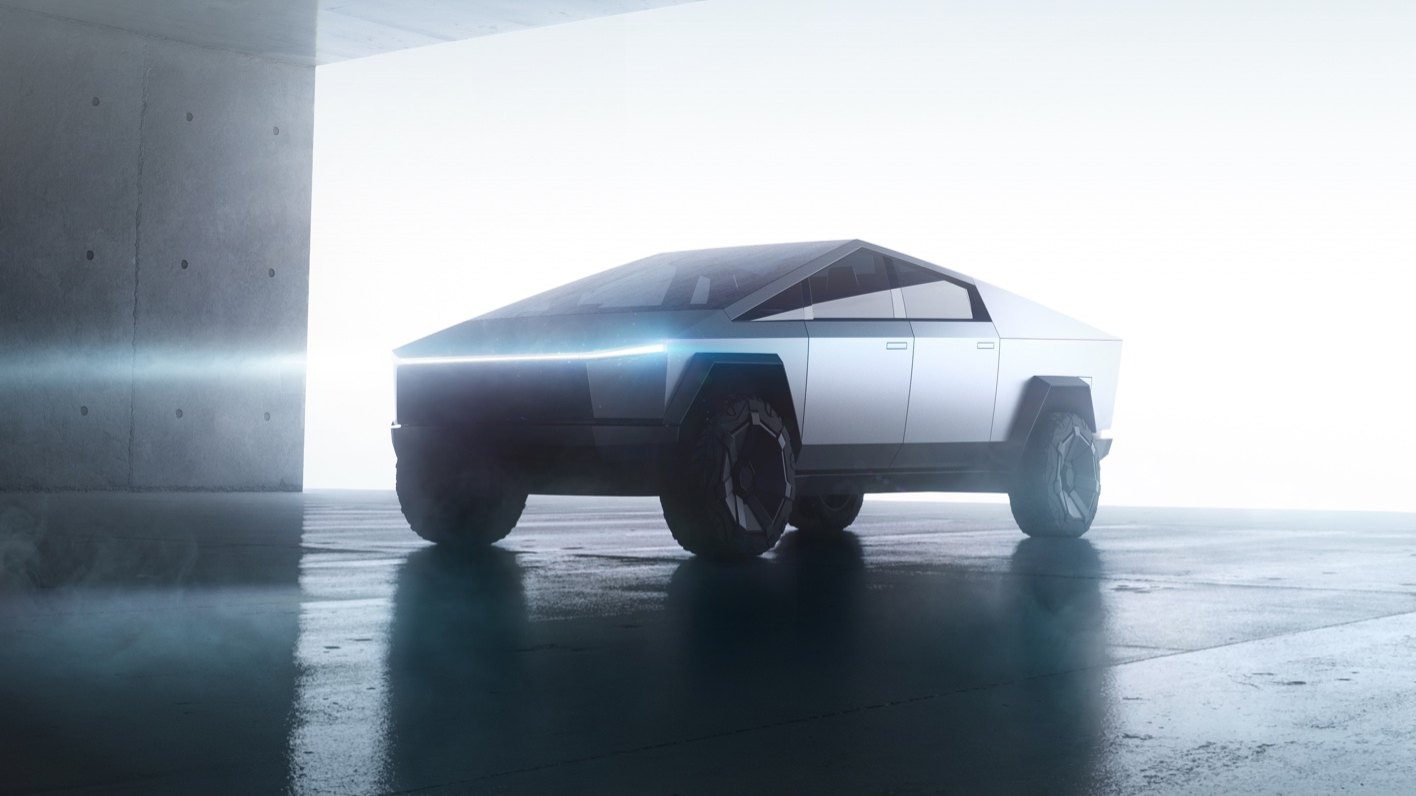
The global electric vehicle (EV) industry is entering a period of major transformation, and no company represents that shift more dramatically than Tesla. Once considered untouchable in the EV market, Tesla is now facing mounting pressure from slowing demand, rising production costs, and changing consumer behavior. At the center of this growing storm is the company’s most controversial and futuristic vehicle: the Tesla Cybertruck.
When the Cybertruck was first unveiled in 2019, it looked like something straight out of a science fiction movie. Its angular stainless-steel body, bulletproof marketing, and ambitious promises captured worldwide attention. Elon Musk positioned the vehicle as the future of pickup trucks — a revolutionary machine that would disrupt America’s most competitive automotive segment.
But by 2025, the narrative had changed dramatically.
Instead of becoming the next Ford F-150 killer, the Cybertruck is now facing what many analysts describe as an existential demand crisis. Declining sales, severe depreciation, manufacturing challenges, and shifting buyer psychology have raised serious questions about the future of Tesla’s most ambitious project.
In this article, we’ll explore why the Cybertruck’s future suddenly looks uncertain and how Tesla’s Silicon Valley mindset may have collided with the hard realities of the traditional automotive industry.
The Fall of Tesla’s Premium Models
To understand the Cybertruck crisis, it’s important to first examine Tesla’s broader strategy shift.
For years, the Tesla Model S and Model X served as the company’s flagship premium vehicles. These models helped establish Tesla as a luxury technology brand and gave the company credibility in the automotive market.
However, by mid-2025, combined global deliveries of the Model S and Model X represented only 1.8% of Tesla’s total sales volume. Revenue contribution also shrank significantly, making the programs increasingly difficult to justify financially.
Tesla quietly retired both models to focus on higher-volume production lines like the Model 3, Model Y, and especially the Cybertruck.
Why Tesla Shifted Resources to the Cybertruck
Tesla invested billions into the Cybertruck program. Gigafactory Texas was designed with an estimated annual capacity of 125,000 Cybertruck units, and Elon Musk publicly predicted demand could eventually reach 250,000 to 500,000 trucks per year.
The company developed:
- Specialized robotics
- Massive Giga Press machines
- Custom tooling systems
- Proprietary stainless-steel manufacturing processes
Everything was built around the idea that the Cybertruck would become Tesla’s next major growth engine.
But reality didn’t match the hype.
Cybertruck Demand Is Falling Fast
When Tesla finally launched full Cybertruck production in late 2023, excitement initially surged. Early adopters rushed to place orders, and social media exploded with videos and reactions.
However, the momentum faded quickly.
Cybertruck Sales Numbers Tell a Different Story
In 2024, Tesla delivered approximately 39,000 Cybertrucks worldwide during the vehicle’s first full production year.
Instead of increasing in 2025, annualized deliveries reportedly dropped to around 20,237 units, representing a decline of nearly 50%.
That trend shocked many analysts because automotive products typically follow a growth curve during their early years. Instead, the Cybertruck experienced what appears to be an immediate demand ceiling.
The problem is simple: Tesla may have already satisfied most of the early-adopter audience.
The Electric Pickup Truck Market Problem
Tesla’s struggles are not isolated.
Even traditional automakers are finding it difficult to make electric pickup trucks profitable.
Ford’s F-150 Lightning Trouble
In 2025, Ford officially scaled back production of the F-150 Lightning, despite strong reviews and positive customer feedback.
The Lightning looked familiar, retained traditional truck functionality, and appealed to loyal Ford buyers. Yet Ford still struggled to generate profits due to:
- Expensive battery packs
- High supply chain costs
- Low production margins
- Weak large-scale EV truck demand
Even so, Ford still managed to deliver over 27,000 Lightning trucks in 2025 — outperforming the Cybertruck.
This comparison highlights a major difference between Detroit and Silicon Valley thinking.
Silicon Valley Logic vs Detroit Reality
Detroit’s Traditional Approach
Legacy automakers like Ford operate diversified businesses.
They sell:
- Gas-powered trucks
- Hybrid vehicles
- Electric models
- Commercial fleets
If one product underperforms, they can redirect investments elsewhere.
Ford could reduce Lightning production without damaging its core business because the traditional F-150 gasoline lineup remains highly profitable.
Tesla’s Bigger Problem
Tesla does not have that flexibility.
The Cybertruck became more than just a vehicle — it became a symbol of Tesla’s identity and manufacturing future.
Canceling or significantly scaling back the Cybertruck would force Tesla to admit that its radical design philosophy may have failed to connect with mainstream truck buyers.
That creates enormous brand risk.
The Cybertruck Pricing Disaster
One of the biggest reasons for declining demand may be Tesla’s pricing strategy.
What Tesla Promised in 2019
During the Cybertruck reveal event, Tesla announced highly aggressive pricing:
- Single-Motor Base Model: $39,900
- Dual-Motor Version: $49,900
- Tri-Motor Performance Model: Around $70,000
These prices shocked the automotive world.
At under $40,000, the Cybertruck looked like a realistic option for middle-class Americans, contractors, and work-truck buyers.
Reservations exploded almost immediately.
What Buyers Actually Received
When production finally began years later, the pricing structure had completely changed.
The affordable base model disappeared entirely.
Instead:
- Dual-motor versions approached $80,000
- Foundation Series trims reached $100,000 to $120,000
This transformed the Cybertruck from a practical work vehicle into a luxury tech product.
And that shift fundamentally changed its target audience.
Why Traditional Truck Buyers Rejected the Cybertruck
Pickup truck buyers in North America typically prioritize practicality over futuristic design.
For decades, trucks have been valued for:
- Reliability
- Towing capability
- Durability
- Low maintenance costs
- Strong resale value
- Work-site utility
The Cybertruck challenged nearly all traditional expectations.
The Design Problem
While many tech enthusiasts loved the vehicle’s sci-fi appearance, mainstream truck buyers often viewed it as impractical or excessive.
The sharp-edged stainless-steel body created concerns about:
- Repair costs
- Visibility
- Everyday usability
- Parking practicality
- Long-term durability
For many consumers, the Cybertruck looked more like an experimental concept than a dependable work machine.
Massive Depreciation Is Hurting Buyers
Another major issue affecting Cybertruck demand is depreciation.
Cybertruck Resale Values Are Falling Quickly
Many early buyers who paid over $100,000 for Foundation Series models are reportedly seeing trade-in values drop toward $60,000.
Some automotive analysts estimate the Cybertruck could lose up to 57% of its value within five years.
That depreciation rate is significantly worse than traditional gasoline pickup trucks, which often retain strong resale value for years.
For truck buyers, resale value matters enormously.
A pickup truck is often viewed as a long-term investment, especially for contractors and business owners.
Rapid depreciation destroys confidence.
Tesla’s Growing Recall Problems
The Cybertruck has also faced multiple technical issues and recalls.
Reported Problems Include:
- Sticky accelerator pedals
- Windshield wiper motor failures
- Loose exterior trim pieces
- High-speed vibration issues
- Surface rust complaints
These problems damaged Tesla’s marketing narrative that the Cybertruck was nearly indestructible.
The stainless-steel exterior was heavily promoted as “apocalypse-proof,” but reports of rust spots and quality-control issues created negative publicity online.
For a premium-priced vehicle, customers expect reliability and refinement.
Instead, many Cybertruck owners encountered early production problems similar to those seen in Tesla’s earlier vehicle launches.
The Manufacturing Nightmare Behind the Cybertruck
One of Tesla’s biggest challenges is the Cybertruck’s unusual manufacturing process.
Why the Stainless-Steel Body Creates Problems
Traditional vehicles use softer metals like aluminum or mild steel, allowing manufacturers to shape curved body panels efficiently.
The Cybertruck uses an ultra-hard stainless-steel alloy.
That material requires:
- Specialized tooling
- Massive 9,200-ton Giga Press machines
- More expensive cutting systems
- High-maintenance robotic equipment
Because the material is difficult to shape, production tools wear out faster, increasing costs significantly.
Low Production + High Fixed Costs = Financial Trouble
If Tesla were producing hundreds of thousands of Cybertrucks annually, these investments might eventually pay off.
But low sales volume creates a dangerous situation:
- Massive factory expenses
- Low production efficiency
- High per-unit costs
- Reduced profitability
This puts enormous financial pressure on the entire program.
The SpaceX Fleet Purchases Raised Eyebrows
One of the most controversial developments emerged through vehicle registration records in late 2025.
SpaceX Purchased Over 1,200 Cybertrucks
Reports revealed that SpaceX, another Elon Musk-controlled company, purchased approximately 1,279 Cybertrucks in a single quarter.
Additional Musk-affiliated companies including:
also purchased Cybertrucks internally.
Combined, these purchases reportedly generated over $137 million in revenue for Tesla.
Why Analysts Are Concerned
While these transactions are technically legal, critics argue they may distort real demand signals.
If affiliated companies are buying large numbers of Cybertrucks, it becomes harder to determine genuine consumer interest.
Some analysts believe these internal fleet purchases may be helping Tesla absorb excess inventory while maintaining the appearance of stable demand.
That possibility has raised concerns among investors and industry observers.
Tesla’s Dangerous Crossroads
Tesla now faces a difficult strategic decision.
Option 1: Continue High Production
Maintaining production risks:
- Unsold inventory accumulation
- Falling resale values
- Higher storage costs
- Greater financial losses
Option 2: Scale Back or Cancel the Cybertruck
Reducing production could trigger:
- Multi-billion-dollar write-offs
- Damage to Tesla’s innovation image
- Investor concerns
- Public perception issues
Neither option is ideal.
The Cybertruck was supposed to represent the future of automotive manufacturing. Instead, it may become one of the most expensive experimental vehicle programs in modern history.
What the Cybertruck Crisis Says About the EV Industry
The Cybertruck story reveals a deeper challenge facing the electric vehicle industry.
Silicon Valley Innovation Doesn’t Always Work in Automotive Markets
Tech companies often succeed by:
- Moving fast
- Prioritizing disruption
- Ignoring traditional rules
- Creating hype-driven products
But the automotive world operates differently.
Truck buyers care about:
- Reliability
- Long-term ownership costs
- Serviceability
- Durability
- Resale value
The Cybertruck attempted to reinvent an industry segment that values practicality above experimentation.
That gamble may not have paid off.
Will Tesla Discontinue the Cybertruck?
Tesla has not officially announced any plans to discontinue the Cybertruck.
However, declining demand, production challenges, and financial pressure have fueled growing speculation about the truck’s future.
The biggest question is whether Tesla can evolve the Cybertruck into a more mainstream product or whether the company will eventually pivot away from the program entirely.
Some analysts believe Tesla may eventually:
- Introduce cheaper trims
- Simplify manufacturing
- Redesign key features
- Reduce production targets
Others believe the Cybertruck may remain a niche luxury vehicle with limited long-term market appeal.
Final Thoughts
The Tesla Cybertruck was designed to revolutionize the pickup truck market, but reality has proven far more complicated.
Despite enormous hype, massive investment, and unprecedented public attention, the truck now faces slowing demand, sharp depreciation, manufacturing difficulties, and growing skepticism from traditional buyers.
The situation highlights the tension between Silicon Valley innovation and Detroit practicality.
Tesla succeeded by challenging the automotive industry’s conventions. But the Cybertruck demonstrates that disruption alone is not enough — especially in a market where reliability, affordability, and utility still matter most.
Whether Tesla can adapt the Cybertruck strategy or whether the vehicle eventually becomes a cautionary tale remains one of the most fascinating questions in the modern EV industry.
FAQs
1. Why is the Tesla Cybertruck struggling in sales?
The Tesla Cybertruck is struggling due to high pricing, limited mainstream appeal, rapid depreciation, and concerns about practicality among traditional truck buyers. Many consumers view it as a futuristic luxury vehicle rather than a dependable work truck.
2. Is Tesla planning to discontinue the Cybertruck?
Tesla has not officially confirmed discontinuation plans, but declining demand and production challenges have sparked speculation that the company could eventually scale back or redesign the program.
3. How many Cybertrucks has Tesla sold?
Tesla delivered around 39,000 Cybertrucks in 2024, but annualized deliveries reportedly dropped to approximately 20,237 units in 2025, indicating weakening demand.
4. Why was the Cybertruck price higher than originally promised?
When Tesla unveiled the Cybertruck in 2019, the company promised entry-level pricing starting at $39,900. However, rising manufacturing costs, inflation, battery expenses, and specialized production requirements pushed actual prices much higher.
5. What makes the Cybertruck different from traditional pickup trucks?
The Cybertruck features a stainless-steel exoskeleton, angular futuristic styling, electric powertrain technology, and advanced manufacturing methods unlike conventional trucks built with stamped steel or aluminum.
6. What problems has the Tesla Cybertruck faced?
The Cybertruck has experienced multiple issues, including:
- Sticky accelerator pedals
- Windshield wiper failures
- Loose trim panels
- Wheel vibration complaints
- Surface rust concerns
These issues have negatively impacted customer confidence.
7. Why are traditional truck buyers hesitant about the Cybertruck?
Most truck owners prioritize reliability, towing capability, affordability, resale value, and practicality. Many buyers feel the Cybertruck’s radical design sacrifices everyday utility for futuristic styling.
8. How much does the Tesla Cybertruck depreciate?
Some automotive analysts estimate the Cybertruck could lose up to 57% of its value over five years, which is significantly worse than many traditional gasoline pickup trucks.
9. Is the Cybertruck profitable for Tesla?
There is growing speculation that the Cybertruck may not currently be highly profitable due to expensive manufacturing systems, low production volume, and high fixed factory costs.
10. Why is Cybertruck manufacturing so expensive?
The Cybertruck uses a hard proprietary stainless-steel alloy that requires specialized tools, giant Giga Press machines, and expensive robotics. These materials and systems increase production complexity and costs.
11. How does the Cybertruck compare to the Ford F-150 Lightning?
The Ford F-150 Lightning uses a more traditional truck design and appeals to conventional pickup buyers, while the Cybertruck focuses heavily on futuristic styling and technology. Despite its own struggles, Ford reportedly sold more electric trucks than Tesla in 2025.
12. Did SpaceX really buy Cybertrucks from Tesla?
Yes. Reports based on vehicle registration data suggest that SpaceX purchased over 1,200 Cybertrucks during a single quarter in 2025, leading to speculation about Tesla using internal corporate demand to support sales numbers.
13. Why did Tesla discontinue the Model S and Model X?
Tesla reportedly reduced focus on the Model S and Model X because declining sales and shrinking profit margins made the vehicles less important compared to high-volume products like the Model 3, Model Y, and Cybertruck.
14. Is the Cybertruck good for off-road driving?
The Cybertruck offers strong torque, adjustable suspension, and advanced traction systems, making it capable off-road. However, some critics argue its size, weight, and sharp body design may limit practicality in extreme environments.
15. Who is the Tesla Cybertruck designed for?
The Cybertruck primarily appeals to:
- Tech enthusiasts
- Early EV adopters
- Tesla fans
- Luxury vehicle buyers
- Consumers interested in futuristic automotive design
It has struggled to attract traditional blue-collar truck owners.
16. What does the Cybertruck crisis mean for the EV market?
The Cybertruck’s challenges show that innovation alone is not enough in the automotive industry. Consumers still care deeply about affordability, durability, reliability, and practicality — especially in the pickup truck segment.
Read More:
- SpaceX’s New BUOY Footage revealed How exactly Starship S39 FLIP & Land Shocked whole Industry
- SpaceX to become America’s Military data backbone for missiles, drones, and warfighters
- FAA Officially STOPPED SpaceX Starship Launch due to Booster 19 Problems! No Launch Until
- Tesla Giga Press 4.0 Upgrade! Cybercab Casting Progress BIG Changes
- Sodium-Ion Battery 2026 Tesla: Model 2 $25K, 10,000-cycle future vs LFP reality
1 thought on “Tesla Cybertruck Soon Discontinued Nobody Saw Coming”