
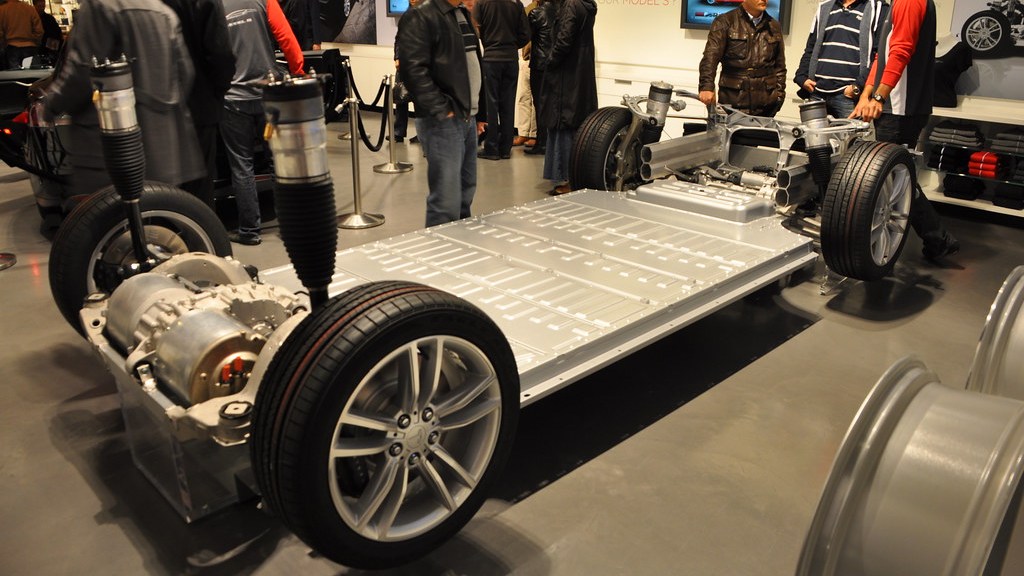
The electric vehicle industry is approaching a major turning point. For years, automakers have focused on futuristic designs, autonomous driving systems, and aggressive marketing campaigns to attract buyers. However, when it comes to creating a truly affordable mass-market electric vehicle, none of those factors matter as much as one critical component: the battery pack.
Tesla’s highly anticipated affordable EV, often referred to as the Tesla Model 2, is expected to target a retail price of around $25,000. Achieving this ambitious price point while maintaining competitive range, fast charging, and long-term reliability is one of the biggest engineering challenges in the automotive industry.
The secret lies beneath the vehicle’s floor. Tesla’s latest battery strategy combines vertical integration, advanced lithium refining, long-life LFP battery technology, and strategic supplier partnerships. Together, these innovations could make the Model 2 one of the most important electric vehicles ever produced.
In this article, we’ll explore Tesla’s new battery technology, why the company rejected a revolutionary 9-minute charging battery configuration, and how a 5,000-cycle LFP battery capable of retaining 90% capacity after 10 years could reshape the future of affordable EVs.
Why the Battery Determines the Success of Tesla Model 2
For an affordable electric vehicle, the battery is not just another component—it is the foundation of the entire business model.
Industry estimates suggest that the battery pack represents approximately 30% to 40% of the total manufacturing cost of a $25,000 EV. That means Tesla may spend between $7,500 and $10,000 on battery cells alone before adding the vehicle body, drivetrain, electronics, or interior.
To make the Model 2 profitable, Tesla must balance three critical objectives:
- Low cost per kilowatt-hour (kWh)
- Competitive driving range
- Exceptional long-term durability
If any one of these factors fails, the economics of an entry-level EV become significantly more difficult.
This is why Tesla’s battery strategy has become one of the company’s most important competitive advantages.
Tesla’s Vertical Integration Strategy: Controlling Lithium from the Source
One of the greatest threats to affordable EV production is the volatility of raw material prices.
Battery production depends on critical materials such as:
- Lithium
- Nickel
- Cobalt
- Iron
Price spikes in any of these commodities can dramatically increase production costs and eliminate already thin profit margins.
While premium vehicles can absorb these fluctuations, a low-cost vehicle like the Model 2 cannot.
Tesla’s Revolutionary Lithium Refinery
To protect itself from commodity market instability, Tesla made an unusual decision: it built its own domestic lithium refinery.
Rather than copying existing industry processes, Tesla designed the refinery using what Elon Musk often calls first-principles engineering—starting from fundamental physical and chemical laws rather than industry traditions.
Benefits of Tesla’s Lithium Refining Operation
1. Reduced Processing Costs
By refining lithium internally, Tesla removes expensive third-party processing markups.
2. Improved Supply Chain Stability
Tesla gains more control over the availability and pricing of battery-grade lithium.
3. Environmental Advantages
The refinery introduces several innovations:
- Acid-free processing methods
- Closed-loop water recycling systems
- Lower energy consumption
- Reduced carbon footprint
These improvements not only reduce environmental impact but also lower operating costs over time.
Increased Bargaining Power
Owning a refinery fundamentally changes Tesla’s relationship with battery suppliers.
Instead of simply purchasing battery materials, Tesla can provide refined lithium directly to cell manufacturers. This transforms supplier relationships from transactional arrangements into strategic partnerships.
Over the long term, this creates significant cost advantages that many competitors may struggle to replicate.
Tesla and Sunwoda Partnership: A New Era of LFP Batteries
After securing lithium supply, Tesla has reportedly explored partnerships with leading battery manufacturers.
One company attracting significant attention is Sunwoda, a major Chinese battery producer known for advanced lithium iron phosphate (LFP) technology.
The 9-Minute Charging Demonstration
Sunwoda recently demonstrated an ultra-fast charging LFP battery pack that generated excitement throughout the EV industry.
The battery achieved:
| Specification | Performance |
|---|---|
| Battery Capacity | 98.8 kWh |
| Cell Count | 264 Prismatic Cells |
| System Voltage | 844.8V |
| Peak Current | 1,800A |
| Peak Charging Power | 1,521 kW |
| Charging Window | 5% to 95% in 9 Minutes |
On paper, the results are extraordinary.
A charging session lasting less than ten minutes would rival the convenience of traditional gasoline refueling.
However, Tesla ultimately chose not to use this exact configuration for the Model 2.
Why Tesla Rejected the 9-Minute Charging Battery
At first glance, rejecting a battery capable of charging from 5% to 95% in just nine minutes may seem surprising.
The reason comes down to vehicle architecture and economics.
The 800V Challenge
Sunwoda’s ultra-fast charging technology relies on an 800-volt electrical architecture.
Tesla’s existing high-volume manufacturing systems, including those used for the Model 3 and Model Y, are built around a highly optimized 400-volt platform.
Switching the Model 2 to 800V would increase costs throughout the vehicle.
Additional Costs of an 800V System
Silicon Carbide Electronics
Higher voltages require premium Silicon Carbide (SiC) power electronics.
More Expensive Charging Hardware
The onboard charger and DC-DC converter systems would require major upgrades.
Advanced Thermal Management
Ultra-fast charging generates substantial heat that demands:
- Larger coolant pumps
- More sophisticated cooling plates
- Enhanced temperature management systems
Specialized Wiring
Higher voltages require:
- Additional insulation
- Specialized shielding
- More expensive wiring harnesses
All of these upgrades add cost.
For a luxury vehicle, these expenses may be justified. For a $25,000 mass-market EV, they could significantly reduce profitability.
Tesla’s Practical Solution
Rather than adopting the entire 800V system, Tesla appears more interested in adapting Sunwoda’s advanced battery chemistry to its proven 400V architecture.
This approach still enables charging rates of approximately 250kW to 300kW, reducing charging times to around 12–15 minutes while maintaining affordability.
For most drivers, this is a far more practical balance between performance and cost.
The Real Breakthrough: 5,000 Charge Cycles
While charging speed attracts headlines, battery longevity may be the most important innovation for the Model 2.
Traditional LFP Battery Lifespan
Most affordable EVs using LFP batteries currently deliver:
1,500 to 2,000 full charge cycles
before experiencing substantial capacity degradation.
For many owners, this is sufficient.
However, Tesla appears to be targeting something far more ambitious.
Sunwoda’s Long-Life LFP Technology
Sunwoda’s next-generation cells are engineered for:
- 5,000 complete charge cycles
- 90% capacity retention after 10 years
- Exceptional long-term durability
This represents one of the most significant improvements in battery longevity seen in recent years.
Cycle Life Comparison
| Battery Type | Charge Cycles |
| Standard Entry-Level LFP | 1,500 – 2,000 |
| Advanced Sunwoda LFP | 5,000 |
The difference is enormous.
A daily commuter charging every day could potentially use the battery for more than 13 years while maintaining approximately 90% of original capacity.
That level of durability fundamentally changes the economics of EV ownership.
How Battery Longevity Increases Vehicle Value
One of the biggest concerns among EV buyers is battery replacement cost.
Replacing an out-of-warranty battery pack can cost anywhere from:
$10,000 to $16,000
This creates uncertainty for:
- Second owners
- Third owners
- Leasing companies
- Fleet operators
Reducing Residual Value Risk
If Tesla’s battery retains 90% capacity after a decade, buyers gain confidence that the vehicle will remain useful long after warranty coverage expires.
This creates several benefits:
Higher Resale Values
Vehicles with healthy batteries maintain stronger market demand.
Lower Lease Costs
Reduced depreciation can lower monthly lease payments.
Better Total Cost of Ownership
Owners spend less on major battery-related repairs.
For many consumers, this durability could be even more important than ultra-fast charging speeds.
Why Tesla Is Not Using Sodium-Ion Batteries
Sunwoda also introduced an impressive sodium-ion battery technology.
The durability numbers are remarkable.
Sodium-Ion Lifespan
The technology reportedly supports:
- 20,000 cycles under normal conditions
- More than 10,000 cycles under fast charging
- Potential lifespan of 25 to 54 years
In theory, these batteries could outlast the vehicle itself.
So why isn’t Tesla using them in the Model 2?
The Energy Density Problem
The answer is simple: energy density.
Energy Density Comparison
| Battery Type | Energy Density |
| Sodium-Ion | 160 Wh/kg |
| LFP | 190 Wh/kg |
This roughly 16% deficit creates major engineering challenges.
Increased Vehicle Weight
A sodium-ion battery requires more material to achieve the same driving range.
Additional weight reduces:
- Efficiency
- Acceleration
- Overall performance
Packaging Constraints
A larger battery pack also consumes more physical space.
For a compact vehicle like the Model 2, cabin and cargo room are critical selling points.
Tesla therefore appears likely to prioritize LFP chemistry for passenger vehicles.
Where Sodium-Ion Batteries Could Excel
Although sodium-ion batteries are not ideal for compact EVs, they may be transformative in stationary energy storage.
Ideal Applications
Grid Storage
Utility-scale battery systems prioritize longevity over weight.
Residential Energy Systems
Home batteries remain fixed in place, making energy density less important.
Commercial Storage Projects
Long-lasting batteries could reduce replacement costs for decades.
Tesla’s energy division could eventually benefit significantly from sodium-ion technology, particularly in future Megapack-style applications.
Tesla’s Multi-Supplier Battery Strategy
Tesla’s battery strategy extends beyond a single supplier.
The company continues to maintain strong relationships with multiple battery manufacturers.
CATL Remains a Key Partner
CATL recently introduced the latest version of its Shenxing LFP battery technology.
This battery focuses heavily on:
- Extreme charging speed
- Cold-weather performance
- Operational reliability
Impressive Winter Performance
One historical weakness of LFP chemistry has been cold-weather charging.
CATL’s latest technology dramatically improves performance at temperatures as low as -30°C.
This advancement could help eliminate one of the final barriers to widespread LFP adoption.
Competitive Supplier Pressure Benefits Tesla
Tesla’s relationships with both Sunwoda and CATL create a powerful competitive dynamic.
Advantages of Multiple Suppliers
Better Pricing
Suppliers compete for Tesla contracts.
Faster Innovation
Manufacturers continuously improve technology to secure future orders.
Reduced Supply Risk
Tesla avoids dependence on a single company.
Improved Negotiation Power
Tesla can compare specifications and costs across multiple suppliers.
This strategy helps maintain downward pressure on battery prices while encouraging rapid technological advancement.
The Future of Tesla Model 2
The future success of the Tesla Model 2 depends less on exterior styling and more on battery economics.
Tesla’s approach combines several powerful advantages:
- Vertical lithium integration
- Domestic refining capabilities
- Long-life 5,000-cycle LFP batteries
- 90% capacity retention after 10 years
- Competitive 12-15 minute charging
- Multi-supplier leverage
- Lower long-term ownership costs
Rather than chasing headline-grabbing charging records, Tesla appears focused on delivering a battery system that balances affordability, durability, and scalability.
That may ultimately be the key to bringing electric vehicles to millions of new customers worldwide.
Conclusion
Tesla’s next-generation battery strategy demonstrates a clear understanding of what truly matters in the affordable EV market. The company rejected a spectacular 9-minute charging battery not because it lacked technical merit, but because it conflicted with the economic realities of mass-market vehicle production.
By prioritizing 5,000-cycle LFP batteries, 90% capacity retention after a decade, and a tightly controlled lithium supply chain, Tesla is building a foundation for sustainable, large-scale EV adoption.
If these technologies reach production in the Tesla Model 2, the vehicle could become one of the most important electric cars ever launched—delivering long battery life, strong resale value, practical charging speeds, and genuine affordability to consumers around the world.
FAQs
1. What is the Tesla Model 2?
The Tesla Model 2 is the unofficial name commonly used for Tesla’s rumored affordable electric vehicle expected to target a starting price of around $25,000. The vehicle is designed to bring Tesla ownership to a much larger global audience.
2. Why is the battery so important for the Tesla Model 2?
The battery pack accounts for approximately 30% to 40% of the vehicle’s manufacturing cost. Keeping battery costs low while maintaining good range, fast charging, and long-term durability is essential for making an affordable EV profitable.
3. What battery chemistry is Tesla expected to use in the Model 2?
Tesla is expected to use Lithium Iron Phosphate (LFP) batteries because they offer lower costs, improved safety, long lifespan, and reduced dependence on expensive materials such as nickel and cobalt.
4. What is special about Sunwoda’s new LFP battery technology?
Sunwoda’s next-generation LFP batteries are designed to achieve up to 5,000 charge cycles while retaining at least 90% of their original capacity after 10 years, significantly outperforming many current entry-level EV batteries.
5. How long could a 5,000-cycle battery last in real-world use?
For drivers who charge their EV daily, a 5,000-cycle battery could potentially provide more than 13 years of regular use while maintaining most of its original driving range.
6. Why did Tesla reject the 9-minute charging battery pack?
The ultra-fast charging battery demonstrated by Sunwoda requires an 800V electrical architecture, which would increase vehicle costs through more expensive electronics, cooling systems, and high-voltage components. Tesla is focused on keeping the Model 2 affordable.
7. What charging speed could the Tesla Model 2 offer instead?
Tesla is expected to adapt the advanced battery chemistry to its existing 400V platform, potentially enabling charging speeds between 250kW and 300kW, allowing charging stops of approximately 12 to 15 minutes.
8. What is the difference between 800V and 400V EV architectures?
An 800V system supports faster charging and improved efficiency but requires more expensive components. A 400V system is cheaper to manufacture and already forms the foundation of Tesla’s high-volume production vehicles like the Model 3 and Model Y.
9. Why did Tesla build its own lithium refinery?
Tesla built a lithium refinery to gain greater control over battery raw materials, reduce processing costs, minimize supply chain risks, and protect itself from volatile lithium market prices.
10. How does Tesla’s lithium refinery help reduce battery costs?
By refining lithium internally, Tesla eliminates third-party refining markups, improves supply chain stability, and creates stronger negotiating power with battery suppliers, helping reduce overall battery production expenses.
11. What are the environmental benefits of Tesla’s lithium refinery?
Tesla’s refinery uses innovative methods such as acid-free processing, closed-loop water recycling, and lower-energy refining techniques, helping reduce environmental impact and operational costs.
12. Why isn’t Tesla using sodium-ion batteries in the Model 2?
Although sodium-ion batteries offer exceptional durability, they have lower energy density than LFP batteries. This means they require more space and weight to deliver the same driving range, making them less suitable for compact passenger vehicles.
13. What is energy density and why does it matter?
Energy density measures how much energy a battery can store relative to its weight. Higher energy density allows EVs to achieve longer driving ranges without increasing battery size or vehicle weight.
14. Could sodium-ion batteries be used in future Tesla products?
Yes. Sodium-ion batteries may be ideal for stationary energy storage systems such as Tesla Megapacks and residential Powerwalls, where battery weight and size are less important than longevity and low cost.
15. What role does CATL play in Tesla’s battery strategy?
CATL is one of Tesla’s key battery suppliers. Its latest Shenxing LFP batteries offer extremely fast charging and improved cold-weather performance, helping Tesla maintain flexibility and access to advanced battery technologies.
16. How does Tesla’s multi-supplier strategy benefit consumers?
By working with multiple battery suppliers such as Sunwoda and CATL, Tesla can encourage competition, secure lower battery prices, reduce supply risks, accelerate innovation, and ultimately deliver more affordable and reliable electric vehicles to customers.
Read More:
- Tesla Semi 90% Of New Electric Truck Orders, Never Seen Specs
- The Tesla and SpaceX merger everyone is talking about is quietly building
- Tesla’s Robotaxi dreams just took a massive step toward reality
- Tesla Cybertruck Soon Discontinued Nobody Saw Coming
- SpaceX’s New BUOY Footage revealed How exactly Starship S39 FLIP & Land Shocked whole Industry