
For decades, humanity’s dream of reaching Mars has been constrained by the limits of traditional rocket technology. Chemical propulsion—the same fundamental method used since the early days of space exploration—has carried us far, but it is no longer enough. Missions are slow, expensive, and tied to narrow launch windows that occur only once every two years.
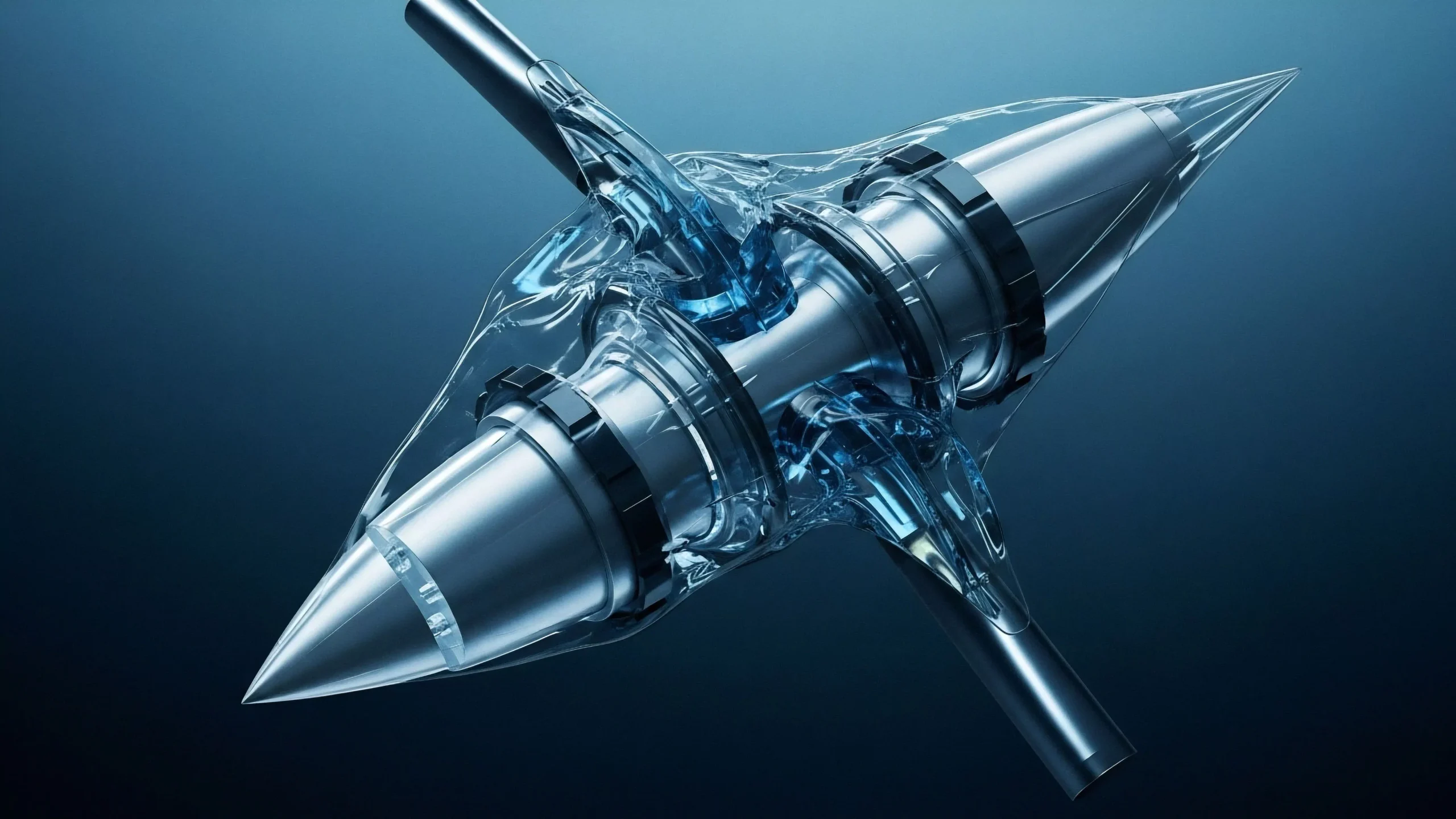
Now, a revolutionary shift is underway. NASA is developing the Space Reactor 1 (SR1), a groundbreaking nuclear-powered spacecraft designed to transform interplanetary travel. This project represents more than just a new rocket—it is the foundation of a “nuclear railroad” to Mars, a system built for efficiency, scalability, and long-term exploration.
In this blog, we’ll explore the challenges of current space travel, how nuclear propulsion works, the design of SR1, and what this means for the future of humanity beyond Earth.
The Problem: The Tyranny of the Rocket Equation
Why Chemical Rockets Are Holding Us Back
Modern space missions rely heavily on chemical rockets, which burn fuel to generate thrust. While powerful, these systems are inherently inefficient for long-distance travel.
To send even a small rover to Mars, engineers must wait for a specific planetary alignment. This alignment minimizes distance and energy requirements, but it only occurs every 26 months. Once launched, spacecraft spend six to nine months drifting through space, consuming enormous amounts of fuel just to escape Earth’s gravity.
The Starship Example: A Logistical Challenge
Even the most ambitious modern rockets face these limitations. Consider SpaceX’s Starship:
- One launch is required to reach low Earth orbit
- Up to ten additional tanker launches are needed just to refuel
- Massive fuel consumption increases cost and complexity
While such systems can deliver large payloads, they come at a steep price—both financially and operationally. The sheer scale of launches required makes sustained Mars missions impractical.
The Core Issue: Inefficiency
At the heart of the problem lies the rocket equation, which dictates that carrying more fuel requires even more fuel. This creates a cycle of diminishing returns, limiting how far and how efficiently we can travel.
It’s clear: chemical propulsion has reached its limits.
The Solution: Nuclear Fission in Space
A Powerful Alternative
NASA is turning to nuclear fission—the same technology used in power plants on Earth—to overcome these limitations. By splitting atoms, nuclear reactors release immense amounts of energy, far exceeding what chemical reactions can produce.
This energy can be harnessed for propulsion in two major ways:
1. Nuclear Thermal Propulsion (NTP)
How It Works
In a nuclear thermal propulsion system:
- Liquid hydrogen is pumped through a nuclear reactor
- The reactor heats the hydrogen to extremely high temperatures
- The hot gas expands and exits through a nozzle, creating thrust
Key Advantages
- Efficiency: About 5 times more efficient than chemical rockets
- Speed: Potential to reach Mars in as little as 45 days
- Reduced Weight: No need for heavy oxidizers like liquid oxygen
Limitations
While NTP offers speed, it still relies on short bursts of thrust rather than continuous acceleration. This makes it ideal for fast missions but less suited for sustained cargo transport.
2. Nuclear Electric Propulsion (NEP): The SR1 Approach
Why NASA Chose NEP
For the Space Reactor 1 mission, NASA selected Nuclear Electric Propulsion (NEP). This system prioritizes efficiency and long-term performance over raw speed.
How NEP Works
- A nuclear reactor generates electricity
- The electricity powers ion thrusters
- Ion thrusters accelerate charged particles (like xenon gas) using electromagnetic fields
The Power of Continuous Acceleration
Unlike chemical rockets, ion thrusters provide constant, gentle thrust. While the initial acceleration is small, it builds over time, allowing spacecraft to reach extremely high speeds.
Key Benefits
- Efficiency: Up to 10 times more efficient than traditional rockets
- Fuel Savings: Requires minimal propellant
- Long-Duration Capability: Ideal for deep space missions
Trade-Off
The main drawback is time. NEP systems are slower to start but excel over long distances.
Anatomy of the Space Reactor 1 (SR1)
A “Freight Train” in Space
The SR1 is designed with a unique philosophy: efficiency over speed. Rather than rushing to Mars, it will carry massive payloads using minimal fuel.
The journey will take about one year, but the trade-off is unprecedented cargo capacity.
Key Components of SR1
1. The Nuclear Reactor
- Located at the front of the spacecraft
- Generates approximately 20 kilowatts of power
- Comparable to a high-end home generator
This modest output is intentional—it serves as a proof of concept for larger, more powerful reactors in the future.
2. Heat Pipe Thermal Transfer System
This innovative system:
- Uses a closed-loop fluid system that vaporizes into gas
- Spins a turbine connected to an electric generator
- Operates for years without maintenance
This design ensures reliability during long missions.
3. Radiation Shielding
Safety is critical in nuclear-powered systems.
- A cone-shaped shield protects sensitive components
- A long metal truss separates the reactor from electronics
This minimizes radiation exposure and ensures system integrity.
4. Titanium Radiators
In space, heat cannot dissipate through air. Instead, SR1 uses:
- Large, wing-like radiator panels
- Titanium construction for durability
- Efficient heat dissipation into the vacuum
These radiators are essential for maintaining stable operating temperatures.
5. Repurposed Modules
To accelerate development, NASA is reusing components from the canceled Lunar Gateway project.
- Propulsion systems
- Habitation modules
This strategy reduces costs and enables a target launch date of 2028.
The Mission: Project Skyfall
Arrival at Mars (2029)
When SR1 reaches Mars, it will deploy a specialized entry capsule known as Skyfall.
Inside are three advanced helicopter drones, evolved from earlier Mars rotorcraft designs.
What the Drones Will Do
1. Topography Mapping
- Identify flat, stable landing zones
- Support future crewed missions
2. Resource Exploration
- Use ground-penetrating radar
- Locate water ice deposits
Water is crucial for:
- Drinking and life support
- Producing oxygen
- Creating fuel for return trips
Why This Matters
Instead of blindly sending humans to Mars, NASA is building a data-driven approach. These drones will act as scouts, ensuring that future missions are safer and more efficient.
The Bigger Vision: Beyond 2028
1. Lunar Reactor 1 (2030)
NASA plans to deploy a nuclear reactor on the Moon.
Why It’s Needed
- The Moon experiences 14-day-long nights
- Solar power is ineffective during this period
A nuclear reactor provides continuous energy, enabling:
- Permanent lunar bases
- Scientific research
- Resource extraction
2. Megawatt-Class Reactors (2030s)
Future reactors will scale up dramatically.
- Power levels in the megawatt range
- Capable of supporting human missions
- Enable faster and larger spacecraft
These systems will be the backbone of deep space infrastructure.
3. Toward Human Colonies on Mars
The ultimate goal is not just exploration—it’s settlement.
With nuclear propulsion:
- Missions become more frequent
- Cargo transport becomes efficient
- Infrastructure can be built over time
This shifts space exploration from “flags and footprints” to a sustainable presence.
Why Nuclear Propulsion Changes Everything
Breaking the Launch Window Constraint
Nuclear-powered spacecraft are not as dependent on planetary alignment. This means:
- More flexible launch schedules
- Faster mission planning
- Reduced delays
Reducing Costs Over Time
While initial development is expensive, nuclear systems:
- Require less fuel
- Reduce the number of launches
- Improve mission efficiency
Over time, this leads to significant cost savings.
Enabling Deep Space Exploration
Mars is just the beginning.
With nuclear propulsion, missions to:
- Jupiter’s moons
- Saturn’s system
- Beyond
become far more feasible.
Challenges and Considerations
Safety Concerns
Launching nuclear material into space raises valid concerns:
- Risk of launch failure
- Radiation exposure
NASA addresses these through:
- Robust containment systems
- Strict safety protocols
Engineering Complexity
Nuclear systems are far more complex than chemical rockets.
- Reactor design
- Heat management
- Long-term reliability
These challenges require cutting-edge innovation.
Public Perception
Nuclear technology often faces skepticism. Transparent communication and proven safety will be essential for public support.
Conclusion: The Dawn of a Nuclear Space Age
The development of the Space Reactor 1 marks a turning point in human history. By embracing nuclear propulsion, NASA is redefining what is possible in space exploration.
This is not just about reaching Mars faster—it’s about building a sustainable, scalable system for exploring the solar system.
The vision of a “nuclear railroad” connects Earth to Mars and beyond, transforming isolated missions into a continuous flow of exploration and development.
As SR1 prepares for its journey, one thing is clear:
The future of space travel is no longer limited by fuel—it is powered by innovation.
Final Thoughts
The path to Mars has always been difficult, but with nuclear propulsion, it is finally becoming practical. What once seemed like science fiction is now within reach.
By the 2030s, we may witness:
- Regular cargo missions to Mars
- Permanent bases on the Moon
- The first steps toward interplanetary civilization
And it all begins with a single spacecraft: SR1.
FAQs
1. What is the Space Reactor 1 (SR1)?
Space Reactor 1 (SR1) is NASA’s planned nuclear-powered spacecraft designed for efficient, long-duration missions to Mars and beyond.
2. How is a nuclear rocket different from a chemical rocket?
A nuclear rocket uses nuclear fission to generate energy, making it far more efficient than chemical rockets, which rely on fuel combustion.
3. What is Nuclear Electric Propulsion (NEP)?
Nuclear Electric Propulsion (NEP) is a system where a nuclear reactor generates electricity to power ion thrusters, enabling continuous acceleration over long distances.
4. How long will SR1 take to reach Mars?
The SR1 mission is expected to take about one year to reach Mars, prioritizing efficiency and payload capacity over speed.
5. Can nuclear rockets reach Mars faster than current rockets?
Yes, technologies like Nuclear Thermal Propulsion (NTP) could reduce travel time to around 45 days, much faster than current 6–9 month missions.
6. Why doesn’t NASA use nuclear thermal propulsion for SR1?
NASA chose NEP for SR1 because it offers higher efficiency and is better suited for cargo-heavy, long-duration missions.
7. What fuel does SR1 use?
SR1 primarily uses a nuclear reactor for energy and small amounts of xenon gas as propellant for its ion thrusters.
8. Is it safe to launch a nuclear-powered spacecraft?
NASA implements strict safety protocols, including robust containment systems, to minimize risks during launch and operation.
9. What is Project Skyfall?
Project Skyfall is the Mars mission payload of SR1, featuring three advanced helicopter drones for surface exploration and scouting.
10. What will the Mars drones do?
The drones will perform topography mapping, identify safe landing zones, and search for water ice deposits using ground-penetrating radar.
11. Why is water on Mars important?
Water ice is essential for drinking, oxygen production, and fuel creation, making it critical for future human missions.
12. What are ion thrusters and how do they work?
Ion thrusters work by accelerating charged particles using electromagnetic fields, producing steady, long-term thrust.
13. What is the “nuclear railroad” concept?
The “nuclear railroad” refers to a sustainable transport system using nuclear-powered spacecraft for regular missions between Earth and Mars.
14. When is SR1 expected to launch?
NASA is targeting a launch date around 2028, with arrival at Mars in 2029.
15. What is the future of nuclear propulsion in space?
Future plans include lunar nuclear reactors, megawatt-class systems, and eventually human colonies on Mars, all powered by advanced nuclear technology.
Read More:
- Tesla Roadster NEW Bombshell | Elon Musk Finally LAUNCH!
- UPDATE: SpaceX’s Falcon Heavy that launched a Tesla into space is back on a mission
- Tesla expands Robotaxi in a way that was long anticipated
- Starship Flight 12 Secret Plan revealed Destroyed the entire rocket industry
- Elon Musk’s Tesla Bot Gen 3 BIG Announcement | New 2026 Update Here!
2 thoughts on “How NASA Will Send a Nuclear Powered Rocket to Mars”