
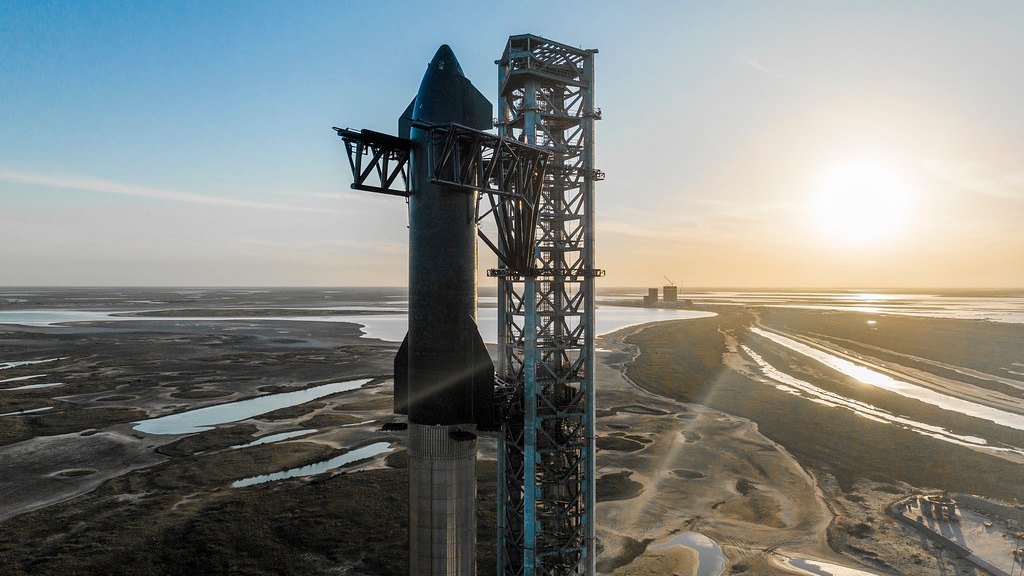
The global aerospace industry is standing on the edge of a historic transformation, and at the center of it is SpaceX. With the upcoming Starship Flight 12, the company is not just testing another rocket—it is preparing to redefine space travel, satellite deployment, and interplanetary missions.
Scheduled for early May 2026, this mission marks the first operational use of Starship Version 3 (V3), a massive technological leap that could render traditional rocket systems outdated. From rapid reusability to orbital infrastructure, Flight 12 represents a bold step toward making space more accessible and economically viable.
The Evolution to Starship Version 3
Starship Flight 12 may appear similar to earlier launches on the surface, but beneath its stainless-steel exterior lies a radically redesigned system. The introduction of Version 3 architecture is all about efficiency, durability, and scalability.
SpaceX has focused on three core principles:
- Simplification of design
- Reduction in mass
- Increased performance and reliability
This evolution is not just incremental—it’s foundational. The V3 upgrade is intended to transform Starship into the most powerful and reusable launch vehicle ever built.
Raptor 3: The Heart of the Beast
At the core of this engineering marvel are the new Raptor 3 engines, powering both the Super Heavy booster (B19) and the Starship upper stage (S39).
Design Simplification
Earlier versions of the Raptor engine featured complex external piping and components. With Raptor 3, SpaceX has eliminated much of that visible complexity. The result is a cleaner, more integrated engine design that reduces failure points and simplifies manufacturing.
This “black” version of the engine reflects a major shift toward minimalism in rocket engineering—fewer parts, fewer problems.
Performance Goals
While early tests indicate there is still room for optimization, Raptor 3 is designed to:
- Increase thrust-to-weight ratio
- Improve fuel efficiency
- Enable higher payload capacity
These enhancements are crucial for missions involving large-scale satellite deployment and future Mars transport.
Reliability and Reusability
One of the biggest challenges in rocketry has always been turnaround time. By simplifying the engine design, SpaceX aims to drastically reduce maintenance requirements, enabling faster reuse between launches—a key pillar of its long-term strategy.
Structural and Aerodynamic Refinements
The improvements in Flight 12 go far beyond engines. The entire vehicle structure has been upgraded to handle extreme conditions during launch, re-entry, and landing.
Redesigned Grid Fins
The Super Heavy booster now features three grid fins instead of four. This change may seem minor, but it offers:
- Reduced weight
- Improved aerodynamic control
- Better thermal resilience
By positioning them farther from high-heat zones, SpaceX has increased their durability during descent.
Integrated Hot-Staging System
In previous designs, hot-staging required bulky external structures. Now, the system is fully integrated into the booster’s primary body.
Inspired by the Soviet-era N1 rocket, this approach:
- Improves heat management
- Reduces structural complexity
- Enhances stage separation efficiency
This innovation is another example of how SpaceX blends historical concepts with modern engineering.
The Secret Mission: Suborbital Payload Deployment
Perhaps the most intriguing aspect of Flight 12 is its payload mission. Unlike previous flights that carried inert mass, this mission introduces functional hardware.
Space Station Mass Simulators
According to regulatory filings, SpaceX plans to deploy payloads that simulate small space stations. These are not just placeholders—they are active systems designed to test real-world operations.
These simulators will:
- Communicate with the Starlink constellation
- Connect with ground stations for about an hour
- Test payload bay door operations in space
Testing Next-Gen Hardware
The mission may also include experimental technologies such as:
- Starlink V3 components
- Advanced onboard chips like Terrafab
This marks a crucial transition: Starship is no longer just a launch vehicle—it’s becoming a space infrastructure platform capable of deploying entire satellite networks in a single mission.
Heat Shield Innovations: Solving the Re-entry Puzzle
Re-entry has been one of Starship’s greatest challenges. The intense heat generated when returning to Earth has tested the limits of materials science.
Advanced Heat Shield Design
For Flight 12, the Starship (S39) features a fully sealed heat shield with no visible gaps. This improvement reduces the risk of heat penetration and structural damage.
New Materials
The heat shield tiles appear to use upgraded ceramic composites, offering:
- Higher temperature resistance
- Improved durability
- Better long-term performance
Removal of Metal Tiles
Previous test flights revealed that metal tiles were prone to oxidation and wear. SpaceX has removed these components, focusing entirely on more reliable materials.
Catch Point Testing
Although the spacecraft will still aim for an ocean landing, Flight 12 introduces a new catch point system. This is a step toward the ultimate goal: mid-air capture using launch tower arms.
Ground Infrastructure: The Power of Pad 2
A rocket is only as powerful as its ground support system. At Starbase, SpaceX has built a next-generation launch facility known as Pad 2.
Dual Flame Trench System
Pad 2 features a dual-trench design that:
- Distributes exhaust energy more efficiently
- Reduces structural damage
- Enhances launch safety
With 33 Raptor engines firing simultaneously, managing this energy is critical.
Simplified Launch Mount
The new orbital launch mount (OLM) is engineered for speed and efficiency. It allows for rapid turnaround between launches—an essential requirement for high-frequency missions.
Refined Chopstick Arms
The iconic “chopstick” arms have been redesigned to be lighter and more responsive. These will eventually be used to catch returning boosters, eliminating the need for traditional landing systems.
The 35-Minute Refueling Breakthrough
One of the most impressive achievements leading up to Flight 12 is the ability to refuel the Super Heavy booster in just 35 minutes.
This involves transferring hundreds of tons of:
Such speed is unprecedented in the aerospace industry.
Why It Matters
For missions to Mars, long refueling times are impractical. Rapid turnaround is essential for:
- Frequent launches
- Orbital refueling operations
- Interplanetary travel
This milestone proves that SpaceX is serious about building a true transportation system—not just a rocket.
Broader Industry Impact: NASA, Mars, and Beyond
While Starship dominates headlines, SpaceX’s influence extends across the entire aerospace sector.
Falcon Heavy and Mars Exploration
NASA has selected the Falcon Heavy to launch the Rosalind Franklin rover in 2028.
This mission aims to:
- Drill 2 meters into Martian soil
- Search for signs of past life
It also highlights growing international collaboration in space exploration.
The Privatization of Low Earth Orbit
As the International Space Station approaches retirement, a new era is emerging—one driven by private companies.
Commercial Space Stations
Companies like:
- Voyager Technologies
- Axiom Space
- Vast
are developing commercial space stations such as Starlab.
Dragon as the Space Taxi
The SpaceX Dragon will serve as the primary transport vehicle, ferrying astronauts and cargo to these orbital platforms.
This shift represents the birth of a private space economy, where governments and corporations collaborate rather than compete.
Why Starship Flight 12 Changes Everything
Starship Flight 12 is more than a test—it’s a proof of concept for an entirely new model of spaceflight.
Key Transformations
- Rockets become reusable transportation systems
- Satellites can be deployed in massive batches
- Launch costs drop dramatically
- Space becomes commercially accessible
Traditional expendable rockets may soon struggle to compete with this level of efficiency and scale.
Conclusion: Countdown to a New Space Era
All signs point to a potential launch around May 7, 2026. With final preparations underway, Starship Flight 12 could mark the moment when the aerospace industry fundamentally changes.
SpaceX is no longer just building rockets—they are building the backbone of a spacefaring civilization.
From rapid refueling to functional payload deployment, every element of this mission is designed to push boundaries. If successful, Flight 12 will not just disrupt the industry—it may completely redefine it.
The question is no longer whether Starship will succeed.
The question is: Is the rest of the world ready to keep up? 🚀
FAQs
1. What is Starship Flight 12?
Starship Flight 12 is an upcoming test and operational mission by SpaceX that will demonstrate the first use of Starship Version 3 (V3) technology.
2. When is Starship Flight 12 expected to launch?
The mission is expected to launch in early May 2026, with strong indications pointing toward May 7, 2026.
3. What makes Starship Version 3 different?
Version 3 (V3) focuses on simplified design, reduced mass, and higher performance, making the rocket more efficient, reusable, and powerful than previous versions.
4. What are Raptor 3 engines?
Raptor 3 engines are the latest generation of engines designed by SpaceX, featuring integrated components, higher efficiency, and improved reliability for rapid reuse.
5. What is the main goal of Flight 12?
The primary goal is to validate V3 architecture, test new hardware systems, and demonstrate operational capabilities like payload deployment and rapid reusability.
6. Will Starship Flight 12 carry real payloads?
Yes, it will carry functional payload simulators that behave like mini space stations, rather than just inert mass.
7. What are space station mass simulators?
These are test payloads designed to simulate real orbital stations, capable of communication and system testing during flight.
8. Will the payload connect to Starlink?
Yes, the payloads are expected to communicate with the Starlink network and ground stations for about one hour.
9. What improvements have been made to the heat shield?
The heat shield now features fully sealed tiles, advanced ceramic materials, and no visible gaps, improving re-entry safety and durability.
10. What is hot-staging in Starship?
Hot-staging is a process where engines ignite before stage separation. The new design is fully integrated, inspired by rockets like the N1 rocket.
11. What is special about Pad 2 at Starbase?
Pad 2 includes a dual flame trench system, a simplified launch mount, and improved infrastructure for faster launch turnaround.
12. What is the 35-minute refueling milestone?
It refers to SpaceX’s ability to refuel the Super Heavy booster in just 35 minutes, a key step toward rapid reusability and Mars missions.
13. How does Starship Flight 12 impact the space industry?
It could revolutionize space travel by reducing costs, increasing launch frequency, and enabling mass satellite deployment.
14. Is NASA involved in Starship Flight 12?
While not directly involved in this flight, NASA collaborates with SpaceX on various missions and supports broader space exploration goals.
15. Why is Starship important for future Mars missions?
Starship is designed for interplanetary travel, offering high payload capacity, rapid refueling, and full reusability, all essential for sustainable Mars exploration. 🚀
Read More:
- Elon Musk’s Tesla Bot Gen 3 BIG Announcement | New 2026 Update Here!
- Tesla offers awesome Free Supercharging incentive on an unexpected vehicle
- Tesla launches solution to end Supercharger fights once and for all
- The FCC just said ‘No’ to SpaceX for now
- Tesla confirms Cybercab with no steering wheel enters production
1 thought on “Starship Flight 12 Secret Plan revealed Destroyed the entire rocket industry”