
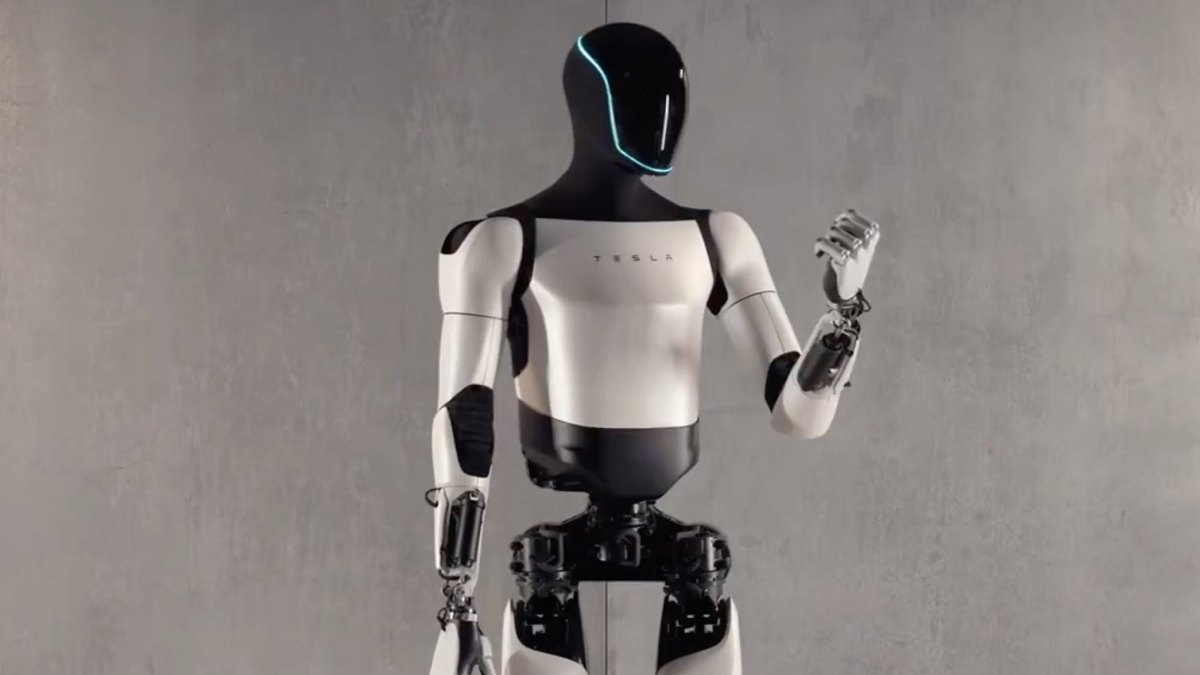
The final week of April 2026 has delivered a wave of groundbreaking developments that could redefine the future of artificial intelligence, robotics, and autonomous transportation. Tesla, under the leadership of Elon Musk, has unveiled critical updates on two of its most ambitious projects: the Optimus Gen 3 humanoid robot and the CyberCab robo-taxi network.
These innovations are not just incremental upgrades—they represent a fundamental shift in Tesla’s long-term vision, positioning AI-driven machines as the backbone of its future revenue streams and technological identity.
In this in-depth blog post, we’ll break down everything you need to know about Tesla’s latest announcements, from engineering breakthroughs to real-world deployment strategies.
The Evolution of Optimus Gen 3: A Complete Redesign
Tesla’s humanoid robot project has taken a bold turn with the development of Optimus Gen 3. Unlike earlier iterations, this version focuses heavily on practical usability rather than theoretical complexity.
Why the Hands Matter the Most
According to Elon Musk, nearly 90% of Optimus’s usefulness depends on its hands. This insight has driven a complete redesign of the robot’s most critical component.
The earlier prototypes aimed for extreme dexterity, but Tesla has now shifted its focus toward durability, reliability, and real-world efficiency.
The Rise and Fall of the Tendon-Driven System
Earlier in 2026, Tesla explored a tendon-driven actuation system inspired by human anatomy. This design attempted to replicate how human muscles and tendons work.
Key Features of the Original Design
- Up to 22 degrees of freedom
- Ability to perform delicate tasks like playing instruments
- Motors relocated to the forearms for better weight distribution
Why It Failed
Despite its innovation, the system proved impractical:
- Friction buildup reduced efficiency over time
- Cable stretching led to inconsistent performance
- Complex assembly made mass production unrealistic
Ultimately, Musk confirmed that the design “didn’t actually work” in real-world conditions.
The New Approach: Practical Over Perfect
Tesla has now adopted a simpler, more robust hand design for Optimus Gen 3.
What’s Changed
- Focus on industrial tasks rather than fine motor skills
- Built for 8-hour continuous work shifts
- Easier to manufacture at scale
This shift signals Tesla’s intention to deploy Optimus in warehouses, factories, and logistics environments—where reliability matters more than finesse.
Aesthetic and Hardware Upgrades
Optimus Gen 3 isn’t just smarter—it also looks significantly different.
Minimalist Design Philosophy
The robot now features a sleek black outer shell that hides all mechanical components.
Design Improvements
- Smooth, seamless exterior
- Covered joints for protection
- More human-like proportions
Improved Movement and Posture
Tesla has refined the robot’s structure for natural motion:
- Rounded shoulders and hips
- Improved walking balance
- More fluid posture
AI5 Hardware Integration
One of the most important upgrades is the introduction of Tesla’s AI5 hardware.
Why This Matters
Earlier versions suffered from latency issues, with delays of up to one second between perception and action.
With AI5:
- Faster decision-making
- Near real-time responsiveness
- Improved safety and efficiency
This upgrade brings Optimus closer to human-like reaction speeds, a crucial milestone for real-world deployment.
Optimus in Action: The Boston Marathon Demo
Tesla recently showcased Optimus 2.5 at a major public event—the Boston Marathon.
What the Robot Did
- Clapped for runners
- Handed out water bottles
- Interacted with crowds
While these tasks may seem simple, they represent a critical step toward real-world integration.
More Than a Demo: Data Collection in Action
These public appearances serve a deeper purpose.
Why Tesla Conducts These Tests
- Gather data in chaotic environments
- Train AI systems on human behavior
- Improve navigation in unpredictable settings
This approach gives Tesla a significant advantage: real-world data at scale.
Current Limitations
Despite its progress, Optimus is not yet perfect:
- Movement is still relatively slow
- Prioritizes safety over speed
- Lacks the agility expected in future versions
However, these limitations are intentional, as Tesla focuses on precision and reliability first.
The CyberCab Revolution: Tesla’s Robo-Taxi Expansion
While Optimus is grabbing headlines, Tesla’s robo-taxi network may be even more transformative.
Massive Growth in 2026
Tesla reported that paid robo-taxi miles nearly doubled in Q1 2026 compared to the previous quarter.
This rapid growth highlights increasing consumer trust and adoption.
Unsupervised Autonomy Becomes Reality
In a major milestone, Tesla has removed safety drivers from its robo-taxi fleets in:
- Austin
- Dallas
- Houston
These vehicles now operate fully autonomously using Software Version 14.3.
Introducing the CyberCab
Tesla has begun pilot production of the CyberCab, a vehicle designed specifically for autonomous ride-hailing.
Key Features
- No steering wheel
- No pedals
- Fully AI-controlled
This represents a radical departure from traditional vehicles, signaling Tesla’s confidence in its autonomous technology.
Production Scaling Strategy
Tesla plans to scale CyberCab production using an S-curve model:
Phase 1 (2026)
- Slow initial rollout
- Testing and refinement
Phase 2 (2027)
- Rapid, exponential growth
- Mass adoption
This strategy allows Tesla to minimize risk while maximizing long-term impact.
Safety Comparison: Tesla vs Competitors
Safety remains one of the most debated aspects of autonomous driving.
Crash Data Overview (March 2026)
- Waymo: 697 incidents
- Tesla Robo-taxi: 18 incidents
- Other companies: 40–50 incidents
Tesla’s Safety Profile
Out of Tesla’s 18 reported incidents:
- 16 involved only property damage
- No injuries reported in most cases
Common Issue
- Collisions with stationary objects like poles or curbs
Some analysts link this to Tesla’s vision-only approach, which differs from competitors using LiDAR and radar.
The Transparency Debate
Tesla’s reporting practices have sparked discussion.
Criticism
- Reports are often heavily redacted
- Limited public details
Competitor Approach
Other companies provide:
- Detailed crash narratives
- Transparent data breakdowns
This difference continues to fuel debate over accountability and trust.
The Road Ahead: Tesla’s Vision for 2026–2027
Tesla is clearly betting big on AI-driven platforms.
Robo-Taxi as a Revenue Engine
While current revenues are modest, Tesla expects robo-taxis to become a major income source by 2027.
Expansion Plans
Tesla aims to:
- Launch robo-taxi services in 12 states by the end of 2026
- Expand coverage rapidly in 2027
Next-Generation Software: Version 15
Tesla is preparing to release Software Version 15 in late 2026.
Expected Improvements
- Completely new architecture
- Enhanced safety systems
- Performance beyond human driving capabilities
Why Tesla’s Strategy Stands Out
Tesla’s approach differs from competitors in several key ways:
1. Real-World Data Advantage
Tesla collects massive amounts of data from:
- Vehicles
- Public tests
- Autonomous fleets
This gives it a training advantage for AI systems.
2. Vertical Integration
Tesla controls:
- Hardware
- Software
- Manufacturing
This allows for faster innovation cycles.
3. Focus on Scalability
Every design decision—from Optimus hands to CyberCab production—is optimized for:
- Mass manufacturing
- Cost efficiency
- Global deployment
Challenges Tesla Still Faces
Despite its progress, Tesla must overcome several hurdles:
Technical Challenges
- Improving robotic dexterity
- Reducing edge-case failures in autonomy
Regulatory Barriers
- Approval for driverless vehicles
- Safety compliance across regions
Public Trust
- Transparency concerns
- Perception of AI safety
Final Thoughts: A Defining Moment for Tesla
The April 2026 announcements mark a turning point in Tesla’s journey.
With Optimus Gen 3, Tesla is moving closer to a world where humanoid robots perform everyday labor. Meanwhile, the CyberCab network is laying the foundation for a fully autonomous transportation ecosystem.
Together, these innovations represent more than just products—they are the pillars of a future powered by AI, automation, and real-world data.
If Tesla succeeds, it won’t just disrupt industries—it could reshape the global economy.
FAQs
1. What is Optimus Gen 3?
Optimus Gen 3 is Tesla’s latest humanoid robot designed for real-world applications like warehouse work, logistics, and industrial automation. It focuses on practical performance, durability, and scalability.
2. Why did Tesla redesign the robot’s hands?
Tesla found that around 90% of the robot’s usefulness depends on its hands, so the redesign prioritizes strength, reliability, and efficiency over complex dexterity.
3. What happened to the tendon-driven hand system?
The tendon-driven system was abandoned because it caused friction issues, cable stretching, and manufacturing complexity, making it unsuitable for real-world use.
4. How is Optimus Gen 3 different from earlier versions?
It features:
- A simpler and more durable hand design
- AI5 hardware for faster response
- A minimalist exterior design
- Improved posture and movement
5. What is AI5 hardware?
AI5 is Tesla’s latest computing system that reduces latency and enables near real-time decision-making, improving both safety and performance.
6. Can Optimus Gen 3 work full-time jobs?
Yes, it is designed to handle 8-hour work shifts, especially in environments like warehouses and factories.
7. What tasks can Optimus currently perform?
Current capabilities include:
- Carrying objects
- Basic human interaction
- Simple repetitive tasks
More advanced functions are expected in future updates.
8. Why did Tesla test Optimus at the Boston Marathon?
The event allowed Tesla to collect real-world data in a chaotic environment, helping improve AI behavior and human interaction.
9. What are the limitations of Optimus right now?
- Slower movement compared to humans
- Limited dexterity
- Focus on safety over speed
10. What is the CyberCab?
The CyberCab is Tesla’s fully autonomous robo-taxi vehicle with no steering wheel or pedals, designed specifically for ride-hailing services.
11. Where are Tesla robo-taxis currently operating?
As of April 2026, Tesla robo-taxis are operating without safety drivers in:
- Austin
- Dallas
- Houston
12. Are Tesla robo-taxis completely driverless?
Yes, Tesla has achieved unsupervised autonomy in select cities using advanced software like Version 14.3.
13. How safe are Tesla’s robo-taxis?
According to recent data:
- Most incidents involve property damage only
- Very few involve injuries
- Common issues include hitting stationary objects
14. How does Tesla compare to competitors like Waymo?
Tesla has fewer reported incidents, but competitors like Waymo provide more detailed transparency in their reporting.
15. When will Tesla expand robo-taxi services?
Tesla plans to expand to 12 states by the end of 2026, with significant growth expected in 2027.
16. What is Tesla’s long-term vision for these technologies?
Tesla aims to make AI-driven robots and robo-taxis its primary revenue sources, potentially transforming industries like transportation, logistics, and labor.
Read More:
- Tesla offers awesome Free Supercharging incentive on an unexpected vehicle
- Tesla launches solution to end Supercharger fights once and for all
- The FCC just said ‘No’ to SpaceX for now
- Tesla confirms Cybercab with no steering wheel enters production
- Tesla Cybercab gets crazy change as mass production begins
2 thoughts on “Elon Musk’s Tesla Bot Gen 3 BIG Announcement | New 2026 Update Here!”