
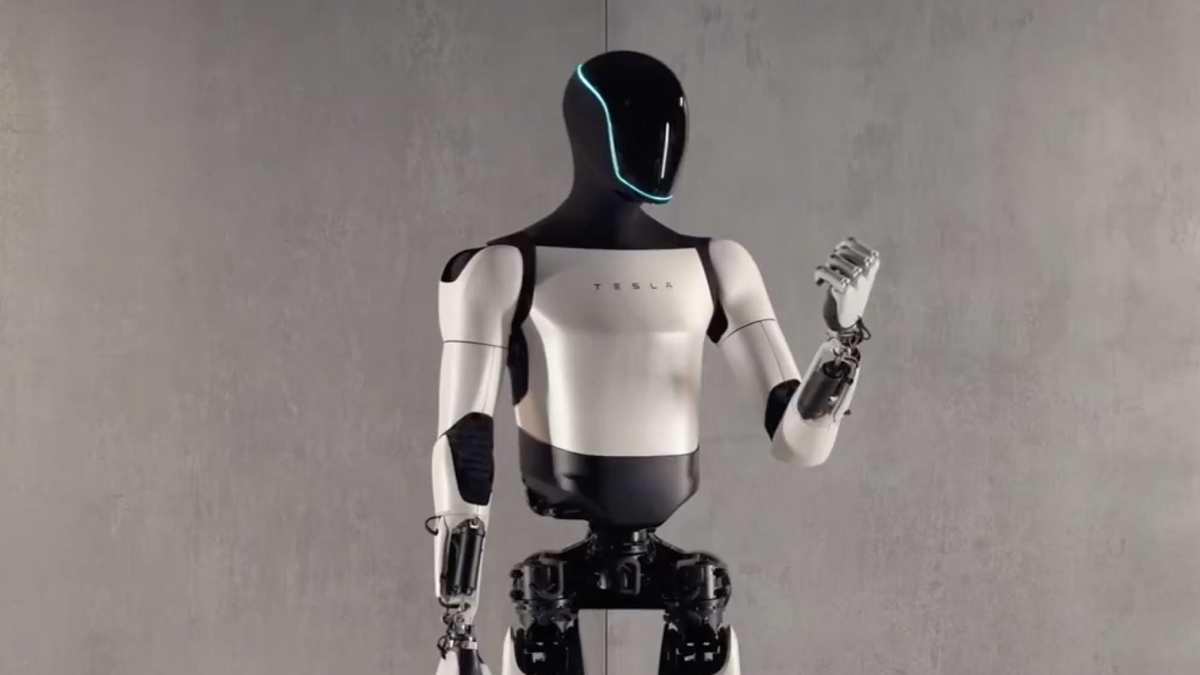
The global robotics sector is entering a completely new era, and Tesla Optimus Gen 3 is at the center of this transformation. What once seemed like a futuristic concept is now becoming a large-scale industrial reality. Tesla is no longer just an electric vehicle company. It is rapidly evolving into an AI-powered robotics giant capable of reshaping manufacturing, labor, and automation worldwide.
Competitors across the robotics industry are reportedly studying Tesla’s every move. From hardware architecture to motion systems and AI integration, companies are trying to replicate the engineering breakthroughs Tesla has achieved with Optimus. This intense focus explains why Elon Musk has remained cautious about revealing the complete details of Optimus Gen 3 before production readiness.
Unlike many robotics firms that remain stuck in the prototype phase, Tesla is building something much bigger: a robotics manufacturing empire. With massive factory expansions, revolutionary biomechanics, and plans for millions of humanoid robots annually, Tesla is preparing for one of the largest technological shifts in modern history.
Tesla Optimus Gen 3: The Future of Humanoid Robotics
The upcoming Tesla Optimus Gen 3 represents a dramatic leap forward in humanoid robot engineering. Tesla’s goal is not merely to create a functional robot but to build a robot that can move naturally, operate efficiently, and eventually become affordable for businesses and consumers alike.
Most robotics companies today focus on limited-use machines designed for controlled environments. Tesla’s vision is much broader. Optimus is being developed as a general-purpose humanoid capable of performing repetitive, dangerous, and labor-intensive tasks.
The long-term ambition is massive:
- Replace repetitive human labor
- Increase industrial productivity
- Reduce operational costs
- Solve workforce shortages
- Create a scalable AI workforce
Tesla believes the humanoid robotics market could eventually become larger than the automotive industry itself.
Why Tesla Is Hiding Optimus Gen 3
One of the most discussed topics in the robotics world is Tesla’s limited public exposure of Optimus Gen 3. According to industry speculation, Tesla understands that competitors are aggressively reverse-engineering every visible component.
Every demonstration video, hardware leak, or patent filing becomes valuable intelligence for rival companies.
This has forced Tesla into a strategic position where secrecy is necessary until manufacturing advantages become impossible to replicate quickly.
The reason is simple: Tesla’s true advantage is not just the robot itself — it is manufacturing scale.
Many startups can create impressive robotics demos. Very few can mass-produce millions of highly advanced humanoid robots efficiently and profitably.
That is where Tesla dominates.
The Human Knee: Tesla’s Biggest Robotics Breakthrough
Solving the Biggest Problem in Humanoid Robotics
For decades, one of the hardest engineering problems in humanoid robotics has been the knee joint.
A humanoid knee must:
- Support heavy loads
- Maintain balance
- Handle dynamic movement
- Enable stair climbing
- Allow squatting
- Operate with low power consumption
Traditional robotic knees often rely on bulky motors and complex gearbox systems. These designs increase weight, energy usage, and maintenance requirements.
Tesla approached the problem differently.
Instead of building a purely mechanical system, Tesla used a bio-inspired engineering modeled after the human body.
Biomechanics Meets Advanced Robotics
Tesla’s new knee design is considered revolutionary because it combines biological efficiency with industrial-grade mechanics.
Linear Actuators as Artificial Muscles
Tesla uses compact linear actuators positioned in the thigh area to simulate the function of human quadriceps muscles.
This design significantly reduces the need for oversized rotary motors while improving energy efficiency.
The result is smoother and more natural movement.
The Four-Bar Linkage System
Another major innovation is Tesla’s use of a four-bar linkage mechanism.
This mechanism mimics the relationship between:
- Femur
- Tibia
- Patella
Instead of relying on direct rotational force, Tesla amplifies motion mechanically.
A relatively small actuator movement of approximately 60 degrees can generate nearly 150 degrees of natural knee rotation.
This creates movement patterns that are far closer to human walking and climbing behavior.
The Cascading Efficiency Effect
One of the smartest aspects of Tesla’s engineering is what experts call a cascading efficiency system.
Because the knee is lighter and simpler:
- The robot requires less energy
- Battery sizes can be reduced
- Total body weight decreases
- Other joints need less torque
- Heat generation falls
- Component wear decreases
This creates a chain reaction of efficiency improvements across the entire robot.
In robotics, reducing weight is one of the most important factors affecting performance. Tesla’s knee innovation could become the defining engineering breakthrough that separates Optimus from competitors.
Tesla Ends Luxury Cars to Focus on Robots
The End of Model S and Model X Production
In a move that shocked the automotive industry, Tesla officially halted production of the Model S and Model X in May 2026.
For years, these vehicles represented Tesla’s premium electric luxury lineup. Their discontinuation signals a dramatic strategic pivot.
Tesla is now prioritizing robotics production over luxury automobiles.
The final signature edition vehicles reportedly rolled off production lines on May 9, 2026, marking the symbolic end of Tesla’s first luxury EV era.
Fremont Factory Transformation
Tesla’s Fremont, California facility is being redesigned into a dedicated Optimus production hub.
The company’s initial target is astonishing:
1 Million Robots Per Year
This level of scale is virtually unheard of in humanoid robotics.
Most robotics firms struggle to produce hundreds or thousands of units annually. Tesla is targeting millions from the very beginning.
This demonstrates Tesla’s confidence in future demand for humanoid labor automation.
Giga Texas: The Largest Robotics Factory Ever Built
A 15 Million Square Foot Robotics Ecosystem
While Fremont handles early production, the true heart of Tesla’s robotics future is located at Gigafactory Texas.
Drone footage from 2026 revealed massive construction activity involving:
- Diamond-shaped foundations
- Thousands of support columns
- Large-scale industrial expansion
- AI infrastructure deployment
Tesla’s North Campus expansion is expected to become one of the most advanced manufacturing facilities on Earth.
Massive Scale and Production Targets
By the end of 2026, Giga Texas is expected to include:
Total Factory Size
- 15 million square feet
Annual Production Capacity
- 10 million Optimus robots
Capital Investment
- More than $20 billion in a single year
These numbers exceed the scale of many traditional automotive manufacturing operations.
Tesla is essentially building an entirely new industrial category.
Tesla’s AI Supercomputer Infrastructure
Cortex Supercomputers Powering Optimus
Tesla understands that humanoid robotics is not just a hardware challenge.
The real intelligence comes from AI systems capable of understanding environments, making decisions, and learning continuously.
To support this, Tesla developed:
- Cortex 1
- Cortex 2
These AI supercomputers reportedly use more than 230,000 Nvidia H100 GPUs.
This level of computational power is enormous and positions Tesla among the global leaders in AI infrastructure.
Tesla’s AI-5 Processor
Tesla has also completed the design of its specialized AI-5 processor chip.
Unlike traditional automotive processors, this chip is specifically designed for:
- Robotic reasoning
- Real-time motion planning
- Sensor fusion
- Autonomous decision-making
- Human interaction processing
Custom silicon allows Tesla to optimize both performance and efficiency for humanoid robotics applications.
This gives Tesla another major advantage over competitors relying on third-party hardware.
Why Tesla Optimus Could Destroy the Robotics Industry
The Cost Problem in Robotics
Today’s humanoid robots are extremely expensive.
Most advanced systems cost between:
- $100,000
- $300,000
These robots are often treated as research projects rather than scalable commercial products.
Tesla’s strategy changes everything.
Tesla’s Goal: $20,000 to $30,000 Robots
Tesla plans to use automotive-style mass manufacturing to dramatically reduce production costs.
Its target pricing range is:
- $20,000 to $30,000
If successful, this would completely disrupt the robotics market.
At this price point, humanoid robots become economically viable for:
- Warehouses
- Factories
- Retail stores
- Construction sites
- Hospitals
- Logistics companies
- Restaurants
- Small businesses
- Home consumers
The impact could be revolutionary.
Machines Making Machines
Tesla’s Manufacturing Philosophy
Tesla’s advantage comes from a philosophy Elon Musk has emphasized for years:
“The machine that builds the machine.”
Tesla focuses heavily on factory optimization rather than only product optimization.
This means:
- Automated assembly systems
- AI-controlled manufacturing
- Vertical integration
- Battery optimization
- Supply chain ownership
- High-speed production lines
Tesla is applying the same manufacturing expertise that disrupted the EV industry to humanoid robotics.
That combination could become nearly impossible for smaller robotics companies to match.
Revised Optimus Timeline
Tesla’s Updated Roadmap
Scaling advanced robotics production is extremely difficult.
Tesla reportedly missed its earlier goal of deploying 10,000 internal robots by 2025. However, the company has revised its roadmap with more realistic milestones.
Summer 2026
Launch of Fremont-based test production version.
Late 2026
Initial business-to-business access for industrial customers.
End of 2027
Potential launch of mass-market consumer version.
If Tesla achieves these milestones, Optimus could become the first truly mass-produced humanoid robot in history.
The Future Impact on the Global Workforce
A Fundamental Shift in Labor
The rise of humanoid robotics could transform the labor market more dramatically than previous industrial revolutions.
Tesla Optimus may eventually perform tasks in:
- Manufacturing
- Warehousing
- Delivery operations
- Elder care
- Hospitality
- Retail
- Agriculture
- Maintenance
- Security
- Domestic assistance
This could significantly reduce labor shortages while increasing productivity across multiple industries.
However, it also raises serious economic and ethical questions.
Will Robots Replace Human Jobs?
One of the biggest concerns surrounding Tesla Optimus is workforce displacement.
While robotics can improve efficiency, many experts worry about:
- Job automation
- Wage pressure
- Economic inequality
- Skill displacement
- Dependence on AI systems
At the same time, new industries and employment opportunities may emerge around robotics maintenance, AI supervision, software engineering, and robot operations.
Historically, technological revolutions tend to eliminate some jobs while creating entirely new categories of work.
The scale of humanoid robotics adoption could determine how disruptive this transition becomes.
Tesla’s Competitive Advantage
Why Competitors Are Struggling
Most robotics companies face several major limitations:
- High production costs
- Limited battery technology
- Weak AI infrastructure
- Poor manufacturing scalability
- Insufficient training data
Tesla already possesses advantages in all these areas because of its automotive business.
The company has years of experience in:
- Battery manufacturing
- Computer vision systems
- Autonomous navigation
- Mass production
- AI training infrastructure
- Supply chain management
This gives Tesla a unique position no pure robotics startup can easily replicate.
The Real Goal: A Robotics Empire
Tesla Is Becoming an AI Company
The biggest story may not even be Optimus itself.
Tesla is evolving into a fully integrated AI ecosystem company.
Its future business model could include:
- Humanoid robots
- Autonomous vehicles
- AI cloud systems
- Robotics subscriptions
- Industrial automation
- AI-powered logistics
The company is no longer confined to transportation.
Instead, Tesla is positioning itself as one of the most influential AI and robotics corporations in the world.
Conclusion
Tesla Optimus Gen 3 represents far more than another robotics project. It signals the beginning of a massive industrial transformation that could redefine automation, manufacturing, and the global workforce.
From its revolutionary bio-inspired knee joint to the enormous scale of Giga Texas, Tesla is building infrastructure that competitors may struggle to match for years.
The company’s aggressive push toward affordable humanoid robots priced between $20,000 and $30,000 could trigger widespread adoption across industries worldwide.
By combining:
- Advanced AI
- Battery innovation
- Mass manufacturing
- Computer vision
- Robotics engineering
Tesla is attempting something no company has ever achieved at scale: creating millions of intelligent humanoid workers.
As construction expands in Texas and Optimus moves closer to production readiness, one thing is becoming increasingly clear:
The robotics revolution is no longer theoretical.
It has already begun.
FAQs
1. What is Tesla Optimus Gen 3?
Tesla Optimus Gen 3 is an advanced humanoid robot developed by Tesla designed to perform human-like tasks in industrial, commercial, and eventually household environments.
2. Why is Tesla focusing on humanoid robots?
Tesla is focusing on humanoid robots because they can perform repetitive, dangerous, and labor-intensive work, helping solve workforce shortages and increase productivity across industries.
3. What makes Optimus Gen 3 different from other robots?
Optimus Gen 3 is designed for mass production at low cost, advanced AI integration, and human-like movement efficiency, unlike most expensive research-based humanoid robots.
4. What is special about Tesla’s robotic knee design?
Tesla’s knee uses a bio-inspired system combining linear actuators and a four-bar linkage mechanism, enabling more natural movement with higher efficiency and lower energy usage.
5. How does the four-bar linkage system work?
The four-bar linkage system amplifies small actuator movement into a larger range of motion, closely replicating human knee behavior for smoother walking and climbing.
6. What is the “cascading efficiency” effect in Optimus?
The cascading efficiency effect means improvements in one part (like lighter knees) reduce load on other systems, improving battery life, reducing weight, and increasing overall performance.
7. Why did Tesla stop Model S and Model X production?
Tesla reportedly stopped Model S and Model X production to redirect manufacturing capacity and resources toward large-scale Optimus robot production.
8. What is Tesla’s production goal for Optimus?
Tesla aims to eventually produce up to 1 million robots annually at Fremont and up to 10 million per year at Gigafactory Texas.
9. What is Gigafactory Texas’s role in Optimus production?
Gigafactory Texas will serve as the primary large-scale manufacturing hub for Optimus robots, supporting mass production and AI infrastructure.
10. What is Tesla’s target price for Optimus robots?
Tesla aims to reduce the cost of humanoid robots to approximately $20,000 to $30,000, making them affordable for businesses and consumers.
11. How is Tesla reducing robot costs?
Tesla is using automotive-style mass production, vertical integration, and simplified mechanical design to dramatically lower manufacturing costs.
12. What AI systems power Optimus?
Optimus is supported by Tesla’s AI infrastructure including Cortex supercomputers and specialized chips like the AI-5 processor.
13. What are Cortex 1 and Cortex 2?
Cortex 1 and Cortex 2 are Tesla’s AI supercomputing systems that train and run advanced neural networks using large-scale GPU clusters.
14. What industries can use Optimus robots?
Optimus can be used in manufacturing, logistics, retail, healthcare, agriculture, hospitality, and domestic assistance.
15. When will Optimus be available to the public?
Tesla’s projected timeline suggests:
- 2026: Test versions and early B2B deployment
- 2027: Broader commercial and consumer availability
Read More:
- It Finally Happened: Elon Musk Sends Millions of Tesla Optimus AI Robots to Colonize Mars
- SpaceX’s Unexpected Launch Date for Starship Flight 12 Revealed! Later than We thought, But
- Delta Airlines rejects Starlink, and the reason will probably shock you
- Honda gives up on all-EV future: ‘Not realistic’
- Tesla puts Giga Berlin in Plaid Mode with new massive investment