
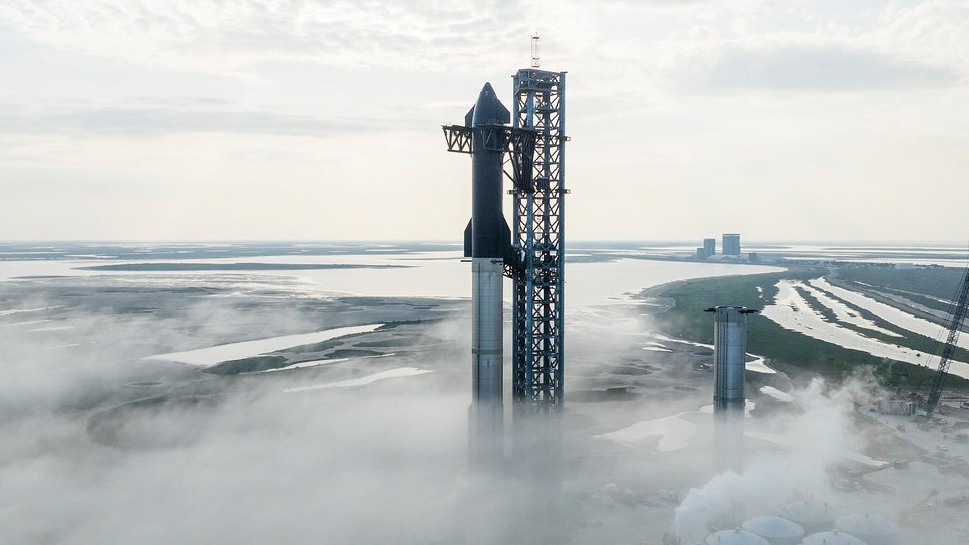
SpaceX Starship’s Crazy International Expansion Revealed, Turned Launching Program Up a Notch: For decades, the idea of traveling from one side of Earth to another using rockets sounded like something pulled straight from a science fiction movie. Commercial aviation ruled the skies, while rockets were reserved for astronauts, satellites, and rare government missions. But now, SpaceX is rewriting the future of transportation with its ambitious Starship global expansion strategy.
The company is no longer focused on launching a few rockets from Texas every year. Instead, it is building the foundation for a worldwide rocket transportation system capable of supporting thousands of launches annually. This marks a dramatic shift in the aerospace industry and could completely redefine how humans travel across the planet.
At the center of this transformation is SpaceX Starship, the fully reusable mega-rocket designed to carry humans, cargo, and eventually entire civilizations to Mars. But before becoming the backbone of interplanetary life, Starship may first revolutionize travel right here on Earth.
From Louisiana and Florida to the Bahamas, Australia, and even floating ocean platforms, SpaceX is quietly assembling a network of futuristic spaceports that could make “Earth-to-Earth” rocket travel a reality.
The Vision Behind SpaceX’s International Expansion
A Shift From Single Launch Sites to a Global Network
Until recently, most Starship operations revolved around Starbase in Texas. Starbase remains the operational headquarters and testing hub for the company, but SpaceX understands that one location alone cannot support the launch frequency needed for the future.
The company’s new strategy is centered around decentralization.
Instead of relying on a single launch site, SpaceX wants a chain of strategically positioned spaceports around the world. These facilities would allow rockets to launch, land, refuel, and relaunch with airline-like efficiency.
This approach mirrors the infrastructure model used in commercial aviation. Airports are spread across continents to maximize accessibility and operational flexibility. SpaceX wants to apply the same logic to rockets.
The long-term goal is clear:
- Thousands of launches every year
- Rapid turnaround times
- Global passenger transportation
- High-speed cargo delivery
- Seamless Earth-to-Earth travel
This expansion is not just about rockets anymore. It is about building a planetary transportation network.
The Louisiana Spaceport Rumors Explained
Why Louisiana Could Become SpaceX’s Next Mega Hub
One of the biggest rumors surrounding SpaceX’s expansion involves a massive 136,000-acre land acquisition in Louisiana. Reports suggest the company is exploring areas around Pecan Island and Freshwater City in Vermilion Parish.
At first glance, Louisiana may seem like an unusual choice for a futuristic rocket hub. However, from an engineering and logistics perspective, it may actually be one of the smartest locations imaginable.
Geographic Advantages of Pecan Island
Strategic Positioning Between Texas and Florida
Pecan Island sits in a near-perfect location between Texas and Florida — two critical regions in the U.S. aerospace industry.
This positioning creates a powerful logistical triangle:
- Texas handles Starship development and testing
- Florida supports major orbital launches
- Louisiana could act as a connecting operational corridor
This southeastern coastal chain would give SpaceX unmatched flexibility in launch scheduling and recovery operations.
The Gulf Coast also provides ideal maritime access for transporting massive rocket components between facilities.
Access to Liquid Natural Gas Infrastructure
Fuel Supply Is Everything
One of the most overlooked aspects of Starship operations is fuel logistics.
Unlike traditional rockets, Starship uses liquid methane and liquid oxygen. These cryogenic propellants require enormous industrial infrastructure to produce, transport, and store safely.
Louisiana’s proximity to some of the world’s largest LNG facilities gives SpaceX a major advantage.
Nearby LNG giants include:
- Cheniere Energy
- Golden Pass LNG
Being close to these energy hubs drastically simplifies fuel transportation while lowering operational costs.
For a company planning thousands of launches annually, fuel efficiency and supply chain optimization are absolutely critical.
Open Water Launch Paths Reduce Problems
Fewer Noise Complaints and Less Bureaucracy
Launching giant rockets near populated areas creates enormous challenges.
Noise pollution, environmental concerns, and public safety regulations can slow projects for years. By positioning launch facilities near the Gulf of Mexico, SpaceX can launch rockets over open water instead of heavily populated land.
This offers several benefits:
- Reduced risk to populated areas
- Lower noise impact on communities
- Easier FAA approval pathways
- Less political resistance
- Safer launch corridors
Open-sea trajectories are one of the main reasons SpaceX continues targeting coastal and offshore regions.
The Emerging Chain of Spaceports
Building America’s Rocket Highway
If you map the planned Starship expansion sites, a fascinating pattern appears.
A launch corridor is emerging across the southeastern United States:
- Texas
- Louisiana
- Florida
This creates a connected infrastructure chain that could eventually support rapid launch cycles and large-scale operations.
Instead of isolated rocket launches, SpaceX is building what could become the world’s first rocket transportation grid.
The concept is revolutionary because it treats rockets less like experimental machines and more like public transportation systems.
Rockets That Operate Like City Buses
Traditional rockets are incredibly expensive because most are disposable.
After a single flight, major components are either destroyed or abandoned in the ocean. This is similar to throwing away an airplane after one trip.
SpaceX wants to completely eliminate that model.
Starship’s Fully Reusable Design
SpaceX Starship and its Super Heavy booster are designed for rapid reuse.
The process works like this:
- Launch
- Complete mission
- Return to landing site
- Refuel
- Fly again
This approach dramatically lowers launch costs while increasing operational frequency.
It also creates the possibility of rockets functioning similarly to airlines.
That is why SpaceX leadership often compares Starship to commercial aviation rather than traditional spaceflight.
Earth-to-Earth Travel: The 60-Minute Planet
The Most Revolutionary Part of the Plan
The real game-changing concept behind this global spaceport network is Earth-to-Earth transportation, often called E2E travel.
Instead of spending 15 to 20 hours on long-haul flights, passengers could potentially travel anywhere on Earth in under an hour.
That means routes like:
- New York to Tokyo
- London to Sydney
- Los Angeles to Singapore
could eventually become ultra-fast rocket journeys.
This transforms Earth into what many are calling a “60-minute planet.”
How Starship Could Beat Commercial Airlines
Speed Beyond Anything in Aviation
Commercial airliners typically fly at around 900 km/h.
Starship, by comparison, can travel at orbital speeds exceeding 27,000 km/h.
Even when accounting for launch, ascent, descent, and landing, the time savings are extraordinary.
Imagine:
- Boarding a rocket
- Leaving the atmosphere
- Traveling across the globe through space
- Landing within an hour
This is the future SpaceX is aggressively pursuing.
Premium Travel and High-Priority Cargo
Initially, Earth-to-Earth travel would likely target:
Premium Travelers
Business executives, government officials, and high-net-worth individuals who value time more than ticket prices.
Emergency Logistics
Critical medical supplies, military equipment, and disaster response materials could be delivered across continents within minutes.
Global Commerce
Ultra-fast cargo transportation could reshape international trade and supply chains.
Over time, as launch costs decrease, SpaceX hopes the technology becomes affordable for broader public use.
International Expansion Beyond the United States
SpaceX’s Global Ambitions Are Becoming Clear
SpaceX has openly discussed expanding beyond U.S. territory.
Potential international sites include:
- The Bahamas
- Caribbean islands
- Australia’s coastline
- Pacific Ocean platforms
- Atlantic Ocean platforms
These locations are not random choices.
They are selected based on:
- Orbital mechanics
- Population density
- Maritime access
- Safety requirements
- Political cooperation
Floating Spaceports Could Solve Major Problems
The Rise of Offshore Rocket Platforms
One of the most fascinating concepts involves floating launch and landing platforms.
These ocean-based facilities could allow SpaceX to position launch pads exactly where missions require them.
This creates enormous flexibility.
Benefits include:
- Reduced land acquisition issues
- Minimal community disruption
- Optimized flight efficiency
- Lower environmental conflicts
- Easier expansion opportunities
Floating spaceports also help SpaceX avoid the famous “Not In My Backyard” problem that often delays major infrastructure projects.
The Massive Challenges Facing SpaceX
Environmental Regulations Remain a Huge Obstacle
Building giant launch facilities is not easy.
Environmental reviews alone can delay projects for years.
At Starbase, SpaceX has already faced scrutiny related to:
- Wildlife protection
- Coastal ecosystem preservation
- Noise pollution
- Debris concerns
Future spaceports will likely face similar challenges.
Governments and environmental agencies will demand extensive studies before approving large-scale rocket operations.
Building Infrastructure in Remote Areas
Rocket Cities Require Enormous Resources
Most proposed launch sites are located in remote coastal regions.
Building a modern spaceport requires:
- Massive launch towers
- Cryogenic fuel storage
- High-capacity power systems
- Transportation infrastructure
- Worker housing
- Emergency response systems
The scale is staggering.
These are not simple launch pads. They are essentially futuristic industrial cities.
Political and Industry Pushback
Airlines May Feel Threatened
If Earth-to-Earth travel becomes successful, it could disrupt entire industries.
Commercial airlines currently dominate long-distance travel. A rocket capable of crossing the globe in under an hour represents a direct challenge to that business model.
Potential opposition may come from:
- Airline corporations
- Shipping industries
- Political lobby groups
- Environmental activists
- Competing aerospace companies
Regulatory battles could become one of the biggest hurdles SpaceX faces.
SpaceX vs Competitors: A Completely Different Philosophy
Why Starship Is Unlike Other Rockets
Many aerospace companies focus on prestige missions with limited launch frequency.
Examples include:
- Space Launch System
- New Glenn
- Vulcan Centaur
These rockets are designed for specific missions and relatively infrequent launches.
SpaceX has a radically different philosophy.
Starship Is Designed for High-Frequency Operations
From Ferrari to City Bus
A common comparison explains the difference perfectly:
- Traditional rockets are like Ferraris
- Starship is intended to become a city bus
Ferraris are expensive, rare, and prestigious.
City buses operate continuously, carrying large numbers of people every day.
That is the future SpaceX is building toward.
The company does not merely want successful launches. It wants constant launches.
Why This Expansion Matters for Humanity
The Foundation for a Multi-Planetary Civilization
Although Earth-to-Earth travel gets most of the attention, the bigger picture is even more ambitious.
SpaceX ultimately wants to build the transportation infrastructure needed for:
- Lunar bases
- Mars colonies
- Deep-space missions
- Planetary cargo systems
- Interplanetary economies
The global spaceport network being built today may eventually support humanity’s expansion beyond Earth.
In many ways, these launch facilities are the equivalent of railroads during the industrial revolution.
They create the infrastructure that enables entirely new economies and ways of life.
Conclusion: SpaceX Is Building the Future of Transportation
SpaceX is no longer just a rocket company.
It is evolving into a global transportation infrastructure powerhouse.
By expanding beyond Texas and establishing a worldwide network of advanced spaceports, the company is laying the groundwork for a future where rockets operate with airline-like frequency.
The vision includes:
- Fully reusable rockets
- International launch hubs
- Offshore spaceports
- Ultra-fast Earth-to-Earth travel
- Thousands of launches every year
If successful, Starship could fundamentally reshape global transportation, logistics, commerce, and even human civilization itself.
What once sounded impossible is now actively being engineered into reality.
And if SpaceX succeeds, the world may soon enter an era where traveling across the planet in under an hour feels as normal as boarding a flight today.
FAQs
1. What is SpaceX’s Starship project?
SpaceX Starship is a fully reusable rocket system developed by SpaceX for carrying humans and cargo to Earth orbit, the Moon, Mars, and potentially for ultra-fast Earth-to-Earth travel.
2. Why is SpaceX expanding internationally?
SpaceX is expanding globally to create a network of spaceports that can support frequent rocket launches, rapid travel, cargo transportation, and future interplanetary missions.
3. What is Earth-to-Earth rocket travel?
Earth-to-Earth travel is a proposed transportation system where rockets transport passengers between cities across the globe in under an hour using suborbital spaceflight.
4. How fast can Starship travel around Earth?
Starship could travel at speeds exceeding 27,000 km/h during spaceflight, making it significantly faster than commercial airplanes.
5. Why is Louisiana important for SpaceX?
Louisiana offers strategic geographic positioning, proximity to LNG fuel infrastructure, and open sea launch paths, making it ideal for future Starship operations.
6. What is special about Pecan Island?
Pecan Island in Louisiana provides coastal access, reduced population density, and close proximity to major fuel suppliers, making it a potential future spaceport location.
7. What fuel does Starship use?
Starship uses liquid methane and liquid oxygen as propellants, both stored at extremely low temperatures.
8. What are floating spaceports?
Floating spaceports are offshore launch and landing platforms located in oceans, allowing rockets to launch away from populated areas while improving mission flexibility.
9. Could Starship replace commercial airlines?
Starship may eventually compete with long-haul airlines for premium international travel, especially on routes that currently take 14–20 hours.
10. How long could Earth-to-Earth trips take with Starship?
SpaceX aims to reduce intercontinental travel times to under 60 minutes for many major global routes.
11. What challenges does SpaceX face with expansion?
Major challenges include environmental regulations, infrastructure costs, political resistance, safety approvals, and public concerns about noise and emissions.
12. Why does SpaceX prefer coastal launch sites?
Coastal sites allow rockets to fly over open water, reducing risks to populated areas and minimizing noise complaints and regulatory complications.
13. Is Starship fully reusable?
Yes. Both the Starship upper stage and the Super Heavy booster are designed to land safely, be refueled, and fly again.
14. How is Starship different from traditional rockets?
Traditional rockets are often disposable after one launch, while Starship is designed for rapid reuse similar to commercial airplanes.
15. Which countries could host future SpaceX spaceports?
Potential future locations include the Bahamas, Caribbean regions, Australia, and offshore ocean platforms in the Pacific and Atlantic.
16. How many launches does SpaceX plan each year?
SpaceX aims for thousands of Starship launches annually once the system reaches full operational capability.
17. How does Starship compare to NASA’s SLS rocket?
Space Launch System is designed for low-frequency deep-space missions, while Starship is intended for frequent, reusable operations and mass transportation.
18. What is SpaceX’s ultimate long-term goal?
The ultimate goal of SpaceX is to build the transportation infrastructure needed for a multi-planetary civilization, including future colonies on Mars.
Read More:
- It Finally Happened: Elon Musk Sends Millions of Tesla Optimus AI Robots to Colonize Mars
- SpaceX’s Unexpected Launch Date for Starship Flight 12 Revealed! Later than We thought, But
- Delta Airlines rejects Starlink, and the reason will probably shock you
- Honda gives up on all-EV future: ‘Not realistic’
- Tesla puts Giga Berlin in Plaid Mode with new massive investment