
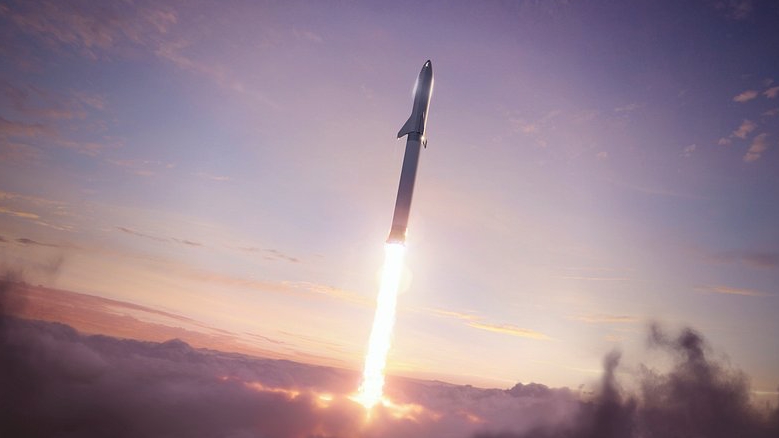
The aerospace world is entering one of its most intense phases yet, and SpaceX is once again at the center of it. The company has officially confirmed the launch target for Starship Flight 12, a mission that is not just another test flight—but a defining moment for the future of heavy-lift space travel.
This flight marks the debut of the next-generation Version 3 (V3) Starship hardware, pushing forward the limits of rapid reusability, engineering scale, and orbital capability. Targeted for as early as Tuesday, May 19, 2026, this mission represents a leap that could reshape how humanity approaches space access.
From the introduction of the powerful Raptor 3 engine to advanced AI-driven heat shield inspection systems, Flight 12 is packed with innovations that signal a new era for Starship, developed at SpaceX facilities like Starbase.
Starship Flight 12 – A Turning Point for Space Exploration
Starship Flight 12 is not just another launch—it is a full-scale validation of next-generation spaceflight systems.
At its core, this mission will test whether V3 Starship architecture can handle extreme operational demands, including:
- Full-scale 33-engine ignition
- High-stress atmospheric ascent
- Orbital maneuvering and relight operations
- Advanced heat shield diagnostics
The upgraded system is designed to support SpaceX’s long-term vision of making space travel as routine as air travel, with the ultimate goal of achieving hundreds or even thousands of launches per year.
The backbone of this system is the fully reusable spacecraft Starship, developed by Starship, paired with upgraded booster technology.
The Debut of Raptor 3 – A New Engine Era Begins
One of the most critical milestones of Flight 12 is the first real-world activation of the Raptor 3 engine.
This engine has already been extensively tested on ground stands in McGregor, Texas, but this mission will mark the first time that 33 Raptor 3 engines ignite simultaneously in flight.
The engine is part of the latest evolution of the Raptor engine series, designed to improve efficiency, thrust-to-weight ratio, and reliability.
Why Raptor 3 is a Game-Changer
The Raptor 3 introduces major advancements:
- Higher combustion efficiency
- Simplified plumbing and reduced failure points
- Improved thermal management
- Greater thrust stability under extreme load
This engine cluster is what gives Starship its unprecedented lift capability, making it one of the most powerful launch systems ever built.
Key Technical Objectives of Flight 12
Flight 12 is built around several high-risk, high-reward engineering goals.
Engine Synchronization at Extreme Scale
One of the biggest challenges is ensuring that all 33 engines:
- Ignite simultaneously
- Maintain synchronized thrust
- Survive extreme acoustic vibrations
- Handle structural flex during liftoff
This is one of the most complex multi-engine coordination problems ever attempted in aerospace history.
Redesigned Water Deluge System
The launch infrastructure at Pad 2 has been upgraded with a new water deluge system designed to absorb the intense acoustic energy generated by the V3 Starship stack.
This system will be tested for the first time under real launch conditions, helping protect both the vehicle and launch pad integrity.
Max Q and Propellant Slosh Challenges
During ascent, Starship will pass through Max Q, the point of maximum aerodynamic pressure.
Engineers will closely monitor:
- Structural stress on the taller V3 design
- Fuel movement in larger header tanks
- Stability under vibration and pressure spikes
This data is essential for future crewed and cargo missions.
Booster 19 – The Future of Simplified Separation
The Booster 19 design introduces a major structural improvement: an integrated hot staging ring.
Previously a detachable component, this ring is now permanently built into the booster structure, improving durability and reducing maintenance complexity.
After stage separation:
- The ship ignites its engines
- The booster performs a 180-degree flip
- A controlled boost-back burn begins
- The booster attempts a soft landing in the Gulf of Mexico
This region is part of the broader operational testing zone for reusable landing validation.
Ship 39 – The AI-Powered “Self-Inspecting” Spacecraft
The upper stage, known as Ship 39, introduces one of the most futuristic systems yet.
It carries 22 mass simulators designed to replicate next-generation payloads similar to Starlink V3 satellites, part of Starlink.
Revolutionary Heat Shield Intelligence
Two of these payload simulators are equipped with cameras and communication systems that enable real-time observation of the spacecraft’s heat shield.
Key Innovations:
- Close-range imaging of thermal protection tiles
- Detection of surface damage during flight
- High-resolution data transmission back to Earth
White Imaging Targets on Heat Tiles
Certain heat shield tiles are intentionally painted white—not as replacements, but as visual contrast markers.
These help AI systems detect:
- Missing tiles
- Surface degradation
- Structural inconsistencies
This creates a training dataset for advanced computer vision systems.
AI and Machine Learning Integration
The collected data will train AI models to automatically inspect spacecraft integrity.
This is essential for future missions involving:
- Tower catch landings back at Starbase
- Rapid reuse between flights
- Crew safety verification before re-entry
The Critical In-Space Raptor Relight Test
One of the most important experiments in Flight 12 is the in-space engine relight.
A Raptor vacuum engine will be shut down and then restarted in zero gravity.
This capability is essential for:
- Orbital adjustments
- Deorbit burns
- Lunar landing trajectories
- Tanker-to-tanker refueling missions
Without successful relight capability, long-duration missions would not be possible.
A Global Vision – 1,000 Flights Per Year
Beyond the technical achievements of Flight 12, SpaceX is working toward a revolutionary goal: massive launch frequency at scale.
The company envisions a world where Starship can fly 1,000 times per year, or roughly three launches per day.
Expansion of Global Spaceports
To achieve this, SpaceX is exploring:
- New launch sites in Louisiana
- International equatorial locations
- High-frequency launch infrastructure development
The Equatorial Advantage
Launching closer to the equator provides a major performance boost due to Earth’s rotation.
Potential advantages include:
- Up to 20–30% higher payload capacity
- Reduced fuel consumption
- Improved orbital insertion efficiency
Promising regions include:
- Brazil
- Indonesia
- Kenya
This strategy could redefine global space logistics.
Final Preparations Before Launch
As of mid-May 2026, both Booster 19 and Ship 39 have returned to production facilities after a successful wet dress rehearsal.
A temporary flight restriction over Massie’s Test Site suggests one final static fire test for Ship 39 is expected around May 15–16.
After this, the full stack will be moved back to Pad 2 for final launch preparations.
Why Starship Flight 12 Matters for the Future
The significance of Starship Flight 12 goes far beyond a single mission.
It represents:
- The first full-scale test of V3 Starship hardware
- Validation of Raptor 3 engine clustering
- Real-world AI-driven spacecraft inspection
- Proof of next-generation reusable launch systems
If successful, it will accelerate SpaceX’s roadmap toward deep space missions, lunar transport, and Mars colonization goals.
Conclusion – A New Space Race Has Already Begun
Starship Flight 12 is not just another milestone—it is a statement of intent.
With the introduction of Raptor 3 engines, AI-powered heat shield monitoring, and full-scale V3 hardware, SpaceX is pushing the boundaries of what is physically and economically possible in spaceflight.
Whether it succeeds fully or reveals new challenges, one thing is certain: the future of space travel is becoming faster, more intelligent, and dramatically more ambitious.
And with Starship leading the charge, the era of routine interplanetary transportation is no longer science fiction—it is engineering in progress.
FAQs
1. What is Starship Flight 12?
Starship Flight 12 is a major test mission by SpaceX featuring the next-generation Version 3 (V3) Starship hardware, designed to test full-scale reusability, new engines, and advanced flight systems.
2. When is the launch of Flight 12 expected?
The mission is currently targeted for as early as May 19, 2026, depending on final test outcomes and weather conditions.
3. Why is Flight 12 so important?
It is the first flight of the upgraded V3 Starship system, testing new engines, structural upgrades, and advanced AI-based heat shield monitoring.
4. What is the Raptor 3 engine?
The Raptor 3 engine is SpaceX’s latest methane-fueled rocket engine designed for higher efficiency, improved reliability, and better thrust performance.
5. How many engines does Starship use?
Starship uses 33 Raptor engines on the booster stage, making it one of the most powerful rocket configurations ever built.
6. What makes Raptor 3 different from earlier versions?
Raptor 3 offers improved combustion efficiency, reduced complexity, better thermal handling, and stronger performance under extreme launch conditions.
7. What is Booster 19?
Booster 19 is the upgraded first-stage booster featuring a redesigned integrated hot staging ring and improved structural design for easier reuse and separation.
8. What is the hot staging ring?
The hot staging ring allows the upper stage to ignite engines before full separation, improving efficiency and reducing stress during stage separation.
9. What will happen to the booster after launch?
After separation, the booster will perform a flip maneuver and a boost-back burn, aiming for a controlled landing in the Gulf of Mexico.
10. What is Ship 39?
Ship 39 is the upper stage of Starship Flight 12, designed to test orbital operations, payload deployment, heat shield inspection, and in-space engine relight.
11. What are the “Pez” dispensers mentioned in the mission?
They are mass simulators representing future Starlink V3 satellites, used to test payload deployment systems in space.
12. How is SpaceX testing the heat shield?
Ship 39 includes camera-equipped payloads that will observe heat shield tiles in real time and detect any damage during flight.
13. Why are some heat shield tiles painted white?
The white tiles act as visual contrast markers to help AI systems detect missing or damaged tiles more easily during analysis.
14. What role does AI play in this mission?
AI is used for computer vision analysis to inspect heat shield condition, helping improve future automated spacecraft safety systems.
15. What is the in-space Raptor relight test?
It is a critical test where a Raptor vacuum engine is shut down and restarted in space to prove it can operate in zero gravity for future missions.
16. Why is SpaceX aiming for 1,000 flights per year?
SpaceX aims for high-frequency launches to enable rapid space access, reduce costs, and support missions like satellite deployment, lunar transport, and eventual Mars colonization.
Read More:
- It Finally Happened: Elon Musk Sends Millions of Tesla Optimus AI Robots to Colonize Mars
- SpaceX’s Unexpected Launch Date for Starship Flight 12 Revealed! Later than We thought, But
- Delta Airlines rejects Starlink, and the reason will probably shock you
- Honda gives up on all-EV future: ‘Not realistic’
- Tesla puts Giga Berlin in Plaid Mode with new massive investment