
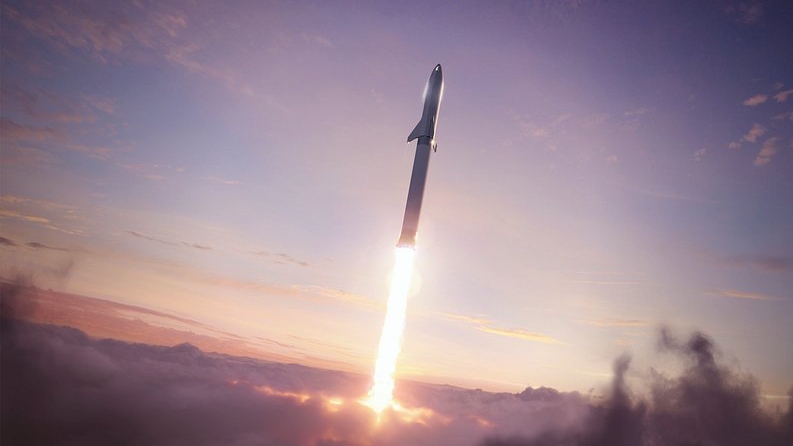
Starship Flight 13 Testing in Line — What’s Next for SpaceX?: The global aerospace industry is undergoing one of the most dramatic transformations in its history. The days of waiting years between major rocket launches and relying on expensive single-use launch vehicles are rapidly fading. Instead, a new era is emerging—one driven by rapid reusability, continuous manufacturing, high-frequency testing, and an expanding network of global launch infrastructure.
At the center of this revolution is SpaceX, whose ambitious Starship program continues to redefine how humanity approaches space transportation. Following the completion of Flight 12, the company has already shifted its focus toward Starship Flight 13, accelerating vehicle testing, expanding launch facilities, and strengthening its role in NASA’s lunar ambitions.
At the same time, innovative competitors such as Stoke Space are entering the market with fully reusable rocket concepts that challenge traditional aerospace design philosophies.
In this article, we’ll explore the latest developments surrounding Starship Flight 13, SpaceX’s global expansion plans, NASA’s growing reliance on Starship, and the emerging competition shaping the future of spaceflight.
SpaceX Accelerates Toward Starship Flight 13
Following the completion of Flight 12, SpaceX immediately redirected resources toward preparing the next launch system for Flight 13. The upcoming mission will utilize Super Heavy Booster 20 (B20) and Starship Ship 40 (S40), both of which are currently undergoing intensive validation and testing procedures.
This rapid transition highlights a major shift in SpaceX’s operational philosophy. Rather than treating each launch as a standalone project, the company is now operating on a near-continuous development cycle.
Booster 20 Begins Structural Validation
On June 5, 2026, Booster 20 arrived at the company’s specialized testing facility known as Massey’s Test Site. Soon after arrival, engineers initiated structural integrity assessments.
Observers noticed significant venting from both the booster and nearby propellant storage systems. However, this was not a fueling operation. Instead, engineers were conducting a carefully controlled structural stress test designed to verify the vehicle’s ability to withstand intense pressure loads.
The purpose was straightforward:
- Validate tank strength
- Identify structural weaknesses
- Confirm weld integrity
- Prepare the booster for cryogenic testing
These early tests serve as a critical checkpoint before exposing the vehicle to ultra-cold propellants.
B20’s Unique Cryogenic Endurance Campaign
The following day, SpaceX began one of the most unusual cryogenic campaigns ever conducted on a Super Heavy booster.
Slow and Deliberate Propellant Loading
Unlike previous tests that focused on speed, engineers intentionally slowed the loading process.
The booster was gradually filled with:
- Liquid Oxygen (LOX)
- Liquid Methane (LCH4)
As temperatures dropped dramatically, a thick layer of frost formed across the stainless-steel exterior.
The loading process lasted nearly two hours, considerably longer than standard fueling operations.
Extended Thermal Soak Testing
Once the tanks were full, SpaceX introduced a rare testing phase known as a thermal soak.
Instead of immediately draining the tanks, engineers left the booster fully loaded for approximately three additional hours.
This extended duration allowed teams to evaluate:
- Long-term cryogenic storage behavior
- Tank contraction under sustained cold temperatures
- Potential leak formation
- Thermal stress distribution
- Material performance over extended periods
In total, Booster 20 remained in a cryogenic state for approximately five hours.
Such testing provides valuable data that could become essential for future missions involving orbital refueling and long-duration propellant storage.
Fast Loading Tests Push Ground Systems to the Limit
On June 7, SpaceX dramatically altered its testing strategy.
After a brief loading anomaly forced a partial abort, engineers recycled the systems and executed an extremely aggressive fueling operation.
Record-Speed Methane Loading
The liquid methane tank reportedly reached full capacity in approximately 20 minutes, representing one of the fastest volumetric loading operations ever performed on a Super Heavy booster.
Unlike the endurance test conducted the previous day, the booster was drained almost immediately after reaching capacity.
The objective was to verify:
- Pump performance
- Valve responsiveness
- Pressure management systems
- Maximum flow-rate capabilities
Successfully completing this test confirmed that both the booster and ground infrastructure can withstand extreme fueling conditions expected during operational launches.
The Road to Dual Static Fire Campaigns
With cryogenic testing completed, Booster 20 is expected to return to the Mega Bay for further analysis and engine integration.
At the same time, Starship S40 continues progressing through its own development campaign.
Ship 40 Moves Toward Engine Testing
Recent hardware deliveries indicate that Ship 40 has received a full set of:
- Sea-level Raptor engines
- Vacuum-optimized Raptor engines
This milestone positions the vehicle for static fire testing in the near future.
Because Booster 20 and Ship 40 can be processed simultaneously using separate infrastructure, SpaceX may conduct two major test campaigns within the same month.
This parallel workflow represents a significant advantage over traditional aerospace development models.
Could Starship Flight 13 Launch in July 2026?
Current progress suggests that a launch attempt during the first half of July 2026 is increasingly realistic.
If both vehicles successfully complete static fire testing before the end of June, SpaceX could move rapidly into launch preparations.
Remaining Regulatory Challenges
The primary obstacle remains the ongoing FAA review of Flight 12’s boost-back burn anomaly.
However, there is one major advantage.
Flight 12 reportedly caused:
- No damage to launch infrastructure
- No damage to the orbital launch mount
- No significant operational disruptions
As a result, engineering work continues uninterrupted while regulatory reviews proceed.
This minimizes delays and keeps the Flight 13 timeline largely intact.
SpaceX’s Vision for a Global Spaceport Network
Starship’s future extends far beyond Starbase, Texas.
To support ambitions of thousands of launches annually, SpaceX is actively exploring a decentralized network of launch and recovery facilities worldwide.
Louisiana Emerges as a Strategic Hub
One of the most significant developments involves a massive land acquisition effort in Vermilion Parish, Louisiana.
The proposed site spans approximately 136,000 acres, making it one of the largest aerospace infrastructure projects ever considered in the United States.
Why Louisiana Makes Sense
The location offers several strategic advantages.
Direct Access to LNG Infrastructure
Starship relies on methane fuel.
Louisiana sits near some of the world’s largest LNG facilities, including:
- Sabine Pass
- Cheniere LNG
- Golden Pass LNG
This proximity allows fuel to be delivered directly through pipelines rather than relying on trucking operations.
Ideal Geographic Position
The site sits between:
- Starbase, Texas
- Cape Canaveral, Florida
This creates a continuous coastal launch corridor that could streamline future operations.
Ocean-Based Flight Paths
Launches can travel directly over open water, reducing:
- Noise concerns
- Safety risks
- Regulatory complications
These benefits make Louisiana an attractive candidate for future Starship operations.
Floating Spaceports Could Transform Global Launch Operations
SpaceX’s expansion plans are not limited to land-based facilities.
The company continues evaluating concepts involving floating spaceports positioned in international waters.
Strategic Maritime Launch Platforms
Potential locations include:
- The Bahamas
- Australia
- Pacific island regions
These platforms could operate as fully functional launch sites equipped with:
- Launch towers
- Fuel storage systems
- Automated support equipment
Moving launch operations offshore provides greater flexibility and reduces constraints associated with populated areas.
Earth-to-Earth Transportation: The Bigger Vision
One of Starship’s most ambitious goals remains point-to-point transportation on Earth.
Instead of traveling through the atmosphere like conventional aircraft, Starship would perform suborbital hops through space.
Travel Times Measured in Minutes
Flights that currently require:
- 14 hours
- 15 hours
- 16 hours
Could potentially be completed in less than one hour.
Such capabilities would revolutionize:
- International cargo logistics
- Premium passenger travel
- Emergency transportation
- Military mobility
However, this business model only works if rockets can be reused rapidly and economically.
That is why SpaceX continues investing heavily in automated turnaround systems and global refueling infrastructure.
NASA’s Growing Dependence on Starship
While SpaceX scales its commercial operations, the company is also becoming increasingly important to NASA’s long-term lunar strategy.
Artemis Redundancy Faces Challenges
NASA originally planned to rely on multiple lunar landing systems.
The strategy included:
- Starship Human Landing System (HLS)
- Blue Moon lunar lander
However, recent setbacks involving Blue Origin’s New Glenn rocket have complicated those plans.
Reports indicate a major structural failure occurred during ground testing, causing significant damage to critical infrastructure.
Such delays may impact future lunar mission schedules.
China’s Lunar Program Continues Advancing
As Western programs encounter obstacles, China continues executing a remarkably consistent lunar exploration campaign.
Recent achievements include:
Chang’e 4
The first successful soft landing on the far side of the Moon.
Chang’e 5
A successful lunar sample return mission.
Chang’e 6
Another historic achievement involving the return of samples from the Moon’s far side.
Meanwhile, development continues on:
- Mengzhou crew spacecraft
- Lanyue lunar lander
China’s steady progress is increasing competitive pressure on both NASA and its commercial partners.
Why Starship Has Become Critical for Artemis
Because alternative architectures face delays, Starship is increasingly viewed as the cornerstone of America’s lunar ambitions.
The vehicle offers several advantages:
- Massive payload capacity
- Full reusability
- Rapid development cycle
- Frequent testing cadence
For NASA, Starship is evolving from a promising experimental system into a mission-critical capability.
Stoke Space Emerges as a Serious Challenger
While SpaceX dominates headlines, another company is quietly making significant progress.
Stoke Space’s Nova Booster Advances
The startup recently completed assembly of its Nova Stage 1 Booster and transported it to its testing facility in Moses Lake, Washington.
The booster has already entered cryogenic testing, where engineers are validating:
- Tank structures
- Weld integrity
- Propellant plumbing
- Pressure systems
This rapid development pace has drawn increasing attention from industry observers.
Advanced Engine Control Technologies
One of Stoke Space’s most impressive innovations involves its Zenith engine cluster.
High-Frequency TVC “Chirp” Testing
Engineers recently conducted sophisticated thrust vector control evaluations.
These tests rapidly oscillate engine gimbals at increasing frequencies to measure:
- Control responsiveness
- Flight computer reaction times
- Stability margins
Such precision is essential for rockets designed to land vertically after atmospheric reentry.
Andromeda: A Different Approach to Reusability
Perhaps Stoke Space’s most revolutionary technology is its second-stage vehicle, Andromeda.
Unlike Starship, which relies on thousands of heat-resistant tiles, Andromeda uses an actively cooled metallic thermal protection system.
Active Cooling Instead of Ceramic Tiles
The design channels cryogenic propellant through microscopic pathways embedded within the heat shield.
This process absorbs extreme heat generated during reentry.
Potential benefits include:
- Reduced maintenance
- Faster turnaround times
- Simplified inspections
- Improved durability
If successful, the concept could significantly influence future spacecraft design.
The Era of Rocket Mass Production
The aerospace industry is increasingly adopting manufacturing strategies inspired by automotive production.
SpaceX’s Starfactory Revolution
At the center of this effort is SpaceX’s massive Starfactory facility in Texas.
The factory utilizes continuous-flow production principles where raw materials enter one end of the building and integrated rocket sections emerge from the other.
This system aims to achieve:
- Higher production rates
- Lower manufacturing costs
- Faster iteration cycles
- Scalable fleet growth
Instead of building rockets individually, SpaceX is creating an assembly-line approach for orbital transportation.
Conclusion
The race toward Starship Flight 13 demonstrates how rapidly the aerospace industry is evolving. SpaceX’s aggressive testing campaign, synchronized vehicle development, global infrastructure expansion, and growing role within NASA’s Artemis program highlight a company operating at unprecedented speed.
At the same time, emerging innovators such as Stoke Space are proving that competition in reusable launch systems is stronger than ever.
Whether through Louisiana launch hubs, floating spaceports, lunar landers, or point-to-point transportation, the next decade promises a transformation in spaceflight unlike anything seen before. As reusable rockets become more reliable, mass-produced, and globally accessible, humanity moves closer to a future where space transportation becomes as routine as air travel.
For now, all eyes remain on Starship Flight 13, a mission that could mark another major step toward a fully reusable and interconnected space economy.
FAQs
1. What is Starship Flight 13?
Starship Flight 13 is the upcoming integrated test flight of SpaceX’s Starship and Super Heavy launch system, expected to use Booster 20 (B20) and Ship 40 (S40). The mission will continue validating the world’s largest fully reusable rocket system.
2. When is Starship Flight 13 expected to launch?
If testing progresses as planned and regulatory approvals are completed, Starship Flight 13 could launch during the first half of July 2026.
3. What is the purpose of Booster 20’s cryogenic testing?
The cryogenic testing campaign is designed to verify the booster’s structural integrity, thermal performance, and ability to safely store liquid methane and liquid oxygen under extreme cold conditions.
4. Why did SpaceX keep Booster 20 fueled for several hours?
The extended thermal soak test allowed engineers to study long-duration cryogenic storage, detect possible leaks, evaluate material behavior, and gather data for future long-duration missions and orbital refueling operations.
5. What is a static fire test?
A static fire test is a ground-based rocket engine test where engines are ignited while the vehicle remains secured to the launch pad. It verifies engine performance, fuel systems, and overall vehicle readiness before launch.
6. What are Raptor engines?
Raptor engines are SpaceX’s advanced methane-fueled rocket engines that power both the Starship spacecraft and the Super Heavy booster, providing the thrust needed for orbital and deep-space missions.
7. Why is SpaceX expanding beyond Starbase and Cape Canaveral?
SpaceX aims to support thousands of Starship launches per year, requiring additional launch and recovery infrastructure. New locations can increase launch frequency, improve logistics, and reduce operational bottlenecks.
8. Why is Louisiana considered an important location for SpaceX?
Louisiana offers direct access to major LNG (Liquefied Natural Gas) infrastructure, open-ocean launch trajectories, and a strategic position between Texas and Florida, making it ideal for future Starship operations.
9. What are floating spaceports?
Floating spaceports are offshore launch platforms that could support Starship launches from international waters. These platforms may reduce noise concerns, improve safety, and allow launches from optimal geographic locations.
10. What is Starship’s Earth-to-Earth transportation concept?
The Earth-to-Earth transportation system would use Starship for suborbital travel, potentially reducing intercontinental flight times from 14–16 hours to less than one hour.
11. How important is Starship to NASA’s Artemis program?
Starship serves as NASA’s Human Landing System (HLS) for Artemis missions and is becoming increasingly important as the agency seeks reliable transportation for future lunar landings.
12. How is China’s lunar program influencing the space race?
China’s successful Chang’e lunar missions and ongoing crewed lunar development are increasing competition in space exploration, pushing other nations and companies to accelerate their lunar programs.
13. What is Stoke Space?
Stoke Space is an aerospace startup focused on developing 100% reusable launch vehicles, aiming to create rockets capable of rapid turnaround and lower operating costs.
14. What makes Stoke Space’s Andromeda vehicle unique?
Andromeda features an actively cooled metallic heat shield that uses cryogenic propellant to absorb reentry heat, eliminating the need for thousands of ceramic thermal protection tiles.
15. What is thrust vector control (TVC)?
Thrust Vector Control (TVC) is a technology that adjusts the direction of a rocket engine’s thrust. It helps maintain stability, steer the vehicle, and support precision landings.
16. What is SpaceX’s Starfactory?
Starfactory is SpaceX’s advanced manufacturing facility in Texas designed around continuous-flow production principles. It enables faster rocket production, lower costs, and large-scale manufacturing of Starship vehicles.
Read More:
- Something Weird is Happening With The SpaceX IPO
- SpaceX (SPCX) IPO is live today at $135: Here’s exactly what you need to know
- New Tesla Battery Technology! Tesla Model 2: Elon Musk’s 4680 Battery EXPOSED
- Tesla Cybertruck Heads To FIFA World Cup 2026 — Mission Revealed
- Tesla stuns with another FSD approval in Europe, its second in two days
1 thought on “Starship Flight 13 Testing in Line — What’s Next for SpaceX?”