
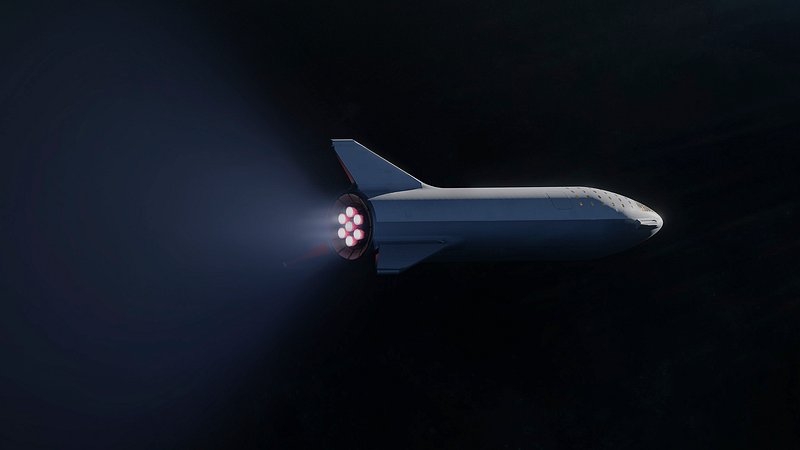
The race to make humanity a truly spacefaring civilization is accelerating, and SpaceX Starship Flight 13 could become one of the most important milestones in modern aerospace history. After investing more than $15 billion into the Starship program, SpaceX is preparing for a mission that may finally achieve something no Starship prototype has ever accomplished before: a full orbital flight profile.
Unlike previous test missions that followed carefully designed suborbital trajectories, Flight 13 is expected to push Starship into true orbit around Earth. If successful, this mission will mark the transition of Starship from an experimental prototype into an operational spacecraft capable of supporting future Moon missions, Mars colonization efforts, and large-scale orbital infrastructure projects.
In this article, we’ll break down everything we know about Starship Flight 13, including the expected launch date, regulatory approvals, hardware progress, Raptor engine advancements, launch pad upgrades, and why this mission could redefine humanity’s future in space.
SpaceX’s Massive $15 Billion Investment in Starship
The development of Starship represents one of the largest engineering investments ever undertaken by a private company.
Recent financial information suggests that SpaceX has spent more than $15 billion developing the Starship architecture. To understand the scale of this investment, consider that the highly successful Falcon 9 rocket reportedly cost around $400 million to develop.
The difference reflects a dramatic shift in mission objectives.
Falcon 9 vs Starship
Falcon 9 was designed to:
- Launch satellites
- Deliver cargo to the International Space Station
- Support commercial and government missions
Starship is being designed to:
- Carry hundreds of people into space
- Enable Moon landings
- Support Mars colonization
- Conduct orbital refueling
- Transport massive payloads across the Solar System
SpaceX founder Elon Musk has repeatedly stated that Starship is the vehicle intended to make humanity a multi-planetary species.
Regulatory Changes Could Speed Up Starship Launches
One of the biggest challenges facing Starship development has not been engineering—it has been regulatory approval.
Historically, every significant anomaly during a Starship test flight triggered lengthy investigations by the Federal Aviation Administration (FAA).
What Happened During Flight 12?
During Flight 12, an anomaly occurred with the Super Heavy booster while it was returning toward Earth.
In previous years, such an incident would likely have caused months of delays while investigators analyzed every detail.
However, the FAA’s response was noticeably different.
Rather than immediately launching a formal mishap investigation, regulators indicated they were still evaluating the event and had not officially determined it to be a mishap.
This signals a major shift in how regulatory agencies view SpaceX’s rapid development model.
Why This Matters
SpaceX follows an engineering philosophy based on:
- Rapid testing
- Fast iteration
- Learning from failures
- Continuous improvement
The evolving regulatory environment could allow Starship testing to proceed much faster than before, dramatically accelerating development timelines.
FCC Filing Reveals Flight 13 Launch Window
One of the most significant discoveries following Flight 12 came from a filing submitted to the Federal Communications Commission (FCC).
SpaceX had already secured a Special Temporary Authority (STA) for Flight 13 months before the previous mission even flew.
Authorized Launch Period
The filing authorizes launch operations between:
May 29, 2026 – November 29, 2026
This six-month window gives SpaceX flexibility to launch whenever hardware and operational readiness are achieved.
Importantly, the broad authorization does not indicate a late launch.
Instead, it eliminates the need to repeatedly apply for communications licensing.
Expected Launch Date
Based on:
- Vehicle processing timelines
- Engine integration schedules
- Booster testing progress
- Launch pad readiness
Industry observers currently expect a launch in the first or second week of July 2026.
Starship Flight 13 Will Attempt a Full Orbital Mission
The most exciting aspect of Flight 13 is its planned mission profile.
Previous Flights Used Suborbital Trajectories
Earlier Starship missions intentionally followed suborbital paths.
This design ensured that if something went wrong:
- The spacecraft would naturally re-enter Earth’s atmosphere.
- Debris would fall into remote ocean regions.
- Risks to populated areas remained minimal.
Most previous missions targeted splashdown zones near the Indian Ocean.
Flight 13 Changes Everything
Flight 13 is expected to attempt a true orbital insertion.
This means Starship will accelerate to approximately:
7.8 kilometers per second (17,500 mph)
At this speed, the spacecraft can continuously fall around Earth rather than immediately returning to the atmosphere.
Why Orbit Matters
Achieving orbit enables:
- Long-duration missions
- Orbital refueling tests
- Satellite deployment
- Lunar mission preparation
- Mars transportation architecture
A successful orbital mission would represent the biggest Starship milestone to date.
Ship 40: The Most Advanced Starship Yet
For Flight 13, SpaceX plans to fly Ship 40, the latest version of its Starship upper stage.
Completion and Testing
Ship 40 completed primary structural stacking in March 2026.
The vehicle features:
- Updated Starship Version 3 design
- Enhanced thermal protection systems
- Improved plumbing architecture
- Refined avionics systems
Thermal Protection System
One of the most visually striking features is its nearly flawless heat shield.
The spacecraft is covered by approximately:
18,000 ceramic heat shield tiles
These tiles protect Starship during atmospheric re-entry, when temperatures reach several thousand degrees Celsius.
Unlike Ship 39, which showed significant scorching after flight, Ship 40 emerged from production with a pristine thermal protection system.
Cryogenic Testing Success
In early May 2026, Ship 40 underwent two successful cryogenic proof tests.
These tests simulated real flight conditions by filling tanks with ultra-cold fluids.
The tests verified:
- Tank strength
- Structural integrity
- Pressure resistance
- Internal bulkhead performance
Successful cryogenic testing is one of the most important milestones before flight.
Raptor 3 Engines Push Rocket Technology Forward
Perhaps the most remarkable aspect of Starship is its propulsion system.
What Is Raptor 3?
The Raptor 3 engine is among the most advanced rocket engines ever built.
It uses a Full-Flow Staged Combustion (FFSC) cycle.
How Full-Flow Staged Combustion Works
Unlike traditional rocket engines, Raptor routes all fuel and oxidizer through specialized pre-burners before entering the combustion chamber.
This approach provides:
- Higher efficiency
- Greater reliability
- Increased thrust
- Improved engine lifespan
Incredible Performance Numbers
Each Raptor 3 engine produces:
More than 280 metric tons of thrust
Additional specifications include:
- Chamber pressure exceeding 350 bar
- Methane fuel at -162°C
- Liquid oxygen at -183°C
- Advanced regenerative cooling systems
These numbers place Raptor 3 among the most powerful and efficient rocket engines ever created.
Precision Steering Through TVC
The central engines feature Thrust Vector Control (TVC) systems.
These electromechanical actuators continuously adjust engine direction during flight, allowing precise control of the enormous spacecraft.
Booster 20 Faces Critical Testing
While Ship 40 has progressed smoothly, Booster 20 remains the key variable in determining the final launch date.
Lessons Learned From Booster 19
During Flight 12, Booster 19 encountered a major problem after hot staging.
The booster began its return maneuver with excessive rotational velocity.
This led to:
- Propellant flow disruptions
- Engine shutdowns
- Loss of landing capability
Only one engine successfully reignited for the landing burn.
As a result, the booster impacted the Gulf of Mexico at extremely high speed.
Improvements for Booster 20
Engineers have spent weeks implementing upgrades including:
- Plumbing modifications
- Propellant line dampening
- Software refinements
- Improved fluid management systems
These changes aim to prevent a repeat of the Flight 12 anomaly.
Launch Pad 2 Is Proving Extremely Durable
Another major reason Flight 13 may arrive sooner than expected is the performance of Orbital Launch Pad 2.
Built Using Lessons Learned
Previous launch facilities often required extensive repairs after each test flight.
Pad 2 was designed specifically to survive repeated Starship launches.
Key features include:
- Bidirectional flame trench
- Water-cooled steel deflector system
- Enhanced launch mount hardware
- Improved acoustic suppression systems
Minimal Post-Flight Damage
Following Flight 12, engineers reported virtually no major structural damage.
This dramatically reduces turnaround time between launches.
Instead of rebuilding infrastructure, crews can immediately focus on preparing the next mission.
Mechazilla Undergoing Important Upgrades
The iconic Mechazilla tower continues receiving refinements ahead of Flight 13.
Catch Rail Improvements
Ground crews recently:
- Removed catch rails
- Inspected structural components
- Installed upgraded hardware
- Performed precision alignment procedures
These rails are critical for future booster-catching operations.
Mechanical Testing Success
Motion tests conducted after Flight 12 confirmed that previous issues were software-related rather than structural.
This is encouraging news for future booster recovery attempts.
Launch Mount Upgrades Increase Reliability
SpaceX has also refurbished critical load-bearing components beneath Launch Mount 2.
Ball Mount Replacements
Technicians removed and inspected all 17 structural ball mounts.
These specialized components allow:
- Controlled flexing
- Vibration absorption
- Load redistribution
- Structural stability during fueling
After inspection, all units were refurbished and reinstalled.
This rapid maintenance approach highlights SpaceX’s focus on minimizing downtime.
Predicted Starship Flight 13 Launch Date
Using historical processing timelines, analysts have developed a likely launch estimate.
Historical Comparison
Ship 39 completed cryogenic testing and launched approximately 75 days later.
Ship 40 completed cryogenic testing on:
May 4, 2026
Applying a similar timeline suggests:
July 18, 2026
Why Launch Could Be Earlier
Several factors may accelerate the schedule:
- Faster engine integration
- Repeat V3 production processes
- Improved launch infrastructure
- Reduced regulatory delays
As a result, the most realistic target appears to be:
Early to mid-July 2026
Why Flight 13 Could Be a Historic Turning Point
If everything works as planned, Flight 13 will represent far more than another test mission.
The mission will validate:
- Orbital insertion capability
- Long-duration spacecraft operations
- Advanced propulsion technologies
- Future orbital refueling architecture
Most importantly, it would demonstrate that Starship is transitioning from a developmental prototype into a true operational spacecraft.
The Road to Mars Begins Here
A successful Flight 13 would move SpaceX significantly closer to its long-term goals:
- Permanent Moon bases
- Human Mars missions
- Interplanetary transportation networks
- Large-scale space infrastructure
For decades, humanity has dreamed about becoming a civilization that lives beyond Earth.
Starship Flight 13 may be the mission that turns that dream into reality.
Final Thoughts
SpaceX’s upcoming Starship Flight 13 is shaping up to be one of the most anticipated space missions in recent history. With over $15 billion invested, a fully upgraded launch system, advanced Raptor 3 engines, and an ambitious orbital mission profile, the company is preparing to attempt something no Starship has achieved before.
If Ship 40 successfully reaches orbit and demonstrates sustained operations in space, SpaceX will take a monumental step toward transforming Starship into the spacecraft that could eventually carry humans to the Moon, Mars, and beyond.
The first or second week of July 2026 is rapidly approaching, and all eyes in the aerospace world will be fixed on Starbase as SpaceX prepares to make history once again.
FAQs
1. What is SpaceX Starship Flight 13?
Starship Flight 13 is the next major test mission in SpaceX’s Starship program. It is expected to be the first Starship mission to attempt a full orbital flight profile, making it one of the most important tests in the vehicle’s development history.
2. When is Starship Flight 13 expected to launch?
Based on current vehicle processing timelines, launch pad readiness, and regulatory approvals, Starship Flight 13 is expected to launch during the first or second week of July 2026.
3. Why is Flight 13 considered historic?
Flight 13 is historic because it is expected to attempt a true orbital insertion, something no previous Starship prototype has achieved. Reaching orbit would mark a major milestone toward operational spaceflight capabilities.
4. How much has SpaceX spent on Starship development?
SpaceX has reportedly invested more than $15 billion into the Starship program, making it one of the most expensive and ambitious aerospace projects ever undertaken by a private company.
5. How does Starship differ from Falcon 9?
While Falcon 9 was designed primarily for satellite launches and ISS resupply missions, Starship is being developed for large-scale cargo transport, lunar missions, Mars colonization, orbital refueling, and carrying large numbers of passengers into space.
6. What is the main goal of Starship Flight 13?
The primary goal is to demonstrate orbital velocity, orbital insertion, extended in-space operations, and critical spacecraft systems needed for future Moon and Mars missions.
7. What spacecraft will be used for Flight 13?
SpaceX plans to launch Ship 40 paired with Booster 20. Both vehicles incorporate improvements based on lessons learned from previous Starship flights.
8. What is Ship 40?
Ship 40 is the latest Starship Version 3 (V3) upper-stage vehicle. It includes upgraded thermal protection tiles, improved plumbing systems, and advanced hardware designed to support orbital missions.
9. What happened during Starship Flight 12?
During Flight 12, the Super Heavy Booster 19 experienced an anomaly during its return maneuver. Excessive rotational forces disrupted propellant flow, preventing a successful landing burn and causing the booster to impact the Gulf of Mexico.
10. What improvements have been made to Booster 20?
Engineers have implemented several upgrades, including:
- Plumbing modifications
- Propellant line dampening
- Software updates
- Improved fluid management systems
These changes are intended to prevent issues experienced during Flight 12.
11. What are Raptor 3 engines?
Raptor 3 engines are SpaceX’s newest rocket engines utilizing a Full-Flow Staged Combustion (FFSC) cycle. They offer higher efficiency, greater reliability, and more than 280 metric tons of thrust per engine.
12. What is orbital velocity for Starship?
To achieve orbit, Starship must reach approximately 7.8 kilometers per second (about 17,500 mph or 28,000 km/h). At this speed, the spacecraft can continuously orbit Earth rather than immediately re-entering the atmosphere.
13. Why is Orbital Launch Pad 2 important?
Launch Pad 2 was specifically designed to withstand the immense forces generated by Starship launches. Its durable design minimizes repair work between missions, allowing SpaceX to accelerate launch schedules.
14. What is Mechazilla?
Mechazilla is SpaceX’s giant launch tower equipped with mechanical “chopstick” arms. These arms are designed to catch returning Super Heavy boosters, enabling rapid reuse and reducing turnaround times.
15. How does Flight 13 help SpaceX reach Mars?
A successful Flight 13 would validate critical technologies needed for Mars missions, including:
- Orbital operations
- Advanced propulsion systems
- Thermal protection performance
- Future orbital refueling capabilities
These technologies are essential for SpaceX’s long-term goal of establishing a self-sustaining human presence on Mars.
Read More:
- Starship Flight 13 Testing in Line — What’s Next for SpaceX?
- Something Weird is Happening With The SpaceX IPO
- SpaceX (SPCX) IPO is live today at $135: Here’s exactly what you need to know
- New Tesla Battery Technology! Tesla Model 2: Elon Musk’s 4680 Battery EXPOSED
- Tesla Cybertruck Heads To FIFA World Cup 2026 — Mission Revealed
1 thought on “SpaceX Reveals New Starship Launch Date to Make History in ORBIT! Never Done Before”