
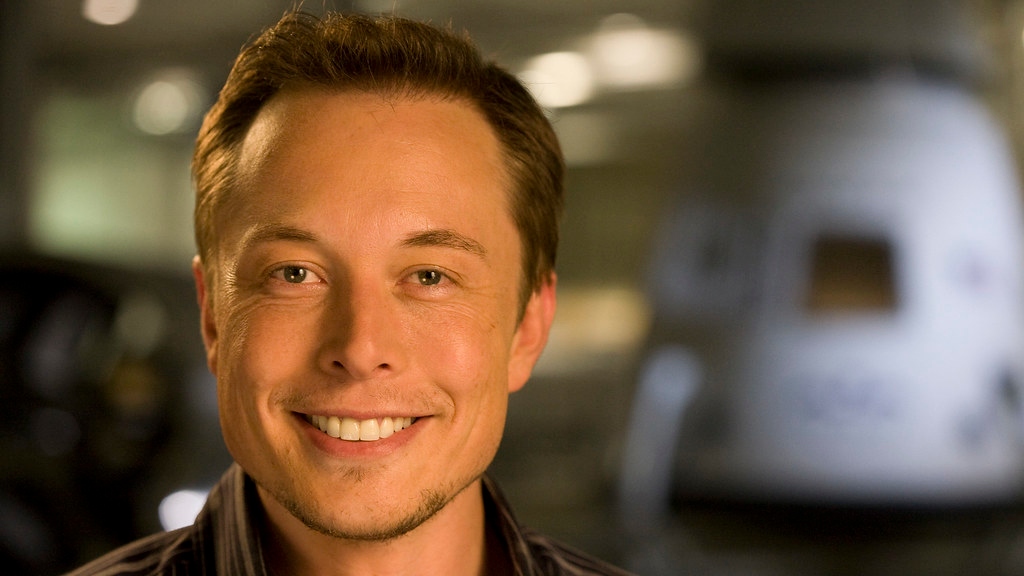
The Real Reason Elon Musk Just Became a TRILLIONAIRE: For years, Elon Musk has been one of the most influential entrepreneurs on the planet. From revolutionizing electric vehicles with Tesla to redefining space exploration through SpaceX, Musk has consistently pushed industries beyond their traditional limits. Yet the real story behind his astonishing rise in wealth is not about selling cars, launching rockets, or posting on social media.
The true reason Elon Musk has reached a trillion-dollar trajectory lies in something far bigger: he is building the foundational infrastructure of the 21st century.
While most companies focus on individual products, Musk’s businesses are creating interconnected systems that span space transportation, global internet connectivity, artificial intelligence computing, autonomous transportation, logistics, and planetary expansion. These systems reinforce one another, creating a powerful economic engine capable of generating unprecedented value.
The result is an empire that could ultimately reshape how humans travel, communicate, work, and even live beyond Earth.
SpaceX: The Foundation of a $28.5 Trillion Opportunity
The first pillar of Musk’s trillionaire blueprint is SpaceX, a company that has transformed from a rocket startup into what may become the backbone of a future space-based economy.
For decades, the space industry was viewed as a niche sector with limited growth potential. Traditional aerospace firms relied heavily on government contracts and expensive launch systems. Investors believed the market was too small and too risky to generate massive returns.
SpaceX completely shattered that assumption.
During a landmark investor road show presentation, SpaceX executives outlined a vision that extends far beyond satellite launches. The company identified three major growth sectors:
1. Space Connectivity
Global internet connectivity through Starlink is already changing how people access information around the world. Remote regions that previously lacked reliable internet can now connect through low-Earth orbit satellites.
2. Artificial Intelligence Infrastructure
AI is becoming one of the most valuable industries in history. SpaceX intends to play a major role in powering the computational backbone needed for future AI systems.
3. Orbital and Deep-Space Industrialization
This includes manufacturing in orbit, lunar production facilities, asteroid mining, and eventually large-scale Martian settlements.
According to SpaceX projections, these combined opportunities represent nearly $6 trillion in today’s market. When integrated with advanced artificial intelligence and space-based infrastructure, the total addressable market could expand to an astonishing $28.5 trillion.
That figure alone explains why investors are increasingly viewing SpaceX as much more than a rocket company.
Transforming Space Into an Economic Platform
One of the most remarkable aspects of SpaceX’s strategy is its ambition to transform space from a destination into an operating environment.
Point-to-Point Earth Transportation
Imagine traveling between continents in less than an hour.
Using Starship’s suborbital capabilities, SpaceX envisions transporting cargo and passengers across the globe at speeds that make traditional air travel appear outdated.
Lunar Manufacturing
The Moon is expected to become a critical industrial hub.
Future factories could manufacture specialized materials and AI computing infrastructure in low-gravity environments that are impossible to replicate on Earth.
Asteroid Mining
Many near-Earth asteroids contain vast quantities of rare metals and valuable resources.
Accessing these resources could unlock entirely new industries while reducing dependence on terrestrial mining operations.
Colonizing Mars
Perhaps the most ambitious goal is building a self-sustaining civilization on Mars.
Rather than a symbolic scientific outpost, Musk envisions a functioning economy complete with transportation networks, energy systems, and industrial production.
These projects may sound futuristic today, but they represent the long-term framework behind SpaceX’s valuation.
The Secret Weapon: Reusable Rockets
The foundation of SpaceX’s success lies in a simple but revolutionary concept: rocket reusability.
Before SpaceX, rockets were treated like disposable products. After every mission, expensive hardware was destroyed.
This approach made access to space incredibly costly.
Falcon 9 Changed Everything
SpaceX’s Falcon 9 rocket introduced routine booster landings and rapid reuse.
The economic impact was enormous.
Instead of building a new rocket for every mission, SpaceX could repeatedly fly the same hardware, dramatically reducing launch costs.
This breakthrough allowed SpaceX to dominate the global launch market.
Launch Dominance Creates Monopoly-Like Advantages
Launch capability became the foundation upon which every future SpaceX business could be built.
By controlling the cheapest and most reliable path to orbit, SpaceX gained a competitive advantage that rivals have struggled to match.
This dominance enabled the next phase of Musk’s strategy: Starlink.
Starlink: The Global Internet Empire
If rockets are the foundation, Starlink is the cash-generating engine powering Musk’s future ambitions.
Starlink has become the largest satellite constellation ever deployed.
Thousands of satellites orbit Earth, delivering high-speed internet to customers across the globe.
Why Starlink Is So Powerful
Most telecommunications companies must build expensive ground infrastructure.
Starlink bypasses many of those limitations through a space-based network.
This provides:
- Global coverage
- Rapid deployment
- Scalability
- Access to underserved markets
A Massive Revenue Machine
Starlink’s subscriber growth has been extraordinary.
As millions of users adopt the service, recurring subscription revenue creates a stable stream of cash flow.
Unlike traditional launch operations, which can be cyclical, internet subscriptions generate predictable income.
This cash flow helps fund:
- Starship development
- Lunar infrastructure
- Mars colonization
- AI computing investments
In many ways, Starlink acts as the financial bridge connecting today’s business operations to tomorrow’s space economy.
xAI and the Race for AI Dominance
The next pillar of Musk’s empire is xAI.
Artificial intelligence has rapidly become one of the most valuable technologies in human history. However, training advanced AI models requires enormous computational resources.
This creates a critical bottleneck.
Compute Is the New Oil
In the AI era, computational power is becoming as valuable as energy was during the industrial revolution.
Companies need massive quantities of:
- GPUs
- Data center infrastructure
- Electricity
- Cooling systems
Demand is growing exponentially.
The challenge is that traditional cloud providers are struggling to scale quickly enough.
Musk recognized this opportunity and responded aggressively.
Colossus: The World’s Most Powerful AI Supercomputer
At the center of xAI’s strategy is Colossus, an ultra-large AI computing cluster.
Designed to support massive-scale neural network training, Colossus represents one of the most ambitious computing projects ever attempted.
Why Colossus Matters
Traditional data centers often face delays caused by:
- Power allocation restrictions
- Construction bottlenecks
- Regulatory approvals
Musk’s companies have instead pursued a rapid-build approach focused on speed and scale.
The result is a gigawatt-class AI infrastructure platform capable of supporting advanced AI development.
High-Margin Revenue Opportunities
The economic implications are enormous.
Large technology companies increasingly require access to AI computing capacity.
Instead of merely developing AI models, Musk’s ecosystem can generate recurring revenue by providing infrastructure services to enterprise clients.
This transforms xAI into something more than an AI startup.
It becomes a cloud infrastructure powerhouse.
The SR-71 Strategy: Speed as a Competitive Advantage
One recurring theme across Musk’s companies is speed.
Musk frequently references the legendary SR-71 Blackbird aircraft, which relied on speed as its primary defense mechanism.
Rather than reacting to competitors, the aircraft simply moved faster than threats could respond.
Applying the Philosophy Across Industries
This strategy appears throughout Musk’s business empire.
SpaceX
Reusable rockets were developed faster than many competitors believed possible.
Starlink
Satellite deployment accelerated rapidly, capturing valuable orbital positions before rivals could respond.
xAI
Massive AI computing infrastructure was constructed in record time.
Tesla
Autonomous driving systems continue expanding into new markets at an accelerating pace.
The goal is simple:
Move faster than competitors, regulators, and market forces can adapt.
This philosophy has become one of Musk’s most effective strategic advantages.
Tesla RoboTaxis: Unlocking a Trillion-Dollar Transportation Network
While SpaceX dominates space and xAI dominates computing, Tesla is preparing to revolutionize transportation.
The company’s long-promised autonomous ride-hailing network is finally approaching commercialization.
The Nevada Expansion
Tesla has filed regulatory applications to launch a large-scale autonomous vehicle network in Nevada.
The proposed deployment includes thousands of self-driving vehicles operating without human supervision.
This represents a dramatic leap from earlier pilot programs.
Why Las Vegas Is the Perfect Market
Las Vegas offers several unique advantages:
- High passenger volume
- Dense urban activity
- Major airports
- Predictable road layouts
- Year-round demand
These characteristics make it an ideal testing ground for large-scale autonomous transportation.
A New Business Model
Traditional ride-sharing companies depend on human drivers.
Tesla’s robo-taxi network removes that cost.
This creates the possibility of:
- Higher profit margins
- Lower passenger costs
- 24/7 vehicle utilization
If successful, autonomous ride-hailing could become one of Tesla’s most valuable businesses.
Tesla Semi: Conquering Global Logistics
Consumer vehicles represent only part of Tesla’s ambitions.
The company is aggressively targeting the global freight market through the Tesla Semi.
Why Trucking Matters
Global logistics is worth trillions of dollars annually.
Freight transportation forms the backbone of international commerce.
Even small improvements in efficiency can create massive economic value.
Entering Europe
Tesla has begun laying the groundwork for major expansion across Europe.
Germany serves as a strategic launch point due to its central role in continental logistics.
By establishing relationships with fleet operators before full-scale deployment, Tesla is positioning itself for rapid adoption.
A Unique Design Advantage
The Tesla Semi uses a centralized driver position.
This allows the same vehicle architecture to function efficiently in both left-hand-drive and right-hand-drive markets.
The result is:
- Lower development costs
- Faster international expansion
- Simplified manufacturing
These advantages strengthen Tesla’s ability to compete globally.
The Return of the Tesla Roadster
While autonomous vehicles and commercial trucks generate revenue, Tesla still needs a flagship product that captures imagination.
That role belongs to the next-generation Tesla Roadster.
More Than a Sports Car
The Roadster serves as Tesla’s technological halo product.
It demonstrates the company’s engineering capabilities while reinforcing its brand identity.
SpaceX Integration
The upcoming Roadster is expected to feature technology inspired by SpaceX engineering principles.
This collaboration highlights the growing synergy between Musk’s companies.
Preserving Human Driving
As autonomous vehicles become increasingly common, the Roadster may remain one of Tesla’s few manually driven vehicles.
This creates a unique position in the market.
While most future vehicles focus on utility and automation, the Roadster celebrates performance, excitement, and human control.
How Musk’s Empire Creates a Self-Reinforcing Ecosystem
The most important insight is that Musk’s businesses do not operate independently.
They reinforce one another.
Step 1: SpaceX Dominates Launch
Reusable rockets lower the cost of reaching orbit.
Step 2: Starlink Generates Massive Cash Flow
Global internet subscriptions provide recurring revenue.
Step 3: xAI Builds AI Infrastructure
Computing capacity powers next-generation AI applications.
Step 4: Tesla Uses AI at Scale
Autonomous driving systems improve through AI-powered learning.
Step 5: Transportation and Logistics Expand
Robo-taxis and Tesla Semi networks generate additional revenue.
Each layer strengthens the next.
This creates a powerful flywheel effect that becomes increasingly difficult for competitors to disrupt.
Conclusion: The Blueprint Behind a Trillion-Dollar Future
The real reason Elon Musk became a trillionaire is not because he built electric cars, launched rockets, or created viral headlines.
It is because he recognized a profound truth:
The greatest fortunes are built by owning infrastructure.
SpaceX controls access to orbit.
Starlink controls global connectivity.
xAI is building the computational backbone of artificial intelligence.
Tesla is developing autonomous transportation and logistics networks.
Together, these businesses form an interconnected ecosystem that touches nearly every major growth industry of the coming century.
Whether it is moving people through autonomous ride-sharing networks, transporting goods across continents, providing AI computing power to enterprises, delivering internet access from space, or establishing humanity’s presence on the Moon and Mars, Musk’s companies are positioning themselves at the center of the global economy.
That is the architecture behind the trillion-dollar vision—and the real reason Elon Musk’s wealth continues to expand at a pace the world has never seen before.
FAQs
1. Why is Elon Musk considered a potential trillionaire?
Elon Musk is considered a potential trillionaire because of his ownership stakes in high-growth companies such as SpaceX, Tesla, and xAI. These companies operate in massive markets including space technology, artificial intelligence, autonomous transportation, and global internet connectivity.
2. What is the main reason behind Elon Musk’s growing wealth?
The primary reason behind Musk’s wealth is his strategy of building critical infrastructure businesses that generate long-term value. Rather than focusing on individual products, he is creating interconnected ecosystems across transportation, AI, energy, and space.
3. How does SpaceX contribute to Elon Musk’s valuation?
SpaceX contributes significantly by dominating the global launch market, reducing the cost of access to space through reusable rockets, and supporting high-growth businesses like Starlink and future space-based industries.
4. What is Starlink, and why is it important?
Starlink is a satellite-based internet network developed by SpaceX. It provides high-speed internet access worldwide, especially in remote areas, while generating recurring subscription revenue that helps fund future SpaceX projects.
5. What is the projected market opportunity for SpaceX?
According to company projections discussed during investor presentations, SpaceX sees opportunities across space connectivity, AI infrastructure, orbital manufacturing, and interplanetary transportation that could eventually reach tens of trillions of dollars in value.
6. What is xAI and how does it fit into Musk’s business empire?
xAI is Elon Musk’s artificial intelligence company. Its goal is to develop advanced AI systems while building large-scale computing infrastructure capable of supporting next-generation AI applications.
7. What is the Colossus supercomputer?
Colossus is xAI’s large-scale AI computing cluster designed to train advanced artificial intelligence models. It represents Musk’s effort to compete in the rapidly growing AI infrastructure market.
8. How does AI computing generate revenue for Musk’s companies?
AI computing infrastructure can be rented to businesses that need massive processing power for training and operating AI models. This creates recurring, high-margin revenue streams similar to cloud computing services.
9. What are Tesla RoboTaxis?
Tesla RoboTaxis are fully autonomous vehicles designed to operate as self-driving ride-hailing services. The goal is to provide transportation without human drivers, reducing operating costs and increasing efficiency.
10. Why is Las Vegas important for Tesla’s RoboTaxi plans?
Las Vegas offers high passenger demand, busy airports, predictable road networks, and year-round tourism activity. These factors make it an ideal location for launching and scaling autonomous transportation services.
11. What is the Tesla Semi, and why is it significant?
The Tesla Semi is Tesla’s all-electric heavy-duty truck. It aims to reduce fuel costs, lower emissions, and improve efficiency in the global freight and logistics industry.
12. Why is Tesla expanding the Semi into Europe?
Europe represents one of the largest commercial trucking markets in the world. By establishing partnerships and infrastructure early, Tesla hopes to secure major fleet customers before full-scale vehicle deployment.
13. What makes the new Tesla Roadster special?
The next-generation Tesla Roadster is expected to feature extreme performance capabilities, advanced battery technology, and engineering collaboration between Tesla and SpaceX, making it a showcase of Musk’s technological vision.
14. How do SpaceX, Tesla, Starlink, and xAI work together?
These companies create a self-reinforcing ecosystem. SpaceX enables Starlink, Starlink generates revenue, xAI develops AI infrastructure, and Tesla uses advanced AI technologies to power autonomous vehicles and logistics systems.
15. Could Elon Musk’s companies reshape the global economy?
Many analysts believe Musk’s companies could significantly influence future industries by advancing space transportation, artificial intelligence, global connectivity, autonomous mobility, renewable energy, and interplanetary exploration.
Read More:
- SpaceX maintains bold advertising push for Starlink, contrasting Tesla’s minimalistic approach
- Tesla and SpaceX’s biggest bull just placed a massive $1B bet on the stock
- SpaceX soars with its first launch as a public company, marking a new era
- Tesla Cybercab snags huge regulatory green light that readies it for public roads
- Tesla Cybercab specs revealed: range, curb weight, range ratings, and more
1 thought on “The Real Reason Elon Musk Just Became a TRILLIONAIRE”