
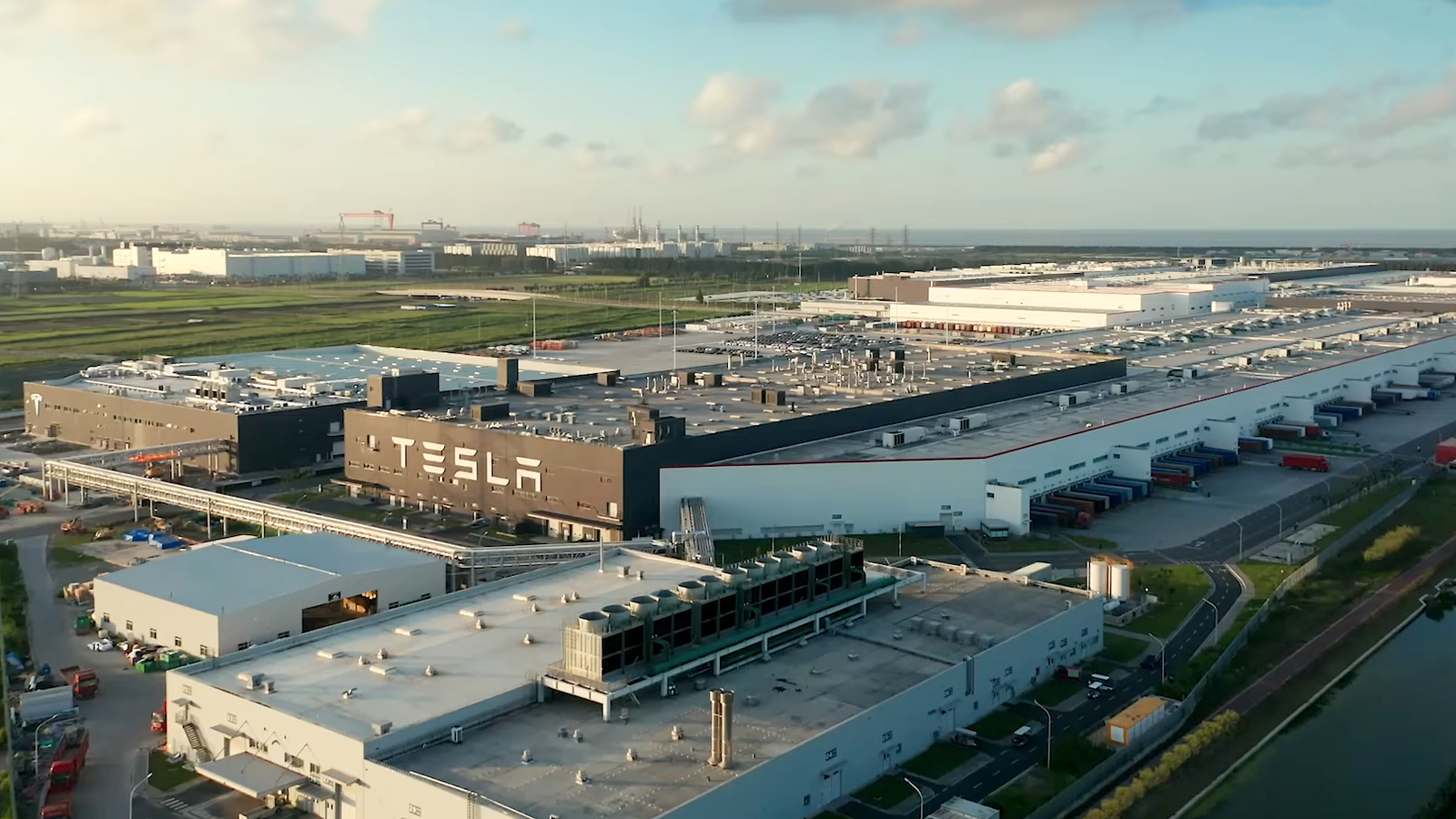
The $119 Billion GigaFactory | Inside New Elon Musk’s Terafab Revealed: Elon Musk is pushing the boundaries of manufacturing with an ambitious vision that combines artificial intelligence (AI), semiconductor production, robotics, and autonomous transportation. At the center of this strategy is Terrafab, a proposed semiconductor manufacturing complex designed to supply advanced chips for Tesla’s self-driving vehicles, Optimus humanoid robots, and SpaceX’s space-based computing systems.
Alongside this massive semiconductor project, Tesla is accelerating production of its futuristic Cybercab robotaxi, a vehicle designed to transform urban transportation. Together, these developments highlight Musk’s broader strategy of building the infrastructure required to support an increasingly automated future.
Terrafab: Elon Musk’s $119 Billion Semiconductor Megaproject
Building One of the World’s Largest Factories
Terrafab represents an ambitious attempt to address the growing demand for advanced semiconductors. According to the plans described in the supplied report, the facility could eventually cover approximately 100 million square feet, making it an extraordinarily large industrial development.
For comparison, this proposed footprint would be roughly 50 times the size of the Pentagon and significantly larger than Tesla’s existing Gigafactory Texas.
The project’s primary objective is to reduce dependence on external semiconductor suppliers. As Tesla expands its AI-powered vehicles and humanoid robots, access to reliable, high-performance chips becomes increasingly important.
A Potential $119 Billion Investment
The proposed project carries a potential long-term investment figure of approximately $119 billion, with an initial development phase in Grimes County, Texas, reportedly estimated at around $16.8 billion.
Such an investment would make Terrafab one of the most ambitious manufacturing projects associated with Musk’s companies.
However, these figures represent projected investment rather than confirmed final expenditure. The project’s ultimate cost, construction schedule, and production capacity will depend on financing, engineering requirements, and execution.
Advanced AI Chips for Tesla and SpaceX
AI5 and AI6 Chips for Autonomous Driving
One of Terrafab’s most important objectives is producing advanced processors for Tesla’s Full Self-Driving (FSD) technology and Optimus humanoid robots.
The planned AI5 and AI6 chip families are intended to support increasingly sophisticated AI workloads. These processors could help vehicles interpret their surroundings, process sensor information, and make driving decisions.
For Optimus, advanced AI computing is essential for recognizing objects, understanding environments, and coordinating physical movements.
By strengthening its semiconductor capabilities, Tesla aims to align chip development more closely with its software and hardware requirements.
D3 Chips for Space-Based Data Centers
SpaceX has a different but equally demanding computing challenge.
Its proposed space-based data center architecture would require powerful processors capable of operating under extreme environmental conditions. The planned D3 chip family is described as targeting high-performance computing applications involving radiation exposure and temperature fluctuations.
Developing reliable computing systems for space presents substantial engineering challenges. Radiation protection, thermal management, power efficiency, and long-term reliability would all be critical considerations.
If successful, this technology could support future orbital computing infrastructure, although the commercial viability of large-scale space-based data centers remains to be demonstrated.
Intel, TSMC, and ASML Could Play Important Roles
Strategic Semiconductor Partnerships
Building a leading-edge semiconductor fabrication facility requires more than financial resources. It demands specialized equipment, advanced manufacturing processes, and extensive technical expertise.
The reported Terrafab strategy involves engagement with major semiconductor industry players, including Intel and TSMC.
Intel’s manufacturing expertise and potential process technologies could provide useful technical knowledge. TSMC’s experience in advanced chip production also makes it a relevant industry participant.
Meanwhile, ASML’s extreme ultraviolet (EUV) lithography systems are important to advanced semiconductor manufacturing. Such equipment enables the precise patterning required for sophisticated chip designs.
These industry relationships should not automatically be interpreted as finalized production agreements. Their exact scope and commercial terms would need to be confirmed.
Terrafab’s Massive Power and Infrastructure Requirements
Up to 2 Gigawatts of Potential Power Demand
A semiconductor factory of this proposed scale would require enormous amounts of electricity.
The supplied report suggests that Terrafab could eventually require as much as 2 gigawatts of power. Maintaining a stable electricity supply would be essential because even brief interruptions can disrupt sensitive manufacturing processes.
Potential infrastructure plans include natural gas turbines and Megapack battery storage to support reliable operations.
Energy management would be particularly important as the facility expands its production capacity. Cooling systems, cleanrooms, advanced manufacturing equipment, and testing operations would all contribute to its electricity requirements.
The final energy mix, generation capacity, and environmental impact will depend on the project’s actual engineering design.
Tesla Cybercab Production Is Accelerating in Texas
A New Approach to Vehicle Manufacturing
While Terrafab focuses on future semiconductor demand, Tesla’s Cybercab program targets autonomous transportation.
The Cybercab is designed as a purpose-built robotaxi rather than a conventional passenger vehicle adapted for ride-hailing.
According to the supplied report, Tesla’s manufacturing system uses parallel modules for components such as the front section, rear section, body sides, battery pack, and seats. These modules can be inspected before being integrated into the finished vehicle.
This modular approach aims to reduce production complexity and improve manufacturing efficiency.
The reported assembly process uses approximately 25 automated stations, alongside an estimated overall automation rate of 78%. These figures are reported production details and should be distinguished from independently verified factory-wide performance measurements.
Eliminating the Traditional Paint Shop
One notable manufacturing innovation involves the use of colored exterior plastic panels.
By reducing the need for conventional painting operations, Tesla could simplify production and reduce the factory space required for its assembly line.
Traditional paint shops involve substantial infrastructure, energy consumption, ventilation systems, and environmental controls.
Eliminating or significantly reducing these requirements could help lower manufacturing complexity and support more compact production facilities.
However, actual savings would depend on material costs, component durability, repair requirements, and the final manufacturing design.
Tesla Cybercab Specifications and Expected Performance
Compact Design and Practical Cargo Space
The Cybercab is intended primarily for urban transportation and short-to-medium-distance ride-hailing services.
The supplied specifications describe a compact vehicle measuring approximately 55.4 inches tall and 69 inches wide, with seating for two passengers.
It reportedly offers 20.2 cubic feet of rear cargo space, providing room for luggage and everyday travel essentials.
Its compact dimensions could make it suitable for navigating crowded urban streets while maximizing passenger transportation efficiency.
Battery, Range, and Energy Efficiency
The reported configuration includes a battery pack of approximately 48 kWh, using Tesla’s 4680 battery cells, and an estimated driving range of nearly 293 miles.
The vehicle is also described as targeting energy consumption of approximately 165 watt-hours per mile, alongside a reported drag coefficient of 0.20.
These figures suggest a strong focus on aerodynamic efficiency and low operating costs. Nevertheless, final specifications and real-world range would depend on the production configuration, driving conditions, weather, and regulatory requirements.
The reported powertrain includes a single front-mounted motor designed without rare-earth magnets, potentially helping reduce reliance on certain specialized materials.
Cybercab Pricing and Long-Term Commercial Potential
Aiming for Affordable Autonomous Transportation
Tesla has targeted a price below $30,000 for the Cybercab, according to the supplied report. Its commercial success, however, will depend on production costs, final pricing, regulatory approval, and the availability of autonomous driving services.
The vehicle is reportedly engineered for a potential service life of at least 500,000 miles, reflecting its intended use in high-utilization commercial fleets.
A long operating life could improve fleet economics by spreading vehicle acquisition costs across more passenger trips.
Tesla’s reported expansion plans include additional markets such as Dallas, Houston, and Miami following its initial Austin rollout. The scale and timing of these deployments will depend on operational readiness and local regulations.
Conclusion: Terrafab and Cybercab Could Shape Musk’s Next Industrial Era
Elon Musk’s reported plans for Terrafab and Tesla Cybercab illustrate two complementary ambitions: developing advanced computing hardware and deploying autonomous transportation at scale.
Terrafab could strengthen semiconductor supply for AI-powered vehicles, humanoid robots, and future space-based computing systems. Meanwhile, Cybercab aims to establish a new manufacturing and transportation model built around autonomous ride-hailing.
Both initiatives face significant challenges, including capital requirements, engineering complexity, energy demand, manufacturing execution, and regulatory approval.
If these ambitious projects meet their technical and commercial objectives, they could reshape important parts of the automotive, semiconductor, robotics, and aerospace industries.
For now, Terrafab’s projected $119 billion investment and Cybercab’s anticipated expansion remain major developments to watch as Musk’s companies pursue their long-term vision of an AI-driven industrial ecosystem.
FAQs
1. What is Tesla Terrafab?
Terrafab is a proposed semiconductor manufacturing complex associated with Elon Musk’s vision for producing advanced chips for Tesla’s artificial intelligence systems, Optimus humanoid robots, autonomous vehicles, and SpaceX’s space-based computing infrastructure.
2. How much will Elon Musk’s Terrafab project cost?
Terrafab has been associated with a potential long-term investment of approximately $119 billion, with an initial development phase in Grimes County, Texas, reportedly estimated at around $16.8 billion. These figures are projections and may change as the project develops.
3. Where will Tesla Terrafab be located?
The reported plans identify Grimes County, Texas, as a location for the project’s initial development. Austin is also associated with early experimental chip research and development activities.
4. How big will the Terrafab semiconductor factory be?
According to the supplied report, Terrafab could eventually cover approximately 100 million square feet. This would make it an exceptionally large industrial complex designed to support substantial semiconductor manufacturing operations.
5. When will Tesla Terrafab begin chip production?
The reported timeline targets initial experimental SRAM test chips at an Austin research facility around May or June 2027, followed by potential mass production at Terrafab in the third or fourth quarter of 2028. These dates are targets rather than guaranteed milestones.
6. What types of chips will Terrafab manufacture?
The proposed semiconductor program includes three main chip families: AI5, AI6, and D3. AI5 and AI6 are intended for AI-powered vehicles and humanoid robots, while D3 is described as targeting high-performance computing applications for SpaceX’s proposed space-based data centers.
7. How will Terrafab benefit Tesla’s Full Self-Driving technology?
Terrafab could help Tesla secure a more reliable supply of advanced AI processors for its Full Self-Driving (FSD) systems. These chips are intended to process information from a vehicle’s surroundings and support the computational requirements of autonomous driving.
8. What role will Terrafab chips play in Tesla Optimus robots?
Advanced AI chips could provide the computing power required by Optimus humanoid robots to recognize objects, interpret their surroundings, process information, and coordinate movements. A reliable supply of specialized processors could support Tesla’s long-term robotics manufacturing ambitions.
9. Will SpaceX use Terrafab to build chips for space-based data centers?
The reported plans include specialized D3 chips for SpaceX’s proposed space-based computing architecture. These processors would need to address challenges such as radiation exposure, temperature fluctuations, power efficiency, and reliability in demanding space environments.
10. Which semiconductor companies could support Terrafab?
The reported strategy involves engagement with major semiconductor companies, including Intel and TSMC, as well as equipment suppliers such as ASML. Their potential contributions could include manufacturing expertise, process technology, and advanced lithography equipment. Specific arrangements would need to be confirmed.
11. How much electricity could Terrafab require?
Terrafab could potentially require up to 2 gigawatts of power, according to the supplied report. The proposed infrastructure includes natural gas turbines and Megapack battery storage to help maintain a stable electricity supply for sensitive semiconductor manufacturing operations.
12. What is Tesla Cybercab?
The Tesla Cybercab is a purpose-built autonomous robotaxi designed primarily for ride-hailing services. Unlike conventional passenger vehicles, its design focuses on two-passenger transportation, operational efficiency, and the requirements of a commercial autonomous fleet.
13. How will Tesla manufacture Cybercab vehicles more efficiently?
Tesla’s reported manufacturing approach uses parallel production modules for major vehicle components, including the front section, rear section, body sides, battery pack, and seats. These modules are inspected before final integration, potentially simplifying assembly and improving production efficiency.
14. What are the expected Tesla Cybercab specifications?
The supplied report describes a two-seat vehicle measuring approximately 55.4 inches tall and 69 inches wide, with 20.2 cubic feet of cargo space. Its reported specifications include a roughly 48 kWh battery, an estimated range of nearly 293 miles, and energy consumption of approximately 165 watt-hours per mile. Final production specifications may differ.
15. How much will the Tesla Cybercab cost, and how long will it last?
Tesla’s reported target is a price below $30,000, with the vehicle designed for a potential service life of at least 500,000 miles. These targets reflect its intended role in high-utilization robotaxi fleets, but final pricing and real-world durability remain subject to confirmation.
16. How could Terrafab and Cybercab change the future of transportation and AI?
Terrafab and Cybercab represent two complementary ambitions: expanding advanced semiconductor production and developing autonomous transportation. If successful, Terrafab could support AI-powered vehicles, humanoid robots, and space-based computing, while Cybercab could help introduce new ride-hailing models. Both projects face significant technical, financial, manufacturing, and regulatory challenges.
Read More:
- Tesla owners who tap Emergency Drive Away for fun are in for a surprise
- Wow! Starship Flight 15 will 24 Hours on Orbit
- Elon Musk Unveils NEXT-GEN Battery! 4 HUGE Upgrades
- 2027 Tesla Model 2 Finally Goes on Sale in November! Elon Musk Confirms Official Price & Design
- Tesla’s Flying Car Unveiled: Elon Musk Stuns with 1.1-Second Speed
3 thoughts on “The $119 Billion GigaFactory | Inside New Elon Musk’s Terafab Revealed”