
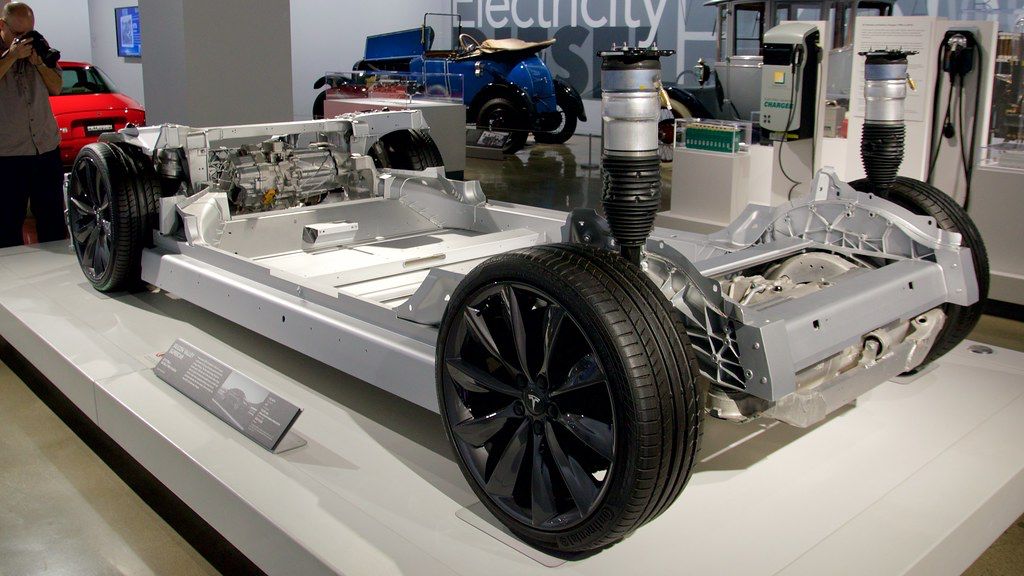
NEW TESLA MODEL 2 Aluminum Battery SHOCK: The electric vehicle revolution has been driven by one company more than any other: Tesla. Over the last decade, Tesla transformed electric cars from niche products into desirable mainstream vehicles. However, despite remarkable advances in EV technology, one major challenge continues to limit affordability, efficiency, and accessibility—the battery.
Today, batteries remain the most expensive, heaviest, and structurally complex component inside any electric vehicle. While traditional lithium-ion batteries have enabled modern EVs to flourish, they also introduce limitations that become increasingly problematic when manufacturers attempt to create smaller, more affordable electric cars.
This challenge is particularly important for the rumored Tesla Model 2, an entry-level EV expected to target a price below $25,000. To make such a vehicle profitable while maintaining safety, performance, and range, Tesla may need to move beyond conventional battery technology.
Could aluminum-ion batteries be the breakthrough that changes everything? If recent developments are any indication, the answer may be yes.
Why the Battery Remains the Biggest EV Challenge
For years, electric vehicle manufacturers have relied on lithium-ion technology because of its impressive energy density and proven performance. These batteries power millions of smartphones, laptops, and electric vehicles around the world.
However, lithium-ion batteries come with several significant drawbacks:
- High manufacturing costs
- Heavy weight
- Complex cooling requirements
- Extensive safety protection systems
- Potential fire risks during damage or overheating
In larger vehicles such as luxury sedans and SUVs, these disadvantages can often be hidden. Bigger vehicles have more room to accommodate heavy battery packs and can absorb additional costs through higher selling prices.
A compact electric car, however, operates under entirely different constraints.
When designing a vehicle expected to sell for under $25,000, every pound of weight and every dollar of cost matters. Simply shrinking an existing Tesla platform would not be enough. Instead, Tesla would need a completely new battery strategy capable of delivering affordability without sacrificing performance.
The Hidden Problem with Traditional Lithium-Ion Batteries
One common misconception is that lithium-ion batteries struggle because they lack power. In reality, they are extremely efficient energy storage systems.
The real challenge lies in their sensitivity to damage, heat, and stress.
Thermal Runaway: The EV Industry’s Biggest Concern
When a lithium-ion battery experiences severe damage, an internal reaction called thermal runaway can occur.
This process can be triggered by:
- Vehicle collisions
- Battery punctures
- Manufacturing defects
- Water intrusion
- Extreme temperatures
Once thermal runaway begins, temperatures rise rapidly and can become difficult to control.
To prevent these rare but dangerous events, modern EV battery packs require multiple layers of protection:
- Heavy steel or titanium shielding
- Advanced liquid cooling systems
- Hundreds of temperature sensors
- Fire-resistant separators
- Complex battery management systems
These safety measures work exceptionally well, but they add substantial weight and cost.
For premium vehicles, the tradeoff is acceptable. For a compact budget EV, it becomes a major obstacle.
The Tesla Model 2 Challenge
The rumored Tesla Model 2 is expected to serve as Tesla’s gateway to mass-market adoption.
To achieve widespread success, it must deliver:
- Affordable pricing
- Competitive range
- Strong safety ratings
- Long-term reliability
- Attractive design
Accomplishing all of these goals simultaneously using current lithium-ion technology is extremely difficult.
This is where aluminum-ion batteries enter the conversation.
What Are Aluminum-Ion Batteries?
Aluminum-ion battery technology represents one of the most promising alternatives to traditional lithium-ion systems.
Instead of using lithium as the primary energy carrier, these batteries utilize aluminum, one of the most abundant metals on Earth.
A typical aluminum-ion battery consists of:
Aluminum Metal Anode
The anode stores and releases aluminum ions during charging and discharging.
Graphene Cathode
A highly conductive graphene cathode allows efficient electron transfer and rapid charging performance.
Non-Flammable Electrolyte
Unlike lithium-ion batteries that rely on flammable organic solvents, aluminum-ion systems often use non-flammable ionic liquid electrolytes.
This single difference could dramatically improve safety while reducing battery complexity.
The Three-Electron Advantage Explained
One of the most exciting aspects of aluminum-ion technology is its unique electrical behavior.
Lithium-Ion Chemistry
Lithium ions carry a charge of +1, meaning each ion transfers a single electron during battery operation.
Aluminum-Ion Chemistry
Aluminum ions carry a charge of +3, allowing each ion to transfer three electrons.
This creates a significant advantage:
More charge can move through the battery with fewer ions.
As a result, aluminum-ion batteries have demonstrated extraordinary charging speeds in laboratory environments.
Some experimental cells have reportedly achieved full charging in under 60 seconds.
While real-world vehicles will always face limitations related to charging infrastructure, grid capacity, cable thickness, and safety regulations, the underlying chemistry suggests dramatically faster charging could become possible.
Imagine reducing charging times from 30 minutes to just a few minutes.
That possibility alone could redefine the EV ownership experience.
Why Aluminum Is a Game-Changer for Battery Costs
One of the biggest barriers preventing mass EV adoption remains cost.
Today, the battery pack accounts for a large percentage of an electric vehicle’s total manufacturing expenses.
Lithium Supply Challenges
Lithium mining involves:
- Extraction
- Refinement
- Transportation
- Purification
These processes create cost floors that are difficult to reduce.
Aluminum’s Massive Supply Advantage
Aluminum is:
- Widely available
- Inexpensive
- Easy to recycle
- Supported by established global supply chains
Because aluminum is the most abundant metal in Earth’s crust, it offers tremendous cost advantages over lithium.
Industry projections suggest future aluminum-ion battery packs could potentially fall below $40 per kWh, compared with approximately $90–$130 per kWh for many current lithium-ion systems.
Such a reduction could significantly lower EV prices while preserving profit margins.
Incredible Battery Longevity
Another major concern for EV buyers is battery degradation.
Consumers want confidence that their battery will remain functional for many years.
Aluminum-Ion Cycle Life
Laboratory testing has shown aluminum-ion batteries surviving more than 10,000 charge-discharge cycles while maintaining approximately 90% capacity.
For comparison:
Typical Lithium-Ion Lifespan
Most conventional lithium-ion batteries achieve:
- 1,500 to 3,000 cycles
- Gradual capacity loss over time
If aluminum-ion technology achieves similar performance in commercial vehicles, batteries may last longer than the car itself.
This could transform the battery from a depreciating component into a long-term asset.
Safety Benefits That Could Revolutionize EV Design
Perhaps the most impressive aspect of aluminum-ion batteries is their safety profile.
Higher Thermal Stability
Traditional lithium-ion cells can enter thermal runaway around 150°C (302°F).
Aluminum-ion batteries appear capable of tolerating temperatures closer to 200°C–300°C before significant structural changes occur.
This dramatically increases safety margins.
Nail Penetration Testing
One of the toughest battery safety evaluations involves driving a steel nail directly through a battery cell.
Lithium-Ion Result
A puncture frequently causes:
- Internal short circuits
- Rapid temperature spikes
- Smoke
- Venting
- Potential fire
Aluminum-Ion Result
Tests indicate only minor temperature increases following puncture.
This remarkable stability could substantially reduce fire risks associated with severe battery damage.
Outstanding Resistance to Water Damage
Flooding has become a growing concern for EV owners worldwide.
Saltwater can damage electrical systems and create dangerous battery conditions long after floodwaters recede.
Lithium-Ion Vulnerability
Flood exposure can lead to:
- Corrosion
- Internal shorts
- Delayed thermal events
Aluminum-Ion Resilience
Experimental aluminum-ion cells have demonstrated strong performance even after prolonged saltwater exposure.
Some tests report more than 90% capacity retention after 48 hours of submersion.
Although no vehicle should be treated as a boat, this level of durability could provide valuable protection during severe weather events.
The Structural Battery Revolution
Tesla has already pioneered the concept of the structural battery pack.
Instead of placing batteries inside a heavy protective box, Tesla integrates the battery into the vehicle’s chassis structure.
This approach:
- Increases rigidity
- Reduces component count
- Improves manufacturing efficiency
However, lithium-ion batteries still require extensive protective reinforcement.
Aluminum-ion chemistry may allow engineers to push structural battery design even further.
Massive Weight Reduction Potential
Because aluminum-ion batteries are inherently safer and less prone to thermal runaway, engineers could eliminate much of the heavy protective hardware currently required.
Potential savings include:
Reduced Battery Housing Weight
Removing excessive shielding could save:
75–100 kilograms (165–220 pounds)
Simpler Cooling Systems
Replacing complex liquid cooling systems could save:
25–35 kilograms (55–77 pounds)
Total Weight Reduction
Combined savings could reach:
80–110 kilograms (176–242 pounds)
For a compact vehicle, this is an enormous improvement.
How Less Weight Improves Everything
Weight reduction creates a positive engineering cycle.
Improved Efficiency
A lighter vehicle consumes less energy per mile.
Smaller Components
Reduced weight allows:
- Lighter suspension systems
- Smaller brakes
- Reduced drivetrain stress
Better Ride Quality
Compact EVs often feel stiff because suspensions must support heavy battery packs.
A lighter battery could allow Tesla to deliver a smoother, more premium driving experience.
Could the Tesla Model 2 Really Deliver 300 Miles of Range?
One of the biggest misconceptions in EV development is that longer range always requires bigger batteries.
In reality, efficiency matters just as much.
Breaking the Weight Spiral
Large batteries add weight.
More weight requires more energy.
More energy requires larger batteries.
This cycle can quickly become inefficient.
Aluminum-Ion Efficiency Benefits
By dramatically reducing battery weight, Tesla could achieve excellent range using a relatively modest battery pack.
Industry estimates suggest a 45–50 kWh aluminum-ion battery could potentially deliver:
Estimated Real-World Range
- 400–480 km
- 250–300 miles
This level of performance would place the Model 2 firmly within mainstream consumer expectations.
Drivers could comfortably handle:
- Daily commuting
- Highway travel
- Weekend road trips
- Long-distance journeys
without the limitations traditionally associated with small electric vehicles.
Why This Could Accelerate Global EV Adoption
The true significance of aluminum-ion technology extends far beyond Tesla.
A successful aluminum-ion battery platform could address nearly every major concern slowing EV adoption today:
Lower Vehicle Prices
Cheaper battery packs reduce overall vehicle costs.
Faster Charging
Potential charging times measured in minutes rather than hours.
Greater Safety
Improved thermal stability reduces fire risks.
Longer Lifespan
Batteries lasting decades rather than years.
Better Sustainability
Abundant materials reduce supply chain pressures.
Improved Efficiency
Lighter vehicles require less energy to operate.
Collectively, these advantages could dramatically accelerate the transition away from internal combustion engines.
Is Aluminum-Ion Ready for Production?
While the potential is extraordinary, aluminum-ion technology remains under active development.
Several challenges still need to be overcome:
- Scaling manufacturing processes
- Improving commercial energy density
- Validating long-term reliability
- Achieving automotive certification standards
- Building supply chains for mass production
As a result, aluminum-ion batteries are not yet replacing lithium-ion packs in mainstream vehicles.
However, research progress continues to accelerate, and industry interest is growing rapidly.
Final Thoughts: The Future of the Tesla Model 2
The rumored Tesla Model 2 represents far more than simply a cheaper Tesla.
It symbolizes the next stage of electric vehicle evolution—one where affordability, safety, efficiency, and performance converge.
If aluminum-ion battery technology fulfills even a portion of its promise, Tesla could fundamentally change the economics of electric transportation.
With three-electron charge transfer, exceptional cycle life, enhanced safety, lower manufacturing costs, and the possibility of ultra-fast charging, aluminum-ion batteries may provide the breakthrough necessary to bring electric vehicles to the global mass market.
While questions remain about commercialization timelines, one thing is clear: the future of EV batteries may not belong exclusively to lithium.
And if Tesla successfully harnesses aluminum-ion technology for the Model 2, the era of affordable electric mobility could arrive sooner than anyone expected.
FAQs
1. What is the Tesla Model 2?
The Tesla Model 2 is a rumored affordable electric vehicle expected to be Tesla’s entry-level EV. Industry reports suggest it could be priced below $25,000, making electric mobility accessible to a much wider audience.
2. Will the Tesla Model 2 use aluminum-ion batteries?
Tesla has not officially confirmed the use of aluminum-ion batteries. However, researchers and industry analysts believe this technology could help Tesla achieve lower costs, lighter weight, and faster charging for future mass-market EVs.
3. What are aluminum-ion batteries?
Aluminum-ion batteries are next-generation energy storage systems that use aluminum ions instead of lithium ions to store and transfer energy. They are being explored as a safer, cheaper, and more sustainable alternative to lithium-ion batteries.
4. Why are aluminum-ion batteries considered safer than lithium-ion batteries?
Aluminum-ion batteries typically use non-flammable electrolytes and exhibit greater resistance to thermal runaway. This significantly reduces the risk of battery fires caused by overheating, punctures, or severe accidents.
5. Can aluminum-ion batteries really charge in one minute?
Laboratory tests have shown some experimental aluminum-ion cells reaching a full charge in under 60 seconds. However, real-world electric vehicles will still be limited by charging infrastructure, power delivery systems, and safety requirements.
6. How does aluminum-ion technology differ from lithium-ion technology?
The main difference is that aluminum ions carry a +3 charge, while lithium ions carry a +1 charge. This allows aluminum-ion batteries to transfer more electrical charge per ion, potentially enabling faster charging and improved efficiency.
7. What driving range could a Tesla Model 2 offer with aluminum-ion batteries?
Industry estimates suggest a lightweight Tesla Model 2 equipped with a 45–50 kWh aluminum-ion battery pack could potentially achieve 250–300 miles (400–480 km) of real-world driving range.
8. Are aluminum-ion batteries cheaper to produce than lithium-ion batteries?
Potentially, yes. Aluminum is one of the most abundant metals on Earth, making it significantly cheaper and more readily available than lithium. Future aluminum-ion battery packs could cost less than $40 per kWh if mass production becomes viable.
9. How long do aluminum-ion batteries last?
Laboratory testing has demonstrated aluminum-ion batteries surviving more than 10,000 charge-discharge cycles while retaining around 90% of their original capacity, far exceeding many conventional lithium-ion batteries.
10. Could aluminum-ion batteries eliminate battery degradation concerns?
While no battery lasts forever, aluminum-ion technology shows promise for dramatically reducing long-term degradation. In theory, the battery could outlast the vehicle itself under normal driving conditions.
11. Are aluminum-ion batteries resistant to water damage?
Experimental tests suggest aluminum-ion batteries perform remarkably well in wet conditions and may retain over 90% capacity even after extended saltwater exposure. However, commercial automotive testing is still ongoing.
12. How would lighter batteries improve the Tesla Model 2?
A lighter battery pack improves energy efficiency, acceleration, handling, braking performance, and ride comfort. It also allows automakers to use smaller and lighter vehicle components.
13. What is a structural battery pack?
A structural battery pack integrates the battery directly into the vehicle’s chassis, allowing it to serve as part of the car’s structure. This reduces weight, improves rigidity, and enhances manufacturing efficiency.
14. When could aluminum-ion batteries appear in production vehicles?
There is currently no official timeline. Researchers and battery manufacturers are still working to improve energy density, scalability, and production methods before aluminum-ion technology can be deployed in mass-market electric vehicles.
15. Would aluminum-ion batteries help reduce EV prices?
Yes. Since the battery is typically the most expensive component in an electric vehicle, lower battery costs could significantly reduce vehicle prices and help manufacturers offer affordable EVs without sacrificing features or quality.
16. Could aluminum-ion batteries transform the future of electric vehicles?
If commercialized successfully, aluminum-ion batteries could revolutionize the EV industry through faster charging, lower costs, longer lifespan, improved safety, lighter vehicles, and greater sustainability, accelerating global electric vehicle adoption.
Read More:
- Tesla Full Self-Driving is getting a major parking upgrade, Elon Musk says
- Elon Musk just upped his Tesla stake further fueling SpaceX merger conversation
- Tesla Cybercab has one important piece that AI4 cars might need for FSD
- Tesla teases greater Grok FSD integration and ‘Banish’ feature ‘in about 3 months’
- Tesla faces Full Self-Driving pushback in EU over ‘speeding’
1 thought on “NEW TESLA MODEL 2 Aluminum Battery SHOCK: 300 Miles & 1-Min Charge?”