
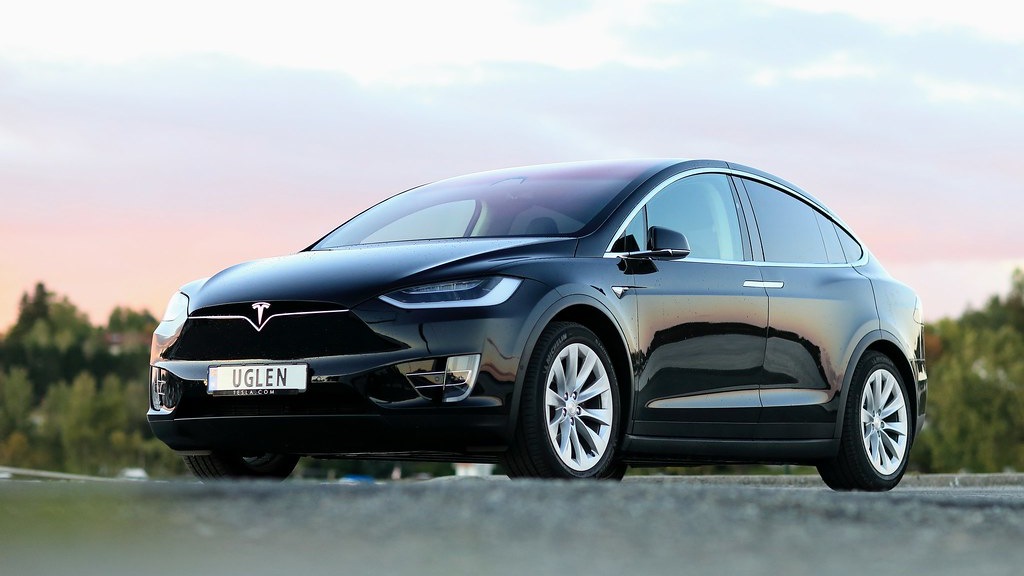
IT’S HERE! Tesla Model 2 Gigacasting Could Turn Small Crashes Into Total Loss: The upcoming Tesla Model 2 has become one of the most anticipated electric vehicles in automotive history. For years, consumers have been waiting for a truly affordable Tesla that brings the company’s advanced technology, software ecosystem, and electric driving experience to the mass market. With a rumored starting price of around $25,000, the Model 2 could dramatically reshape the global EV industry.
However, beneath the excitement surrounding Tesla’s low-cost EV lies a growing concern that many experts, insurers, and repair specialists are beginning to discuss. The very innovation that may allow Tesla to manufacture the Model 2 at such a competitive price could also create significant challenges when the vehicle is damaged.
At the center of the debate is Tesla Gigacasting, a revolutionary manufacturing process that replaces hundreds of traditional metal parts with a single massive cast structure. While this technology promises lower production costs, faster assembly, and improved structural rigidity, critics fear it could make some seemingly minor accidents surprisingly expensive to repair.
The question is simple yet incredibly important:
Could a small crash turn a Tesla Model 2 into a total loss?
Let’s explore the technology, the concerns, and what it could mean for future EV buyers.
Why the Tesla Model 2 Is Generating So Much Excitement
The anticipation surrounding the Tesla Model 2 didn’t emerge overnight. It stems from a powerful promise that has been missing from the electric vehicle market for years: a truly affordable Tesla.
Current EV options often force consumers to choose between:
- High prices
- Limited driving range
- Compromised technology
- Reduced performance
Tesla’s rumored Model 2 aims to break that pattern.
What Makes the Model 2 So Important?
If Tesla successfully delivers a vehicle featuring:
- A price near $25,000
- Competitive driving range
- Full Tesla software integration
- Access to Tesla’s charging network
- Modern driver assistance features
It could become one of the most disruptive automotive launches of the decade.
For first-time buyers, young families, students, and daily commuters, the Model 2 could finally make Tesla ownership realistic.
However, affordability isn’t just about the sticker price.
True ownership costs include insurance, maintenance, repairs, and long-term reliability.
This is where concerns about Gigacasting begin to emerge.
Understanding Tesla’s Gigacasting Revolution
One of the most important innovations behind the Model 2 is Tesla’s Gigacasting technology.
Rather than assembling a vehicle from hundreds of individual stamped metal components, Tesla creates large sections of the car using enormous aluminum casting machines.
Traditional Vehicle Manufacturing
For over a century, automakers have relied on a familiar process:
- Hundreds of steel components are stamped individually.
- Parts are welded together.
- Brackets are bolted into place.
- Structural elements are joined throughout the assembly line.
A typical vehicle may contain 400 to 500 separate structural parts.
This approach creates manufacturing complexity but offers flexibility when repairs are needed.
Tesla’s New Approach
Tesla’s Gigacasting system dramatically simplifies vehicle construction.
Instead of hundreds of parts, Tesla uses:
- Massive die-casting machines
- Molten aluminum
- Single-piece structural components
The result is a vehicle architecture made from dramatically fewer parts.
This approach is revolutionary because it removes much of the complexity traditionally associated with automobile production.
How Gigacasting Works
At its core, Gigacasting involves injecting molten aluminum into giant molds using extraordinary pressure.
Tesla’s casting machines reportedly generate between 6,000 and 9,000 tons of clamping force, making them among the largest die-casting systems ever used in automotive manufacturing.
The Gigacasting Process
The process includes:
- Heating aluminum alloy until molten.
- Injecting the metal into a giant mold.
- Applying immense pressure.
- Allowing the casting to cool.
- Producing a single integrated structural component.
The engineering precision required is astonishing.
Even minor variations can create defects such as:
- Air pockets
- Structural weaknesses
- Uneven wall thickness
- Microscopic fractures
Despite these challenges, Tesla believes Gigacasting represents the future of vehicle manufacturing.
Why Tesla Loves Gigacasting
The benefits from a manufacturing perspective are enormous.
Reduced Complexity
Traditional vehicles require hundreds of individual components.
Gigacasting eliminates many of these parts, reducing:
- Supply chain complexity
- Inventory management
- Manufacturing bottlenecks
Faster Production
Fewer components mean:
- Less assembly time
- Fewer welding stations
- Reduced labor requirements
This allows Tesla to produce vehicles much faster.
Lower Manufacturing Costs
Perhaps the biggest advantage is cost reduction.
Since battery packs remain one of the most expensive parts of any EV, Tesla must find savings elsewhere.
Gigacasting helps by:
- Reducing factory space requirements
- Lowering labor costs
- Eliminating hundreds of components
- Simplifying assembly operations
For a vehicle targeting the $25,000 price point, these savings are crucial.
The Major Concern: Repairability
While Gigacasting looks brilliant inside a factory, real-world driving introduces a different challenge.
Cars don’t live on assembly lines.
They encounter:
- Parking lot accidents
- Rear-end collisions
- Road debris
- Curbs
- Potholes
The concern is what happens when a Gigacast structure gets damaged.
Traditional Repairs Are Often Localized
In conventional vehicles, damage can often be isolated.
Repair shops may:
- Replace a bracket
- Weld a damaged section
- Install a new frame component
- Realign structural pieces
Since the vehicle consists of many individual parts, damage usually remains confined to one area.
Gigacasting Changes the Equation
When a massive single-piece casting is damaged, repairs become much more complicated.
Potential issues include:
- Hairline fractures
- Structural deformation
- Internal cracking
These problems can be difficult to identify and even harder to repair safely.
Why Insurers Are Concerned
Insurance companies focus heavily on repair costs.
A vehicle becomes a total loss when repair expenses exceed a certain percentage of its value.
For a vehicle costing around $25,000, that threshold can be reached surprisingly quickly.
The Total Loss Risk
Imagine a low-speed collision.
The bumper may show only minor cosmetic damage.
However, if impact energy reaches the underlying cast structure, even a small crack could create major problems.
Potential repair requirements may include:
- Advanced diagnostics
- Structural inspections
- Non-destructive testing
- Extensive disassembly
The costs can escalate rapidly.
If insurers determine that repairs are uneconomical, the vehicle may be written off entirely.
This is the nightmare scenario critics often discuss.
Why Aluminum Castings Are Difficult to Repair
One major challenge involves the material itself.
Steel vs. Cast Aluminum
Traditional steel structures can often be:
- Straightened
- Welded
- Reinforced
Cast aluminum behaves differently.
Once damaged, the material may lose critical structural properties.
Heating a cast aluminum component during welding can alter:
- Strength characteristics
- Crash performance
- Material integrity
As a result, repair shops face significant limitations.
They cannot simply recreate Tesla’s factory casting process.
This has led some experts to question whether certain types of casting damage can be repaired economically at all.
Tesla’s Solution: Sacrificial Crash Structures
Tesla isn’t ignoring these concerns.
The company has developed protective systems designed specifically to shield the Gigacast structure.
What Are Sacrificial Crash Rails?
Sacrificial crash rails are engineered components placed between the vehicle’s exterior and the main cast structure.
Their purpose is simple:
Absorb impact energy before it reaches the Gigacast chassis.
These components are designed to:
- Crumple during collisions
- Protect the main structure
- Be replaceable after accidents
Think of them as protective shields.
How They Help
In a typical low-speed collision:
- The bumper absorbs initial force.
- Crash rails deform.
- Energy dissipates before reaching the Gigacast section.
If successful, repairs remain relatively straightforward.
Technicians can replace the sacrificial components without touching the expensive primary casting.
Can Crash Rails Prevent Total Losses?
Industry discussions suggest Tesla’s sacrificial structures may be capable of handling a large percentage of everyday accidents.
Some estimates suggest they could absorb approximately 80% of common low-speed impacts.
If true, that dramatically changes the repair outlook.
Best-Case Scenario
In most minor accidents:
- Crash rails are replaced.
- Main casting remains intact.
- Repair costs stay manageable.
Worst-Case Scenario
In more severe impacts:
- Energy reaches the main casting.
- Structural damage occurs.
- Repair costs increase substantially.
The success of the Model 2 may ultimately depend on how effectively these protective systems perform in real-world situations.
The Insurance Industry’s Unique Perspective
There is another side to this debate.
Insurance companies don’t only evaluate vehicle repairs.
They also evaluate injury claims.
Stronger Structures Can Reduce Injuries
A Gigacast architecture creates an extremely rigid passenger compartment.
This rigidity may help:
- Protect occupants
- Maintain cabin integrity
- Distribute crash forces more effectively
If fewer occupants suffer serious injuries, insurance providers may save significant money on medical claims.
The Trade-Off
Insurance companies could eventually accept:
- Higher vehicle write-off rates
In exchange for:
- Lower injury payouts
- Reduced medical expenses
- Better occupant protection
From a financial perspective, the equation is more complex than many consumers realize.
Why Other Automakers Are Following Tesla
If Gigacasting were merely a risky experiment, competitors would likely avoid it.
Instead, the opposite is happening.
Industry-Wide Interest
Major manufacturers are actively exploring large-scale casting technology.
These include:
- Toyota
- Hyundai
- Ford
- Several Chinese EV manufacturers
This level of investment sends a strong message.
The automotive industry sees enormous potential in Gigacasting.
The Manufacturing Arms Race
The future EV market will be won by companies that can:
- Build vehicles faster
- Reduce complexity
- Lower costs
- Maintain quality
Gigacasting directly addresses all four objectives.
That is why so many automakers are racing to develop similar technologies.
Could Tesla Redefine Affordable Electric Cars?
The Model 2 represents much more than another electric vehicle launch.
It serves as a test case for an entirely new manufacturing philosophy.
Tesla is essentially betting that:
- Lower production costs
- Faster assembly
- Improved efficiency
Will outweigh:
- Repair challenges
- Insurance concerns
- Consumer skepticism
If successful, Gigacasting could become the industry standard.
If unsuccessful, it may reveal important limitations that force automakers to rethink large-scale cast structures.
Final Verdict: Will Small Crashes Really Total a Tesla Model 2?
The reality is more nuanced than headlines often suggest.
A minor accident will not automatically total every Tesla Model 2.
Tesla’s sacrificial crash structures exist specifically to prevent that outcome.
However, the concerns aren’t entirely unfounded.
If damage reaches the primary Gigacast structure, repairs could become significantly more expensive and complex than traditional vehicle repairs.
The true answer won’t emerge from factory demonstrations or engineering presentations.
It will emerge after thousands—and eventually millions—of Model 2 vehicles spend years navigating real roads, real traffic, and real accidents.
If Tesla’s crash protection systems successfully shield the Gigacast chassis in most everyday collisions, the company could achieve one of the most important manufacturing breakthroughs in modern automotive history.
But if routine fender benders frequently result in costly write-offs and rising insurance premiums, buyers may discover that a low purchase price doesn’t always translate into low ownership costs.
Until then, the Tesla Model 2 remains one of the most fascinating experiments in automotive manufacturing—and one that could reshape the future of affordable electric vehicles forever.
FAQs
1. What is Tesla Gigacasting?
Tesla Gigacasting is an advanced manufacturing process that uses giant high-pressure die-casting machines to create large sections of a vehicle’s chassis as a single aluminum piece instead of assembling hundreds of smaller parts.
2. What is the expected price of the Tesla Model 2?
Tesla has not officially confirmed pricing, but industry reports and rumors suggest the Tesla Model 2 could start around $25,000, making it Tesla’s most affordable electric vehicle.
3. Why is the Tesla Model 2 important for the EV market?
The Model 2 could significantly expand EV adoption by offering Tesla technology, software, and charging network access at a much lower price point than current Tesla models.
4. How does Gigacasting reduce vehicle production costs?
Gigacasting reduces costs by eliminating hundreds of individual components, reducing factory complexity, minimizing labor requirements, and speeding up vehicle assembly.
5. Can a small accident total a Tesla Model 2?
Not necessarily. Tesla’s design includes sacrificial crash rails intended to absorb minor impacts. However, if damage reaches the main Gigacast structure, repair costs could become significantly higher.
6. Why are insurance companies concerned about Gigacasting?
Insurers worry that structural damage to a large single-piece casting may be more expensive to repair than damage to traditional multi-part vehicle structures, potentially increasing total loss claims.
7. What are sacrificial crash rails?
Sacrificial crash rails are replaceable components designed to absorb impact energy before it reaches the vehicle’s primary Gigacast structure, helping reduce repair costs after minor collisions.
8. Is Gigacasting safer than traditional vehicle construction?
Gigacasting can improve structural rigidity and crash performance by creating a stronger, more unified chassis structure that helps distribute impact forces during a collision.
9. Why is aluminum harder to repair than steel?
Unlike steel, cast aluminum can lose structural integrity when heated or welded. This makes repairing damaged cast components more difficult and often more expensive.
10. Could Tesla Model 2 insurance premiums be higher?
Insurance premiums will depend on real-world repair data. If insurers find that Gigacast structures lead to expensive repairs or frequent total losses, premiums could rise accordingly.
11. Are other automakers using Gigacasting technology?
Yes. Automakers such as Toyota, Ford, Hyundai, and several Chinese EV manufacturers are actively exploring large-scale casting technologies similar to Tesla’s approach.
12. What happens if the main Gigacast structure is damaged?
If the primary cast structure suffers significant damage, repairs may require specialized equipment and procedures. In some cases, insurers may consider the vehicle a total loss.
13. Does Gigacasting affect the driving range of the Tesla Model 2?
Indirectly, yes. By reducing manufacturing costs and weight, Gigacasting may allow Tesla to allocate more resources toward battery technology and vehicle efficiency.
14. Will the Tesla Model 2 use Tesla’s Full Self-Driving technology?
Tesla has not released official specifications, but the Model 2 is expected to include Tesla’s software ecosystem and may support driver-assistance features similar to those offered in other Tesla vehicles.
15. Is Gigacasting the future of automotive manufacturing?
Many industry experts believe Gigacasting could become a major part of future vehicle production because it reduces costs, simplifies manufacturing, and improves production efficiency, especially for mass-market electric vehicles.
Read More:
- Tesla Semi spotted with ground truth validation equipment as launch looms
- The Real Reason Why SpaceX’s new Raptor 4 is the Best Engine Ever Made
- Tesla Reveals Major New Cybercab Update
- Crazy Solution to Land Astronauts from Starship HLS on the Moon Without 35m Elevator
- President Trump touts new Air Force One with Musk technology
1 thought on “IT’S HERE! Tesla Model 2 Gigacasting Could Turn Small Crashes Into Total Loss”