
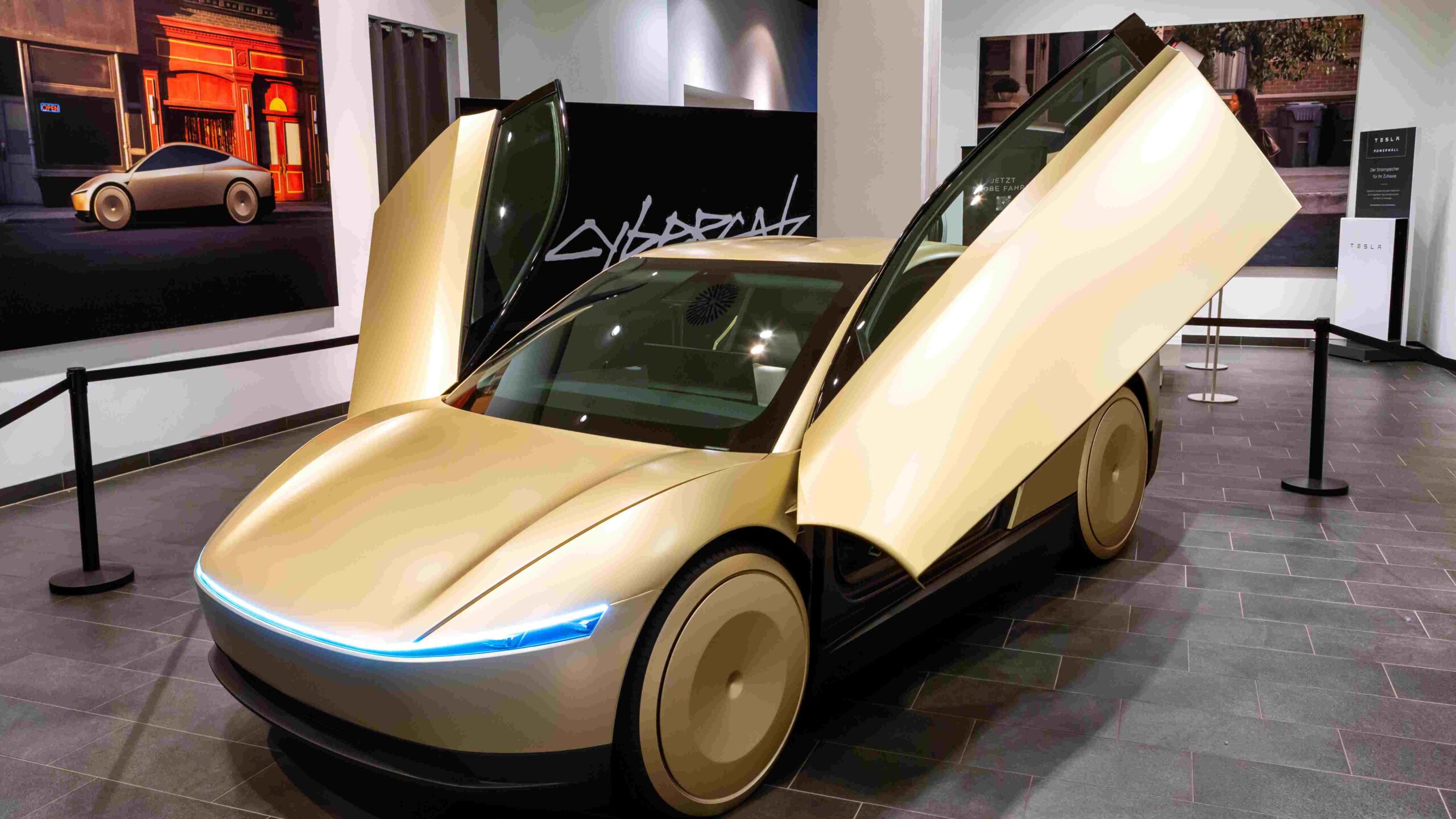
Tesla Reveals Major New Cybercab Update: The future of transportation, artificial intelligence, brain-computer interfaces, underground infrastructure, and commercial space exploration is no longer a distant vision. Across multiple industries, groundbreaking developments are reshaping how humans travel, communicate, work, and build wealth. From Tesla’s highly anticipated Cybercab, to Neuralink’s real-world mobility breakthrough, the Boring Company’s expanding tunnel networks, and SpaceX’s historic public market debut, the technology ecosystem is entering a new era of practical deployment.
Recent regulatory filings, clinical demonstrations, infrastructure projects, and financial milestones reveal a common trend: futuristic concepts are rapidly becoming real-world solutions. Among these developments, Tesla’s latest Cybercab update has attracted significant attention after official Environmental Protection Agency (EPA) certification documents unveiled previously unknown technical details.
In this article, we explore the latest Cybercab revelations, Neuralink’s groundbreaking London demonstration, the Boring Company’s tunneling progress, and how SpaceX’s IPO has created thousands of employee millionaires.
Tesla Cybercab Update: EPA Documents Reveal the Truth
When Tesla first introduced the Cybercab in October 2024, reactions were mixed. The futuristic autonomous vehicle lacked many traditional automotive features, including:
- A steering wheel
- Pedals
- Side mirrors
- Rear window
- Second-row seating
Many critics dismissed the vehicle as a futuristic transportation pod rather than a practical consumer product. However, newly released EPA certification filings tell a very different story.
These government documents provide the first comprehensive look at the production-ready Cybercab and reveal that Tesla’s engineering team has built one of the most efficient electric vehicles ever created.
Cybercab Technical Specifications Revealed
According to EPA documentation, the Cybercab is built on a highly optimized electric vehicle platform focused on efficiency and practicality.
Key Mechanical Specifications
Powertrain
The Cybercab features:
- Single electric motor
- Front-wheel drive configuration
- 219 horsepower output
While these numbers may seem modest compared to performance-focused EVs, Tesla’s objective was not maximum speed but maximum efficiency.
Vehicle Weight
The Cybercab weighs approximately:
3,113 pounds (1,412 kg)
This makes it significantly lighter than many modern electric vehicles.
Battery System
Tesla equipped the Cybercab with a:
48 kWh battery pack
Compared to many EVs carrying 70-100 kWh batteries, the Cybercab’s battery is surprisingly compact.
The Most Impressive Cybercab Feature: Efficiency
The biggest surprise in the EPA filings is not the battery size or power output—it is the vehicle’s extraordinary efficiency.
Official EPA documentation lists:
- 418 miles total range
- 375 miles highway range
Using basic calculations:
418 miles ÷ 48 kWh = approximately 8.7 miles per kWh
This efficiency level is unprecedented in modern electric vehicles.
Why This Matters
Most electric vehicles achieve between:
- 3 to 5 miles per kWh
The Cybercab nearly doubles that benchmark.
This means Tesla has successfully demonstrated that range can be increased without dramatically increasing battery size, reducing costs and improving sustainability.
Tesla’s Revolutionary Design Philosophy
The Cybercab represents a complete departure from traditional automotive design.
Traditional Vehicle Layout
Conventional vehicles are built to accommodate occasional needs such as:
- Five passengers
- Long family trips
- Large cargo loads
As a result, most cars carry unnecessary weight and complexity for everyday commuting.
Tesla’s Data-Driven Approach
Tesla engineers analyzed global transportation patterns and discovered a critical trend:
Approximately 80% of daily trips involve two passengers or fewer.
Instead of designing a vehicle around rare use cases, Tesla optimized the Cybercab for the majority of real-world journeys.
The Benefits of Removing Rear Seats
One of the Cybercab’s most controversial features is the absence of a second row.
However, the EPA documents demonstrate why this decision was made.
Increased Passenger Comfort
Despite its compact size, the Cybercab offers:
- More front-row legroom
- Greater horizontal space
- Enhanced comfort for two occupants
Massive Cargo Capacity
The elimination of rear seats creates a large cargo area capable of storing:
- Multiple suitcases
- Golf bags
- Full-size bicycles
- Foldable wheelchairs
- Airport luggage
For ride-hailing and autonomous transportation services, this is a major advantage.
Cybercab Payload Capacity
The EPA documents also reveal:
- Curb Weight: 3,113 lbs
- Gross Vehicle Weight Rating (GVWR): 3,730 lbs
This provides over:
600 pounds of payload capacity
Two adults weighing 200 pounds each can travel comfortably while carrying substantial luggage without exceeding the vehicle’s design limits.
Cybercab Is Already a Mature Product
Another major revelation from the EPA filing is the maturity of the Cybercab development program.
The vehicle submitted for certification was not an early prototype.
The tested unit had already accumulated:
More than 2,100 miles of operational testing
before reaching regulators.
Additionally, the EPA certified the Cybercab for:
150,000 miles of commercial service life
This indicates Tesla is preparing the vehicle for high-utilization autonomous fleet operations rather than limited experimental deployment.
Neuralink Achieves Historic Real-World Mobility Milestone
While Tesla is redefining transportation, Neuralink is transforming human mobility itself.
The company recently demonstrated one of the most important milestones in brain-computer interface history.
A Neuralink participant successfully navigated central London using a motorized wheelchair controlled entirely by his thoughts.
Meet Owen Egan
Owen Egan, an architect from Ireland, was diagnosed with Motor Neuron Disease (MND) in 2020.
The progressive neurological condition gradually destroyed his motor control, leaving him:
- Paralyzed
- Unable to speak
- Dependent on assistive technologies
In December 2025, Egan became one of the first participants in Neuralink’s United Kingdom clinical trial program.
Understanding the Neuralink N1 Implant
The device implanted into Egan is Neuralink’s flagship:
N1 Brain-Computer Interface
The system works by:
- Recording neural activity from the motor cortex
- Interpreting neural firing patterns
- Converting intentions into digital commands
- Wirelessly communicating those commands to external devices
The technology enables direct interaction between the human brain and digital systems.
Beyond Cursor Control
Previous Neuralink demonstrations focused on activities such as:
- Moving a computer cursor
- Operating software
- Browsing applications
- Speech synthesis
The London demonstration represented a much larger challenge.
Real-World Mobility Is Different
Controlling a wheelchair in a busy city environment requires:
Continuous Steering Adjustments
Users must constantly modify direction while moving through crowds.
Obstacle Avoidance
The system must respond instantly to:
- Pedestrians
- Platform edges
- Structural barriers
- Unexpected hazards
Speed Regulation
Safe navigation requires continuous speed adjustments based on surrounding activity.
Neuralink Successfully Handles Real-World Complexity
Egan successfully navigated London’s crowded transit system using only neural commands.
This achievement demonstrates that Neuralink’s technology can operate outside controlled laboratory conditions and function effectively amid:
- Electromagnetic interference
- Environmental distractions
- Dynamic public spaces
- Dense pedestrian traffic
The milestone represents a major step toward restoring independence for individuals with severe physical disabilities.
Restoring Human Freedom
For many users, the most important outcome is not technological advancement but personal autonomy.
Following the demonstration, Egan explained that he can once again enjoy outings with his family.
This highlights a crucial distinction:
- Communication technology restores a person’s voice.
- Mobility technology restores freedom.
Neuralink is beginning to deliver both.
The Boring Company Expands Underground Infrastructure
As Tesla and Neuralink transform transportation above ground and within the human body, the Boring Company continues building transportation infrastructure beneath the Earth’s surface.
Recent updates reveal active tunneling projects in:
- Las Vegas, Nevada
- Nashville, Tennessee
- Bastrop, Texas
Why Tunneling Is More Complex Than Most People Realize
To the public, digging tunnels may appear straightforward.
However, civil engineers face dramatically different conditions depending on geology.
Each city presents unique engineering challenges.
Las Vegas: Extreme Geological Variability
Las Vegas is currently considered one of the most difficult environments for tunneling.
Engineers must navigate:
- Loose sand
- Clay layers
- Dense caliche rock
Caliche formations can reach compressive strengths approaching:
10,000 PSI
This is comparable to reinforced concrete.
Tunnel boring machines experience intense wear as they alternate between soft and extremely hard materials.
Nashville: Stable Limestone Conditions
Compared with Las Vegas, Nashville offers:
- Consistent limestone formations
- Predictable cutting conditions
- Reduced equipment stress
These characteristics improve project efficiency and reliability.
Bastrop: Cave-In Prevention Challenges
Bastrop presents different concerns.
Engineers must address:
- Loose soil
- Sand formations
- Structural stabilization requirements
Maintaining tunnel integrity is critical in these conditions.
Music City Loop Gains Government Support
One of the most significant developments is the growing institutional support for underground transportation.
Tennessee Governor Bill Lee recently toured the active construction zone of the Music City Loop.
The visit included:
- Tunnel inspections
- Engineering briefings
- Operational reviews
This level of government engagement signals a shift in perception.
Underground transportation systems are increasingly viewed as practical infrastructure solutions rather than experimental concepts.
The Boring Company’s Long-Term Goal
The company aims to transform tunneling from a slow, expensive process into an automated manufacturing operation.
Its objectives include:
- Faster tunnel construction
- Lower infrastructure costs
- Reduced urban congestion
- Scalable transportation networks
If successful, underground mobility could become a major component of future city planning.
SpaceX IPO Creates Historic Wealth Generation Event
While technological breakthroughs continue across multiple industries, SpaceX has achieved one of the largest financial milestones in modern history.
The company’s long-awaited public offering has become a landmark event for both investors and employees.
SpaceX Valuation Surpasses $2 Trillion
Following its public market debut, SpaceX reportedly raised approximately:
$75 billion
The offering pushed the company’s valuation beyond:
$2 trillion
This places SpaceX among the most valuable corporations in the world.
The Real Story: Employee Wealth Creation
The most remarkable aspect of the IPO is not institutional investment.
It is the extraordinary wealth generated for employees.
Thousands of workers who accepted stock compensation during SpaceX’s early years are now experiencing life-changing financial outcomes.
Examples of Employee Success
Trevor Heis
- Joined SpaceX in 2011 as an intern
- Accumulated more than 100,000 shares
- Estimated equity value: $13.5 million
Gavin Petty
- Long-term SpaceX veteran
- Chose stock options over larger cash compensation
- Estimated equity value: $6.7 million
Juan Hernandez
- Former support welder
- Accumulated approximately 6,500 shares
- Estimated equity value exceeding $1 million
Thousands of New Millionaires
Financial estimates suggest:
- Approximately 4,400 current and former employees became millionaires
- Around 400 employees possess equity holdings exceeding $100 million
This wealth creation extends far beyond executives.
Beneficiaries include:
- Technicians
- Welders
- Manufacturing workers
- Support staff
- Administrative personnel
Rewarding Long-Term Risk
Two decades ago, many industry observers believed SpaceX would fail.
Employees who joined the company during its earliest years accepted:
- Lower salaries
- High uncertainty
- Intense workloads
They chose ownership over immediate financial security.
The IPO has transformed those decisions into generational wealth.
Conclusion: A New Era of Technology Is Taking Shape
The latest Cybercab revelations, Neuralink’s mobility breakthrough, the Boring Company’s expanding tunnel infrastructure, and SpaceX’s historic public offering all point toward the same conclusion:
The future is no longer theoretical—it is operational.
Tesla’s Cybercab demonstrates how radical efficiency can redefine transportation. Neuralink shows that brain-computer interfaces are beginning to restore real-world independence. The Boring Company continues laying the physical foundation for next-generation urban mobility. Meanwhile, SpaceX proves that long-term technological innovation can generate unprecedented economic value for workers as well as investors.
Together, these developments signal the emergence of a new technological era where automation, artificial intelligence, advanced infrastructure, and human-machine integration move beyond experimentation and into everyday reality.
As these technologies continue to mature, they will not simply change industries—they will reshape the way society moves, communicates, works, and creates wealth for generations to come.
FAQs
1. What is Tesla’s Cybercab?
Tesla Cybercab is a fully autonomous electric vehicle designed without a steering wheel or pedals. It is specifically built for robotaxi and autonomous transportation services, focusing on efficiency, affordability, and passenger comfort.
2. What range does the Tesla Cybercab offer?
According to EPA certification documents, the Tesla Cybercab is expected to deliver up to 418 miles of range on a single charge, making it one of the most efficient electric vehicles ever developed.
3. What battery size does the Cybercab use?
The Cybercab features a 48 kWh battery pack, which is significantly smaller than many modern EV batteries but achieves exceptional efficiency through lightweight engineering and aerodynamic design.
4. Why does the Cybercab only have two seats?
Tesla designed the Cybercab based on data showing that nearly 80% of daily vehicle trips involve two passengers or fewer. Removing the rear seats allows for more passenger space and increased cargo capacity.
5. How efficient is the Tesla Cybercab?
EPA documents suggest the Cybercab achieves approximately 8.7 miles per kWh, making it one of the most energy-efficient electric vehicles ever certified.
6. Is the Cybercab intended for personal ownership?
While Tesla has not finalized all ownership details, the Cybercab is primarily designed for autonomous ride-hailing and robotaxi fleet operations.
7. What is Neuralink’s N1 brain-computer interface?
The Neuralink N1 implant is a wireless brain-computer interface (BCI) that records neural activity and converts brain signals into digital commands, allowing users to control devices using their thoughts.
8. Who is Owen Egan?
Owen Egan is a Neuralink clinical trial participant diagnosed with Motor Neuron Disease (MND) who successfully demonstrated mind-controlled wheelchair navigation in London using the Neuralink N1 implant.
9. Why is the London Neuralink demonstration important?
The demonstration showed that Neuralink technology can function effectively in complex real-world environments, proving that brain-computer interfaces can support practical daily mobility outside laboratory settings.
10. How does Neuralink help people with paralysis?
Neuralink enables individuals with severe paralysis to control computers, communication systems, and mobility devices through neural signals, helping restore independence and quality of life.
11. What is the Boring Company?
The Boring Company is an infrastructure and tunnel construction company focused on creating high-speed underground transportation networks to reduce traffic congestion in major cities.
12. Which cities currently have active Boring Company projects?
The Boring Company is actively working on tunnel projects in Las Vegas, Nevada, Nashville, Tennessee, and Bastrop, Texas.
13. Why is tunneling in Las Vegas particularly challenging?
Las Vegas contains highly variable geological conditions, including loose sand and extremely hard caliche rock formations that can reach compressive strengths of nearly 10,000 PSI.
14. What is the Music City Loop?
The Music City Loop is a Boring Company transportation project in Nashville designed to provide efficient underground transit and help reduce urban traffic congestion.
15. How much was SpaceX valued after its IPO?
Following its public offering, SpaceX reportedly achieved a valuation exceeding $2 trillion, making it one of the world’s most valuable companies.
16. How many SpaceX employees became millionaires after the IPO?
Reports suggest that approximately 4,400 current and former SpaceX employees became millionaires due to stock ownership and equity participation following the company’s public market debut.
17. What do Tesla, Neuralink, the Boring Company, and SpaceX have in common?
All four companies share a mission of advancing transformative technologies. They focus on autonomous transportation, brain-computer interfaces, underground infrastructure, and space exploration, helping shape the future of mobility, communication, and human innovation.
Read More:
- Crazy Solution to Land Astronauts from Starship HLS on the Moon Without 35m Elevator
- President Trump touts new Air Force One with Musk technology
- DELIVERY NOW! Tesla Semi Gen 2 Gets SHOCKING New Upgrade
- SpaceX’s Much Safer Way to Land Starship on the Moon Shocked NASA
- Elon Musk UPDATE Neuralink 4.0 Chip Destroy Entire BCI Industry
1 thought on “Tesla Reveals Major New Cybercab Update”