
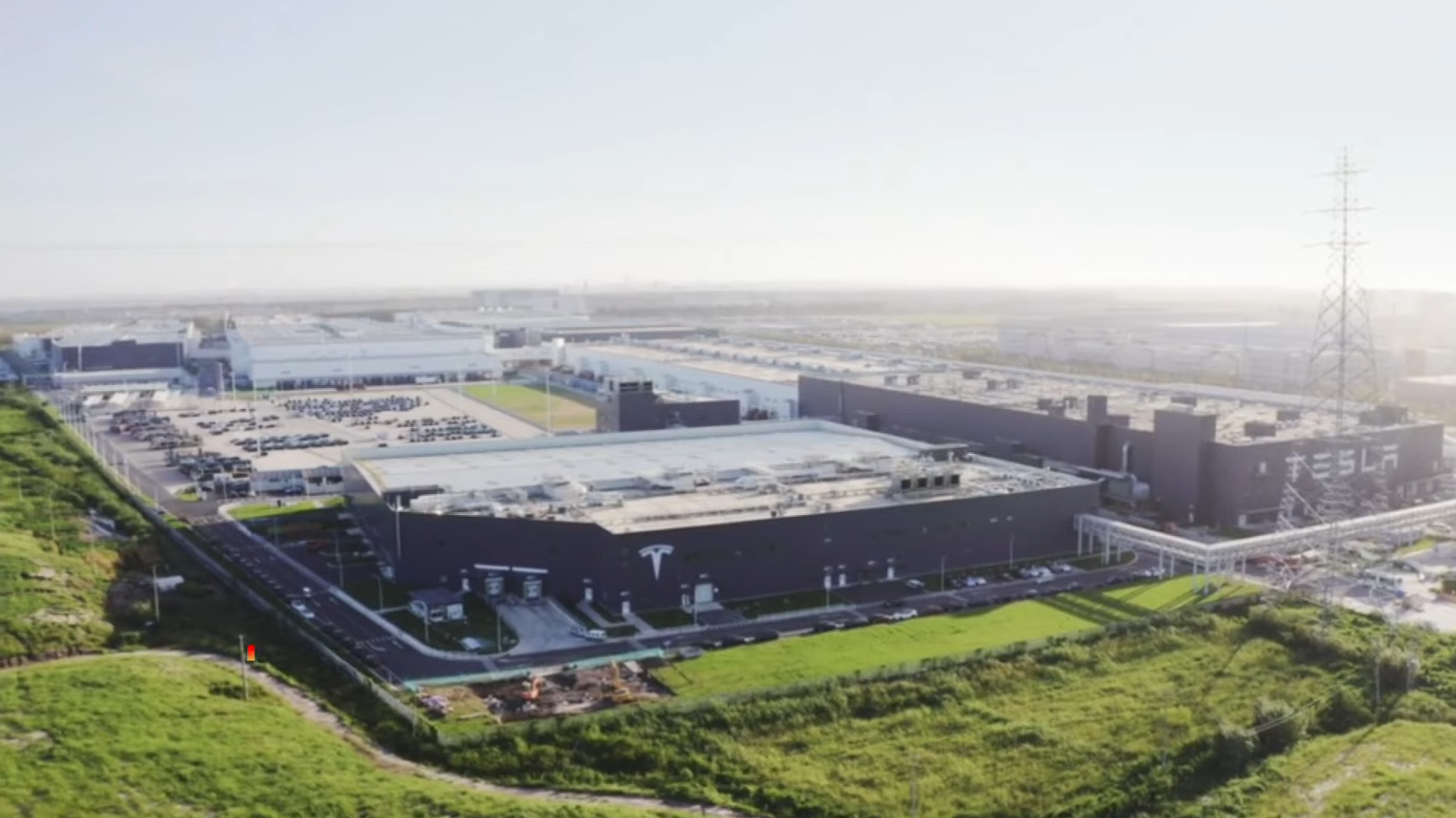
Tesla BIGGEST Solar Factory 1TW Inside Shocks The World: The global spotlight on Tesla often revolves around its revolutionary electric vehicles (EVs), Full Self-Driving (FSD) technology, the futuristic Cybercab, and the rapidly evolving Optimus humanoid robot. While these innovations continue to dominate headlines, another groundbreaking project is quietly taking shape in Brookshire, Texas, and it could become one of the most significant developments in the history of clean energy.
Tesla has officially begun construction on what is expected to become the largest solar manufacturing facility in the world. With a long-term production goal of 1 terawatt (1,000 gigawatts) of solar panels annually, this ambitious project signals Tesla’s transformation from a leading electric vehicle manufacturer into a fully integrated renewable energy powerhouse.
If successful, this mega factory could dramatically reshape the global solar industry, reduce manufacturing costs, strengthen domestic supply chains, and accelerate the world’s transition toward sustainable energy.
Tesla’s Brookshire Energy Campus: A Game-Changer for Renewable Energy
Tesla’s newest manufacturing campus is located in Brookshire, Texas, approximately 35 miles west of Houston. The company has already leased more than 1.65 million square feet of industrial space, with plans to expand even further as production scales.
Unlike conventional factories focused on a single product, Brookshire is being designed as a fully integrated clean energy campus, combining both solar panel manufacturing and energy storage production under one strategic location.
Why Brookshire, Texas?
Many industry experts expected Tesla to expand near Gigafactory Texas in Austin. Instead, Brookshire offers several strategic advantages.
Massive Logistics Advantages
Houston is home to one of the largest ports in the United States, making it ideal for importing advanced manufacturing equipment and exporting finished solar products worldwide.
The area’s extensive highway network, rail connections, and industrial infrastructure allow Tesla to move raw materials and finished products more efficiently than many competing manufacturers.
Skilled Workforce
Texas already has a large workforce experienced in heavy industry, manufacturing, chemical engineering, and energy production. Many professionals from the oil and gas sector possess skills that directly transfer into advanced solar manufacturing.
Unlimited Expansion Potential
Unlike densely populated urban regions, Brookshire offers vast amounts of available land. This provides Tesla with the flexibility to continue expanding production capacity without facing immediate real estate limitations.
A Solar Factory Built Beside a Megapack Factory
One of the smartest aspects of Tesla’s strategy is placing the new solar factory directly next to its Megapack manufacturing facility.
Rather than operating as two separate businesses, Tesla is creating a unified energy ecosystem where electricity generation and storage work together.
Utility-Scale Energy Solutions
Large solar farms produce electricity during daylight hours. However, energy demand continues long after sunset.
Tesla’s Megapack battery systems solve this challenge by storing excess solar energy during the day and releasing it back to the electrical grid when demand rises.
This combination significantly improves grid stability while maximizing renewable energy utilization.
Residential Energy Independence
Tesla applies the same concept at the residential level.
A homeowner with rooftop solar panels can pair the system with a Powerwall battery, storing excess electricity generated during the day for use at night or during power outages.
This integrated approach reduces dependence on traditional utility companies while lowering long-term electricity costs.
By manufacturing solar panels and battery storage products at the same location, Tesla reduces transportation costs, streamlines production, and creates products specifically designed to work together.
Tesla’s Vertical Integration Could Change the Solar Industry
Most solar companies rely on complex international supply chains involving multiple countries.
A typical solar panel follows a lengthy manufacturing journey:
- Raw polysilicon is refined in one country.
- Silicon wafers are produced elsewhere.
- Photovoltaic cells are manufactured in another region.
- Final panel assembly occurs in a separate facility.
This fragmented process increases production costs, shipping expenses, and supply chain risks.
Tesla plans to eliminate these inefficiencies through complete vertical integration.
Everything Under One Roof
The Brookshire facility is expected to perform every major manufacturing step internally.
Instead of depending on multiple suppliers, Tesla intends to handle:
- Raw silicon processing
- Silicon ingot production
- Wafer slicing
- Photovoltaic cell manufacturing
- Solar panel assembly
- Final product testing and packaging
Keeping every stage under one roof provides Tesla with far greater control over manufacturing quality, production speed, and operating costs.
Lower Costs and Better Quality
Vertical integration allows Tesla to reduce expensive supplier markups while improving quality control.
Engineers can quickly identify production issues, implement design improvements, and adjust manufacturing processes without waiting for overseas suppliers.
This strategy has already helped Tesla dramatically reduce costs in its electric vehicle business, and the company hopes to replicate that success in solar manufacturing.
Tesla’s Incredible Scaling Plan: From 300 MW to 1 Terawatt
Perhaps the most astonishing aspect of this project is its planned production capacity.
Tesla’s current solar manufacturing facility in Buffalo, New York, produces approximately 300 megawatts (MW) of solar panels each year.
The Brookshire factory aims to increase that output to an incredible 100 gigawatts (GW) annually during its initial production phase.
To understand the scale of this achievement, consider the difference:
- Current Buffalo Factory: 0.3 GW per year
- Brookshire Initial Target: 100 GW per year
- Ultimate Long-Term Goal: 1,000 GW (1 TW) annually
That represents more than a 300-fold increase compared to Tesla’s existing solar production.
Why 100 GW Is So Important
The United States installed approximately 32 GW of solar capacity across the entire country in a recent year.
If Tesla reaches its 100 GW annual production target, this single factory alone could manufacture more than three times the amount of solar panels currently installed across the entire U.S. market each year.
Such production would establish Tesla as one of the world’s most influential renewable energy manufacturers while dramatically increasing domestic solar production capacity.
Even if Tesla reaches only a fraction of its long-term goal, the company could still become the dominant solar manufacturer in North America and significantly reduce the cost of clean energy worldwide.
esla’s Solar Comeback: Learning from the SolarCity Experience
Tesla’s ambitious solar expansion in Texas is not its first attempt to revolutionize the renewable energy market. In 2016, the company acquired SolarCity for $2.6 billion, aiming to create a fully integrated clean energy ecosystem that combined solar panels, energy storage, and electric vehicles.
At the time, Elon Musk introduced the innovative Solar Roof, envisioning homes powered entirely by sleek solar roof tiles connected to Tesla’s Powerwall battery systems. To support this vision, the state of New York invested nearly $1 billion in incentives to build a major manufacturing facility in Buffalo.
However, the project faced several challenges.
Why the Buffalo Factory Fell Short
Although the Solar Roof generated significant excitement, manufacturing and installation proved much more difficult than expected.
Some of the major obstacles included:
- Complex production processes that slowed manufacturing.
- High installation costs, making the product less competitive.
- Panasonic ending its solar manufacturing partnership with Tesla in 2020.
- The Buffalo facility gradually shifting toward producing Supercharger components and supporting Tesla’s Autopilot and Full Self-Driving (FSD) programs.
As a result, Tesla’s solar business largely disappeared from the spotlight, with quarterly solar deployments declining over several years.
The TSP420 Marks Tesla’s Return to Solar
Rather than abandoning the solar business, Tesla quietly spent years refining its technology behind the scenes.
In late 2025, the company introduced the TSP420, a redesigned residential solar panel focused on efficiency, durability, and simplified installation. Unlike the ambitious Solar Roof, the TSP420 follows a more practical approach by offering homeowners a traditional solar panel with improved performance and lower production costs.
This product launch signaled that Tesla had overcome many of the engineering challenges that previously limited its solar ambitions.
The success of the TSP420 also laid the foundation for the enormous Brookshire manufacturing project, giving Tesla confidence that it could scale production on a much larger level.
Tesla’s Multi-Billion Dollar Investment Shows Long-Term Confidence
One of the biggest differences between Tesla’s previous solar efforts and the Brookshire project is how it is being financed.
Unlike the Buffalo factory, which relied heavily on government incentives, the Texas expansion is primarily funded through Tesla’s own financial resources.
Nearly $4 Billion in Capital Investment
Reports indicate that Tesla has committed billions of dollars toward building this next-generation manufacturing campus.
The investment includes:
- Approximately $2.9 billion for advanced solar manufacturing equipment sourced from leading machinery suppliers.
- Construction of specialized cleanrooms and highly automated production lines.
- New electrical infrastructure, environmental control systems, and logistics facilities.
- Additional expansion capacity to support future production increases.
Industry analysts estimate the total investment could exceed $4 billion, making it one of Tesla’s largest energy infrastructure projects to date.
This level of investment demonstrates Tesla’s belief that renewable energy generation and battery storage will become just as important as its electric vehicle business over the coming decades.
Tesla Doesn’t Need 1 TW to Dominate
The headline figure of 1 terawatt (1,000 GW) understandably attracts attention, but Tesla does not need to achieve that goal immediately for the project to be considered a success.
Even partial production would dramatically reshape the American solar market.
Scenario 1: 20–30 GW Annual Output
If Brookshire reaches only 20 to 30 GW of annual production, Tesla would instantly become one of the largest solar manufacturers in the United States.
That alone would significantly strengthen domestic manufacturing while reducing dependence on imported solar products.
Scenario 2: 50 GW Annual Output
At 50 GW per year, Tesla would surpass the combined production capacity of many existing domestic competitors.
Such output would likely lower cost per watt, increase competition, and accelerate solar adoption across residential, commercial, and utility-scale projects.
The Long-Term Vision
If Tesla eventually reaches its full 100 GW production target—and ultimately scales toward 1 TW—the company could fundamentally transform the global renewable energy industry.
Few manufacturers in history have attempted production at this scale.
Giga Berlin Expansion Supports Tesla’s Global Energy Strategy
Tesla’s renewable energy ambitions extend beyond the United States.
At Gigafactory Berlin-Brandenburg in Germany, Tesla is expanding its manufacturing footprint with plans to nearly double the site’s size.
The additional space is expected to support:
- Increased electric vehicle production.
- Dedicated Cybercab manufacturing lines.
- Expanded robotics integration using Optimus.
- Future battery production growth.
This expansion strengthens Tesla’s European manufacturing capabilities while reducing reliance on overseas vehicle shipments.
Cybercab Manufacturing Moves Closer to Europe
Tesla has already started producing its purpose-built Cybercab vehicle in Texas.
By creating dedicated Cybercab assembly lines in Germany, Tesla will be able to manufacture autonomous vehicles directly within Europe once regulatory approvals are granted.
This localized production strategy offers several benefits:
- Lower transportation costs.
- Faster deliveries.
- Easier compliance with European regulations.
- Improved support for future robotaxi fleets.
Combined with Tesla’s expanding battery and solar manufacturing operations, the company is building an integrated global clean energy and transportation network.
Conclusion
Tesla’s massive Brookshire Energy Campus represents far more than another factory—it marks a significant step toward the company’s long-term vision of becoming a global clean energy leader.
By combining solar panel manufacturing, Megapack battery production, and vertical integration under one roof, Tesla aims to simplify production, reduce costs, and accelerate the adoption of renewable energy worldwide.
Although headlines often focus on electric vehicles, Cybercab, or Optimus, the Brookshire project could ultimately have an even greater impact. A manufacturing facility capable of producing 100 GW annually—and eventually scaling toward 1 terawatt—has the potential to reshape the economics of solar energy for decades to come.
Even if Tesla achieves only a portion of its ambitious target, it would still emerge as one of the world’s largest solar manufacturers, strengthening domestic production and helping drive the global transition toward sustainable energy.
As construction progresses, the Brookshire factory will be closely watched by investors, industry experts, and governments alike. If Tesla successfully executes its vision, this project may become one of the defining milestones in the future of renewable energy.
FAQs
1. What is Tesla’s new 1TW solar factory?
Tesla’s new solar factory in Brookshire, Texas, is an ambitious manufacturing facility designed to produce up to 1 terawatt (1,000 GW) of solar panels annually. If completed as planned, it will become the largest solar manufacturing facility in the world.
2. Where is Tesla building its biggest solar factory?
Tesla is constructing its largest solar manufacturing campus in Brookshire, Texas, about 35 miles west of Houston. The location provides excellent logistics, skilled labor, and room for future expansion.
3. Why did Tesla choose Brookshire, Texas?
Brookshire offers access to Houston’s major port, an established industrial infrastructure, a skilled engineering workforce, and large areas of land suitable for expanding a massive manufacturing operation.
4. What is Tesla’s annual solar production target?
Tesla plans to begin with a production capacity of 100 GW per year and eventually scale the factory to produce 1 TW (1,000 GW) of solar panels annually.
5. How does Tesla’s solar factory compare to its Buffalo facility?
Tesla’s Buffalo factory produces around 300 MW (0.3 GW) of solar panels annually, while the Brookshire factory aims to produce 100 GW, making it more than 300 times larger in planned output.
6. What is vertical integration in Tesla’s solar manufacturing?
Vertical integration means Tesla will control the entire production process, including silicon processing, wafer production, photovoltaic cell manufacturing, and final solar panel assembly within a single facility.
7. What are the advantages of Tesla’s vertical integration strategy?
By manufacturing everything under one roof, Tesla can reduce production costs, improve quality control, minimize supply chain risks, and accelerate innovation without relying heavily on overseas suppliers.
8. Why is the Brookshire solar factory located next to a Megapack factory?
Building the solar factory beside Tesla’s Megapack facility allows the company to manufacture both energy generation and energy storage products in one location, reducing logistics costs and creating a more efficient clean energy ecosystem.
9. How much is Tesla investing in the Brookshire project?
Industry reports estimate Tesla’s investment will exceed $4 billion, covering advanced manufacturing equipment, cleanrooms, infrastructure, automated production systems, and future expansion.
10. What happened to Tesla’s SolarCity project?
After acquiring SolarCity in 2016, Tesla faced manufacturing and installation challenges with its Solar Roof product. The Buffalo factory was later repurposed for other Tesla operations while the company refined its solar technology.
11. What is the Tesla TSP420 solar panel?
The TSP420 is Tesla’s latest residential solar panel, introduced with improved efficiency, durability, and easier installation. It represents the company’s renewed focus on expanding its solar business.
12. Will Tesla’s new factory reduce solar panel prices?
Large-scale manufacturing and vertical integration could significantly lower production costs, which may help make solar panels more affordable for homeowners, businesses, and utility-scale energy projects.
13. Does Tesla need to reach 1 TW for the project to succeed?
No. Even producing 20–50 GW annually would make Tesla one of the largest solar manufacturers in the United States and significantly reshape the domestic solar market.
14. How does the Brookshire project support Tesla’s clean energy strategy?
The factory strengthens Tesla’s vision of integrating solar energy, battery storage, and electric vehicles, creating a complete renewable energy ecosystem for residential, commercial, and utility-scale applications.
15. How is Giga Berlin connected to Tesla’s renewable energy plans?
Tesla is expanding Giga Berlin to increase vehicle production and prepare for future Cybercab manufacturing. Together with the Brookshire solar project, these expansions support Tesla’s long-term global growth strategy.
16. Why is Tesla’s 1TW solar factory considered a game changer?
The project has the potential to transform global renewable energy by dramatically increasing solar panel production, lowering manufacturing costs, strengthening domestic supply chains, and accelerating the worldwide transition to clean energy.
Read More:
- Tesla’s INSANE New Upgrade Makes Cybercab 100% SAFE
- Tesla Phone? Not quite, but close: analyst
- Tesla Full Self-Driving v14 ‘Lite’ for older cars finally gets released
- Tesla Full Self-Driving v14 ‘Lite’ Release Notes: new capabilities and features
- Tesla reveals huge Cybercab detail in new guide for First Responders