
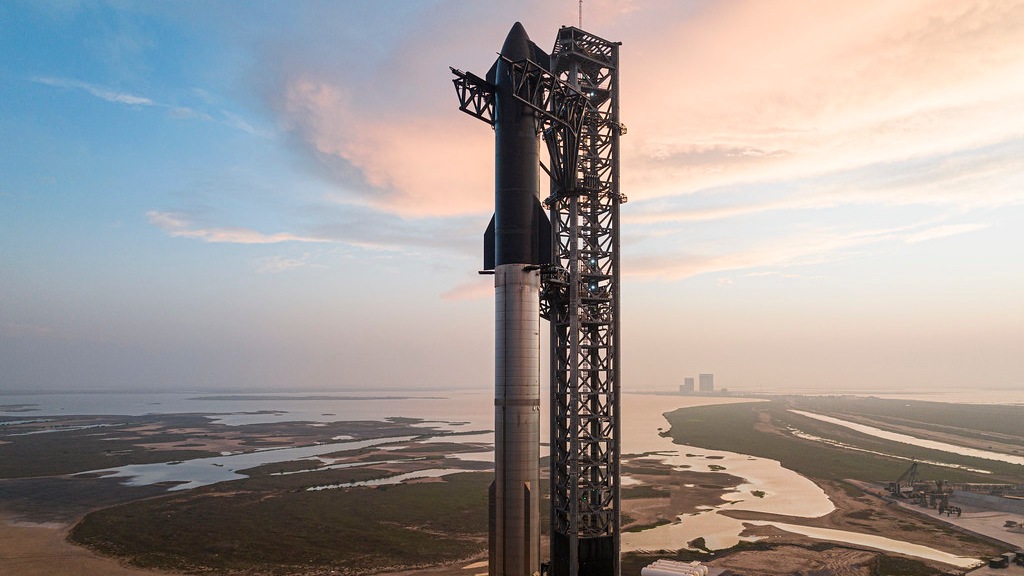
SpaceX’s 1st Starfall Capsule Reentry Made History! Starship Flight 13 Launch Incoming: The commercial space industry is entering an exciting new era where reusable rockets, orbital manufacturing, lunar exploration, and private aerospace companies are reshaping the future of spaceflight. Companies like SpaceX, Blue Origin, and Varda Space Industries are no longer competing only for satellite launches—they are transforming how humanity manufactures products in orbit, returns cargo to Earth, and prepares for permanent lunar missions.
The latest milestones include SpaceX’s first Starfall capsule demonstration, preparations for Starship Flight 13, major infrastructure expansion in Florida, and NASA’s evolving Artemis strategy. Together, these developments mark one of the biggest shifts in modern aerospace history.
Starfall Opens a New Era of Commercial Space Manufacturing
One of the fastest-growing sectors in space is microgravity manufacturing. Scientists have long known that products manufactured in the weightlessness of Low Earth Orbit (LEO) can achieve a quality impossible to replicate on Earth.
Without gravity, materials experience:
- No sedimentation
- No convection currents
- Improved crystal growth
- Higher pharmaceutical purity
These conditions enable production of advanced medicines, fiber optics, semiconductors, and specialty materials.
Previously, Varda Space Industries led this niche by launching automated capsules aboard Falcon 9 rideshare missions. Their spacecraft manufacture valuable materials in orbit before safely returning them to Earth.
Now, SpaceX has officially entered the market with its own dedicated reentry vehicle called Starfall.
SpaceX Successfully Launches the First Starfall Demonstration Mission
The first Starfall demonstration capsule launched aboard a Falcon 9 rocket from Cape Canaveral’s Space Launch Complex 40.
Rather than carrying commercial products, this initial mission focused on validating critical engineering systems before beginning regular cargo operations.
Mission Objectives
The demonstration tested several key technologies:
- Autonomous orbital operations
- Precision guidance and navigation
- Communication systems
- Thermal protection during atmospheric reentry
- Controlled ocean splashdown
According to FAA filings, the capsule targeted a recovery zone nearly 800 miles west of California, making it one of SpaceX’s most significant cargo recovery demonstrations.
Starfall vs Varda: A Massive Leap in Capability
Although both spacecraft support orbital manufacturing, Starfall is significantly larger than Varda’s capsule.
Key Advantages of Starfall
- Approximately 3x larger diameter
- Around 2,000 kg total mass
- Up to 1,000 kg payload capacity
- Supports industrial-scale manufacturing
- Compatible with Falcon 9 and Falcon Heavy
The increased size transforms orbital manufacturing from small laboratory experiments into large-scale commercial production, dramatically improving economic viability.
Advanced Engineering Behind the Starfall Capsule
Starfall uses a two-section architecture designed for safe reentry.
Upper Section
The upper module houses:
- Scientific payloads
- Electronics
- Flight computers
- Attitude control systems
Lower Section
The lower module features:
- Carbon-fiber heat shield
- Nitrogen-based attitude control system
- Parachute deployment hardware
- Heat shield separation mechanisms
Unlike traditional spacecraft, Starfall currently lacks its own high-thrust propulsion system. Instead, it relies on the Falcon 9 upper stage to place it onto its return trajectory before separation.
Another major advantage is its environmentally friendly design. The spacecraft contains no toxic liquid propellants, and all nitrogen gas is vented before splashdown, minimizing environmental impact.
Starship Flight 13 Testing Begins at Starbase
While Starfall captured headlines, SpaceX engineers were equally busy preparing for Starship Flight 13.
After the successful Flight 12, development briefly slowed while teams upgraded hardware inside Mega Bay 2.
The quiet period ended with the rollout of Ship 40 (S40) to the Massey’s Test Site.
Static Fire Campaign
At Massey’s, engineers began:
- Loading liquid methane
- Loading liquid oxygen
- Performing cryogenic testing
- Ignition verification
Observers noticed a brief ignition flash before the test was halted.
This likely indicates either:
- An automated countdown abort
- A planned cryogenic proof test
Both are common during advanced rocket development and help ensure maximum reliability before flight.
SpaceX Accelerates Production with Flight 14 Hardware
One of the biggest signs of SpaceX’s growing manufacturing capability is its parallel production strategy.
Rather than waiting for Ship 40 to finish testing, engineers immediately rolled out Ship 41 for structural verification.
This staggered workflow allows SpaceX to:
- Keep testing facilities fully occupied
- Speed up production
- Reduce launch delays
- Increase overall launch cadence
Meanwhile, Super Heavy Booster 20 is completing final integration before its massive 33-engine static fire test.
These milestones keep Starship Flight 13 on track for a potential late-summer launch window.
Mystery Starship Nose Cone Sparks Speculation
Another fascinating development inside the Star Factory is the appearance of a mysterious new nose cone prototype.
The structure includes:
- Large reinforced openings
- Multiple circular ports
- Heavy structural connection rings
Spaceflight analysts believe it could support future missions involving:
Orbital Refueling
A reinforced docking interface could simplify fuel transfer between Starships.
Artemis Lunar Docking
The design may accommodate docking systems for NASA’s Orion spacecraft during Artemis III and Artemis IV.
Lunar Maneuvering Thrusters
The openings may also house specialized thrusters needed for precise lunar landings while minimizing dust contamination.
Florida Becomes SpaceX’s Next Major Launch Hub
SpaceX is rapidly expanding operations beyond Texas.
Construction is progressing at Space Launch Complex 37, where the former Delta IV infrastructure is being replaced with a brand-new Starship launch complex.
Tower construction has officially begun, bringing Florida closer to operating multiple Starship launch sites simultaneously.
This expansion is essential for supporting SpaceX’s long-term vision of high-frequency reusable launches.
NASA Faces Growing Infrastructure Challenges
As commercial launch activity increases, NASA’s aging infrastructure is struggling to keep pace.
Launches from Florida have grown dramatically over the past few years, placing enormous stress on:
- Power systems
- Road networks
- Water pipelines
- Industrial gas facilities
NASA estimates launch activity could increase another 150% by 2030.
The agency’s Office of Inspector General recommends investing approximately $1 billion to modernize shared launch infrastructure before it becomes a major operational bottleneck.
SpaceX’s Vision of Hourly Starship Launches
Perhaps the most ambitious goal is SpaceX’s plan for hourly Starship flights.
If fully reusable Starships achieve aviation-like operations, the company could eventually launch millions of tons of cargo into orbit every year.
Making this possible requires:
- Rapid vehicle refurbishment
- Fully reusable boosters
- Automated launch operations
- Mid-air booster recovery using Mechazilla
- High-volume production lines
Although incredibly ambitious, this strategy could completely redefine global access to space.
Blue Origin’s Blue Moon Challenges SpaceX
While SpaceX pushes massive reusable spacecraft, Blue Origin is pursuing a different path with the Blue Moon Mark II lunar lander.
The vehicle is designed specifically for NASA’s Artemis V mission.
Blue Moon Highlights
- Two-astronaut crew cabin
- Stable low-profile landing design
- Dedicated lunar descent and ascent systems
- Human-in-the-loop testing
- Advanced lunar surface operations
Blue Origin also continues testing the Blue Moon Mark I cargo lander, which will pave the way for future crewed missions.
SpaceX vs Blue Origin: Two Different Lunar Strategies
Although both companies aim to return humans to the Moon, their philosophies differ significantly.
SpaceX
- Massive payload capacity
- Fully reusable architecture
- Orbital refueling
- Mars-focused technology
- Long-term lunar infrastructure
Blue Origin
- Traditional lander design
- Smaller, focused missions
- Lower technical risk
- Proven engineering approach
- Gradual development philosophy
Together, these approaches provide NASA with multiple pathways toward sustainable lunar exploration.
NASA’s Artemis Program Continues to Evolve
NASA has also revised its long-term Artemis Program strategy following significant cost overruns across several legacy projects.
Rather than relying entirely on government-developed hardware, the agency is increasingly embracing commercial partnerships with SpaceX and Blue Origin.
This shift enables:
- Faster innovation
- Lower development costs
- More launch opportunities
- Sustainable lunar exploration
The combination of commercial competition and government oversight is creating a stronger foundation for humanity’s return to deep space.
Final Thoughts
The modern space industry is evolving faster than ever before. Starfall’s successful demonstration, Starship Flight 13 preparations, expanding launch infrastructure, and the race between SpaceX and Blue Origin are accelerating humanity’s journey beyond Earth.
Whether through microgravity manufacturing, reusable Starship launches, or NASA’s Artemis Moon missions, these advancements are laying the groundwork for a future where space transportation becomes as routine as commercial aviation.
The next few years will determine not only who leads the new space economy but also how quickly humanity establishes a permanent presence on the Moon—and eventually, Mars.
FAQs
1. What is SpaceX’s Starfall capsule?
SpaceX’s Starfall capsule is a reusable cargo return spacecraft designed to transport scientific experiments, manufactured materials, and commercial payloads from Low Earth Orbit (LEO) back to Earth safely. It supports the growing market of orbital manufacturing and microgravity research.
2. Why is the Starfall mission important?
The Starfall mission marks SpaceX’s entry into the commercial microgravity manufacturing sector. It demonstrates the company’s ability to perform controlled cargo reentry, opening new opportunities for pharmaceutical research, advanced materials, and industrial space manufacturing.
3. How is Starfall different from Varda Space Industries’ capsule?
Starfall is significantly larger than Varda’s capsule, with a payload capacity of up to 1,000 kilograms, compared to only a few dozen kilograms for Varda. This allows SpaceX to support larger scientific experiments and commercial manufacturing missions.
4. What is microgravity manufacturing?
Microgravity manufacturing involves producing materials in the weightless environment of space. Without Earth’s gravity, scientists can create higher-quality crystals, pharmaceuticals, fiber optics, and advanced materials that are difficult or impossible to manufacture on Earth.
5. What is Starship Flight 13?
Starship Flight 13 is the next major test mission in SpaceX’s fully reusable Starship development program. The mission is expected to validate upgraded hardware, Raptor engines, and vehicle systems ahead of future orbital and lunar missions.
6. What is the purpose of static fire testing?
A static fire test allows engineers to ignite rocket engines while the vehicle remains secured to the ground. This verifies engine performance, fuel systems, plumbing, and software before launch.
7. Why is SpaceX expanding its Florida launch facilities?
SpaceX is expanding its Florida operations to increase launch frequency and support future Starship missions. New launch infrastructure at Space Launch Complex 37 will complement existing facilities and help achieve rapid launch operations.
8. What is Mechazilla?
Mechazilla is SpaceX’s giant launch tower equipped with mechanical arms, often called “chopsticks.” It is designed to catch both the Super Heavy booster and Starship after flight, reducing turnaround time and enabling rapid rocket reuse.
9. What is Blue Origin’s Blue Moon Mark II lander?
Blue Moon Mark II is Blue Origin’s crewed lunar lander being developed for NASA’s Artemis V mission. It is designed to transport astronauts safely between lunar orbit and the Moon’s surface.
10. How does Blue Moon differ from Starship HLS?
Blue Moon is a smaller, traditional lunar lander focused on carrying two astronauts, while Starship Human Landing System (HLS) is a much larger spacecraft capable of transporting massive cargo and supporting long-duration lunar missions.
11. Why is NASA partnering with commercial space companies?
NASA partners with companies like SpaceX and Blue Origin to reduce development costs, accelerate innovation, increase launch opportunities, and build sustainable systems for future Moon and Mars exploration.
12. What is the Artemis Program?
The Artemis Program is NASA’s initiative to return astronauts to the Moon, establish a long-term lunar presence, and prepare for future human missions to Mars through partnerships with commercial aerospace companies.
13. What is orbital refueling, and why is it important?
Orbital refueling allows spacecraft to transfer propellant while in space, enabling larger payloads and longer missions. It is a critical technology for Starship’s planned lunar and Mars exploration missions.
14. Can Starship eventually launch multiple times per day?
SpaceX aims to develop Starship into a fully reusable launch system capable of extremely rapid turnaround times. The company’s long-term vision includes frequent, airline-style operations, although achieving multiple daily launches will require significant infrastructure and operational advances.
15. What does Starfall’s successful demonstration mean for the future of spaceflight?
Starfall’s successful demonstration highlights the growing commercialization of space. It brings routine cargo return, orbital manufacturing, and reusable spacecraft one step closer to becoming a regular part of the global space economy.
Read More:
- Tesla crushes Wall Street expectations, beats delivery estimates by over 15 percent
- Tesla is using vehicle microphones to improve build quality: here’s how
- Tesla just told us twice that Model Y L is coming to the U.S.
- Tesla brings Model Y L ‘Launch Series’ to the U.S. at $61,990
- Tesla Bot Gen 3 Gets Major Upgrade For Tesla’s 1M Robot Goal
1 thought on “SpaceX’s 1st Starfall Capsule Reentry Made History! Starship Flight 13 Launch Incoming”