
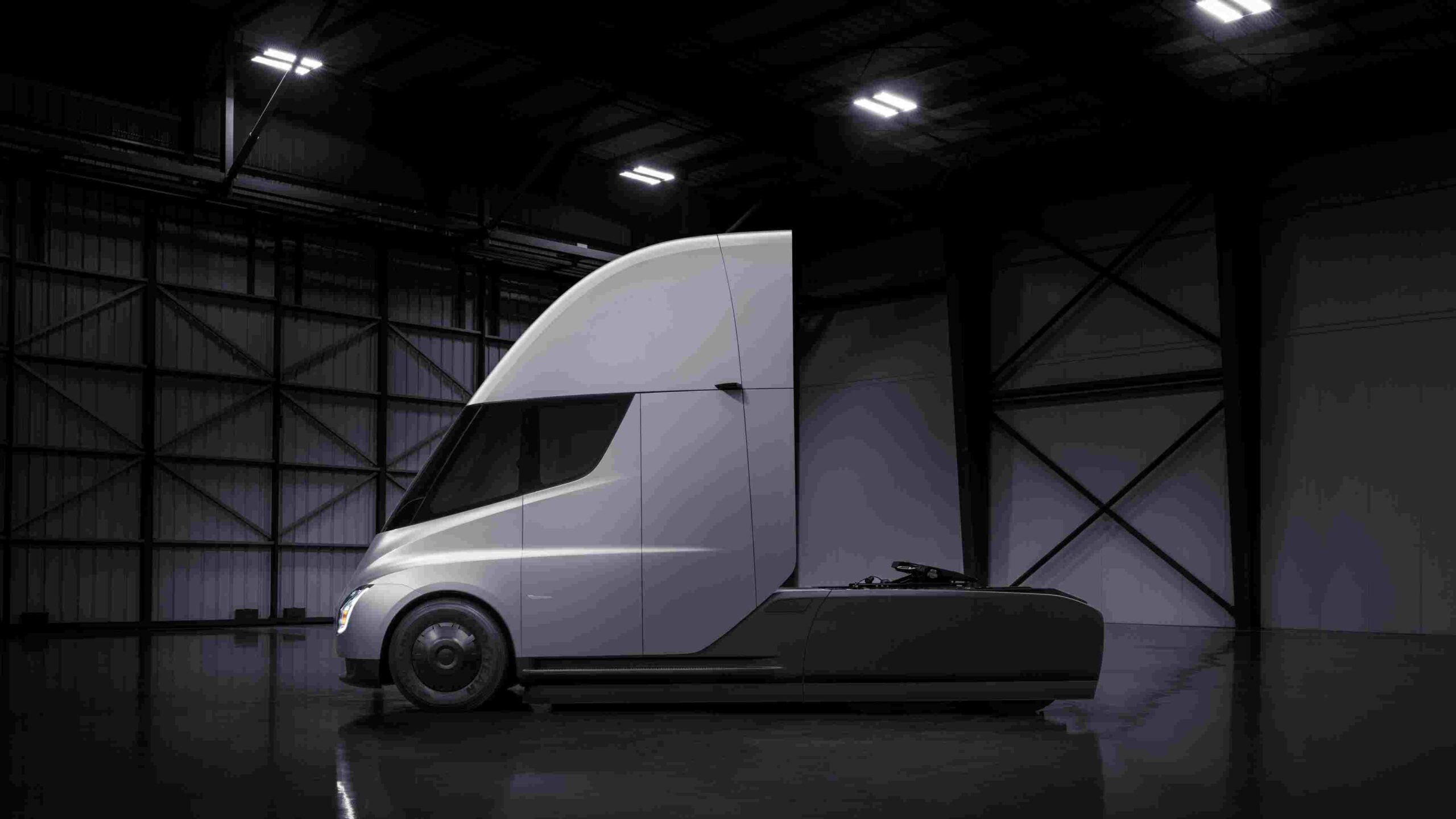
Tesla Semi 2.0 Just Upgraded A Major Feature & New Cabin: The Tesla Semi has evolved from an ambitious concept into a next-generation electric Class 8 truck designed for the future of commercial transportation. With a series of major hardware, software, and driver-focused upgrades, Tesla is quietly transforming the Semi into one of the most advanced freight vehicles on the road.
From improved Full Self-Driving (FSD) capabilities and intelligent Vehicle Dynamics Control (VDC) to a redesigned cabin and impressive fleet reliability, the latest updates showcase Tesla’s long-term vision for autonomous trucking and sustainable logistics.
In this article, we’ll explore every major improvement in the Tesla Semi 2.0, including its new cabin, AI-powered driving system, advanced safety technologies, and fleet performance.
Tesla Semi 2.0 Receives Major Full Self-Driving (FSD) Upgrades
One of the biggest improvements in the latest Tesla Semi is its rapidly advancing Full Self-Driving (FSD) development program. Tesla is collecting massive amounts of real-world driving data to train its neural networks for future autonomous freight operations.
Ground Truth Validation Rig Improves AI Accuracy
Recently, a production Tesla Semi was spotted near Fremont, California, equipped with a specialized roof-mounted Ground Truth Validation Rig.
This sophisticated system captures extremely accurate environmental data that serves as the “answer key” for Tesla’s AI. Engineers compare this reference data with what the truck’s onboard cameras and neural networks detect.
Whenever the AI incorrectly identifies:
- Lane boundaries
- Road objects
- Distances
- Vehicle movement
the collected information helps retrain Tesla’s neural network, making future predictions increasingly accurate.
This validation process is essential for creating a reliable autonomous trucking platform.
Why Autonomous Driving Is More Difficult for Tesla Semi
Developing autonomous software for a Class 8 electric truck is significantly more challenging than building self-driving technology for passenger vehicles.
A fully loaded Tesla Semi can weigh up to 82,000 pounds, creating several engineering challenges:
- Much longer braking distances
- Higher momentum
- Trailer sway prevention
- Jackknife avoidance
- Precise steering control during emergency maneuvers
Even a minor steering correction at highway speeds requires sophisticated software capable of managing both the tractor and trailer simultaneously.
Tesla’s updated AI has been specifically designed to handle these complex situations safely.
New Camera System Makes Tesla Semi Smarter
Another important improvement is the Semi’s optimized camera architecture.
Early Tesla Semi prototypes featured as many as 26 cameras, but engineers discovered that a more refined system could deliver better performance with less complexity.
The production model now features:
- 10 exterior cameras
- 1 cabin-facing camera
These cameras are supplied exclusively by Samsung and provide the visual data required for Tesla’s advanced AI systems.
The simplified camera arrangement reduces hardware complexity while maintaining excellent visibility around the truck.
Advanced Vehicle Dynamics Control (VDC) Improves Safety
Safety has always been one of Tesla’s biggest priorities, and the new Vehicle Dynamics Control (VDC) system represents one of the most important upgrades for commercial trucking.
Unlike conventional diesel trucks, electric motors can adjust power almost instantly.
Instant Torque Distribution
Traditional diesel trucks rely on:
- Engine response
- Mechanical transmissions
- Hydraulic systems
These components introduce delays when traction control is needed.
The Tesla Semi’s electric motors respond in fractions of a second by:
- Adjusting wheel torque
- Redistributing power
- Applying selective braking
This rapid response significantly improves vehicle stability on slippery roads.
Tesla Semi Successfully Passed Extreme Ice Testing
Tesla tested the Semi extensively on low-friction ice tracks in Alaska.
These tests evaluated how the truck behaves under dangerous winter driving conditions.
During testing, the VDC continuously monitored:
- Wheel speed
- Steering angle
- Lateral vehicle forces
- Tire traction
When the truck began to lose grip, the system immediately reduced motor torque and selectively applied braking to individual wheels.
Instead of allowing the trailer to swing out or jackknife, the Semi automatically corrected its path before traction was completely lost.
This intelligent stability system offers a major safety advantage for freight companies operating in harsh winter climates.
Heavy Ballast Testing Simulated Real Freight Loads
Tesla didn’t stop with empty vehicle testing.
Engineers loaded the trailer with:
- Heavy steel bars
- Concrete ballast
This recreated real-world hauling conditions using a high-mass, low-center-of-gravity trailer.
Testing with realistic cargo ensures the vehicle performs safely under the same conditions experienced by commercial freight operators every day.
Tesla Semi’s New Cabin Is Designed Like an Office on Wheels
Tesla has also redesigned the cabin to improve everyday usability for professional drivers.
While the iconic center driving position remains unchanged, several ergonomic improvements make long-haul driving more comfortable.
Larger 16-Inch QHD Displays
The Semi now features upgraded dual 16-inch QHD touchscreens positioned on both sides of the steering wheel.
These displays provide:
- Navigation
- Vehicle diagnostics
- Fleet information
- Camera views
- Energy management
Their placement aligns naturally with the driver’s field of vision, reducing distractions while driving.
Practical Cabin Improvements Based on Driver Feedback
Tesla collected feedback from fleet operators and early drivers to redesign the cabin with everyday practicality in mind.
Some of the biggest improvements include:
Higher Cup Holders
Cup holders are now positioned higher, making drinks easier to access without taking attention away from the road.
Larger Storage Compartments
Side storage spaces have been expanded, giving drivers more room for paperwork, electronics, and personal belongings.
Improved Steering Wheel Controls
Frequently used controls have been consolidated, allowing drivers to operate more functions with one hand.
Larger Side Windows
The redesigned side windows extend deeper into the doors.
This makes it easier for drivers to:
- Speak with security personnel
- Access gate controls
- Reach outside during depot operations
These seemingly small updates can greatly improve productivity during daily freight operations.
Tesla Semi Fleet Surpasses 13.5 Million Miles
Tesla’s commercial fleet continues to demonstrate impressive real-world reliability.
The global Tesla Semi fleet has now accumulated more than 13.5 million miles of operation.
This growing dataset gives Tesla valuable information for improving:
- Battery durability
- AI driving systems
- Energy efficiency
- Maintenance schedules
- Software updates
Every mile helps make future versions even more reliable.
High-Mileage Tesla Semi Demonstrates Exceptional Durability
One standout truck in the fleet has already exceeded 440,000 miles, proving that Tesla’s electric drivetrain is capable of handling demanding commercial workloads.
This milestone suggests that electric trucks can compete with traditional diesel vehicles in terms of long-term durability while offering lower maintenance requirements.
95% Fleet Uptime Shows Commercial Readiness
For logistics companies, vehicle uptime directly affects profitability.
Tesla reports that the Semi fleet currently achieves an impressive 95% operational uptime.
Even more encouraging:
- 75–80% of service issues are resolved within 24 hours.
- Nearly half of all repairs are completed in under one hour.
Fast service minimizes downtime, helping freight operators keep deliveries on schedule and protect revenue.
Final Thoughts
The latest updates prove that the Tesla Semi 2.0 is no longer just an exciting prototype—it is becoming a mature, highly capable commercial trucking platform. With significant advances in Full Self-Driving development, AI validation, Vehicle Dynamics Control, driver ergonomics, and fleet reliability, Tesla is positioning the Semi as a serious competitor in the heavy-duty transport industry.
As Tesla continues gathering millions of miles of real-world data, the Semi is expected to become even smarter, safer, and more efficient. For fleet operators seeking lower operating costs, improved safety, and future-ready technology, the Tesla Semi 2.0 represents a major step toward the next generation of electric freight transportation.
FAQs
1. What is the Tesla Semi 2.0?
Tesla Semi 2.0 is the latest version of Tesla’s all-electric Class 8 truck, featuring upgraded Full Self-Driving (FSD) technology, enhanced safety systems, a redesigned cabin, and improved fleet reliability.
2. What major upgrade has Tesla added to the Semi?
The biggest upgrade is the continued development of Full Self-Driving (FSD) using advanced Ground Truth Validation technology, which helps improve the truck’s AI accuracy for future autonomous operations.
3. What is the Ground Truth Validation Rig?
The Ground Truth Validation Rig is a roof-mounted sensor system that collects highly accurate environmental data. Tesla uses this information to compare real-world conditions with its AI predictions and improve autonomous driving performance.
4. How many cameras does the production Tesla Semi have?
The production Tesla Semi features 10 exterior cameras and 1 cabin-facing camera, replacing the 26-camera setup used on early prototypes.
5. Why is autonomous driving more challenging for the Tesla Semi?
A fully loaded Tesla Semi can weigh up to 82,000 pounds, requiring longer stopping distances, better trailer control, and advanced software to prevent trailer sway and jackknifing.
6. What is Vehicle Dynamics Control (VDC)?
Vehicle Dynamics Control (VDC) is Tesla’s intelligent stability system that instantly adjusts motor torque and braking to improve traction and maintain vehicle control in slippery conditions.
7. How does the Tesla Semi perform on icy roads?
The Tesla Semi has been tested on low-friction ice tracks in Alaska, where its VDC system successfully prevented skidding by automatically adjusting power distribution and applying selective braking.
8. Why did Tesla perform ballast testing?
Tesla loaded trailers with concrete ballast and heavy steel bars to simulate real freight loads, ensuring the Semi performs safely under actual commercial hauling conditions.
9. What cabin improvements does the Tesla Semi 2.0 offer?
The updated cabin includes dual 16-inch QHD touchscreens, larger storage compartments, higher-mounted cup holders, improved steering wheel controls, and deeper side windows for better accessibility.
10. How large are the Tesla Semi’s displays?
The latest Tesla Semi features two 16-inch QHD touchscreens positioned on both sides of the steering wheel for improved visibility and driver convenience.
11. How many miles has the Tesla Semi fleet traveled?
Tesla reports that its global Semi fleet has surpassed 13.5 million real-world miles, providing valuable operational data for continuous software and hardware improvements.
12. What is the highest recorded mileage of a Tesla Semi?
At least one Tesla Semi has already exceeded 440,000 miles, demonstrating the durability and reliability of Tesla’s electric drivetrain.
13. What is the Tesla Semi’s fleet uptime?
The Tesla Semi fleet currently maintains an impressive 95% operational uptime, helping logistics companies reduce downtime and maximize productivity.
14. How quickly are Tesla Semi service issues resolved?
Approximately 75% to 80% of service issues are resolved within 24 hours, and nearly half are fixed in less than one hour, minimizing disruptions for fleet operators.
15. Is the Tesla Semi designed for commercial fleet operators?
Yes. The Tesla Semi is built specifically for commercial logistics, offering advanced safety features, lower maintenance requirements, improved driver comfort, and high operational efficiency.
16. Is the Tesla Semi fully autonomous today?
No. While the Tesla Semi includes advanced Full Self-Driving (FSD) development and AI testing, it is not yet fully autonomous. Tesla continues to refine its autonomous driving technology using extensive real-world validation and testing.
Read More:
- SpaceX’s 1st Starfall Capsule Reentry Made History! Starship Flight 13 Launch Incoming
- Tesla crushes Wall Street expectations, beats delivery estimates by over 15 percent
- Tesla is using vehicle microphones to improve build quality: here’s how
- Tesla just told us twice that Model Y L is coming to the U.S.
- Tesla brings Model Y L ‘Launch Series’ to the U.S. at $61,990
1 thought on “Tesla Semi 2.0 Just Upgraded A Major Feature & New Cabin”