
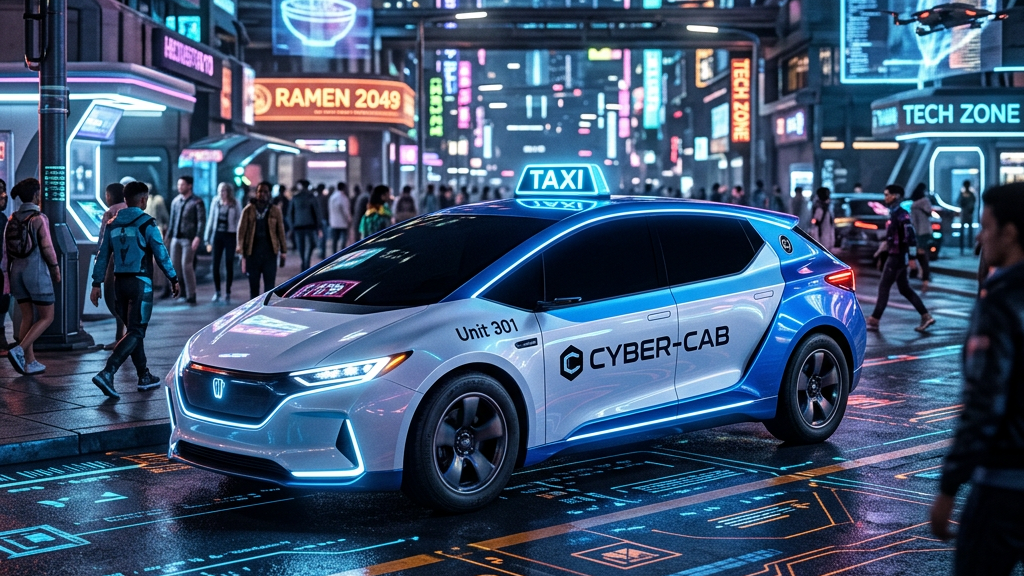
ELON CONFIRMED IT! Tesla Cybercab Is HERE With 4 HUGE Upgrades: Tesla is once again redefining the future of transportation with the highly anticipated Tesla Cybercab. Designed specifically for a fully autonomous ride-hailing network, the Cybercab represents far more than just another electric vehicle. It introduces revolutionary engineering upgrades that reduce manufacturing costs, improve reliability, enhance autonomous performance, and maximize fleet efficiency.
Tesla has already deployed more than 150 Cybercabs inside Gigafactory Texas, where they autonomously drive approximately 1.5 miles from production lines to end-of-line charging stations without human intervention. Even more exciting, Cybercabs have also been spotted testing on public roads in Austin, San Francisco, and Las Vegas, showcasing a steering-wheel-free and pedal-free design that highlights Tesla’s confidence in its Full Self-Driving (FSD) technology.
In this article, we’ll explore the four biggest engineering upgrades that make the Tesla Cybercab one of the most advanced autonomous vehicles ever developed.
Tesla Cybercab Moves Closer to Full Robotaxi Deployment
Tesla’s vision has always been larger than building electric cars. The company’s long-term goal is creating a global autonomous robotaxi fleet capable of operating around the clock with minimal human involvement.
Unlike traditional vehicles designed for personal ownership, the Cybercab has been engineered specifically for commercial fleet operations. Every component has been optimized to reduce operating costs, improve durability, simplify maintenance, and maximize vehicle uptime.
This philosophy is clearly visible in the four major upgrades Tesla has introduced.
1. Tesla’s New 48-Volt Electrical Architecture Changes Everything
Perhaps the most important upgrade in the Cybercab isn’t visible from the outside.
Tesla has completely abandoned the traditional 12-volt electrical system, replacing it with a modern 48-volt lithium-ion low-voltage architecture.
Why 48 Volts Is a Massive Improvement
The low-voltage system powers nearly every supporting electronic component inside the vehicle, including:
- Full Self-Driving (FSD) Computer
- AI Processing Hardware
- Safety Cameras
- Autonomous Sensors
- Climate Control
- Door Locks
- 5G Connectivity
- Vehicle Lighting
Traditional 12V systems require significantly higher electrical current to deliver the same amount of power. According to electrical engineering principles, higher current generates far more heat and energy loss.
By increasing voltage from 12V to 48V, Tesla reduces electrical current by approximately 75% while maintaining identical power output.
Major Benefits of the 48V System
The advantages are substantial:
- Lower heat generation
- Greater electrical efficiency
- Reduced stress on wiring
- Improved battery efficiency
- Longer component lifespan
- Higher reliability
These improvements become even more important in an autonomous vehicle that constantly powers dozens of high-performance computers simultaneously.
Huge Manufacturing Cost Savings
One of the biggest advantages comes from the vehicle’s wiring harness.
Modern vehicles typically contain between 1.5 and 2 kilometers of wiring. Thanks to the new architecture, Tesla has reduced wiring weight by approximately 30% to 50%, removing around 15 to 20 kilograms from every Cybercab.
That translates into:
- Lower vehicle weight
- Longer driving range
- Less copper consumption
- Lower manufacturing costs
If Tesla eventually produces one million Cybercabs annually, these savings could eliminate tens of thousands of tons of copper, potentially saving billions of dollars.
More Stable Computing for Autonomous Driving
Autonomous driving demands enormous computing power.
Tesla’s FSD computer performs billions of calculations every second while processing data from cameras, sensors, navigation systems, and onboard AI.
Traditional 12V systems can experience voltage fluctuations whenever high-power components activate simultaneously.
The new 48V architecture provides a much more stable power supply, ensuring the AI computer maintains maximum performance during:
- Hard acceleration
- Emergency braking
- Heavy climate control usage
- Continuous sensor processing
This stability is essential for achieving reliable Level 4 autonomous driving.
2. Tesla Keeps Its Proven 400-Volt Platform
While Tesla upgraded its low-voltage system, it intentionally retained its 400-volt high-voltage drivetrain instead of switching to the newer 800-volt architecture used in the Cybertruck.
At first glance, this may seem surprising.
However, it perfectly reflects Tesla’s cost-focused engineering philosophy.
Why 400V Makes More Sense for Robotaxis
Private EV owners value ultra-fast charging because they frequently travel long distances.
Robotaxis operate very differently.
Instead of charging whenever convenient, Cybercabs will:
- Drive continuously during busy hours
- Automatically return to fleet depots
- Charge during periods of low passenger demand
- Potentially utilize wireless charging systems
Because charging schedules are centrally managed, Tesla doesn’t require the extreme charging speeds offered by 800V systems.
Leveraging Existing Manufacturing Infrastructure
Tesla’s 400V platform has already accumulated tens of billions of miles across millions of Model 3 and Model Y vehicles.
Using this mature platform provides several major advantages:
Lower Production Costs
Existing manufacturing lines, battery systems, power electronics, and silicon carbide inverters can all be reused.
Greater Reliability
Years of real-world testing have already validated the platform under virtually every driving condition.
Massive Economies of Scale
Because Tesla already manufactures millions of compatible components, Cybercab production becomes dramatically less expensive than competitors building entirely new robotaxi platforms.
Tesla Even Removed Wireless Phone Chargers
Tesla also simplified the passenger cabin.
Instead of wireless charging pads, the Cybercab uses high-speed USB-C charging ports.
This small decision offers several benefits:
- Lower standby power consumption
- Reduced heat generation
- Improved charging reliability
- Lower maintenance costs
- Better long-term durability
For a fleet operating millions of rides every year, even small savings become enormous.
3. Advanced Camera Cleaning System Keeps Vision Clear
Unlike competitors relying heavily on LiDAR and multiple radar systems, Tesla continues to pursue its Vision-Only Autonomous Driving strategy.
That means clean cameras are absolutely essential.
Automatic Camera Cleaning
Each exterior camera receives its own dedicated cleaning system consisting of:
- Fluid washer nozzle
- High-pressure compressed air jet
Rather than simply spraying water, Tesla combines liquid cleaning with compressed air to remove:
- Rain
- Dust
- Mud
- Road grime
- Snow
- Water spots
- Bird droppings
The compressed air helps prevent streaks that could interfere with computer vision.
AI Detects Dirty Cameras Automatically
Tesla’s FSD computer constantly monitors image quality from every camera.
Whenever image clarity begins to decline:
- The AI detects the issue instantly.
- The cleaning system activates automatically.
- The camera is cleaned while the vehicle remains in motion.
No human intervention is required.
This significantly improves fleet uptime because vehicles never need to stop simply to clean camera lenses.
Reliable Operation in Difficult Conditions
The automated cleaning system allows the Cybercab to continue operating in:
- Rain
- Fog
- Snow
- Dusty roads
- Parking garages
- Airport pickup zones
- Car washes
- Urban traffic
Maintaining perfect camera visibility is one of the most important safety requirements for fully autonomous driving.
4. Smarter Fleet Maintenance and Self-Recovery Features
Tesla also redesigned the Cybercab to reduce maintenance time and simplify repairs.
Every minute a robotaxi spends off the road represents lost revenue.
The Cybercab addresses this with several intelligent design improvements.
High-Visibility Orange Coolant
Tesla now uses bright fluorescent orange battery coolant.
If a cooling leak occurs, technicians can immediately identify the problem through visual inspection without complicated diagnostic procedures.
This dramatically reduces service time.
Emergency Charging Connector Release
If an automated charging connector becomes stuck, Tesla includes a manual emergency release cable located behind the rear wheel liner.
Technicians can disconnect charging equipment within seconds without removing body panels.
Protective Wheel Covers
The Cybercab’s yellow wheel covers aren’t just decorative.
They extend beyond the wheel rim to protect against curb damage—one of the most common issues affecting urban taxi fleets.
Even better, technicians can remove the outer ring quickly for tire service without disassembling the wheel.
Dedicated Tow Recovery System
Unlike conventional vehicles, the Cybercab cannot simply be towed with its wheels rolling on the road.
Tesla includes a heavy-duty tow attachment behind the front license plate area.
Recovery crews can rapidly secure the vehicle without lifting body panels or damaging the drivetrain.
Autonomous Self-Recovery During Failures
Perhaps the most impressive feature is the Cybercab’s ability to handle problems completely on its own.
If a minor fault occurs:
- The vehicle automatically drives itself to the nearest Tesla service center or charging depot.
If a major hardware failure happens:
- Hazard lights activate automatically
- The AI scans surrounding traffic
- The Cybercab safely moves to the roadside
- The vehicle parks itself
- A connection is established with Tesla’s Remote Operation Center
This level of autonomous fail-safe capability represents a major advancement over current driver-assistance systems that still depend on human drivers taking control.
Final Thoughts
The Tesla Cybercab isn’t simply another electric vehicle—it’s a purpose-built autonomous transportation platform engineered for the future of mobility.
From its revolutionary 48-volt electrical architecture and proven 400-volt drivetrain to its AI-powered camera cleaning system and autonomous self-recovery features, every design decision focuses on one goal: creating the world’s most efficient and scalable robotaxi fleet.
By reducing manufacturing costs, simplifying maintenance, improving reliability, and maximizing vehicle uptime, Tesla is positioning the Cybercab to become the backbone of its future autonomous transportation network.
If Tesla successfully scales production to its ambitious targets, the Cybercab could fundamentally transform urban mobility, making autonomous transportation safer, cheaper, and more accessible than ever before. The coming years may mark the beginning of a new era where fully driverless vehicles become a normal part of everyday life.
FAQs
1. What is the Tesla Cybercab?
The Tesla Cybercab is a fully autonomous electric robotaxi designed by Tesla for ride-hailing services. It features a steering-wheel-free design, advanced Full Self-Driving (FSD) technology, and is optimized for high-efficiency fleet operations.
2. Does the Tesla Cybercab have a steering wheel or pedals?
No. The Tesla Cybercab is designed without a steering wheel or pedals, relying entirely on Tesla’s autonomous driving system to navigate roads.
3. Where is Tesla currently testing the Cybercab?
Tesla has been testing the Cybercab at Gigafactory Texas and on public roads in Austin, San Francisco, and Las Vegas as part of its autonomous vehicle development program.
4. Why did Tesla switch to a 48-volt electrical system?
The new 48-volt architecture reduces electrical current by about 75%, improving energy efficiency, reducing heat generation, lowering wiring weight, and enhancing the reliability of the vehicle’s electronic systems.
5. What are the benefits of the 48V architecture in the Cybercab?
The 48V system offers better efficiency, lighter wiring, lower manufacturing costs, improved battery performance, reduced heat, and a more stable power supply for Tesla’s Full Self-Driving computer.
6. Why did Tesla keep the 400-volt high-voltage platform instead of using 800 volts?
Tesla retained the proven 400V platform because it is highly reliable, cost-effective, and already supported by existing manufacturing infrastructure, making it ideal for large-scale robotaxi production.
7. How does the Tesla Cybercab charge?
The Cybercab is expected to automatically return to fleet charging depots during low-demand periods. Tesla is also developing autonomous and wireless charging solutions for future fleet operations.
8. How does the Cybercab keep its cameras clean?
Each exterior camera is equipped with an automated cleaning system that combines washer fluid and high-pressure compressed air to remove rain, dust, mud, and other debris while the vehicle is in motion.
9. Does Tesla Cybercab use LiDAR technology?
No. Tesla follows a vision-only autonomous driving approach, relying on cameras and artificial intelligence instead of LiDAR sensors.
10. What happens if the Tesla Cybercab experiences a mechanical problem?
For minor issues, the Cybercab can automatically drive itself to the nearest Tesla service center. In the event of a major failure, it safely pulls over, activates hazard lights, parks, and contacts Tesla’s Remote Operation Center.
11. How does the Tesla Cybercab reduce maintenance costs?
Tesla has simplified maintenance with features such as fluorescent coolant for easy leak detection, removable wheel covers, emergency charging connector releases, and dedicated towing points for faster servicing.
12. Why doesn’t the Cybercab include wireless phone chargers?
Tesla replaced wireless charging pads with USB-C ports to reduce power consumption, minimize heat generation, improve charging reliability, and lower maintenance costs across large vehicle fleets.
13. How many Tesla Cybercabs are currently operating?
Tesla has deployed more than 150 Cybercabs within Gigafactory Texas for autonomous factory logistics, while additional vehicles are undergoing testing on public roads.
14. When will the Tesla Cybercab be available to the public?
Tesla has not announced an official public launch date. Availability will depend on regulatory approvals, production scaling, and the continued development of Full Self-Driving technology.
15. Why is the Tesla Cybercab considered a major breakthrough?
The Cybercab combines fully autonomous driving, advanced electrical architecture, AI-powered camera maintenance, simplified servicing, and lower manufacturing costs, making it one of Tesla’s most ambitious projects toward creating a large-scale autonomous robotaxi network.
Read More:
- Elon Musk’s NEW Update On Tesla Bot Gen 3, 1000 Tasks Begins
- Tesla’s World’s First 1000GW Solar Factory Destroys Energy Industry
- Texas man charged in fatal Tesla crash where he blamed Autopilot
- Starship S40 finally Completed Full-Engine Fire Test, Faster Than Expected! Pad-2 in Strange Tests
- Elon Musk Unveils New Tesla Mega Projects That SHOCKED China
1 thought on “ELON CONFIRMED IT! Tesla Cybercab Is HERE With 4 HUGE Upgrades”