
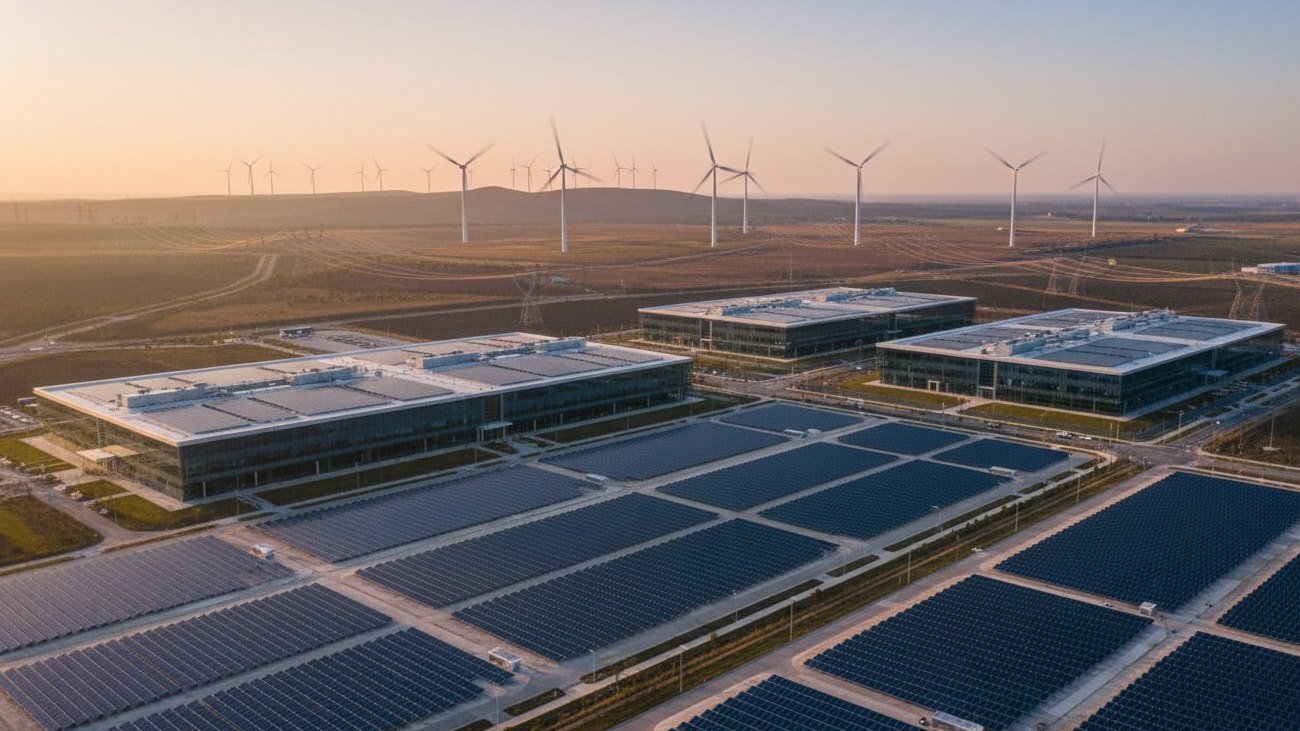
Tesla’s 1TW Solar Factory Plan Is Absolutely Massive!: For years, Tesla has been recognized as the world’s leading electric vehicle (EV) manufacturer. While millions of people associate the company with electric cars, Elon Musk has been quietly steering Tesla toward a much larger ambition—becoming one of the world’s biggest energy generation and storage companies.
The company’s latest reported investment in Brookshire, Texas, signals that Tesla’s future isn’t just about transportation. It’s about creating a vertically integrated energy ecosystem capable of powering AI supercomputers, autonomous robotaxis, Megapack battery systems, and the global Supercharger network.
If Tesla successfully executes its Master Plan Part 3, it could reshape not only the renewable energy industry but also the future of artificial intelligence and autonomous transportation.
Tesla’s Massive Solar Manufacturing Vision
Tesla’s long-term strategy goes far beyond installing rooftop solar panels for homeowners.
According to Tesla Master Plan Part 3, the company ultimately aims to manufacture an astonishing 1 Terawatt (1,000 Gigawatts) of solar panels annually.
The first major milestone toward this vision is reportedly taking shape in Brookshire, Texas, approximately 35 miles west of Houston, where Tesla is said to be investing nearly $2.9 billion in specialized manufacturing equipment as part of a broader $4+ billion facility expansion.
The goal?
100 Gigawatts (GW) of solar panel production every single year.
Why Tesla’s 100GW Factory Is Such a Big Deal
To understand how enormous this project is, consider these numbers:
| Solar Capacity Comparison | Annual Output |
|---|---|
| Tesla Gigafactory New York (Buffalo) | 0.3 GW |
| Total U.S. Solar Installations (2023) | 32 GW |
| Estimated U.S. Manufacturing Capacity | 65 GW |
| Tesla Brookshire Factory Target | 100 GW |
| Tesla Master Plan Goal | 1,000 GW (1 TW) |
A single Tesla factory could manufacture more than three times the total amount of solar capacity installed across the United States in 2023.
It would also exceed the country’s current estimated solar module manufacturing capacity.
This naturally raises an important question:
Why Build More Solar Panels Than the Market Needs?
At first glance, producing 100GW annually seems excessive.
Tesla isn’t trying to dominate the residential rooftop solar market.
Instead, it’s building something much larger.
The company appears to be preparing for a future where electricity becomes the world’s most valuable resource.
Tesla Is Building an Energy Ecosystem
Rather than selling solar panels alone, Tesla is creating a complete closed-loop energy infrastructure.
The strategy looks something like this:
Solar Panel Production → Megapack Battery Storage → AI Data Centers → Supercharger Network → Autonomous Robotaxis
Every component supports another, reducing reliance on traditional utility companies while lowering long-term operating costs.
This level of vertical integration could become one of Tesla’s biggest competitive advantages.
AI Is Creating an Energy Crisis
Artificial intelligence is growing at an extraordinary pace.
Modern AI data centers consume dramatically more electricity than traditional cloud computing facilities.
High-density AI server racks can require up to 10 times more power than conventional computing infrastructure.
Large AI clusters are already moving toward multi-gigawatt power requirements, creating enormous pressure on existing electrical grids.
Projects such as xAI’s Colossus illustrate how quickly power demand is increasing.
Unfortunately, many public power grids simply weren’t designed to support this scale.
Building new transmission infrastructure often takes years because of regulatory approvals and construction timelines.
For companies competing in AI, energy has become just as important as computing chips.
How Tesla’s Solar Factory Solves the Power Problem
Tesla’s proposed 100GW solar production capacity could directly support multiple business segments.
1. AI Supercomputers
Tesla trains its Full Self-Driving (FSD) neural networks while simultaneously developing the Optimus humanoid robot.
Both projects require enormous computing resources.
Generating electricity internally gives Tesla greater control over one of AI’s biggest constraints—power availability.
2. The Global Supercharger Network
Tesla’s worldwide Supercharger network could increasingly operate using company-generated renewable energy.
This would reduce dependence on commercial electricity providers while helping stabilize charging costs.
3. Megapack Energy Storage
Solar power isn’t always available when demand peaks.
That’s where Tesla Megapack systems become essential.
Large-scale batteries can store excess daytime electricity and provide reliable energy throughout the night, transforming intermittent solar generation into dependable 24/7 power.
4. Autonomous Robotaxi Fleets
Tesla’s future Robotaxi network depends on extremely low operating costs.
Producing electricity internally could significantly reduce the cost per mile, making autonomous transportation even more economically attractive.
Tesla’s History of Building Ahead of Demand
This isn’t the first time Tesla has made a massive investment before market demand fully existed.
When Gigafactory Nevada was announced in 2014, many analysts questioned whether global battery demand would ever justify such a large facility.
The same skepticism surrounded Gigafactory Shanghai and Gigafactory Texas.
History has shown Tesla repeatedly expands manufacturing capacity before demand reaches its peak.
If Brookshire follows the same playbook, Tesla could once again gain a significant first-mover advantage.
A 333x Expansion in Solar Manufacturing
Tesla’s existing Buffalo, New York solar factory currently produces around 0.3GW annually.
Moving to a 100GW production target represents approximately a 333-fold increase.
Instead of gradually increasing output over decades, Tesla appears to be making a dramatic leap in industrial scale.
This reflects the company’s philosophy of solving future demand before it becomes an immediate problem.
Competing With Global Supply Chains
Many people compare Tesla’s ambitions with companies like First Solar, one of America’s largest solar manufacturers.
However, Tesla’s reported production target dwarfs most domestic competitors.
First Solar is projected to reach approximately 17.7GW of annual manufacturing capacity by 2027.
Tesla’s planned 100GW facility would be more than five times larger.
The company’s real competition isn’t individual U.S. manufacturers.
Instead, Tesla appears to be challenging the global solar manufacturing ecosystem, particularly supply chains that have long been concentrated in China.
Complete Vertical Integration
Tesla’s strategy extends far beyond assembling finished solar panels.
The company is reportedly working toward controlling nearly every stage of production, including:
- Silicon processing and purification
- Ingot production
- Wafer fabrication
- Photovoltaic (PV) cell manufacturing
- Solar module assembly
- Megapack battery integration
- Energy management software
Owning the entire value chain allows Tesla to improve efficiency, automate manufacturing, negotiate lower raw material costs, and reduce production expenses per watt.
This kind of end-to-end vertical integration has been a defining characteristic of Tesla’s business model.
Why Tesla’s Energy Strategy Matters
Tesla’s long-term vision extends far beyond selling electric vehicles.
The company is positioning itself at the intersection of several rapidly growing industries:
- Renewable energy
- Artificial intelligence
- Battery storage
- Autonomous transportation
- Robotics
Each business strengthens the others.
More solar generation supports larger battery deployments.
More batteries power AI infrastructure.
AI improves autonomous driving.
Robotaxis generate additional energy demand.
The result is a powerful industrial flywheel.
Final Thoughts
Tesla’s reported 100GW Brookshire solar factory isn’t simply another manufacturing expansion—it represents a fundamental shift in the company’s long-term strategy.
Rather than focusing solely on electric vehicles, Tesla appears to be building a fully integrated energy platform capable of supporting the next generation of AI computing, robotics, autonomous transportation, and renewable infrastructure.
If the company eventually achieves its ambitious 1 Terawatt annual solar manufacturing goal, it could become one of the most influential energy companies in the world.
Whether this vision unfolds exactly as planned remains to be seen, but one thing is clear: Tesla is betting that the future will be powered not just by electric cars, but by abundant, affordable, and self-generated clean energy.
FAQs
1. What is Tesla’s 1TW solar factory plan?
Tesla’s 1TW (1 Terawatt) solar factory plan is part of Tesla Master Plan Part 3, which aims to eventually manufacture 1,000 gigawatts (GW) of solar panels annually to support renewable energy, AI infrastructure, battery storage, and electric transportation.
2. Where is Tesla’s new solar manufacturing facility located?
Tesla’s reported large-scale solar manufacturing facility is planned for Brookshire, Texas, located approximately 35 miles west of Houston.
3. How much solar capacity will the Brookshire factory produce?
The proposed Brookshire facility is expected to produce up to 100GW of solar panels per year, making it one of the largest solar manufacturing plants ever planned.
4. Why is Tesla building such a massive solar factory?
Tesla aims to create a vertically integrated energy ecosystem that powers AI data centers, the Supercharger network, Megapack battery systems, and future Robotaxi fleets while reducing dependence on traditional utility grids.
5. What is Tesla Master Plan Part 3?
Tesla Master Plan Part 3 is Elon Musk’s long-term vision for building a sustainable global energy economy through large-scale renewable energy generation, battery storage, electric vehicles, and electrified industrial processes.
6. How does Tesla’s solar strategy support artificial intelligence?
AI training clusters require enormous amounts of electricity. Tesla’s large-scale solar production and battery storage could provide reliable, low-cost renewable energy for AI supercomputers and machine learning infrastructure.
7. What role do Tesla Megapack batteries play in this plan?
Tesla Megapack batteries store excess solar energy during the day and release it when needed, enabling 24/7 power availability and improving grid stability.
8. How will Tesla’s solar factory benefit the Supercharger network?
Tesla could power more Supercharger stations with self-generated renewable energy, reducing electricity costs, improving energy independence, and minimizing reliance on commercial utility providers.
9. Is Tesla competing with residential solar installers?
No. Tesla’s reported strategy focuses primarily on utility-scale energy generation and infrastructure, rather than competing directly in the residential rooftop solar market.
10. How does Tesla compare with other solar manufacturers?
Tesla’s reported 100GW annual production target would significantly exceed the projected capacity of many existing solar manufacturers, making it one of the largest planned solar production facilities in the world.
11. Why is vertical integration important for Tesla?
Vertical integration allows Tesla to control manufacturing from raw materials to finished energy systems, helping reduce costs, improve efficiency, strengthen supply chains, and scale production more rapidly.
12. How could Tesla’s solar factory support Robotaxis?
Autonomous Robotaxi fleets require inexpensive electricity to keep operating costs low. Producing renewable energy internally could reduce charging costs and improve profitability.
13. Will Tesla sell all of the solar panels it manufactures?
Not necessarily. A significant portion of the production could be used to support Tesla’s own infrastructure, including AI facilities, Megapack installations, Superchargers, and utility-scale solar projects.
14. Why is energy becoming so important for AI companies?
Modern AI data centers consume enormous amounts of electricity. As AI models become larger and more complex, access to reliable and affordable power is becoming a critical competitive advantage.
15. What makes the Brookshire project different from Tesla’s Buffalo factory?
Tesla’s Buffalo facility produces around 0.3GW of solar panels annually, while the proposed Brookshire facility aims for 100GW, representing an approximately 333-fold increase in manufacturing capacity.
16. Could Tesla become an energy company instead of just an EV manufacturer?
Many analysts believe Tesla is evolving into a diversified energy and technology company, with businesses spanning electric vehicles, renewable energy, battery storage, AI computing, robotics, and autonomous transportation.
Read More:
- SpaceX canceled Starship Flight 13 Attempt 2, Launch Again Today!
- Tesla Semi finally has an FSD timeline and it’s waiting on the Cybercab
- Elon Musk’s answer to Christopher Nolan’s Odyssey got way more specific
- Tesla Robotaxi’s slow rollout gets explanation from Elon Musk
- Tesla’s switch-up on selling Full Self-Driving has paid off big time