
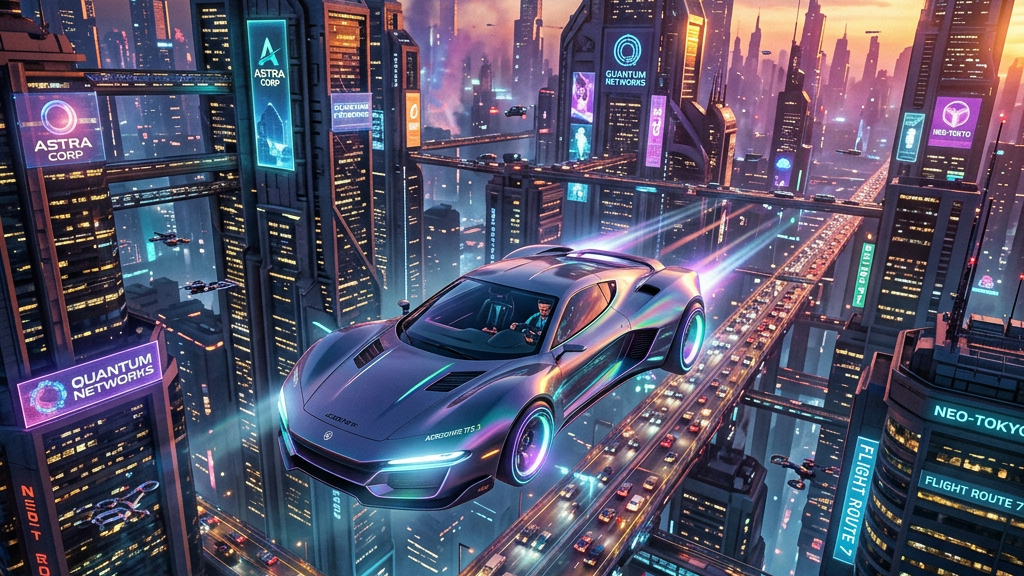
Tesla’s First Flying Taxi Prototype to Hit US Roads in 2026: For years, the idea of a flying Tesla seemed like nothing more than science fiction. Online rumors, CGI concept designs, and Elon Musk’s ambitious predictions regularly fueled speculation about whether Tesla could eventually build a vehicle capable of leaving the road behind.
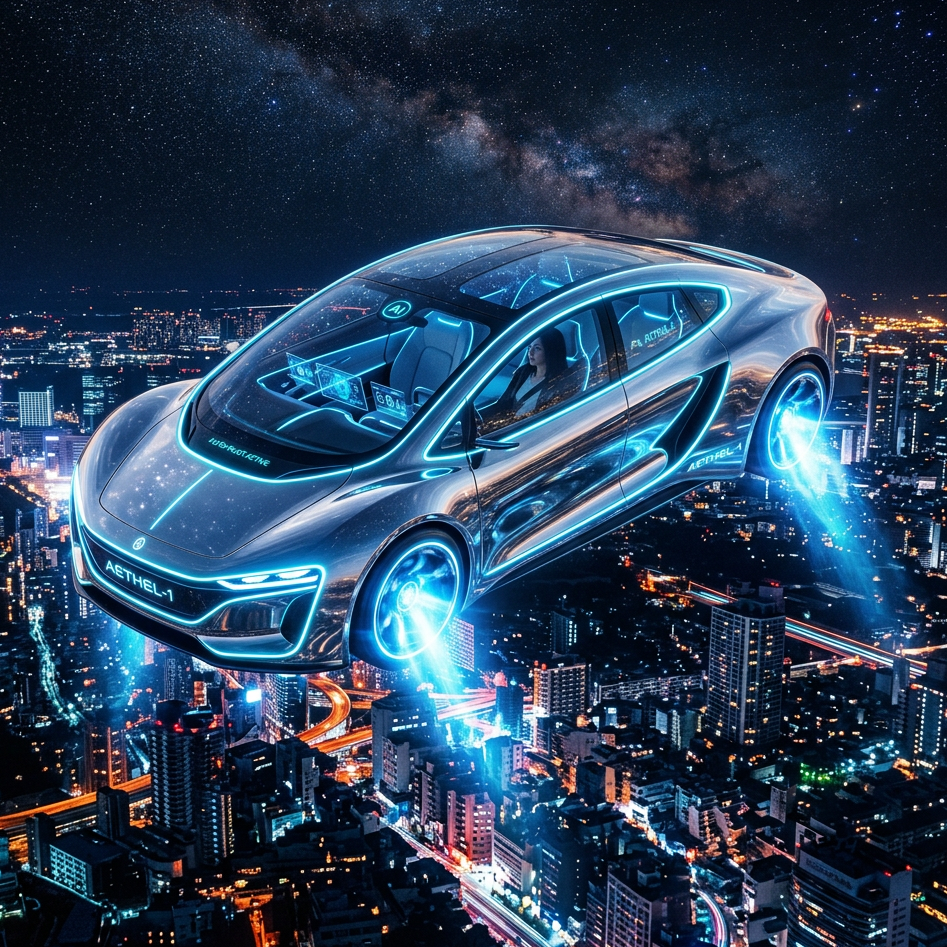
But the conversation is becoming more interesting as autonomous driving, electric powertrains, artificial intelligence, and aerospace technology continue to develop. Tesla’s growing Robotaxi ambitions, combined with technology associated with SpaceX, have led to a provocative question: could Tesla eventually create an autonomous flying taxi—something that might be described as a “Cybercab Air”?
While there is no confirmed production aircraft carrying that name, the technological pieces provide an intriguing look at what an autonomous electric air taxi could potentially become.
The Cybercab Could Lay the Groundwork for Flying Taxis
The foundation of any future Tesla flying taxi may actually be developing on the ground.
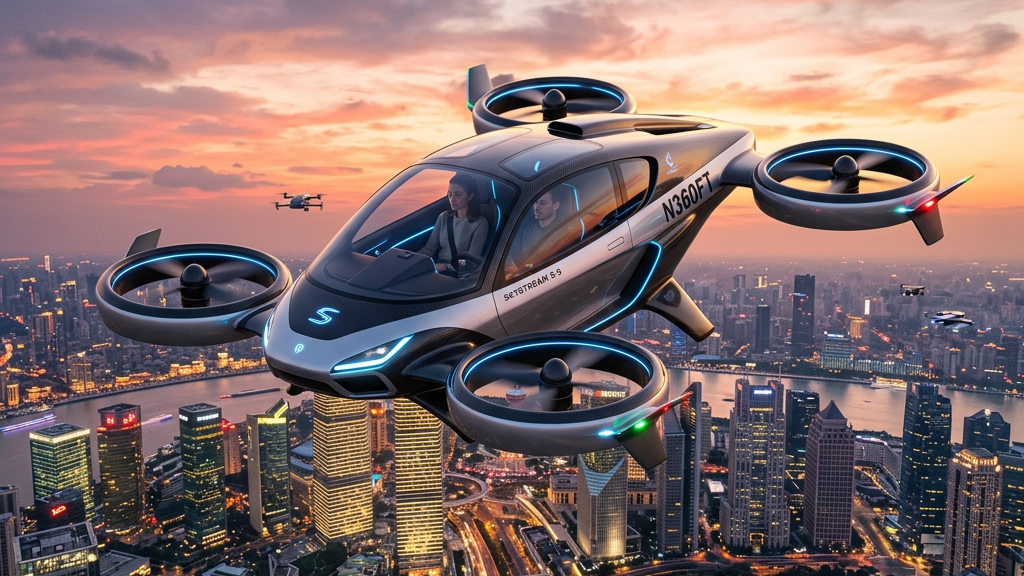
Tesla’s Cybercab concept represents a major change from traditional automobiles because it is designed around autonomous passenger transportation rather than conventional human driving. A vehicle that does not require a driver can potentially be redesigned around the passenger experience.
A Vehicle Without Traditional Controls
A fully autonomous transportation capsule could eventually eliminate many components found in today’s cars, including:
- Steering wheels and pedals
- Traditional driver-focused dashboard controls
- Human-driver monitoring systems
- Conventional vehicle layouts designed around manual operation
Instead, the cabin could become a passenger-focused transportation space optimized for point-to-point travel.
The bigger opportunity, however, is the software infrastructure behind the vehicle. Autonomous routing, fleet management, payments, remote assistance, and real-time trip coordination could form the foundation of a larger mobility network.
That matters because an autonomous flying taxi would require many of the same digital systems—only adapted for three-dimensional transportation.
Could the Tesla Roadster Become a Flying Technology Testbed?
Another part of the speculation involves the next-generation Tesla Roadster and reported SpaceX-related technology.
Concepts surrounding the Roadster have previously included the possibility of cold-gas thrusters. Such a system would not be practical as the primary propulsion method for a commercial flying taxi, but experimental thrust technology could provide engineers with valuable experience in controlling a vehicle using additional forces.
What Could Thruster Testing Teach Tesla?
A hovering or levitating demonstration could potentially help engineers investigate areas such as:
- Thrust stabilization
- Rapid actuator response
- Vehicle balance
- Remote telemetry
- Computer-controlled movement
- Advanced control algorithms
Cold-gas propulsion itself would not solve the major challenges of electric flight. However, an experimental platform can provide a laboratory for understanding how software and hardware interact when a vehicle is no longer constrained by four wheels.
This distinction is important: a hovering Roadster would not automatically mean Tesla has built a flying car. A commercial eVTOL aircraft requires an entirely different level of engineering, certification, redundancy, and energy management.
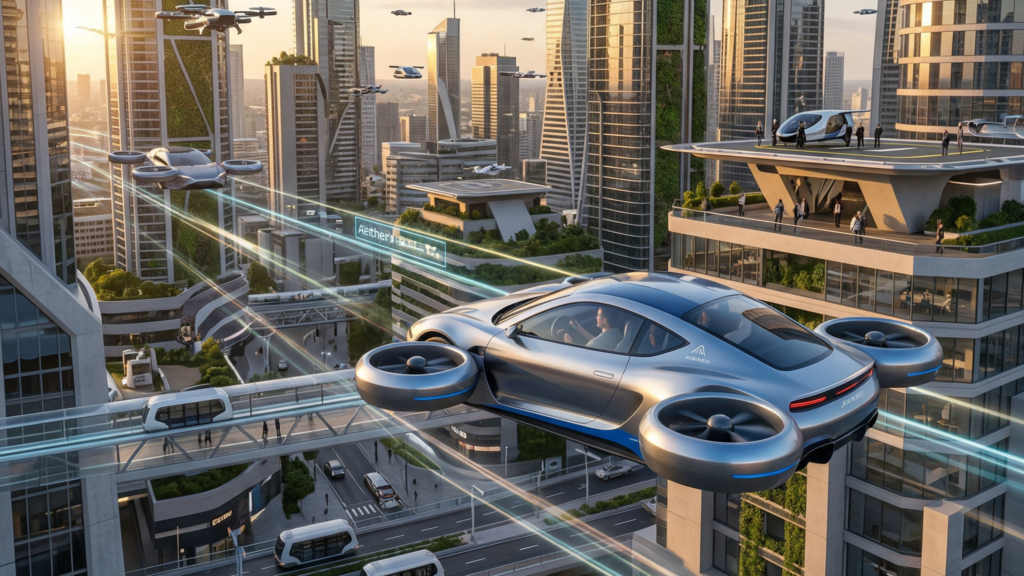
What Could a “Cybercab Air” Look Like?
If Tesla ever enters the electric air-taxi market, an eVTOL (electric Vertical Takeoff and Landing) aircraft would arguably make more sense than simply attempting to turn an automobile into an airplane.
An eVTOL can use multiple electric motors and rotors to take off vertically, hover, and transition into forward flight. This architecture could be particularly useful for urban transportation because it would reduce the need for conventional runways.
Potential Cybercab Air Specifications
A purely conceptual Tesla eVTOL could look something like this:
| Feature | Cybercab Air Concept |
|---|---|
| Passenger capacity | 2–4 passengers |
| Estimated range | 150–250 km |
| Cruising speed | 200–300 km/h |
| Propulsion | 6–8 independent electric rotor systems |
| Pilot | Fully autonomous flight control |
| Primary use | Urban and regional air mobility |
These figures should be treated as conceptual estimates, not confirmed Tesla specifications.
The biggest advantage would be the combination of Tesla’s expertise in electric vehicles with aerospace engineering.
Tesla and SpaceX Could Create a Powerful Combination
A future flying taxi project could theoretically benefit from expertise across both Tesla and SpaceX.
Tesla’s Potential Contribution
Tesla has extensive experience with:
- Electric motors
- High-voltage electrical systems
- Battery management
- Power electronics
- Artificial intelligence
- Autonomous software
- Large-scale manufacturing
These technologies are highly relevant to electric aviation.
SpaceX’s Potential Contribution
SpaceX, meanwhile, operates in a completely different engineering environment, where lightweight structures, aerodynamics, avionics, propulsion, redundancy, and autonomous control are critical.
Combining those areas could create an interesting technology stack.
The most challenging part may be autonomy. Driving AI primarily deals with roads, vehicles, pedestrians, signs, and intersections. An autonomous aircraft would need to understand altitude, airspace, weather, obstacles, landing zones, and precise three-dimensional positioning.
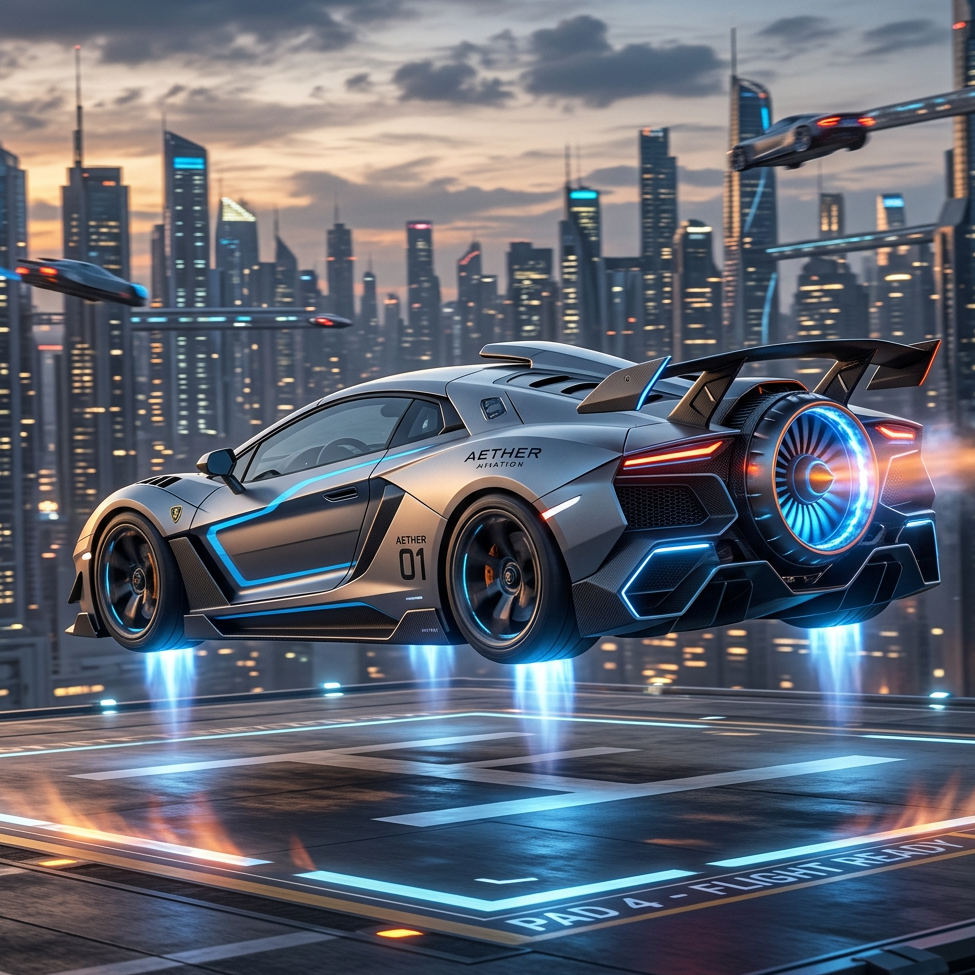
The Biggest Challenges Are Still Ahead
Despite the excitement surrounding flying taxis, turning the concept into a safe commercial product would be extraordinarily difficult.
Battery Energy Density
Electric aircraft face a fundamental challenge: vertical takeoff consumes enormous amounts of energy.
A car can stop at the side of the road if something goes wrong. An aircraft cannot. Every component must be optimized for weight, efficiency, and reliability.
Redundant Safety Systems
A commercial autonomous aircraft would need multiple layers of redundancy.
If one motor, battery module, sensor, or flight computer failed, the aircraft would need to remain controllable or execute a safe emergency procedure. That makes aerospace engineering considerably more demanding than conventional automotive engineering.
FAA Certification
Perhaps the largest hurdle would be regulatory certification.
An autonomous passenger aircraft operating without a human pilot would have to satisfy stringent aviation safety requirements. Obtaining approval for widespread civilian operations could take years and would require extensive testing.
Noise and Vertiports
Flying taxis also need somewhere to take off and land.
Urban networks could require dedicated vertiports, charging infrastructure, maintenance facilities, and automated passenger systems. Noise would also be a major consideration because communities may resist large-scale eVTOL operations if aircraft generate excessive sound.
When Could Tesla Flying Taxis Become Reality?
A realistic development path would probably involve several stages rather than an immediate commercial launch.
Near-Term: Experimental Testing
Tesla and SpaceX-related technology could continue to provide opportunities for testing thrust, autonomous control, and advanced vehicle dynamics.
Mid-Term: Aircraft Concepts and Prototypes
If Tesla formally entered the eVTOL market, the next step would likely be a dedicated prototype rather than a modified road car.
Engineers would have to test flight controls, battery systems, rotors, structural materials, emergency systems, and autonomous navigation.
Long-Term: Certification and Commercial Operations
The final stage would involve FAA certification, infrastructure development, fleet management, charging stations, and passenger safety validation.
Only after these systems were proven could a large-scale autonomous air-taxi network become realistic.
The Bigger Tesla Vision: Autonomous Mobility Beyond Roads
The most interesting part of the flying-Tesla discussion may not be the aircraft itself. It is the autonomous transportation network behind it.
Tesla is already attempting to build software capable of managing vehicles, passengers, routing, payments, and remote support. If those capabilities mature, the same digital infrastructure could potentially be extended into other forms of transportation.
A future mobility platform could theoretically allow a passenger to request a vehicle for a short ground trip and then transfer to an autonomous aerial vehicle for a longer journey.
That would transform Tesla from a traditional automobile manufacturer into something closer to an autonomous mobility company.
Final Thoughts
The idea of Tesla’s first flying taxi remains speculative, and there is currently no confirmed production “Cybercab Air” with finalized specifications. However, the combination of autonomous driving technology, electric propulsion, AI, and aerospace expertise makes the concept worth watching.
The transition from Robotaxi to autonomous eVTOL would be one of Tesla’s most ambitious technological leaps yet. Before that happens, the company would need to overcome enormous challenges involving batteries, flight safety, autonomy, noise, infrastructure, and FAA certification.
If Tesla eventually succeeds, the result may not look like the flying cars imagined in science fiction. It could instead be something more practical: a quiet, electric, autonomous passenger capsule designed to move people through the sky as efficiently as Robotaxis move them across roads.
For now, the flying Tesla remains a fascinating possibility—but the groundwork for autonomous mobility is already being built on the ground.
FAQs
1. Is Tesla actually building a flying taxi?
There is no officially confirmed production Tesla flying taxi at this time. The idea of a Tesla eVTOL, sometimes called “Cybercab Air,” remains largely conceptual and speculative.
2. What is a Tesla flying taxi?
A Tesla flying taxi would theoretically be an autonomous electric vertical takeoff and landing (eVTOL) aircraft designed to transport passengers without a human pilot.
3. Could the Cybercab become a flying car?
The existing Cybercab is designed for ground-based autonomous transportation. A flying version would likely require an entirely new aircraft architecture rather than simply adding wings or rotors to the road vehicle.
4. What is a Cybercab Air?
“Cybercab Air” is a proposed name for a hypothetical autonomous Tesla air taxi. It is not currently a confirmed Tesla product or official model name.
5. Will Tesla use SpaceX technology for a flying car?
Tesla and SpaceX have overlapping leadership through Elon Musk, and SpaceX aerospace technologies have fueled speculation about future flying vehicles. However, there is no confirmed announcement that SpaceX technology will power a commercial Tesla flying taxi.
6. Could the Tesla Roadster fly?
Previous Roadster concepts have been associated with SpaceX cold-gas thrusters, potentially enabling unusual performance demonstrations. However, that does not mean the Roadster is designed to function as a practical passenger aircraft.
7. How would a Tesla flying taxi take off?
A likely design would use multiple electric rotors to generate vertical lift. This would allow the aircraft to take off and land without requiring a conventional runway.
8. How many passengers could a Tesla air taxi carry?
A hypothetical Cybercab Air could potentially carry two to four passengers, depending on its final design, battery capacity, weight, and regulatory requirements.
9. How fast could a Tesla flying taxi travel?
A conceptual eVTOL could potentially cruise at around 200–300 km/h, although Tesla has not announced official performance specifications for a flying taxi.
10. How far could a Tesla flying taxi travel?
A future electric air taxi might target a range of roughly 150–250 km, but actual range would depend heavily on battery technology, aircraft weight, weather, payload, and flight conditions.
11. Would Tesla flying taxis be fully autonomous?
The long-term concept could involve fully autonomous flight, but achieving safe, pilotless passenger aviation would require substantially more advanced systems and regulatory approval than autonomous road driving.
12. What batteries would a Tesla flying taxi use?
A Tesla eVTOL would likely require a high-energy-density battery system capable of delivering large amounts of power during vertical takeoff and landing while keeping overall aircraft weight low.
13. What are the biggest challenges for Tesla’s flying taxi?
The major challenges include battery energy density, aircraft weight, flight-control reliability, redundant safety systems, noise, infrastructure, air-traffic integration, and aviation certification.
14. Would Tesla need FAA approval for an autonomous flying taxi?
Yes. A passenger aircraft operating commercially in the United States would need to meet applicable Federal Aviation Administration (FAA) certification and operational requirements. Autonomous passenger operations would present particularly complex regulatory challenges.
15. Where would Tesla flying taxis take off and land?
A commercial network would likely require dedicated vertiports equipped with landing areas, charging systems, passenger facilities, and maintenance infrastructure.
16. When could Tesla flying taxis become available?
There is no confirmed Tesla launch date for a commercial flying taxi. Before such a service could become reality, Tesla would need to develop and test an aircraft, demonstrate reliable autonomous flight, establish infrastructure, and obtain the necessary aviation certifications.
Read More:
Looking forward to getting a flying Tesla. Riding and Driving will be extra fun. Good thing I got a Tesla Toilet to take with me while flying the skies. https://teslatoilets.com