
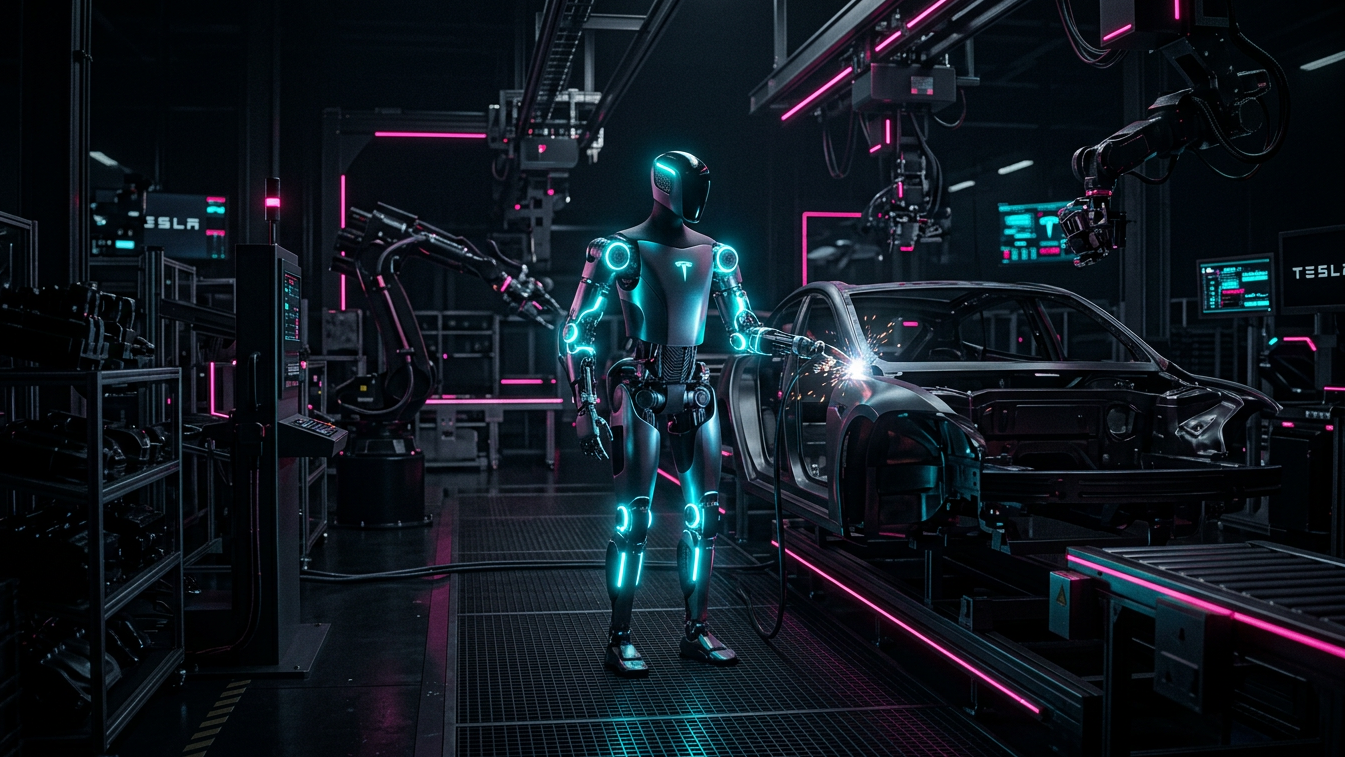
Tesla Bot Gen 3 MASSIVE Upgrade REVEALED At Cybercab Event: When Tesla hosted its highly anticipated Cybercab event, most of the world’s attention was focused on the company’s vision for autonomous transportation. However, tech insiders noticed another remarkable machine standing quietly behind a barrier: a metallic gold version of the Tesla Optimus humanoid robot.
Although Tesla did not give this particular robot a dedicated presentation, its appearance alongside the Cybercab offered a powerful glimpse into the company’s broader artificial intelligence strategy.
The gold-finished Optimus prototype may represent more than a cosmetic experiment. Its presence highlighted Tesla’s ambition to develop embodied AI—artificial intelligence capable of understanding and interacting with the physical world. While Cybercab is designed to bring autonomous driving to public roads, Optimus could eventually take the same underlying AI capabilities into factories, offices, warehouses, and homes.
Tesla Optimus Gen 3: A Major Hardware Evolution
The most obvious feature of the newly showcased Optimus prototype is its metallic gold or bronze exterior. The finish covered much of the upper torso and reflected the event’s blue and purple lighting, giving the humanoid robot a futuristic appearance.
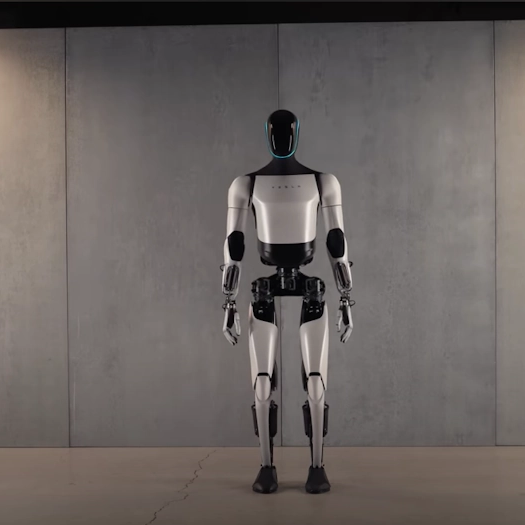
The arms, legs, and joint areas retained darker tones, creating a visual contrast between the metallic torso and mechanical components. Tesla has not officially confirmed that this exact unit represents a final production configuration, so it is best viewed as a high-visibility demonstration prototype that showcases the direction of Optimus hardware development.
A Minimalist Face Designed to Avoid the Uncanny Valley
One of the defining characteristics of Optimus remains its minimalist facial design. Rather than attempting to replicate realistic human eyes, noses, and mouths, Tesla uses a smooth black faceplate that resembles a futuristic visor.
This approach could help Tesla avoid the uncomfortable “uncanny valley” effect associated with humanoid machines that look almost, but not quite, human. The simple interface also reinforces Optimus’s identity as a machine built for functionality rather than human imitation.
Human-Sized Proportions for Real-World Environments
Optimus is designed around approximately 1.73 meters of height and 57 kilograms of weight, giving it a footprint comparable to an average human.
That design choice is strategically important. Factories, offices, warehouses, kitchens, and homes are already designed around human dimensions. A robot with similar proportions can potentially use existing doors, workstations, tools, shelves, and equipment without requiring businesses to completely redesign their facilities.
Exposed Mechanical Joints
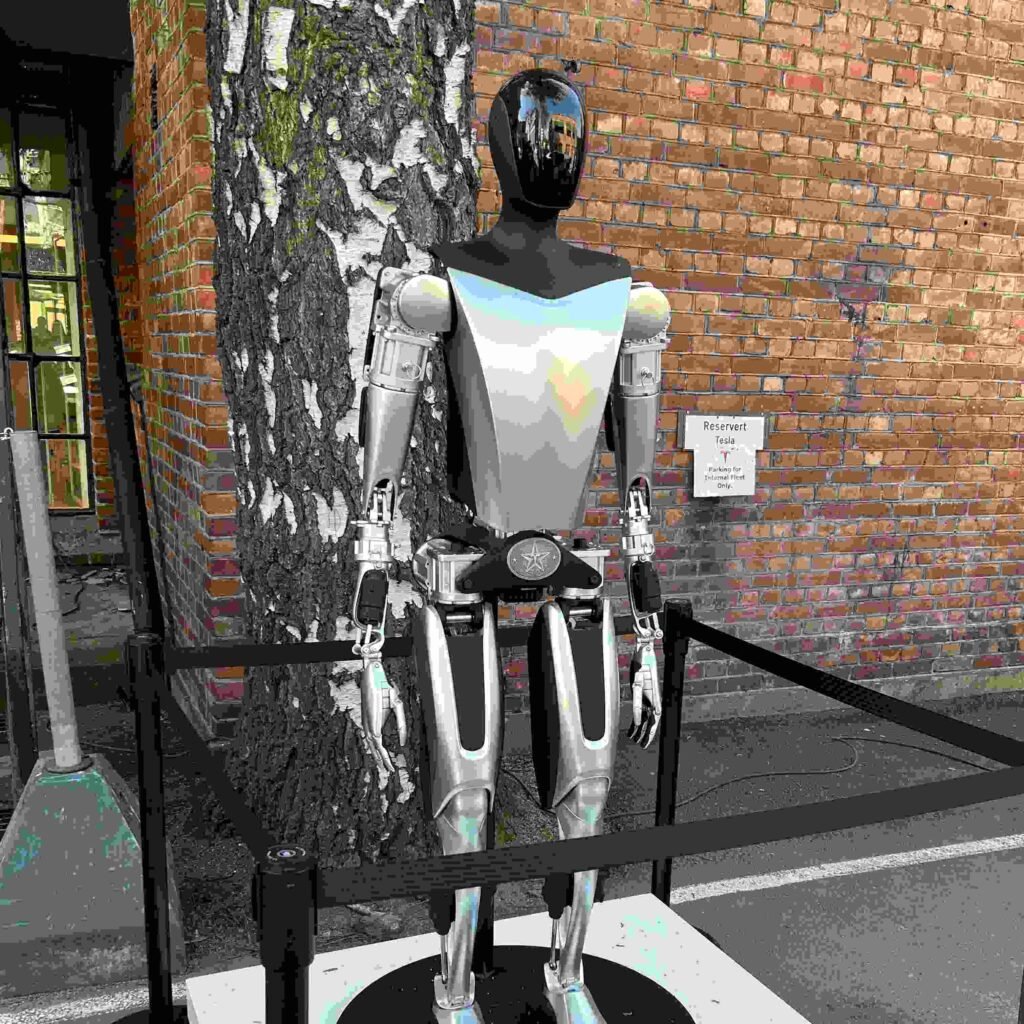
Another important feature is the visibility of the robot’s mechanical joints. Instead of covering every component with a completely smooth outer shell, Tesla leaves areas around the shoulders, elbows, wrists, and knees visibly mechanical.
These exposed areas emphasize articulation, durability, heat management, and structural efficiency. For a robot expected to perform repetitive physical work, engineering the joints for reliability may ultimately be more important than creating a perfectly polished exterior.
Optimus Gen 2.5 vs. Gen 3: What’s the Difference?
A major question surrounding the prototype is whether it should be considered an Optimus Gen 2.5 model or an early preview of Gen 3.
Tesla has historically followed a rapid hardware iteration strategy, and Optimus appears to be following a similar development path. Gen 2 and transitional versions focus heavily on improving balance, walking, sensors, actuators, and manipulation. Gen 3, meanwhile, is expected to place greater emphasis on manufacturing scalability and commercial deployment.
| Optimus Generation | Main Focus | Production Role | Key Improvements |
|---|---|---|---|
| Gen 2 / 2.5 | Hardware refinement | Testing platform | Balance, locomotion, sensors, manipulation |
| Gen 3 | Manufacturing and dexterity | Mass-production benchmark | Advanced hands, actuators, standardized assembly |
Advanced Hands Could Be the Biggest Upgrade
Walking is impressive, but hands may be the most commercially important part of a humanoid robot.
The latest Optimus development direction includes increasingly sophisticated hands with individually articulated fingers. These capabilities could allow the robot to pick up different objects, operate tools, manipulate components, and perform delicate industrial tasks.
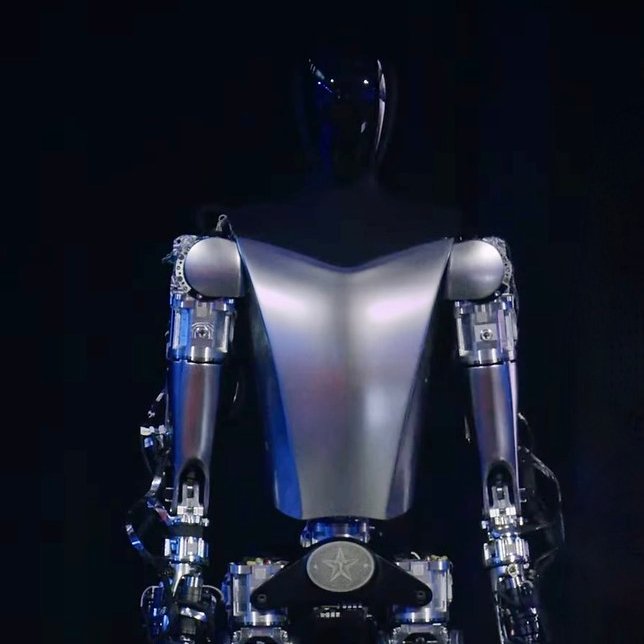
For Tesla, this represents a critical step. A robot that can walk around is interesting. A robot that can reliably perform useful work for hours at a time could become commercially transformative.
Tesla’s Massive Optimus Manufacturing Strategy
Building a capable humanoid robot is only half the challenge. Tesla must also figure out how to manufacture it at enormous scale.
The company has been developing its manufacturing infrastructure around Gigafactory Texas in Austin, with ambitious production targets for future Optimus deployment. The reported strategy involves scaling from an initial capacity measured in hundreds of thousands or potentially millions of robots annually toward a much larger long-term manufacturing footprint.
The Advanced Technology Circuit Facility
One particularly important part of this strategy is the reported Advanced Technology Circuit Facility (ATCF) at Tesla’s Austin campus, being developed in collaboration with SpaceX.
The facility is described as covering approximately 470,000 square feet and is intended to support advanced electronics and manufacturing capabilities.
Its importance goes beyond simply providing additional factory space.
Reducing Vibration for Precision Manufacturing
Modern semiconductor packaging and precision electronics manufacturing can be extremely sensitive to vibration. Even tiny environmental disturbances can interfere with highly precise equipment and testing procedures.
Specialized vibration-isolated foundations can help create a controlled environment for advanced electronics work. This could allow Tesla to move more of its precision manufacturing processes closer to the Optimus assembly operation.
Bringing Electronics Production Closer to Optimus
Vertical integration could become one of Tesla’s biggest advantages in humanoid robotics.
Instead of depending heavily on distant suppliers and international shipping, Tesla could increasingly bring chip packaging, circuit production, sensors, actuators, and robot assembly into a tightly connected manufacturing ecosystem.
That could reduce transportation delays, simplify supply-chain management, and allow engineers to move from hardware testing to production much faster.
The Path Toward a $20,000–$25,000 Robot
Tesla’s long-term Optimus vision depends heavily on cost.
If humanoid robots remain extremely expensive, their adoption will likely be limited to specialized industrial applications. Tesla, however, has discussed a future in which Optimus could reach a substantially lower price point, potentially around $20,000 to $25,000.
Achieving that figure would require enormous production volumes, component standardization, automation, and vertical integration.
This is where Tesla’s experience in automotive manufacturing could become valuable.
One AI Brain Behind Cybercab and Optimus
Perhaps the most important takeaway from the Cybercab event is not the gold exterior or even the robot’s mechanical upgrades. It is the connection between Tesla’s autonomous driving technology and Optimus.
Tesla’s broader strategy increasingly revolves around AI systems that interpret the physical world and make decisions in real time.
Cybercab and Optimus Share the Same Core Philosophy
Cybercab uses camera-based perception and neural networks to understand roads, traffic, pedestrians, vehicles, and other environmental variables.
Optimus faces a different physical environment, but the underlying concept is similar.
The robot must interpret visual information, understand where objects are located, determine how its body is positioned, and decide how to move its limbs to complete a task.
In simplified terms:
Full Self-Driving AI → Cybercab → Autonomous movement on roads
Full Self-Driving AI → Optimus → Autonomous movement in physical workspaces
The environments are different, but both systems require real-time perception, spatial understanding, decision-making, and physical control.
Tesla’s Bigger Vision: Embodied Artificial Intelligence
This is why Optimus could ultimately become more important to Tesla than a traditional robotics project.
The company is not simply attempting to create a walking machine. It is attempting to develop a general-purpose embodied AI platform.
Cybercab places AI inside a vehicle. Optimus places AI inside a humanoid body.
That distinction could become extremely significant.
A vehicle primarily interacts with roads and traffic. A humanoid robot could potentially interact with nearly everything humans interact with: tools, machines, boxes, doors, computers, household objects, and industrial equipment.
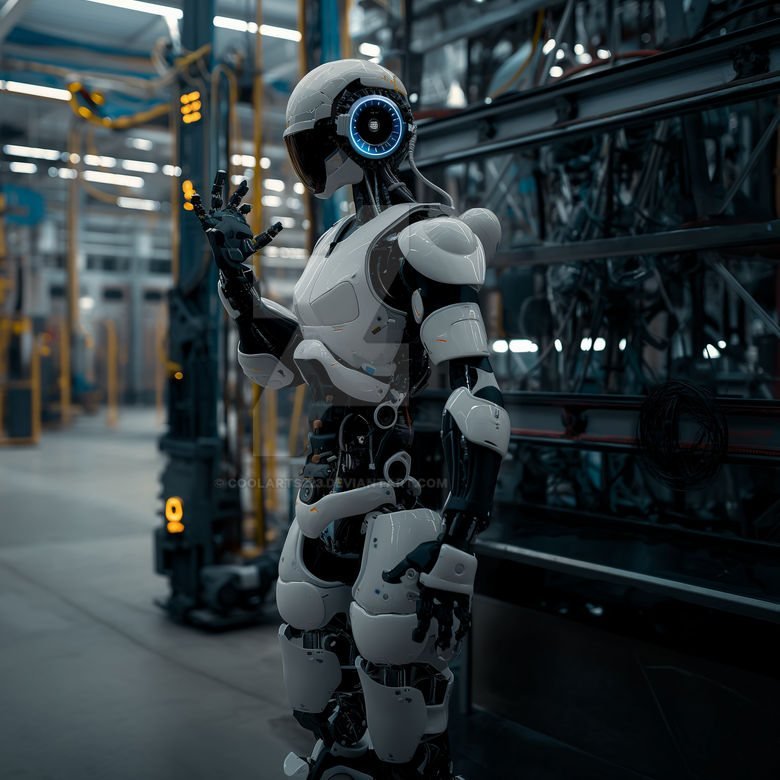
From Autonomous Vehicles to Autonomous Workers
Tesla’s biggest challenge now is moving Optimus from impressive demonstrations to reliable commercial deployment.
The critical questions are no longer simply whether Optimus can walk, balance, or pick up an object. The real questions are whether it can work safely, repeatedly, economically, and at massive scale.
If Tesla can solve those problems, the potential market extends far beyond automotive manufacturing.
Conclusion: The Real Optimus Breakthrough May Be Manufacturing
The metallic gold Optimus prototype may have been one of the most visually striking surprises at Tesla’s Cybercab event, but its appearance tells only part of the story.
The bigger development is Tesla’s attempt to connect AI software, advanced robotics hardware, semiconductor technology, and large-scale manufacturing into one ecosystem.
The evolution from Optimus Gen 2 toward Gen 3 could bring significant improvements in dexterity, actuation, sensors, and manufacturability. Meanwhile, Tesla’s expanding Texas infrastructure could provide the industrial foundation required to produce robots at unprecedented volumes.
Ultimately, the success of Optimus will not be measured simply by how impressive a prototype looks on stage.
It will be measured by how quickly Tesla can turn that prototype into millions of useful humanoid robots operating in the real world.
If Tesla succeeds, Cybercab may represent the beginning of an autonomous transportation revolution—but Optimus could represent something even bigger: the arrival of mass-produced embodied artificial intelligence.
FAQs
1. What is Tesla Optimus Gen 3?
Tesla Optimus Gen 3 is the next major generation of Tesla’s humanoid robot, designed to improve dexterity, movement, AI capabilities, and mass-production readiness.
2. Was Optimus Gen 3 revealed at the Cybercab event?
Tesla showcased a striking gold/bronze Optimus prototype at the Cybercab event, but the company did not formally confirm that the specific unit was the final production version of Gen 3.
3. Why was the Optimus robot gold?
The metallic gold or bronze finish appears to have been used to give the prototype a distinctive futuristic visual identity. Tesla has not publicly established that the color represents a specific production specification.
4. How tall is Tesla Optimus?
Optimus is approximately 1.73 meters (5 feet 8 inches) tall, giving it human-like proportions that allow it to potentially work in environments designed for people.
5. How much does Tesla Optimus weigh?
The Optimus design has been described as weighing approximately 57 kilograms (125 pounds).
6. What are the biggest Optimus Gen 3 upgrades?
The expected improvements include more advanced hands, better actuators, improved sensors, greater dexterity, lower latency, and manufacturing-focused hardware designed to support large-scale production.
7. What makes Optimus’s hands so important?
Humanoid robots need highly capable hands to perform useful tasks. Individually articulated fingers could allow Optimus to pick up objects, manipulate tools, handle components, and perform delicate industrial operations.
8. What is the difference between Optimus Gen 2 and Gen 3?
Gen 2 and transitional versions primarily focus on hardware refinement, balance, locomotion, and sensor integration. Gen 3 is expected to place much greater emphasis on scalable manufacturing and commercial deployment.
9. Will Tesla Optimus use the same AI technology as Tesla vehicles?
Tesla’s broader AI architecture is intended to support both autonomous vehicles and Optimus. Both require neural networks capable of understanding visual information, interpreting environments, and generating physical actions.
10. How is Optimus connected to the Cybercab?
Cybercab uses AI to understand and navigate roads, while Optimus uses AI to understand and operate within physical environments. Both represent Tesla’s broader push toward AI-powered physical autonomy.
11. Where will Tesla manufacture Optimus robots?
Tesla is developing its Optimus manufacturing strategy around facilities including Gigafactory Texas in Austin, with the goal of eventually achieving extremely high production volumes.
12. What is the Advanced Technology Circuit Facility?
The Advanced Technology Circuit Facility (ATCF) is a planned facility associated with Tesla’s Austin operations and intended to support advanced electronics and manufacturing capabilities that could benefit Tesla’s robotics and AI programs.
13. How many Optimus robots could Tesla eventually produce?
Tesla has discussed extremely ambitious long-term production goals, potentially reaching millions of humanoid robots per year. Actual production volumes will depend on manufacturing development, component availability, and commercial demand.
14. How much could Tesla Optimus cost?
Tesla has previously discussed a potential future price in the range of $20,000–$25,000, although this should be considered a target rather than a confirmed retail price for a production Optimus.
15. What will Tesla Optimus be used for?
Optimus is intended to perform repetitive, dangerous, physically demanding, or otherwise useful tasks. Potential applications include factories, warehouses, logistics, and eventually offices and homes. The biggest challenge is proving that the robot can perform these tasks safely, reliably, and economically at scale.
Read More:
1 thought on “Tesla Bot Gen 3 MASSIVE Upgrade REVEALED At Cybercab Event”