
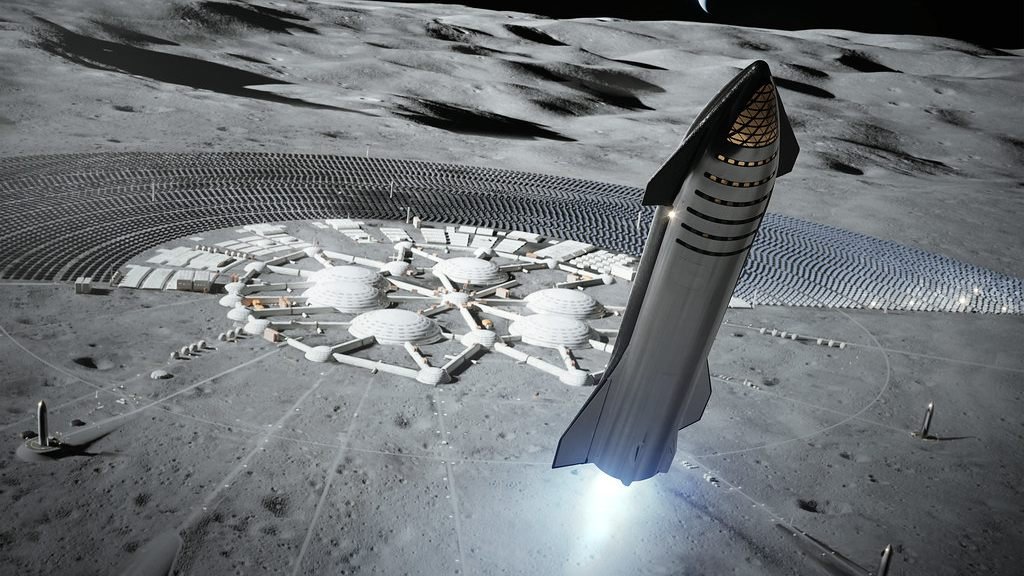
SpaceX Starship Is Launching BIGGER Space Station after NASA ISS Destroyed: The retirement of NASA’s International Space Station (ISS) around 2030 marks one of the biggest turning points in human spaceflight history. For more than two decades, the ISS has served as a symbol of international cooperation, scientific research, and continuous human presence in Low Earth Orbit (LEO). However, as the station approaches the end of its operational life, the United States and its allies face a major strategic challenge: ensuring that humans continue living and working in orbit without interruption.
The solution may come from the private space industry. Companies such as Vast Space, Axiom Space, Starlab, and Orbital Reef partners are developing next-generation commercial space stations designed to replace the ISS. Among these ambitious projects, Vast Space’s Haven-2 stands out because it plans to use a combination of Falcon Heavy launches and future SpaceX Starship missions to build a larger-than-ISS orbital platform.
The Post-ISS Space Race: Why Commercial Stations Matter
The retirement of the ISS creates a major geopolitical challenge. Without an American-led replacement, China’s Tiangong Space Station could become the only permanently crewed orbital facility operating in the early 2030s.
Maintaining a continuous presence in Low Earth Orbit is important for several reasons:
- Scientific research and microgravity experiments
- Commercial space manufacturing
- Astronaut training and technology development
- Strategic leadership in space exploration
NASA’s Commercial Low Earth Orbit Destinations (CLD) initiative aims to support private companies in creating new orbital habitats. Instead of governments owning and operating a single station, future space infrastructure will likely become a commercial ecosystem.
Potential ISS successors include:
| Space Station | Development Strategy |
|---|---|
| Vast Haven-2 | Phased Falcon Heavy and Starship construction |
| Axiom Space Station | Modular expansion connected to ISS initially |
| Starlab | Commercial single-platform orbital station |
| Orbital Reef | Large-scale commercial space habitat |
Among these projects, Haven-2 represents one of the most ambitious plans because it aims to eventually exceed the ISS in usable internal volume.
Haven-2: A Modular Space Station Built in Phases
Building a massive orbital station in one launch is currently impossible. The solution is a modular assembly approach, where multiple launches gradually construct the station in orbit.
The Haven-2 architecture is planned in three major phases.
Phase 1: Falcon Heavy Builds the Foundation
The first stage of construction is expected to begin around 2028 using SpaceX Falcon Heavy.
Four initial station modules would be launched separately:
- Module length: Approximately 16 meters
- Module mass: Around 29 metric tons
- Launch vehicle: Falcon Heavy
- Deployment method: Multiple launches spaced several months apart
These modules would connect together to create an initial operational station.
The early Haven-2 structure would look like a linear orbital facility:
Module 1 — Module 2 — Module 3 — Module 4
This approach allows commercial operations to begin before the complete station is finished.
Phase 2: Starship Delivers the Haven Core
The biggest transformation happens around 2030, when SpaceX Starship is expected to deliver the central Haven Core module.
This module requires a much larger launch vehicle because of its size:
- Diameter: Approximately 8 meters
- Purpose: Main structural hub
- Function: Supports multiple docking ports and additional modules
Once attached, the station changes from a simple line into a cross-shaped orbital structure capable of expansion.
The Haven Core allows additional modules to connect around the station, dramatically increasing living space and operational capability.
Phase 3: A Space Station Larger Than the ISS
By around 2032, Haven-2 could expand into a nine-module commercial station.
The completed station is expected to provide:
- More than 1,000 cubic meters of pressurized volume
- Multiple research areas
- Commercial astronaut facilities
- Increased docking capacity
For comparison, the ISS has approximately 916 cubic meters of habitable internal volume. A fully expanded Haven-2 could therefore become one of the largest privately developed orbital habitats ever built.
Why Starship Is Required for Bigger Space Stations
The biggest challenge in constructing future orbital stations is not only weight — it is physical size.
Rocket payload fairings limit how wide a spacecraft module can be.
Payload Fairing Size Comparison
| Launch Vehicle | Maximum Diameter |
| Space Shuttle Payload Bay | 4.6 meters |
| Falcon Heavy Fairing | 5.2 meters |
| NASA SLS Block 1B | 8.4 meters |
| SpaceX Starship Payload Bay | About 9 meters |
The Falcon Heavy is extremely powerful, but its 5.2-meter fairing diameter prevents it from carrying an 8-meter-wide station core.
This means the Haven Core cannot launch on Falcon Heavy.
The answer is SpaceX Starship.
With a payload envelope close to 9 meters wide, Starship is currently the only near-term commercial vehicle designed to transport extremely large rigid structures into orbit.
Starship V4: The Heavy-Lift Future of Orbital Construction
To support massive infrastructure missions, SpaceX is developing future Starship upgrades.
The next-generation Starship platform is expected to feature:
- Around 142 meters total height
- 42 Raptor engines
- Approximately 200 metric tons of reusable LEO payload capability
- A larger cargo deployment system
This capability changes how space infrastructure can be built.
Instead of sending small components over dozens of launches, Starship could deliver entire station modules, laboratories, and large orbital structures in fewer missions.
Starship Payload Door Challenge
Current Starship designs are optimized for satellite deployment, such as Starlink missions.
Large station modules require a different approach.
A future cargo version may need:
- A large clamshell-style payload door
- Robotic deployment systems
- Space Shuttle-style cargo handling capability
This would allow Starship to release massive modules safely in orbit.
Why Crew Dragon May Remain the Better Space Taxi
Although Starship is ideal for building stations, it may not be the best vehicle for transporting astronauts directly to Haven-2.
The reason is simple: size and momentum.
Dragon vs Starship Crew Transport
| Vehicle | Crew Role |
| Crew Dragon | Astronaut transport |
| Starship | Heavy cargo and construction |
Crew Dragon has:
- Around 7.7 metric tons dry mass
- Standard NASA docking compatibility
- Lower docking forces
A crewed Starship would be dramatically heavier, potentially exceeding 100 tons.
During orbital docking, momentum becomes a major concern. A massive spacecraft approaching a station creates significantly higher structural loads.
A direct Starship docking system would require:
- Stronger docking ports
- Reinforced station structures
- Advanced proximity maneuver systems
There are also concerns about RCS plume effects, where powerful attitude-control thrusters could damage station coatings, solar panels, and sensitive equipment.
For this reason, the most efficient strategy may be:
Starship = Heavy construction and logistics
Crew Dragon = Astronaut transportation
The Future of Commercial Space Stations
The transition from ISS to commercial orbital habitats represents a new era of space exploration.
The combination of:
- Falcon Heavy modular launches
- Starship heavy-lift capability
- Private space station development
- Commercial astronaut missions
could create a sustainable human presence in orbit beyond 2030.
The ISS proved that humans can live and work in space for decades. The next challenge is building larger, more capable, and commercially sustainable stations.
With Haven-2 and SpaceX Starship, the future of Low Earth Orbit may become bigger than ever before.
FAQs
1. Why is the International Space Station (ISS) being retired?
The International Space Station (ISS) is planned to retire around 2030 because the aging orbital laboratory is becoming increasingly expensive to maintain. After decades of operation, NASA and international partners are shifting focus toward commercial space stations that can continue human activity in Low Earth Orbit (LEO).
2. What will replace the ISS after 2030?
Several private companies are developing potential ISS successors, including Vast Space’s Haven-2, Axiom Space Station, Starlab, and Orbital Reef. These commercial stations aim to maintain a continuous human presence in orbit while supporting research, manufacturing, and private astronaut missions.
3. What is Haven-2 space station?
Haven-2 is a planned commercial space station developed by Vast Space. It is designed as a modular orbital habitat that will be assembled in phases using SpaceX Falcon Heavy and future SpaceX Starship launches.
4. Will Haven-2 be bigger than the ISS?
Yes. The fully expanded Haven-2 is planned to have more than 1,000 cubic meters of pressurized volume, which would exceed the ISS’s approximately 916 cubic meters of habitable volume.
5. Why does Haven-2 need SpaceX Starship?
Haven-2 requires SpaceX Starship because some station components, especially the central Haven Core, are too large for traditional rockets. Starship’s approximately 9-meter payload diameter can accommodate modules around 8 meters wide, which Falcon Heavy cannot carry.
6. Can Falcon Heavy launch the entire Haven-2 station?
No. Falcon Heavy can launch the smaller initial Haven-2 modules, but its payload fairing is only about 5.2 meters wide. This limits the size of modules it can carry. Larger components require Starship’s wider cargo capacity.
7. When will Haven-2 construction begin?
The first phase of Haven-2 construction is expected to begin around 2028 with multiple Falcon Heavy launches. The larger central Haven Core module is targeted for deployment around 2030 using Starship.
8. How will Haven-2 be assembled in orbit?
Haven-2 will use a phased orbital assembly strategy. Early Falcon Heavy launches will place several connected modules in orbit. Later Starship missions will deliver the large central core, allowing the station to expand into a larger cross-shaped structure.
9. What makes SpaceX Starship important for future space stations?
Starship is designed to provide extremely high payload capacity and a large cargo volume. These capabilities could allow future missions to transport entire space station modules, large spacecraft components, and other infrastructure into orbit more efficiently.
10. How much payload can Starship carry to Low Earth Orbit?
Future Starship versions are expected to target around 200 metric tons of reusable payload capacity to Low Earth Orbit, making it one of the most powerful launch systems ever developed for orbital construction.
11. Why can’t Falcon Heavy launch an 8-meter space station module?
The limitation is not only rocket power but also payload fairing size. Falcon Heavy’s fairing is about 5.2 meters in diameter, while an 8-meter station module requires a much wider payload space.
12. Will astronauts travel to Haven-2 using Starship?
Not necessarily. While Starship is expected to play a major role in station construction and cargo delivery, Crew Dragon may continue handling astronaut transportation because it is smaller, lighter, and already designed for safe docking with orbital stations.
13. What problems could happen if Starship docks directly with a space station?
A crewed Starship would create engineering challenges because of its large mass. Higher docking forces, structural stress, and rocket plume effects from powerful maneuvering thrusters could damage station components unless major design changes are made.
14. Could China’s Tiangong become the only space station after ISS retirement?
Without new American or allied commercial stations, China’s Tiangong Space Station could become the only permanently crewed orbital facility. This possibility is one reason the United States is supporting commercial Low Earth Orbit destinations.
15. What will commercial space stations be used for?
Future commercial stations could support:
- Scientific experiments
- Space manufacturing
- Private astronaut missions
- Technology demonstrations
- Microgravity research
- Preparation for future Moon and Mars missions
16. Will commercial space stations replace the ISS completely?
Commercial stations are expected to continue the role of the ISS by providing a place for humans to live and conduct research in orbit. However, future stations will likely operate differently, focusing more on private investment, commercial activity, and reusable space transportation systems rather than government-only missions.
Read More:
- Tesla stock tumbles after earnings, one of its sharpest single-day declines
- SpaceX Starship Flight 13 faces wrath of the Texas skies
- Tesla door handle saga gets its latest chapter and a big change is coming
- Tesla short sellers win big after shares fall after earnings
- Tesla’s Supercharger Diner probably just secured more locations