
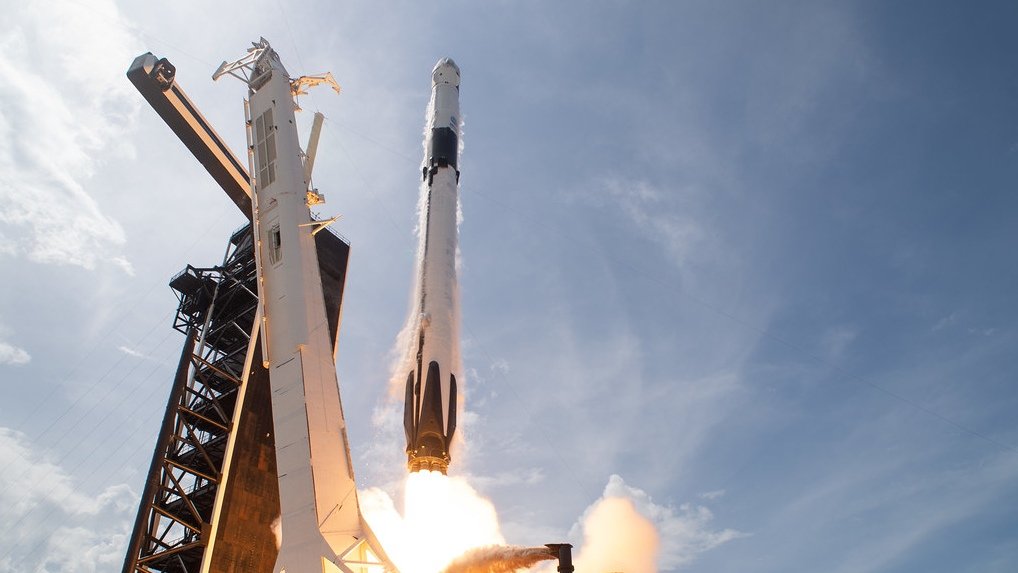
How SpaceX build one rocket every day: Building a giant rocket more than 120 meters tall, weighing thousands of tons, and capable of carrying over 100 tons into orbit sounds like a project that should take several years. Historically, that was exactly the case. Traditional aerospace programs required enormous amounts of time, specialized labor, and complicated manufacturing processes to construct even a small fleet of rockets.
However, SpaceX is changing the future of rocket manufacturing with an ambitious vision: producing one fully flight-ready Starship every single day. Instead of treating rockets as individually handcrafted engineering masterpieces, SpaceX wants to manufacture them using production methods similar to those found in the automotive and commercial aircraft industries.
This transformation involves advanced factory design, stainless steel construction, parallel assembly, automation, and continuous engineering improvements. Let’s explore how SpaceX is redesigning rocket manufacturing to achieve unprecedented production speeds.
1. SpaceX’s Production Milestones: From Months to Days
One of the biggest differences between traditional aerospace manufacturing and SpaceX’s approach is the speed of production.
Historically, NASA spent years constructing the Saturn V rockets used during the Apollo program. Similarly, the Space Shuttle program operated only a limited fleet of reusable spacecraft over several decades.
SpaceX is pursuing an entirely different manufacturing philosophy. According to the production figures described in the company’s development journey, a complete Starship takes approximately 30 days to manufacture.
The production timeline has evolved through several important stages:
- Early Prototypes: Approximately five months to manufacture one complete vehicle.
- Current Production Rate: Approximately one Starship per month.
- Near-Term Target: Two complete Starships per week.
- Long-Term Objective: One fully flight-ready Starship every day.
Reaching the daily production target would mean manufacturing approximately 365 Starships annually.
This ambitious objective supports Elon Musk’s long-term vision of developing a transportation system capable of carrying people, equipment, and supplies to Mars. Producing rockets at this scale could fundamentally change how humanity approaches space exploration.
2. The Starfactory: Transforming Rocket Manufacturing
During the early stages of Starship development at Starbase in Boca Chica, Texas, SpaceX relied heavily on temporary tents, outdoor assembly areas, and flexible manufacturing spaces.
These facilities allowed engineers to experiment quickly. They could modify components, introduce new designs, and test improvements without rebuilding an entire standardized production line.
However, temporary manufacturing arrangements become inefficient when production volumes increase.
Moving enormous stainless steel components between different buildings, coordinating multiple teams, and managing complicated workflows can waste valuable manufacturing hours.
To solve this challenge, SpaceX developed Starfactory, a dedicated manufacturing facility designed to streamline the entire production process.
How Starfactory Improves Production Efficiency
Instead of treating a factory as simply a building where workers assemble rocket components, SpaceX approaches manufacturing as an integrated system.
Every production area is designed around the movement of materials, components, equipment, and workers.
The objective is to eliminate unnecessary transportation, reduce waiting times, and prevent duplicated manufacturing activities.
This approach allows different teams to work more efficiently while maintaining a consistent flow of components throughout the facility.
As production expands, Starfactory provides the industrial foundation needed to move from experimental prototypes toward high-volume rocket manufacturing.
3. Why SpaceX Uses Stainless Steel for Starship
One of the most important decisions behind Starship’s manufacturing strategy is its use of stainless steel.
Unlike traditional rockets that frequently rely on advanced aluminum alloys or carbon-fiber composite structures, Starship uses large stainless steel sections to construct its main body.
The manufacturing process begins with industrial steel rolls. Sheets are cut, shaped into cylindrical sections, and welded together to create major structural components.
These sections eventually become propellant tanks, the vehicle’s central body, and its nose structure.
Major Manufacturing Advantages of Stainless Steel
1. Easier Industrial Welding
Stainless steel supports established welding techniques that can be performed using industrial equipment. This makes it easier to standardize fabrication and introduce automated welding operations.
2. Excellent Temperature Resistance
Stainless steel offers useful mechanical properties across a wide range of temperatures. Its thermal characteristics make it suitable for a vehicle exposed to extreme launch, atmospheric, and reentry environments.
3. Faster Material Processing
Manufacturers can cut, roll, shape, and weld stainless steel without relying on lengthy composite curing processes.
This helps reduce production bottlenecks and allows multiple structural components to move through manufacturing simultaneously.
By selecting a material compatible with repeatable industrial processes, SpaceX can simplify an important part of rocket construction.
4. Parallel Assembly: Building Multiple Components Simultaneously
Traditional aerospace manufacturing often follows a sequential production model. A vehicle moves through different manufacturing stations, completing one major stage before progressing to the next.
Although this approach provides organization, it can create serious bottlenecks. If one station experiences a delay, the entire production schedule may be affected.
SpaceX uses a more flexible approach based on parallel assembly.
Rather than waiting for every component to be completed in sequence, different manufacturing teams work on separate Starship sections simultaneously.
How Parallel Manufacturing Works
- Nose Section: Teams manufacture the nose cone, payload structures, and forward aerodynamic components.
- Central Section: Workers construct the main methane and liquid oxygen propellant tanks.
- Lower Section: Specialized teams assemble engine bay structures, thrust components, and propulsion plumbing.
Each section progresses independently through its own manufacturing workflow.
For example, a delay in installing plumbing inside a propellant tank does not necessarily prevent another team from manufacturing nose-cone structures or preparing thermal protection components.
Once the individual sections are ready, they are transferred to larger assembly facilities for final integration.
This manufacturing philosophy helps SpaceX increase productivity without forcing every department to operate at exactly the same pace.
5. Design for Manufacturability: Simplifying Every Component
A highly organized factory cannot achieve extraordinary production speeds if the rocket itself is unnecessarily complicated to manufacture.
That is why SpaceX continuously modifies Starship’s design to improve both performance and production efficiency.
The company follows an engineering philosophy centered on questioning requirements, removing unnecessary complexity, and accelerating manufacturing processes.
Its five-step problem-solving approach can be summarized as follows:
- Question Every Requirement: Examine whether every component and engineering requirement is genuinely necessary.
- Delete Unnecessary Parts: Remove components and processes that do not provide essential value.
- Simplify Remaining Components: Make necessary structures easier to manufacture and assemble.
- Accelerate Cycle Time: Reduce the time required to complete individual manufacturing operations.
- Automate Operations: Introduce automation after simplifying the underlying process.
This approach is important because automating a complicated process does not automatically make it efficient.
If a component contains unnecessary parts or requires excessive manufacturing steps, automation may simply accelerate wasted effort.
By simplifying structures, reducing plumbing complexity, and refining aerodynamic components, SpaceX aims to reduce total manufacturing hours before expanding automation.
6. Gigabay: Bringing Starship Together
After individual stainless steel rings and structural modules are manufactured, they move into large vertical assembly facilities known as Gigabay.
These enormous industrial buildings feature high ceilings and heavy-duty overhead cranes capable of lifting and positioning massive rocket sections.
Gigabay plays an important role in bringing independently manufactured components together.
The Three Main Starship Assembly Sections
Nose Section: This upper portion includes the payload bay, forward flaps, nose cone, and associated structural hardware.
Center Section: The central structure contains the main liquid methane and liquid oxygen propellant tanks.
Lower Section: This area incorporates the aft structures, main engine mounting system, thrust puck, and propulsion connections.
Large lifting systems allow these sections to be positioned and joined during final vehicle integration.
The ability to assemble enormous rocket structures inside dedicated high-bay facilities is essential for supporting higher production volumes.
7. Vertical Integration: Why SpaceX Manufactures Its Own Components
Another important factor behind SpaceX’s manufacturing strategy is vertical integration.
Rocket production depends on thousands of components, including engines, valves, avionics, plumbing systems, and specialized electronic hardware.
Depending entirely on external suppliers can create significant production delays.
For example, a completed Starship structure cannot become a flight-ready vehicle if its Raptor engines are unavailable.
SpaceX addresses this challenge by manufacturing many critical systems internally, including its Raptor rocket engines and important supporting hardware.
This gives the company greater control over production schedules, engineering modifications, and component availability.
However, vertical integration also creates an important challenge: engine manufacturing must expand alongside airframe production.
Producing hundreds of rocket structures annually would be pointless if engine production could not keep pace.
Therefore, maintaining synchronization between structural manufacturing, propulsion production, and final integration is essential to achieving the company’s long-term objectives.
8. Can SpaceX Really Build One Starship Every Day?
Manufacturing one Starship every day represents an extraordinary industrial ambition.
Reaching this target requires more than faster welding machines or larger assembly buildings. It requires an entirely connected manufacturing ecosystem.
SpaceX must coordinate material processing, component fabrication, engine production, avionics manufacturing, final integration, quality inspections, and flight preparation.
Every department must operate efficiently without creating bottlenecks elsewhere.
The company’s strategy combines several important principles:
- High-volume stainless steel manufacturing
- Dedicated Starfactory production infrastructure
- Parallel component assembly
- Simplified rocket designs
- Automated manufacturing operations
- In-house production of critical hardware
- Large-scale vertical integration facilities
Although the one-rocket-per-day objective remains an ambitious long-term production goal rather than an established daily output, the manufacturing strategy demonstrates how SpaceX intends to scale its operations.
Conclusion: The Future of Rocket Manufacturing
SpaceX is attempting to transform rocket construction from a slow, specialized aerospace activity into a repeatable industrial manufacturing process.
Through Starfactory, stainless steel fabrication, parallel assembly, Gigabay integration, and vertical manufacturing, the company is building an infrastructure designed to support dramatically higher Starship production rates.
The ultimate objective is not simply to manufacture rockets faster. It is to make space transportation more affordable, repeatable, and scalable.
If SpaceX eventually achieves its goal of producing one fully flight-ready Starship every day, it could represent a major turning point in aerospace history.
Such manufacturing capacity would support ambitious plans for lunar exploration, large-scale satellite deployment, and eventually a permanent human presence on Mars.
The future of space exploration may depend not only on how powerful rockets become, but also on how efficiently humanity can manufacture them.
FAQs
1. How does SpaceX plan to build one Starship rocket every day?
SpaceX aims to achieve daily Starship production through advanced manufacturing facilities, parallel assembly, stainless steel fabrication, automation, and simplified engineering designs.
2. How long does it currently take SpaceX to build one Starship?
Based on the production figures in the article, SpaceX takes approximately 30 days to manufacture one complete Starship.
3. What is SpaceX’s long-term Starship production target?
SpaceX’s long-term objective is to manufacture one fully flight-ready Starship per day, potentially producing around 365 vehicles annually.
4. What is Starfactory?
Starfactory is SpaceX’s dedicated manufacturing facility at Starbase, Texas, designed to streamline Starship production and increase manufacturing efficiency.
5. Why does SpaceX use stainless steel for Starship?
SpaceX uses stainless steel because it offers excellent temperature resistance, established welding techniques, structural strength, and efficient industrial manufacturing processes.
6. What is Gigabay at SpaceX?
Gigabay is a large vertical assembly facility where major Starship and Super Heavy rocket sections are stacked, integrated, and prepared for further production operations.
7. What are the three main sections of Starship?
The three main sections include the nose section, central propellant tank section, and lower engine bay section containing propulsion and structural components.
8. How does parallel assembly help SpaceX build rockets faster?
Parallel assembly allows different teams to manufacture separate rocket components simultaneously, reducing waiting times and preventing delays in one department from stopping the entire production process.
9. How many Starships could SpaceX manufacture annually?
If SpaceX achieves its ambitious target of one complete Starship per day, it could theoretically manufacture approximately 365 Starships annually.
10. What role do Raptor engines play in Starship production?
Raptor engines provide the propulsion required for Starship and Super Heavy. Their manufacturing capacity must increase alongside rocket production to prevent engine shortages.
11. What is vertical integration in SpaceX manufacturing?
Vertical integration means manufacturing important components internally rather than depending entirely on outside suppliers. This gives SpaceX greater control over production schedules, quality, and engineering improvements.
12. How has SpaceX reduced Starship manufacturing time?
SpaceX focuses on simplifying designs, eliminating unnecessary components, improving factory layouts, using parallel assembly, and introducing automation to reduce manufacturing time.
13. Why is Starship production important for Mars exploration?
High-volume Starship production could help SpaceX transport astronauts, equipment, supplies, and infrastructure to Mars, supporting its long-term vision of establishing a permanent human presence there.
14. What challenges could prevent SpaceX from building one Starship every day?
Major challenges include Raptor engine production, supply-chain coordination, manufacturing quality control, component availability, factory capacity, and final vehicle integration.
15. Could SpaceX’s rocket manufacturing approach change the aerospace industry?
Yes. If successful, SpaceX’s automotive-style manufacturing approach could make rocket production faster, more repeatable, and potentially more affordable, transforming the future of commercial spaceflight.
Read More:
- Inside Tesla and SpaceX: The Mega-Merger Talks, Cybercab Swarms, and Starship Flight 15
- Grok Bot users hit with weekly limits early, Elon Musk explains what happened
- SpaceX’s Starfall just went from secret to storefront
- Elon Musk Unveils Tesla Optimus Gen 3 Homemaker Robot for 2027
- SpaceX’s Moonbase Alpha: The Future of Lunar Living
- 2027 Tesla Bot Gen 3 LEARNS 500 INSANE Tasks! AMAZING Upgrade