
Blue Origin Failed to Deploy Payload after Booster Landing, WHY! Lunar Lander Mission Delayed!?: The global aerospace industry is entering a new era of innovation, risk, and fierce competition, where technological breakthroughs are happening at lightning speed. Yet, paradoxically, even as the “impossible” becomes routine, the “routine” still proves incredibly difficult to master.
On April 19, 2026, a series of dramatic events involving Blue Origin, SpaceX, and United Launch Alliance revealed just how wide the gap remains between emerging challengers and dominant industry leaders.
This blog dives deep into Blue Origin’s New Glenn failure, SpaceX’s historic milestone, and ULA’s ongoing struggles, while exploring what these developments mean for the future of space exploration.
The Aerospace Industry in 2026: A Turning Point
The modern space race is no longer just about reaching orbit—it’s about efficiency, reusability, and reliability.
Private companies are now leading innovation, pushing boundaries once dominated by government agencies like NASA. However, with rapid progress comes equally dramatic failures.
The events of April 19 highlight three key realities:
- Reusability is the future—but hard to perfect
- Reliability determines commercial success
- Consistency separates leaders from competitors
Blue Origin’s New Glenn: A Success Wrapped in Failure
The spotlight of the week was on Blue Origin’s New Glenn rocket, a heavy-lift launch vehicle designed to rival SpaceX’s Falcon Heavy.
While the mission showcased impressive engineering achievements, it ultimately ended in a critical payload failure.
Midnight Launch Drama and Liftoff
The launch began in the early hours of the morning in Florida, where the rocket stood illuminated like a “glowing monument” against the night sky.
Fueling a rocket like New Glenn involves complex cryogenic operations, requiring extreme precision. Despite a last-minute mysterious hold at T-minus 3:57, the countdown resumed successfully.
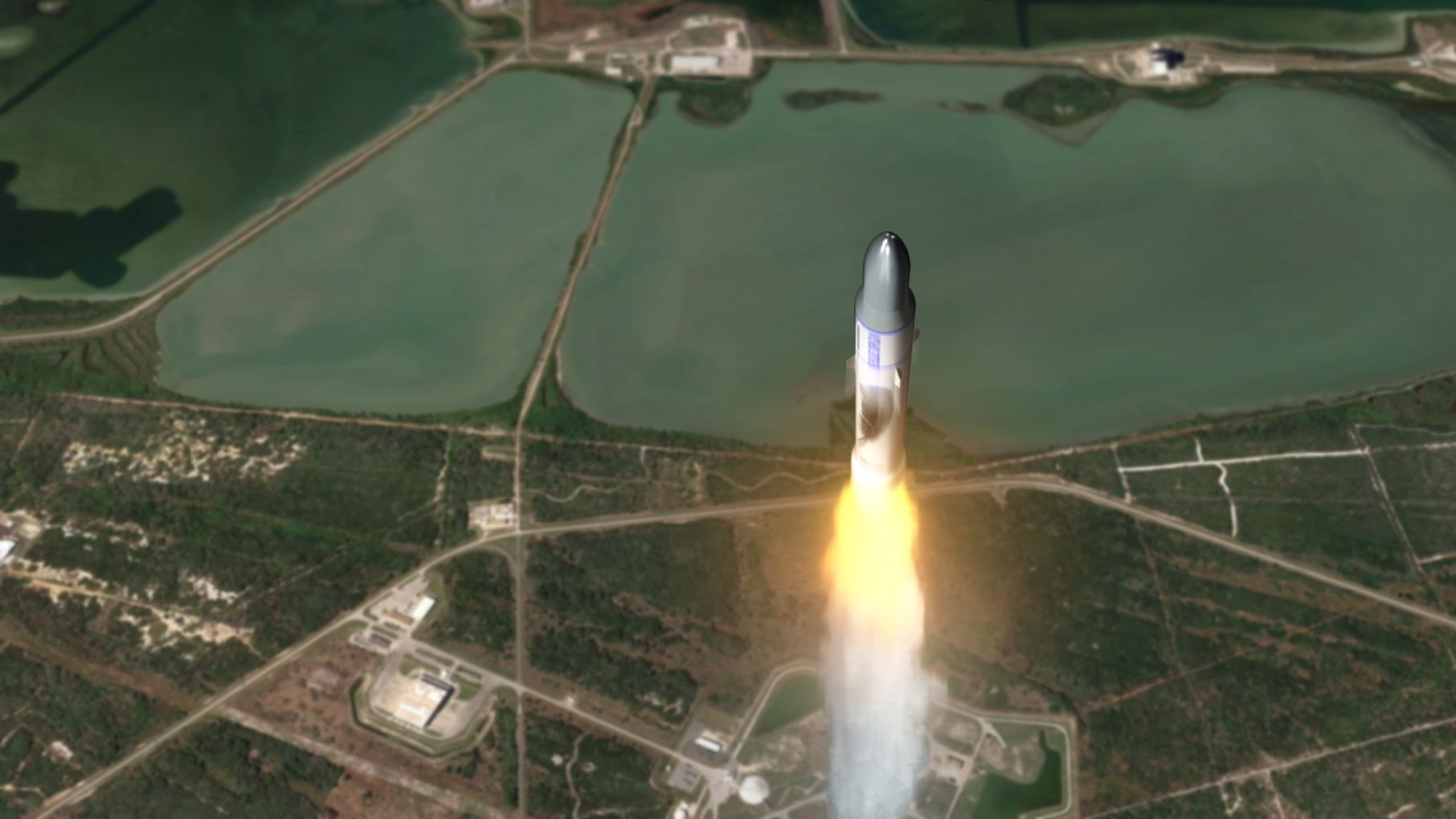
At 7:25 a.m. ET, seven BE-4 engines ignited, delivering massive thrust and marking a powerful liftoff that shook nearby areas.
Reusable Rocket Milestone: Booster Landing Success
One of the biggest achievements of the mission was the successful recovery of the first-stage booster, named “Never Tell Me the Odds.”
What Made This Special?
- It was a reused booster, flying for the second time
- It performed precision re-entry and landing burns
- It landed safely on a drone ship in the Atlantic
This marked a major milestone for Blue Origin, officially placing them in the reusable rocket race alongside SpaceX.
The dramatic landing included a cloud of smoke engulfing the booster, creating a “ninja-like” disappearance effect—but the result was clear:
👉 Blue Origin can now successfully reuse orbital-class boosters
Upper Stage Failure: The Real Problem
Despite the success of the booster landing, the mission ultimately failed where it mattered most—payload deployment.
What Went Wrong?
- The Bluebird 7 satellite was deployed into an extremely low orbit
- The satellite began scraping Earth’s atmosphere
- It lacks sufficient fuel to maintain orbit
The Outcome
The satellite is expected to:
- Gradually lose altitude
- Burn up during re-entry
👉 In simple terms, it became a multi-million-dollar loss
Possible Causes of Failure
Blue Origin now faces a deep technical investigation, often referred to as an “engineering autopsy.”
Potential causes include:
- Liquid hydrogen leaks
- Faulty igniters in upper-stage engines
- Software or calculation errors
Until resolved, this issue raises serious concerns about mission reliability.
Why This Failure Matters: Amazon and NASA Impact
This isn’t just a technical glitch—it has massive business and strategic implications.
Amazon’s Satellite Ambitions at Risk
Blue Origin is closely tied to Amazon through Jeff Bezos’ satellite internet initiative.
Project Kuiper (Amazon LEO)
The goal:
- Launch thousands of satellites
- Compete with SpaceX’s Starlink network
But there’s a problem:
👉 If New Glenn cannot reliably deploy satellites, Amazon’s entire timeline could be delayed by years
This creates internal pressure between:
- Rocket development teams
- Satellite deployment strategies
NASA’s Artemis Program and Lunar Goals
Blue Origin is also a major partner in NASA’s Artemis program, which aims to return humans to the Moon.
Key Concern
If Blue Origin struggles with:
- Stable Earth orbit
- Precision deployment
Then achieving a successful lunar landing becomes significantly harder
The Blue Moon lander, designed for lunar missions, depends heavily on these capabilities.
👉 This failure raises doubts about future Moon mission timelines
SpaceX Dominates: 600 Rocket Landings and Counting
While Blue Origin faced setbacks, SpaceX achieved something extraordinary on the very same day.
Falcon 9’s Historic 600th Landing
A Falcon 9 rocket launched from California and successfully landed its booster, marking:
👉 600 successful booster recoveries
This milestone would have seemed impossible just two decades ago.
Why SpaceX Is Ahead
Elon Musk’s company has mastered:
- Rapid reusability
- High-frequency launches
- Operational efficiency
What Sets SpaceX Apart?
- Boosters are reused multiple times
- Launches happen at unprecedented frequency
- Failures are quickly analyzed and corrected
👉 SpaceX has turned rocket science into a logistics business
Making the Impossible Look Routine
SpaceX now lands rockets so frequently that it feels almost ordinary.
This level of consistency:
- Lowers costs
- Increases reliability
- Forces competitors to innovate faster
Even industry rivals acknowledged Blue Origin’s success—but the gap remains enormous:
👉 600 landings vs. just a few attempts
ULA’s Vulcan Rocket Crisis: A Heavy Lifter in Trouble
The third major player, United Launch Alliance, is facing its own challenges with the Vulcan rocket.
The Solid Rocket Booster Problem
Vulcan relies on boosters supplied by Northrop Grumman.
However:
- Persistent technical issues have grounded the rocket
- Launch schedules are disrupted
A Radical Solution: Remove the Boosters
In a surprising move, the U.S. Space Force suggested:
👉 Launching Vulcan without its solid rocket boosters
Why This Is a Big Deal
Removing boosters drastically impacts performance:
- Reduced payload capacity
- Lower altitude capability
- Limited mission scope
It’s essentially like:
👉 Running a sports car without its turbo engine
Impact on National Security Missions
Without full capability, Vulcan may lose high-priority missions.
These could shift to:
- SpaceX’s Falcon Heavy
- Future Starship missions
👉 This threatens ULA’s position in the aerospace market
Brand and Image Damage
Vulcan was meant to replace legendary rockets.
Flying without boosters:
- Weakens its reputation
- Raises doubts about its design
It’s a symbolic setback as much as a technical one.
The Bigger Picture: A New Space Race Reality
The events of April 19 reveal a powerful truth:
👉 Space exploration is still incredibly difficult
Even in 2026:
- Small errors can cause massive failures
- Reliability is everything
- Competition is accelerating innovation
Key Takeaways from April 19, 2026
1. Blue Origin
- Achieved reusable booster success
- Failed critical payload deployment
- Faces delays in Amazon and NASA projects
2. SpaceX
- Reached 600 successful landings
- Continues to dominate the industry
- Sets the benchmark for reliability
3. ULA
- Struggling with hardware issues
- Considering reduced-capability launches
- Risks losing market relevance
Conclusion: A Wild, Loud, and Unpredictable Future
We are living in one of the most exciting periods in human history.
The aerospace industry today is:
- Unpredictable
- Highly competitive
- Rapidly evolving
Blue Origin has proven it can build reusable rockets—but must now solve its upper-stage reliability problem.
SpaceX continues to lead, turning groundbreaking achievements into everyday operations.
ULA is fighting to adapt in a rapidly changing landscape.
Final Thought
Every rocket launch—successful or failed—is a step forward.
What feels like routine today was once science fiction. And while future generations may look back at this era with amusement, right now:
👉 Every landing, every launch, and every failure brings humanity closer to the stars. 🚀
FAQs
1. Why did Blue Origin fail to deploy its payload successfully?
Blue Origin’s New Glenn rocket experienced an upper-stage issue, which placed the satellite into an extremely low orbit. This made it impossible for the payload to maintain its position, leading to its eventual re-entry and burn-up.
2. Was the New Glenn launch a complete failure?
No, it was a partial success. While the payload deployment failed, the mission achieved a major milestone by successfully landing and reusing the booster, which is critical for future cost reduction.
3. What happened to the Bluebird 7 satellite?
The satellite was deployed but into a suboptimal orbit. Due to atmospheric drag and limited fuel, it is expected to deorbit and burn up, resulting in a financial loss.
4. What caused the upper-stage failure in New Glenn?
The exact cause is still under investigation, but possible reasons include:
- Liquid hydrogen leaks
- Engine ignition problems
- Software or calculation errors
5. How does this impact Amazon’s satellite plans?
Amazon’s Project Kuiper (Amazon LEO) depends heavily on reliable launches. This failure could delay satellite deployment timelines, affecting its competition with SpaceX’s Starlink.
6. Will this delay NASA’s Moon missions?
Yes, it could. Blue Origin is involved in the Artemis program led by NASA. If reliability issues persist, it may delay lunar missions, including the Blue Moon lander.
7. What is special about New Glenn’s booster landing?
The booster successfully landed on a drone ship after launch and was reused from a previous mission, marking a significant step toward rocket reusability for Blue Origin.
8. How many successful rocket landings has SpaceX achieved?
SpaceX has reached an incredible milestone of 600 successful booster landings, showcasing unmatched reliability in reusable rocket technology.
9. Why is SpaceX considered ahead of its competitors?
SpaceX leads due to:
- High launch frequency
- Proven reusability
- Rapid innovation cycles
These factors allow it to reduce costs and increase efficiency faster than competitors.
10. Who is leading SpaceX’s vision?
SpaceX is led by Elon Musk, whose focus on reusability and long-term space colonization has driven the company’s success.
11. What challenges is United Launch Alliance facing?
ULA’s Vulcan rocket is dealing with technical issues related to its solid rocket boosters, which has delayed launches and raised concerns about performance.
12. Why is launching Vulcan without boosters a problem?
Without boosters, the rocket loses:
- Payload capacity
- Lift capability
- Mission flexibility
This limits its ability to handle heavy or high-priority missions.
13. Who supplies Vulcan’s boosters?
The solid rocket boosters are supplied by Northrop Grumman, which is currently facing issues affecting Vulcan’s readiness.
14. What does this event say about the future of space exploration?
It highlights that while progress is rapid, space missions remain complex and risky. Success requires not just innovation but also consistent reliability.
15. What is the biggest takeaway from April 19, 2026?
The biggest lesson is that reusability alone isn’t enough. Companies must master both booster recovery and precise payload deployment to succeed in the modern space race.
Read More:
- Elon Musk officially announced NEW LAUNCH DATE for first Starship V3 Launch!
- Tesla expands Unsupervised Robotaxi service to two new cities
- Elon Musk Shocked Everyone by Unveiling an AI Device to Control Tesla Cars
- What is Actually Happening on Artemis 3
- Tesla Signature Model S, X owners get hit with crazy no-resale clause