
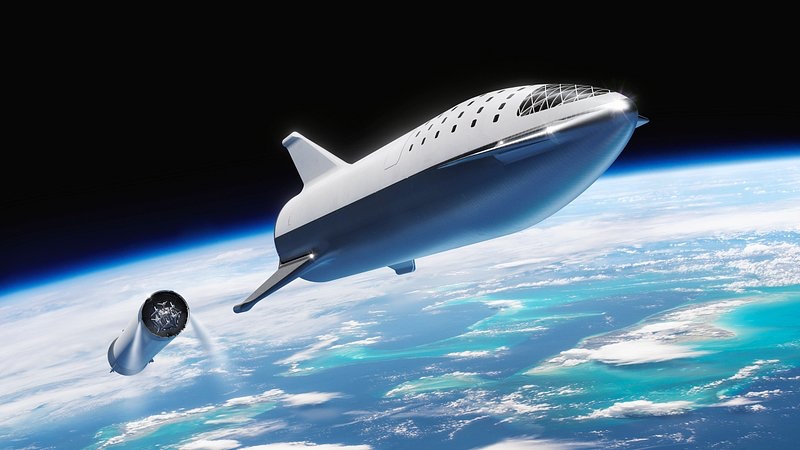
The aerospace industry is entering one of its most exciting chapters yet. With Elon Musk confirming a new launch window, all eyes are now on SpaceX as it prepares for Starship Flight 12—a mission that promises to redefine the future of space exploration.
This isn’t just another test flight. It marks the debut of Starship Version 3 (V3), a significantly upgraded system designed to push humanity closer to becoming a multi-planetary species. From powerful new engines to historic Mars missions and industry-shifting market dynamics, this launch could change everything.
Starship Flight 12: A Historic Leap Forward
What Makes Starship V3 So Important?
The upcoming Flight 12 mission introduces the world to Starship V3, a next-generation iteration that is taller, heavier, and more capable than any previous version.
Unlike earlier prototypes, V3 is engineered with long-term missions in mind—particularly lunar landings and Mars colonization. Every component has been refined to improve efficiency, payload capacity, and reusability.
This launch is not just about testing hardware—it’s about proving that SpaceX is ready to transition from experimentation to operational deep-space missions.
The Power Behind V3: Raptor 3 Engines
At the heart of Starship V3 lies its most critical upgrade: the Raptor 3 engine.
Static Fire Success Signals Readiness
Recently, Booster 19 successfully completed a 3-second static fire test, igniting all 33 Raptor 3 engines simultaneously. This milestone demonstrated not only raw power but also system reliability—two essential factors for orbital missions.
More Power, More Efficiency
Compared to earlier versions, Raptor 3 engines are:
- Significantly more powerful
- Noticeably louder
- More fuel-efficient
This boost in performance translates directly into greater payload capacity and improved mission flexibility.
Rapid Fueling Breakthrough
In a stunning display of operational efficiency, SpaceX managed to load 2,500 tons of liquid oxygen and methane in just 35 minutes.
This rapid turnaround is crucial for future missions where speed and reliability will determine launch cadence and cost-effectiveness.
Launch Timeline: When Will Starship V3 Lift Off?
Target Launch Date: Early May 2026
While Elon Musk is known for ambitious timelines, current projections point to early May 2026, with many analysts highlighting May 8th as the most likely launch date.
Preparation Status of Ship 39
- Successfully completed all checks at the Massey test site
- Returned to Mega Bay 2 for final inspections
- Undergoing telemetry analysis and system validation
These steps ensure that every system is functioning perfectly before integration with the booster.
Enhanced Live Streaming Experience
SpaceX is also upgrading the viewer experience:
- Installation of high-definition cameras
- Improved Starlink connectivity
- Full HD live-streaming capability
This marks a major improvement over older missions, including those conducted by NASA, where live feeds often lacked clarity.
The Road to Launch: A Critical Countdown Week
If the May 8th timeline holds, the week leading up to launch will be one of the most intense in SpaceX history.
Stacking the Rocket: Precision Engineering
The process begins with the iconic “chopsticks” system, which will lift Ship 39 and place it atop Booster 19 at Pad 2.
This new launch mount is making its debut, adding another layer of complexity and excitement to the mission.
Wet Dress Rehearsal: The Final Test
Before ignition, SpaceX will conduct a wet dress rehearsal, which includes:
- Fully fueling both stages
- Testing pressurization systems
- Verifying valve and cooling performance
This step ensures that the rocket can handle real launch conditions without actually firing the engines.
FAA Approval: The Final Green Light
No launch can proceed without regulatory approval. The Federal Aviation Administration (FAA) is expected to issue a launch license just days before liftoff.
This decision will be based on:
- Telemetry data from recent tests
- Safety assessments
- Environmental considerations
Falcon Heavy: Preparing for a Historic Mars Mission
While Starship dominates headlines, another SpaceX rocket is quietly preparing for a groundbreaking mission.
Falcon Heavy चुosen for Mars 2028
The powerful Falcon Heavy has been selected to launch the Rosalind Franklin rover to Mars in late 2028.
This mission is being conducted in collaboration with the European Space Agency (ESA).
Why This Mission Matters
This will be the first time a SpaceX rocket delivers a rover designed to land on Mars—a major milestone in commercial spaceflight.
The Rosalind Franklin Rover: खोज जीवन के संकेत
The Rosalind Franklin rover is unlike any rover before it.
Key Features:
- Designed to search for signs of past or present life
- Equipped with advanced scientific instruments
Unlike NASA’s surface-level exploration rovers, this mission aims to go deeper—literally and scientifically.
Why Falcon Heavy Was Selected
After the cancellation of partnerships involving Russia’s Proton rocket, Falcon Heavy emerged as the best choice due to:
- Proven reliability
- Cost efficiency
- Capability for direct Mars trajectories
The Space Industry Shift: SpaceX vs ULA
The year 2026 is shaping up to be a turning point in the global launch market.
ULA’s Vulcan Centaur Faces Setbacks
The United Launch Alliance (ULA) has encountered serious challenges with its Vulcan Centaur rocket.
Major Issues Include:
- Reliability concerns with solid rocket boosters
- A significant anomaly in February
- Mission delays and uncertainty
As a result, the United States Space Force has paused several critical missions.
Payloads Shift to SpaceX
Due to these setbacks:
- Multiple GPS III missions have been reassigned
- SpaceX’s Falcon 9 is now handling these launches
This shift highlights growing confidence in SpaceX’s reliability.
Winning the National Security Launch Market
In the latest National Security Space Launch (NSSL) contracts:
- SpaceX secured 5 out of 7 missions
- Total value: approximately $714 million
This significantly shifts the balance, moving away from the original 60/40 split favoring ULA.
SpaceX’s Growing Dominance
With consistent performance, rapid innovation, and aggressive pricing, SpaceX is quickly becoming the primary launch provider for both commercial and government missions.
Key Advantages:
- Reusable rocket technology
- Faster launch turnaround
- Lower costs
- Higher reliability
These factors are making it increasingly difficult for competitors to keep up.
The Bigger Picture: A Multi-Planetary Future
Starship V3 is more than just a rocket—it’s a vision for humanity’s future.
Moon, Mars, and Beyond
SpaceX’s long-term goals include:
- Supporting NASA’s Artemis missions
- Establishing a permanent human presence on Mars
- Enabling interplanetary travel
Each test flight brings us closer to these ambitious objectives.
Why Starship V3 Could Be a Game-Changer
If Flight 12 succeeds, it will validate:
- The Raptor 3 engine architecture
- Advanced launch infrastructure
- High-frequency launch capability
This could dramatically accelerate timelines for Mars missions and beyond.
Final Thoughts: A Defining Moment in Space History
The upcoming Starship Flight 12 represents a pivotal moment not just for SpaceX, but for the entire aerospace industry.
From the raw power of Raptor 3 engines to the scientific promise of Mars exploration, everything about this mission signals a bold step forward.
As Elon Musk pushes the boundaries of what’s possible, one thing is clear:
The dream of becoming a multi-planetary species is no longer science fiction—it’s rapidly becoming reality.
FAQs
1. What is Starship Flight 12?
Starship Flight 12 is the upcoming test mission by SpaceX that will debut the upgraded Starship V3 system, marking a major step toward deep-space exploration.
2. When is the Starship V3 launch scheduled?
The launch is currently targeted for early May 2026, with many experts pointing to May 8 as the most likely date, as hinted by Elon Musk.
3. What is new in Starship Version 3 (V3)?
Starship V3 is taller, heavier, and more powerful than previous versions, featuring improved engines, better payload capacity, and enhanced reusability.
4. What are Raptor 3 engines?
Raptor 3 engines are the latest generation of rocket engines developed by SpaceX, offering higher thrust, improved efficiency, and better performance than earlier versions.
5. How many engines does Booster 19 use?
Booster 19 is equipped with 33 Raptor 3 engines, all of which were successfully tested during a recent static fire.
6. What is a static fire test?
A static fire test is when rocket engines are ignited while the rocket remains anchored to the ground to verify performance and system stability before launch.
7. What is a wet dress rehearsal?
A wet dress rehearsal is a full launch simulation where the rocket is fueled and tested without engine ignition to ensure all systems function correctly.
8. Where will Starship Flight 12 launch from?
The launch will take place at SpaceX’s Starbase facility in Texas, using the newly introduced Pad 2 launch mount.
9. What role does the FAA play in the launch?
The Federal Aviation Administration (FAA) must approve and issue a launch license after reviewing safety and test data before the mission can proceed.
10. What is Falcon Heavy and how is it related?
Falcon Heavy is another powerful rocket by SpaceX that will be used for future missions, including sending payloads to Mars.
11. What is the Rosalind Franklin rover mission?
The Rosalind Franklin rover is a Mars mission by the European Space Agency designed to search for signs of life beneath the Martian surface.
12. Why is Falcon Heavy chosen for the Mars mission?
Falcon Heavy was selected due to its reliability, cost-effectiveness, and ability to carry heavy payloads on direct trajectories to Mars.
13. What challenges is ULA facing?
United Launch Alliance is experiencing technical issues with its Vulcan Centaur rocket, leading to delays and mission reassignments.
14. How is SpaceX dominating the launch market?
SpaceX is gaining dominance through reusable rockets, lower costs, faster turnaround times, and consistent success in securing major contracts.
15. What are the long-term goals of Starship?
Starship aims to support lunar missions, enable human travel to Mars, and eventually help establish a multi-planetary civilization.
16. Why is Starship V3 considered a game-changer?
Starship V3 introduces powerful new technologies and operational efficiencies that could significantly accelerate space exploration and make missions to Mars more achievable than ever before.
Read More:
- Tesla expands Unsupervised Robotaxi service to two new cities
- Elon Musk Shocked Everyone by Unveiling an AI Device to Control Tesla Cars
- What is Actually Happening on Artemis 3
- Tesla Signature Model S, X owners get hit with crazy no-resale clause
- Tesla Cybertruck sales bolstered by bold Musk move, report claims
1 thought on “Elon Musk officially announced NEW LAUNCH DATE for first Starship V3 Launch!”