
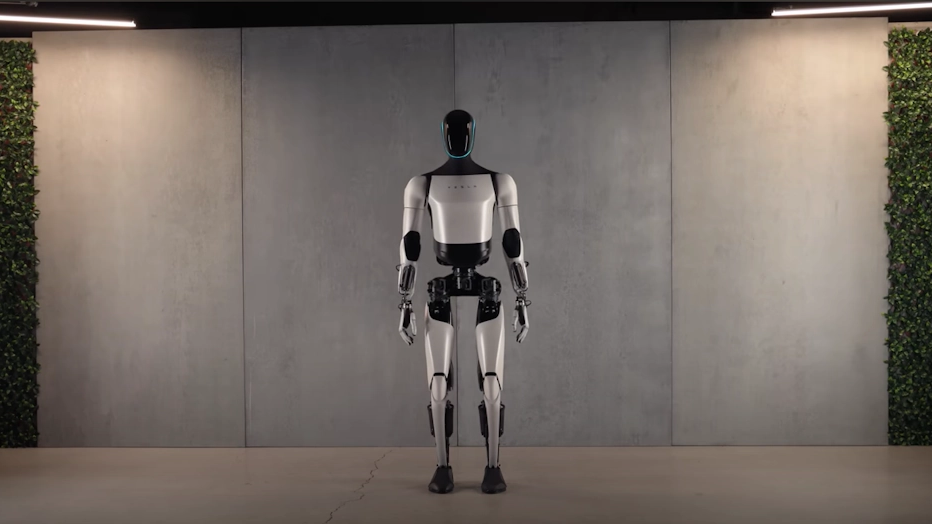
Elon Musk Confirms The BEST Tesla Bot Gen 3 To COOK, CLEAN & Serve BEER For $1/Hour: Tesla is no longer just an electric vehicle company. Under Elon Musk’s leadership, the company is rapidly evolving into one of the world’s most ambitious Artificial Intelligence (AI) and robotics companies. After Musk posted “Optimus will be epic” on X, Tesla’s Head of Autopilot and AI, Ashok Elluswamy, added another bold statement by correcting production expectations to 10 million robots.
While producing millions of humanoid robots sounds exciting, an even bigger question remains: What will these robots actually do every day?
Unlike robots designed for flashy backflips or martial arts demonstrations, Tesla Optimus Gen 3 is being engineered to perform practical household tasks like cooking meals, cleaning dishes, folding laundry, vacuuming floors, organizing groceries, and even assisting elderly family members. If Tesla succeeds, Optimus could completely transform domestic labor by delivering work at an estimated cost of just $1 per hour.
Let’s explore why Tesla believes Optimus Gen 3 could become one of the most revolutionary products ever created.
Tesla’s Vision: From Electric Cars to AI-Powered Humanoid Robots
Tesla’s long-term vision extends far beyond electric vehicles. Elon Musk believes that humanoid robots may eventually become a much larger business than automobiles.
The company’s target isn’t simply building robots.
It’s building millions of affordable AI assistants capable of working safely inside homes, factories, offices, hospitals, and warehouses.
According to Tesla’s vision, Optimus could eventually become as common as smartphones are today.
Instead of spending time on repetitive household chores, families could rely on a robot that works tirelessly every day.
Why Tesla Bot Gen 3 Focuses on Household Work Instead of Backflips
Many robotics companies attract attention by showcasing robots that can:
- Run
- Jump
- Perform parkour
- Dance
- Do martial arts
These demonstrations are entertaining, but they don’t solve real-world problems.
Tesla has taken a completely different approach.
Instead of designing the world’s most athletic robot, Optimus Gen 3 focuses on human-like dexterity.
That means learning how to:
- Cook food safely
- Wash dishes without breaking them
- Fold clothes neatly
- Vacuum floors
- Organize kitchens
- Carry groceries
- Help elderly people stand or walk
These seemingly simple activities are actually among the hardest challenges in robotics because homes are unpredictable environments filled with fragile and constantly changing objects.
The Biggest Upgrade: Tesla Optimus Gen 3’s Revolutionary Hands
Walking is relatively easy compared to handling delicate household objects.
Imagine trying to:
- Hold a fragile wine glass
- Crack an egg
- Pour coffee without spilling
- Pick up a wet plate
- Fold towels
- Open a jar
Humans perform these actions effortlessly.
For robots, every movement requires thousands of tiny adjustments.
That’s why Tesla has heavily redesigned the Optimus Gen 3 hand.
22 Degrees of Freedom
One of the largest hardware upgrades is increasing each hand to approximately 22 Degrees of Freedom (DoF).
This allows fingers to move much more like a human hand, enabling precise gripping and manipulation.
The result is significantly improved flexibility during everyday household tasks.
Three Times More Tactile Sensors
Optimus Gen 3 is expected to include nearly 3x more tactile and force sensors than previous versions.
These sensors help the robot determine:
- How slippery an object is
- How much pressure to apply
- Whether something is fragile
- If an object is moving unexpectedly
Without advanced touch sensing, robots cannot safely interact with household items.
Bio-Inspired Tendon Architecture
Instead of placing heavy motors inside the hand itself, Tesla plans to relocate them into the robot’s forearm.
Power is transferred using bio-inspired tendons, similar to how human muscles operate.
This design offers several advantages:
- Lighter hands
- Faster movement
- Greater precision
- Lower mechanical inertia
- More room for sensors
It’s one of the most important engineering improvements in Optimus Gen 3.
Physical AI Is Much Harder Than Self-Driving Cars
Tesla already leads the industry in autonomous driving technology.
However, controlling a humanoid robot is an entirely different challenge.
A self-driving vehicle mainly focuses on:
- Detecting roads
- Recognizing traffic
- Avoiding collisions
- Following lanes
A household robot must do far more.
Optimus Must Understand Physical Reality
The robot needs to instantly recognize:
- Thousands of household objects
- Whether a mug is full or empty
- If a frying pan is hot
- How heavy a box is
- Whether a surface is slippery
- How tightly it should grip an object
This combination of computer vision, touch sensing, balance, force control, and real-time reasoning is often called Physical AI.
Many robotics experts believe Physical AI is considerably more difficult than autonomous driving.
Can Tesla Really Deliver $1 Per Hour Robot Labor?
One of Elon Musk’s most ambitious claims is that Optimus could eventually reduce labor costs to roughly $1 per hour.
How?
Tesla expects large-scale manufacturing to dramatically reduce production costs.
Estimated numbers include:
- Production cost: $20,000–$25,000
- Expected selling price: Around $30,000
When spread across thousands of working hours over several years, the effective hourly labor cost becomes incredibly low.
Instead of paying hourly wages, customers would essentially own a machine capable of performing years of productive work.
This economic model could reshape industries worldwide.
How Tesla Is Training Optimus Using Its Own Factories
Rather than immediately placing robots inside homes, Tesla is first deploying Optimus in Gigafactories.
This strategy offers several important advantages.
Massive Training Data
Every successful task provides valuable learning data.
Every mistake becomes another training opportunity.
The robot continually improves through experience.
Fleet Learning
Perhaps Tesla’s biggest competitive advantage is fleet learning.
If one robot discovers a better way to perform a task, that improvement can eventually be distributed across the entire Optimus fleet through Over-the-Air (OTA) updates.
Millions of robots could improve together instead of learning individually.
Learning From Human Videos
Tesla is also exploring AI systems capable of learning from instructional videos.
Instead of manually programming every movement, Optimus watches humans perform tasks and translates those observations into robotic actions.
This dramatically speeds up training.
Major Challenges Tesla Still Needs to Solve
Despite its ambitious roadmap, several significant obstacles remain.
Mechanical Differences Between Robots
No two robots are perfectly identical.
Tiny differences in:
- Joint alignment
- Motor temperatures
- Sensor calibration
- Manufacturing tolerances
can affect performance.
A robot trained under one set of conditions may require additional calibration before matching another robot’s precision.
Limited Usefulness of Self-Driving Data
Although Tesla possesses billions of miles of Full Self-Driving (FSD) driving data, that information doesn’t teach a robot how to:
- Fold laundry
- Wash dishes
- Peel vegetables
- Hold delicate objects
Domestic manipulation requires an entirely new dataset.
Tesla must collect vast amounts of fresh training data specifically for household activities.
The Data Explosion Problem
Every Optimus robot generates enormous amounts of sensor information daily.
With multiple high-resolution cameras and hundreds of force sensors operating continuously, a single robot could produce several terabytes of data every day.
Scaling to hundreds of thousands—or even millions—of robots creates an extraordinary data management challenge.
Tesla will need advanced edge AI processing to filter useful information before uploading it to central training systems.
Will Tesla Optimus Gen 3 Change the Future of Robotics?
If Optimus Gen 3 successfully performs everyday household chores with high reliability, it could represent one of the biggest technological breakthroughs of this decade.
Unlike entertainment-focused robots, Tesla’s humanoid assistant is being designed for real productivity.
Its success won’t depend on impressive stage performances or viral videos.
Instead, it will be measured by how well it performs ordinary daily tasks like:
- Cooking meals
- Cleaning kitchens
- Washing dishes
- Vacuuming floors
- Serving drinks
- Helping elderly family members
- Organizing homes
These practical abilities are what consumers truly value.
Final Thoughts
Tesla’s Optimus Gen 3 represents far more than another robotics project. It embodies Elon Musk’s vision of making AI-powered humanoid robots a part of everyday life. By focusing on human-like dexterity, advanced Physical AI, 22-DoF hands, tactile sensing, and fleet learning, Tesla aims to solve some of the toughest engineering challenges ever attempted.
The company believes that once production reaches scale, Optimus could deliver reliable physical labor at an astonishing $1 per hour, fundamentally changing how homes and businesses operate. While major hurdles remain—including mechanical precision, massive AI training requirements, and handling enormous amounts of sensor data—the potential impact is enormous.
Ultimately, the real test for Tesla Bot Gen 3 won’t be how well it performs on a stage, but how effectively it can cook dinner, clean a kitchen, fold laundry, assist elderly family members, and complete everyday chores safely and consistently. If Tesla achieves that goal, Optimus could become one of the most important technological innovations of the AI era.
FAQs
1. What is Tesla Optimus Gen 3?
Tesla Optimus Gen 3 is Tesla’s latest humanoid robot designed to perform everyday tasks such as cooking, cleaning, folding laundry, carrying groceries, and assisting elderly people using advanced AI and robotics.
2. Why is Elon Musk focusing on humanoid robots?
Elon Musk believes humanoid robots could become an even bigger business than electric vehicles by automating repetitive physical work in homes, factories, and businesses while reducing labor costs.
3. Can Tesla Bot Gen 3 really cook and clean?
Tesla aims for Optimus Gen 3 to safely perform household chores like cooking meals, washing dishes, vacuuming floors, organizing groceries, and folding clothes with minimal human supervision.
4. What makes Tesla Optimus Gen 3 different from other robots?
Unlike robots that showcase backflips, dancing, or parkour, Tesla Optimus focuses on real-world domestic tasks, advanced human-like dexterity, and practical everyday assistance.
5. What is special about Optimus Gen 3’s hands?
The robot is expected to feature 22 Degrees of Freedom (DoF) per hand, three times more tactile sensors, and a tendon-driven architecture, enabling delicate tasks like holding fragile objects or cracking an egg.
6. How does Tesla Optimus use Artificial Intelligence?
Optimus combines computer vision, tactile sensing, force feedback, balance control, and Physical AI to understand its surroundings and interact safely with objects in real time.
7. What is Physical AI in Tesla Optimus?
Physical AI enables the robot to understand the physical properties of objects, such as weight, temperature, grip force, friction, and balance, allowing it to manipulate items safely.
8. Why is building a household robot so difficult?
Homes are unstructured environments with fragile, irregular, and constantly changing objects. Tasks like folding laundry or washing dishes require much greater precision than warehouse automation.
9. How much will Tesla Optimus Gen 3 cost?
According to Elon Musk, Tesla aims for a production cost of around $20,000–$25,000, with a potential retail price of approximately $30,000 once manufacturing reaches large-scale production.
10. Why does Elon Musk say Optimus could work for $1 per hour?
By spreading the robot’s purchase cost over thousands of working hours, Tesla estimates the effective labor cost could drop to around $1 per hour, making robotic labor highly affordable.
11. How is Tesla training Optimus robots?
Tesla is deploying Optimus robots inside its Gigafactories, where they learn from real manufacturing tasks. The company also plans to use human demonstration videos to accelerate robot learning.
12. What is fleet learning in Tesla Optimus?
Fleet learning allows improvements learned by one robot to be shared with every Optimus robot through Over-the-Air (OTA) software updates, enabling continuous AI improvements across the entire fleet.
13. What challenges does Tesla still face with Optimus Gen 3?
Major challenges include robot hardware precision, collecting massive manipulation datasets, mechanical calibration differences, edge AI processing, and managing petabytes of sensor data.
14. When will Tesla Optimus be available for consumers?
Tesla has not announced an official consumer release date. Initial deployments are expected inside Tesla factories, with broader commercial availability likely after the technology proves reliable and scalable.
15. Could Tesla Optimus change the future of work?
Yes. If Tesla Optimus Gen 3 successfully performs everyday household and industrial tasks safely and reliably, it could transform domestic labor, manufacturing, healthcare, and service industries, making AI-powered robotic assistance part of everyday life.
Read More:
- Space finally faced the people living next to its next Terafab mega-project
- Tesla Cybertruck production snaps back after ugly supplier fight
- Elon Musk just Revealed Starship Flight 14 Launch Date & Goals Beyond What We Expected
- Elon Musk’s First Fully Autonomous Tesla CyberHouse Is Now For Sale
- SpaceX reports beat in first earnings while minimizing losses
1 thought on “Elon Musk Confirms The BEST Tesla Bot Gen 3 To COOK, CLEAN & Serve BEER For $1/Hour”