
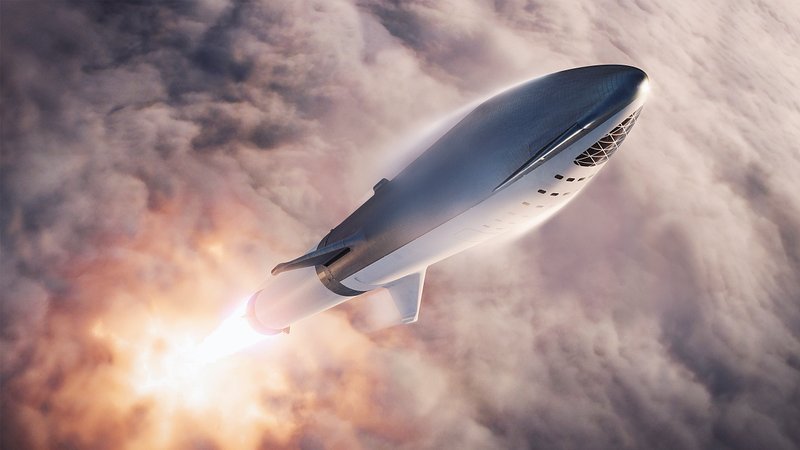
Elon Musk just revealed Starship V4 totally Solves V3 Problems, even Refuelling: SpaceX is preparing for another major leap in rocket technology as Elon Musk turns his attention toward the next generation of the revolutionary Starship program: Starship V4. While Starship V3 is expected to establish the foundation for practical heavy-lift operations, V4 could introduce significant improvements in propulsion, payload capacity, orbital refueling, and full reusability.
The next-generation rocket is being developed with an ambitious objective: making interplanetary transportation more affordable, reliable, and sustainable. With projected improvements in engine performance, vehicle dimensions, and propellant transfer capabilities, Starship V4 could become one of the most powerful launch systems ever developed.
Although many of its specifications remain projected development targets rather than confirmed final specifications, the proposed upgrades highlight SpaceX’s long-term ambitions for lunar exploration, Mars missions, and large-scale satellite deployment.
SpaceX Starship Evolution: From V1 and V2 to V3 and V4
SpaceX follows an iterative development strategy, using real-world flight tests to improve its rockets rather than waiting for a completely finished design.
Starship V1 and V2: Building the Foundation
The first Starship generations, developed between 2023 and 2025, played an essential role in testing the vehicle’s fundamental technologies.
These experimental versions helped SpaceX engineers investigate several critical engineering challenges, including:
- Structural strength and durability during launch and atmospheric reentry.
- Hot-staging technology for separating the Super Heavy booster from the spacecraft.
- Grid fin improvements for booster steering and recovery.
- Thermal protection systems designed to withstand extreme reentry temperatures.
- Raptor engine performance and vehicle flight control.
Although these early versions experienced technical difficulties, every flight generated valuable engineering data that helped SpaceX refine its next-generation designs.
Starship V3: Moving Toward Operational Launches
Starship V3 represents an important transition from experimental development toward practical heavy-lift operations.
One of its major objectives is increasing payload delivery capabilities. The proposed ability to deploy 27 Starlink V3 satellites in a single flight demonstrates the scale of missions SpaceX wants to accomplish.
However, V3 still faces several performance challenges.
Its propulsion capabilities, payload limitations, and complicated orbital refueling requirements remain important obstacles to achieving SpaceX’s ultimate ambitions.
This is where Starship V4 enters the picture.
Starship V4 Specifications: A Massive Generational Upgrade
Starship V4 is expected to introduce substantial improvements in overall dimensions, engine performance, and transportation capacity.
1. A Massive 142-Meter Starship Rocket
One of the most noticeable proposed changes is the vehicle’s increased height.
While earlier Starship generations measured approximately 120 to 124 meters, the projected V4 configuration could reach approximately 142 meters.
The proposed configuration includes:
- Super Heavy booster: Approximately 81 meters.
- Starship upper stage: Approximately 61 meters.
- Total vehicle height: Approximately 142 meters.
This increase in size could provide additional room for propulsion systems, propellant storage, and payload infrastructure.
A larger vehicle could also support more ambitious missions requiring substantial cargo capacity.
2. Raptor 4 Engines Could Deliver Around 10,000 Tons of Thrust
Propulsion is another major area where Starship V4 could deliver significant improvements.
The next-generation Raptor 4 engines are projected in the supplied development estimates to produce approximately 300 tons of thrust per engine.
Across both stages, the proposed system could feature approximately 42 engines.
If these performance targets are achieved, Starship V4 could approach an incredible 10,000 tons of combined liftoff thrust, equivalent to approximately 22 million pounds.
For comparison, NASA’s historic Saturn V rocket generated approximately 3,400 tons of liftoff thrust.
This would place the proposed V4 configuration at nearly three times the Saturn V’s liftoff thrust.
Such performance could help SpaceX transport significantly larger payloads into orbit and support demanding deep-space missions.
3. An Advanced 42-Engine Configuration
Starship V4 could also feature an improved engine arrangement.
The proposed configuration includes additional vacuum-optimized engines on the Starship upper stage and additional engines in the Super Heavy booster’s inner ring.
These improvements could provide:
- Increased total propulsion capability.
- Better engine redundancy.
- Improved performance during different flight phases.
- Greater flexibility during orbital operations.
- Additional support for demanding landing and recovery maneuvers.
However, operating such a large engine system will require sophisticated control software, reliable engine ignition, and effective thermal management.
4. More Than 200 Tons of Payload Capacity
Payload capacity is one of the most important performance measurements for any heavy-lift launch vehicle.
Starship V4 is targeting the ability to deliver more than 200 tons into low Earth orbit.
This would represent a substantial improvement over the intended capabilities of earlier generations.
A higher payload capacity could make it possible to transport:
- Large satellite constellations.
- Space station modules.
- Lunar exploration equipment.
- Mars transportation infrastructure.
- Scientific research equipment.
- Large-scale orbital manufacturing systems.
For commercial customers, increased payload capacity could also reduce the cost per kilogram of delivering equipment into space, provided the system achieves its reusability and flight-rate goals.
Starship V4 Could Finally Transform Orbital Refueling
Perhaps the most important proposed improvement involves orbital propellant refueling.
Refueling is essential because Starship needs enormous quantities of cryogenic propellant to travel beyond low Earth orbit.
A spacecraft launched from Earth cannot simply carry all the fuel required for a fully loaded lunar or Mars mission without sacrificing substantial payload capacity.
Instead, SpaceX plans to use specialized tanker Starships to transfer propellant to another spacecraft while both vehicles are in orbit.
A 200-Ton Propellant Tanker
Under the projected V4 specifications, a specialized tanker variant could transport approximately 200 tons of propellant per flight.
This would represent a major improvement in orbital logistics.
The higher tanker capacity could allow SpaceX to transfer larger quantities of fuel with fewer launches.
Only Five to Six Tanker Flights for Lunar Missions?
One particularly ambitious estimate suggests that approximately five to six tanker flights could provide the propellant required to refuel a lunar-bound Starship.
This could significantly simplify the logistics of future lunar missions.
However, the actual number of tanker flights will depend on several factors, including the final vehicle configuration, usable propellant capacity, orbital transfer efficiency, and mission requirements.
Successful orbital propellant transfer must also be demonstrated repeatedly before these projected benefits can become operational reality.
If SpaceX solves this challenge, it could unlock a new generation of reusable spacecraft capable of traveling between Earth orbit, the Moon, and eventually Mars.
Reliability and Full Reusability Remain Critical
Bigger rockets and more powerful engines are important, but they are not enough to make Starship economically successful.
SpaceX must also demonstrate that its vehicles can fly repeatedly without requiring extensive refurbishment.
1. Improved Raptor Engine Reliability
The Raptor engine family has undergone continuous development.
Raptor 3 introduced a simplified design with fewer external components and improved integration.
However, simpler external construction does not automatically guarantee easier maintenance.
Starship V4 will need engines capable of handling repeated launches, multiple restarts, and demanding landing burns.
Engine reliability and maintainability will therefore remain essential priorities.
2. Stronger Thermal Protection Tiles
Starship must survive extremely high temperatures during atmospheric reentry.
Its thermal protection system uses thousands of heat-resistant tiles designed to protect the stainless-steel vehicle structure.
For V4 to achieve rapid reuse, SpaceX will need more durable tiles, improved attachment systems, and faster inspection procedures.
The ultimate objective is to reduce refurbishment time between flights and move toward aircraft-like operational turnaround.
3. Faster Manufacturing and Launch Infrastructure
Mass production will be another major requirement.
SpaceX is expanding its manufacturing and launch infrastructure across Starbase, Florida, and Louisiana to support its long-term Starship ambitions.
Higher production capacity could allow the company to manufacture more vehicles, increase launch frequency, and support increasingly complex missions.
The long-term vision includes dramatically increasing launch operations, potentially targeting weekly flights as the system matures.
Why Starship V3 Must Succeed Before V4 Arrives
Despite the excitement surrounding Starship V4’s projected 2027 debut, SpaceX still needs to demonstrate that V3 can deliver its promised operational capabilities.
V3 is an essential proving ground for the technologies that will eventually support V4.
Several milestones remain particularly important:
- Full-stack tower recovery: Demonstrating reliable recovery of both the Super Heavy booster and Starship upper stage.
- Orbital refueling: Successfully transferring cryogenic propellant between Starships.
- Reliable engine performance: Demonstrating consistent Raptor operation across demanding flight conditions.
- Rapid reusability: Reducing inspection and refurbishment requirements.
- High launch frequency: Proving that Starship can support regular commercial and exploration missions.
These achievements will provide the engineering experience needed to develop a more capable V4 vehicle.
How Starship V4 Could Transform Moon and Mars Exploration
The long-term importance of Starship V4 extends far beyond launching satellites.
Its proposed payload capacity, increased propulsion performance, and improved refueling capabilities could fundamentally change how humanity approaches deep-space transportation.
NASA Artemis Lunar Missions
A fully operational and reusable Starship could play an important role in NASA’s Artemis program.
The Human Landing System version of Starship is designed to transport astronauts from lunar orbit to the Moon’s surface.
Improved refueling technology and greater payload capabilities could help support future lunar exploration infrastructure.
Making Mars Transportation More Practical
Mars remains one of Elon Musk’s biggest long-term ambitions.
Reaching the Red Planet requires substantial propellant, reliable spacecraft, and the ability to transport large quantities of cargo.
Starship V4’s projected improvements could help address these challenges.
A reusable heavy-lift transportation system could eventually deliver habitats, scientific equipment, energy systems, and supplies needed for future Mars missions.
Conclusion: Starship V4 Could Become SpaceX’s Biggest Leap Yet
Starship V4 represents an ambitious vision for the future of reusable space transportation.
With projected dimensions of 142 meters, approximately 10,000 tons of liftoff thrust, more than 200 tons of payload capacity, and significantly improved orbital tanker capabilities, the next-generation vehicle could overcome several important limitations associated with earlier Starship versions.
However, these figures remain development targets and should not be confused with verified operational performance.
The immediate challenge is ensuring that Starship V3 successfully demonstrates reliable launches, booster and ship recovery, orbital refueling, and rapid reuse.
If SpaceX can establish these capabilities, V4 could become a major step toward affordable lunar transportation, large-scale satellite deployment, and eventually crewed missions to Mars.
The future of space exploration may depend on one central achievement: turning the world’s most powerful rockets into vehicles that can launch, land, refuel, and fly again.
FAQs
1. What is SpaceX Starship V4?
SpaceX Starship V4 is the proposed next-generation version of Elon Musk’s Starship rocket. It is expected to introduce major improvements in engine performance, payload capacity, orbital refueling, and reusability to support future Moon and Mars missions.
2. When is SpaceX Starship V4 expected to launch?
Starship V4 is projected to make its debut around 2027. However, the actual launch schedule will depend on successful Starship V3 development and the readiness of V4 hardware.
3. How tall will Starship V4 be?
The proposed Starship V4 configuration could reach approximately 142 meters (466 feet) in height, consisting of an 81-meter Super Heavy booster and a 61-meter Starship upper stage.
4. How powerful will Starship V4 be?
Starship V4 could generate approximately 10,000 tons of combined liftoff thrust, or around 22 million pounds, using its projected next-generation Raptor 4 engines.
5. What engines will power SpaceX Starship V4?
Starship V4 is expected to use advanced Raptor 4 engines. These engines are projected to deliver approximately 300 tons of thrust each, although final specifications have not been confirmed.
6. How many engines will Starship V4 have?
The proposed Starship V4 configuration could feature approximately 42 engines across both stages, including additional vacuum-optimized engines on the upper stage and improvements to the Super Heavy booster.
7. What is the payload capacity of Starship V4?
Starship V4 is targeting more than 200 tons of payload capacity to low Earth orbit. This would make it an extremely powerful launch vehicle for satellites, cargo, space infrastructure, and deep-space missions.
8. How is Starship V4 different from Starship V3?
Starship V4 is expected to improve upon V3 through increased vehicle dimensions, more powerful engines, higher payload capacity, and improved orbital refueling capabilities. Its primary objective is to overcome important performance and operational limitations of earlier generations.
9. How will Starship V4 improve orbital refueling?
Starship V4 could use upgraded tanker variants capable of carrying approximately 200 tons of propellant per flight. This would allow SpaceX to transfer larger quantities of cryogenic fuel in orbit and simplify deep-space mission preparation.
10. How many tanker flights will Starship V4 need to refuel a lunar Starship?
Based on the projected specifications, approximately five to six tanker flights could provide the propellant required for a lunar-bound Starship. The actual number will depend on final vehicle performance and mission requirements.
11. Why is orbital refueling important for Starship V4?
Orbital refueling allows Starship to receive additional propellant after reaching Earth orbit. This is essential for missions to the Moon and Mars because carrying all the required fuel during the initial launch would severely limit available payload capacity.
12. Will Starship V4 be fully reusable?
SpaceX aims to make Starship a fully reusable launch system. V4 will need improved thermal protection, reliable engines, efficient recovery systems, and faster inspection procedures to achieve frequent reuse.
13. Why does SpaceX need Starship V3 before developing V4?
Starship V3 provides the engineering foundation for V4. SpaceX must demonstrate reliable launches, full-stack recovery, orbital propellant transfer, and higher flight frequencies before introducing the next-generation vehicle.
14. Can Starship V4 help NASA’s Artemis Moon missions?
Yes. A more capable Starship could support NASA’s Artemis program by transporting astronauts, equipment, and supplies to the lunar surface. Its improved refueling capabilities could also support more ambitious lunar exploration missions.
15. Can Starship V4 take humans to Mars?
Starship V4 is being developed within SpaceX’s broader vision of making human Mars exploration possible. Its projected payload capacity, reusable architecture, and orbital refueling technology could help transport astronauts, habitats, and supplies to Mars in the future.
16. Will Starship V4 be the most powerful rocket ever developed?
Starship V4 could become one of the most powerful rockets ever developed if its projected performance targets are achieved. Its estimated 10,000 tons of liftoff thrust would significantly exceed the approximately 3,400 tons produced by NASA’s historic Saturn V rocket.
Read More:
- Tesla Cybercab BIG Update, Impressive Ramp Up & Production Line
- The Real Reason Why SpaceX’s new Raptor 4 is the Best Engine Ever Made
- How SpaceX Builds a Rocket Every Week: Behind the Scenes of Rapid Innovation
- SpaceX’s next Starship flight set to make history on Friday the 13th
- Tesla is ending Cybertruck production