
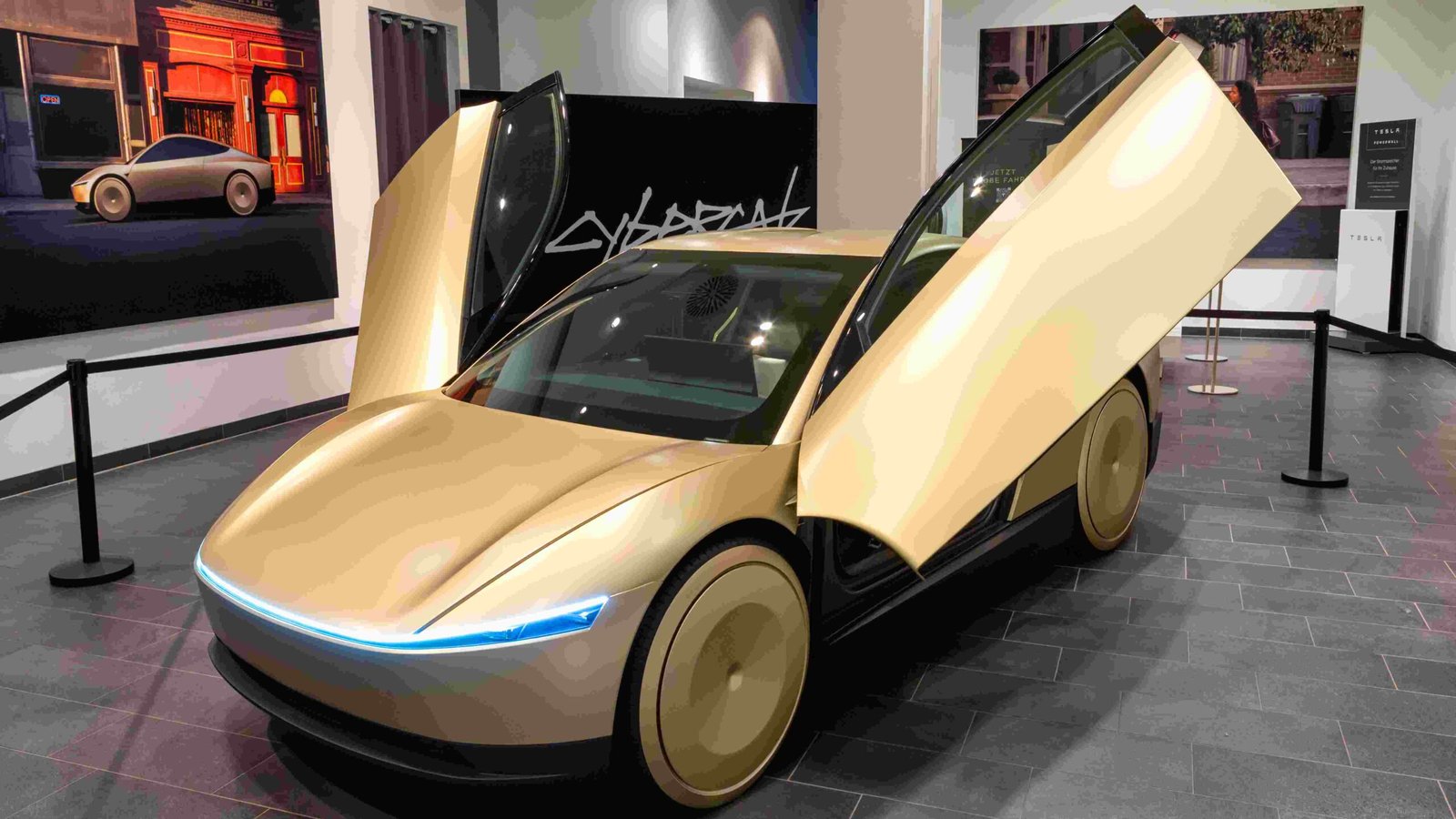
Tesla Cybercab BIG Update, Impressive Ramp Up & Production Line: Tesla is making significant progress with its ambitious Cybercab robotaxi program, moving beyond early manufacturing trials toward large-scale production and commercial deployment. With major improvements in factory automation, battery technology, manufacturing efficiency, and autonomous driving infrastructure, the Cybercab is shaping up to become a central part of Tesla’s future transportation strategy.
The company’s latest manufacturing developments highlight an entirely different approach to building vehicles. Instead of relying on traditional automotive assembly methods, Tesla is introducing modular production techniques, fewer assembly stations, and innovative materials to reduce manufacturing costs.
Alongside production improvements, Tesla is expanding its robotaxi operations in Austin while preparing for additional markets. The company is also working toward direct-to-consumer sales, potentially making autonomous transportation available to individual customers at a target price below $30,000.
Let’s explore the latest Tesla Cybercab production updates, battery innovations, robotaxi expansion, and commercialization plans.
Tesla Cybercab Production Line Reaches Impressive Manufacturing Speeds
One of the most interesting developments surrounding the Tesla Cybercab is its manufacturing efficiency. Tesla’s Texas factory setup is designed to produce vehicles at a pace that could significantly change conventional automotive manufacturing.
Production Capacity of More Than 125,000 Vehicles
The Cybercab production line is reportedly capable of producing one vehicle every 10 seconds under its stated operating conditions. Tesla’s designed annual production capacity exceeds 125,000 vehicles, demonstrating the company’s ambition to scale autonomous transportation quickly.
This production strategy focuses on simplifying the manufacturing process rather than simply increasing the number of traditional assembly stations.
With fewer manufacturing steps and greater automation, Tesla aims to reduce production complexity while maintaining consistent vehicle quality.
Only 25 Automated Assembly Stations
Traditional vehicle production lines often require hundreds of individual operations across different manufacturing areas. However, Tesla’s Cybercab approach reportedly uses approximately 25 automated final-assembly stations.
This represents a substantial reduction compared with traditional Model Y assembly processes.
The reported automation rate is approximately 78%, while the body structure assembly process reaches 100% automation through the use of autonomous mobile robots.
These systems help transport components, coordinate manufacturing activities, and reduce the need for manual material handling.
Modular Manufacturing Reduces Factory Complexity
Another major innovation is Tesla’s modular manufacturing architecture.
Instead of assembling the entire vehicle through one long production sequence, Tesla manufactures several major sections simultaneously.
These include:
- Front vehicle sections.
- Rear vehicle sections.
- Side body panels.
- Battery modules.
- Interior seating components.
Once these modules are ready, they are brought together during final assembly.
This approach can improve production efficiency because multiple manufacturing operations happen simultaneously.
Tesla has also reportedly eliminated conventional paint shops from the Cybercab manufacturing process by using pre-colored plastic body panels. Removing traditional painting infrastructure could reduce factory space requirements by nearly 50%.
The result is a manufacturing system designed around lower costs, faster assembly, and greater scalability.
Tesla Cybercab Battery Technology Gets Important Improvements
Battery technology is another important part of Tesla’s robotaxi strategy. Unlike privately owned vehicles, commercial robotaxis are expected to operate for extended periods, accumulating hundreds of thousands of miles during their service lives.
Tesla therefore needs a battery system that balances affordability, durability, charging performance, and safety.
Current 48 kWh Battery Pack
The Cybercab reportedly uses a 48 kWh battery pack containing approximately 4,680 cells.
Rather than relying on one large structural battery arrangement, the current configuration uses separate modular battery units.
This design offers an important maintenance advantage. If an individual section experiences a problem, technicians may be able to replace the affected module instead of replacing the entire battery pack.
For a commercial robotaxi fleet, reducing repair complexity could improve vehicle availability and lower long-term maintenance expenses.
Steel Battery Enclosures Reduce Costs
Tesla has also moved toward a steel battery enclosure.
The reported material cost is approximately $1.90 per kilogram, compared with around $5 to $8 per kilogram for certain alternative materials.
Steel offers several potential advantages, including durability, manufacturing familiarity, and relatively low material costs.
For vehicles expected to operate continuously across different road conditions, a strong battery enclosure is an important part of the overall vehicle design.
Future LFP Battery Integration
Perhaps the most interesting battery development is the possibility of introducing Lithium Iron Phosphate (LFP) cells in future Cybercab production.
The current 4680 battery technology offers higher energy density, reportedly around 240 Wh/kg, while LFP technology is closer to 140 Wh/kg.
Although LFP batteries generally provide lower energy density, they offer several advantages:
- Lower battery costs: LFP chemistry can reduce battery material expenses.
- Thermal stability: LFP cells generally offer strong thermal stability.
- Long cycle life: They can handle extensive charging and discharging.
- Commercial durability: Their characteristics make them attractive for vehicles with demanding operating schedules.
The Cybercab battery architecture reportedly leaves additional space to accommodate a potential future LFP configuration.
For a robotaxi designed around a targeted 500,000-mile service life, battery longevity and replacement costs could be just as important as maximum driving range.
Tesla Robotaxi Fleet Expansion Accelerates in Austin
Tesla’s manufacturing ambitions are closely connected to its expanding robotaxi operations.
Austin, Texas, has become an important testing and deployment location for the company’s autonomous transportation strategy.
More Than 1,000 Registered Robotaxi Vehicles
According to the supplied update, Tesla’s Texas robotaxi fleet has expanded beyond 1,000 registered vehicles.
Cybercabs reportedly outnumber Model Ys within the fleet group, suggesting that Tesla is increasingly emphasizing its purpose-built autonomous vehicle platform.
Growing the fleet is essential because robotaxi businesses depend on having enough vehicles available to serve passengers across different locations and operating hours.
Weekly Driverless Mileage Surpasses 438,000 Miles
Another notable milestone is the reported increase in weekly driverless mileage in Austin.
Tesla’s robotaxi operations have reportedly exceeded 438,000 weekly driverless miles, placing the company’s local operating activity alongside established autonomous mobility competitors.
Increasing driverless mileage can provide valuable operational experience and help improve autonomous driving systems.
However, total mileage alone does not establish safety performance. Accident rates, intervention frequency, operating conditions, and independent safety assessments remain important measurements.
Robotaxi Operating Hours Expand to 20 Hours
Tesla is also reportedly extending its robotaxi operating window to approximately 20 hours per day.
The stated schedule runs from 6:00 a.m. until 2:00 a.m.
Longer operating hours could help Tesla increase vehicle utilization and generate more trips from each robotaxi.
For an autonomous transportation business, maximizing the number of productive hours per vehicle is an important factor in improving potential profitability.
Expansion Into Dallas, Houston, and Miami
Following its Austin operations, Tesla is targeting additional expansion into major metropolitan markets.
The cities identified in the current roadmap include:
- Dallas, Texas
- Houston, Texas
- Miami, Florida
These markets offer opportunities to introduce autonomous transportation to larger passenger populations.
However, expansion will depend on regulatory requirements, operational readiness, autonomous driving performance, and the ability to maintain reliable service across different road environments.
Tesla Cybercab Introduces New Passenger Experience Features
Tesla is not focusing exclusively on manufacturing and autonomous driving. The company is also developing passenger-focused features designed specifically for a vehicle without traditional driver controls.
Calm Mode Improves the Cabin Experience
One reported addition is Calm Mode, a feature designed to create a more comfortable passenger environment.
It can dim displays and adjust interior lighting to provide a less distracting atmosphere.
Since passengers will not need to concentrate on driving, cabin comfort becomes an important part of the Cybercab experience.
Rear-Facing Camera Feed Replaces the Traditional Rear Window Experience
The Cybercab’s unusual exterior design does not include a conventional rear windshield.
To address visibility-related concerns, Tesla has introduced rear-facing camera feeds displayed on the interior screen.
This allows passengers to view the area behind the vehicle digitally.
The feature demonstrates how Tesla is adapting traditional automotive interfaces for a purpose-built autonomous vehicle.
Haptic Feedback Navigation
Tesla has also introduced haptic-feedback navigation through its iOS application.
Haptic feedback uses physical vibrations to communicate information through a smartphone.
This could make navigation instructions easier to recognize without requiring passengers to constantly look at their phone screens.
Together, these updates show that Tesla is developing the Cybercab as a dedicated passenger transportation platform rather than simply removing the steering wheel from an existing vehicle.
Tesla Cybercab Consumer Sales Could Begin Before the End of 2026
One of the biggest questions surrounding the Cybercab is when individual customers will be able to purchase one.
Tesla is reportedly targeting direct-to-consumer availability before the end of 2026, potentially opening a new market for personal autonomous transportation.
Target Price Below $30,000
Tesla’s ambitious pricing target is reportedly below $30,000.
This would position the Cybercab as a relatively affordable purpose-built autonomous vehicle.
Its design eliminates traditional driving controls, including the steering wheel and pedals.
Instead, the vehicle is intended to handle transportation autonomously, allowing passengers to focus on their journey.
If Tesla can achieve its targeted manufacturing costs, the Cybercab could introduce a different ownership model for people interested in autonomous mobility.
However, the sub-$30,000 figure remains a target rather than a confirmed final retail price.
A New Opportunity for Personal Autonomous Transportation
Direct-to-consumer sales could significantly expand the Cybercab’s potential market.
Instead of relying exclusively on Tesla-operated robotaxi fleets, individual customers could eventually own vehicles designed around autonomous transportation.
This approach could create additional opportunities for personal mobility, shared transportation, and commercial fleet operations.
The actual availability of fully driverless personal use will depend on regulatory approvals, software capabilities, and local operating requirements.
Conclusion: Tesla Cybercab Moves Toward Large-Scale Autonomous Transportation
The latest Tesla Cybercab production and robotaxi updates highlight the company’s ambitious plans to transform the transportation industry.
From a production line designed for one vehicle every 10 seconds to modular manufacturing, automated assembly, and potentially lower-cost LFP batteries, Tesla is attempting to redesign how autonomous vehicles are manufactured.
Meanwhile, the reported expansion beyond 1,000 registered vehicles in Texas, increasing driverless mileage, and longer operating hours demonstrate the importance of building a scalable robotaxi network.
Passenger-focused features such as Calm Mode, rear-camera displays, and haptic navigation also show that Tesla is considering the complete autonomous passenger experience.
The next major milestones will involve increasing production, demonstrating consistent autonomous driving performance, expanding into additional cities, and delivering vehicles to customers.
If Tesla achieves its ambitious manufacturing and pricing targets, the Cybercab could become a major part of the future autonomous transportation market.
FAQs
Q1. What is the Tesla Cybercab?
The Tesla Cybercab is a purpose-built autonomous electric vehicle designed for robotaxi services and personal transportation. It features a steering-wheel-free and pedal-free design, allowing passengers to travel using Tesla’s autonomous driving technology.
Q2. How many Tesla Cybercabs can the production line manufacture?
Tesla’s Cybercab production line is reportedly designed to produce more than 125,000 vehicles annually, with a targeted production speed of approximately one vehicle every 10 seconds under specified operating conditions.
Q3. How many assembly stations does the Tesla Cybercab production line use?
The Cybercab final assembly process reportedly requires approximately 25 automated stations, significantly fewer than traditional Tesla Model Y production lines.
Q4. What is the automation rate of Tesla Cybercab manufacturing?
The reported overall automation rate is approximately 78%, while body structure assembly reportedly achieves 100% automation using autonomous mobile robots.
Q5. How does Tesla reduce Cybercab manufacturing costs?
Tesla uses modular manufacturing, automated assembly, pre-colored plastic body panels, and simplified production processes. Eliminating traditional paint shops could reduce factory space requirements by nearly 50%.
Q6. What battery does the Tesla Cybercab currently use?
The current Cybercab battery configuration reportedly features a 48 kWh battery pack containing approximately 4,680 cells arranged into modular units.
Q7. Why is Tesla using modular battery units in the Cybercab?
Modular battery units can make battery maintenance and replacement easier. Instead of replacing an entire battery pack, technicians may be able to replace individual sections when necessary.
Q8. Why did Tesla switch to steel battery enclosures?
Tesla’s reported steel battery enclosure strategy focuses on reducing material costs while maintaining durability. Steel is estimated to cost approximately $1.90 per kilogram, compared with $5 to $8 for certain alternative materials.
Q9. Will Tesla Cybercab use LFP batteries in the future?
Tesla’s Cybercab battery architecture reportedly leaves room for potential Lithium Iron Phosphate (LFP) integration. LFP batteries offer lower costs, strong thermal stability, and long cycle life, making them attractive for commercial robotaxi operations.
Q10. What is the expected service life of the Tesla Cybercab?
The Cybercab is being designed around an ambitious target of approximately 500,000 miles of service life. Achieving this goal would require durable batteries, reliable components, and effective long-term maintenance.
Q11. How many vehicles are reportedly registered in Tesla’s Austin robotaxi fleet?
According to the supplied update, Tesla’s Texas robotaxi fleet has surpassed 1,000 registered vehicles, with Cybercabs reportedly outnumbering Model Ys within the fleet group.
Q12. How many driverless miles does Tesla’s robotaxi fleet cover weekly in Austin?
Tesla’s Austin robotaxi operations reportedly exceeded 438,000 weekly driverless miles, highlighting the growing scale of its autonomous transportation activities.
Q13. How many hours per day does Tesla’s robotaxi service operate?
Tesla has reportedly expanded its robotaxi operating window to approximately 20 hours daily, running from 6:00 a.m. until 2:00 a.m.
Q14. Which cities could receive Tesla Cybercab robotaxi services next?
Following its Austin operations, Tesla is targeting expansion into Dallas, Houston, and Miami. These cities could become important markets for the company’s expanding autonomous transportation network.
Q15. What is Tesla Cybercab Calm Mode?
Calm Mode is a passenger-focused feature designed to create a more relaxing cabin environment. It reportedly dims displays and adjusts interior lighting to make the passenger experience more comfortable.
Q16. How does the Tesla Cybercab provide rear visibility without a rear windshield?
The Cybercab reportedly uses rear-facing camera feeds displayed on its interior screen. This digital camera system allows passengers to see the area behind the vehicle despite its unconventional exterior design.
Q17. What is the expected price of the Tesla Cybercab?
Tesla is reportedly targeting a price of less than $30,000 for the Cybercab. However, this remains a target price and should not be considered a confirmed final retail price.
Q18. When will Tesla Cybercab become available for individual customers?
Tesla is reportedly aiming to introduce direct-to-consumer Cybercab sales before the end of 2026. Actual availability will depend on production readiness, regulatory approvals, and autonomous driving capabilities.
Read More:
- The Real Reason Why SpaceX’s new Raptor 4 is the Best Engine Ever Made
- How SpaceX Builds a Rocket Every Week: Behind the Scenes of Rapid Innovation
- SpaceX’s next Starship flight set to make history on Friday the 13th
- Tesla is ending Cybertruck production
- Something WEIRD Is Happening With SpaceX Starship HLS
1 thought on “Tesla Cybercab BIG Update, Impressive Ramp Up & Production Line”