
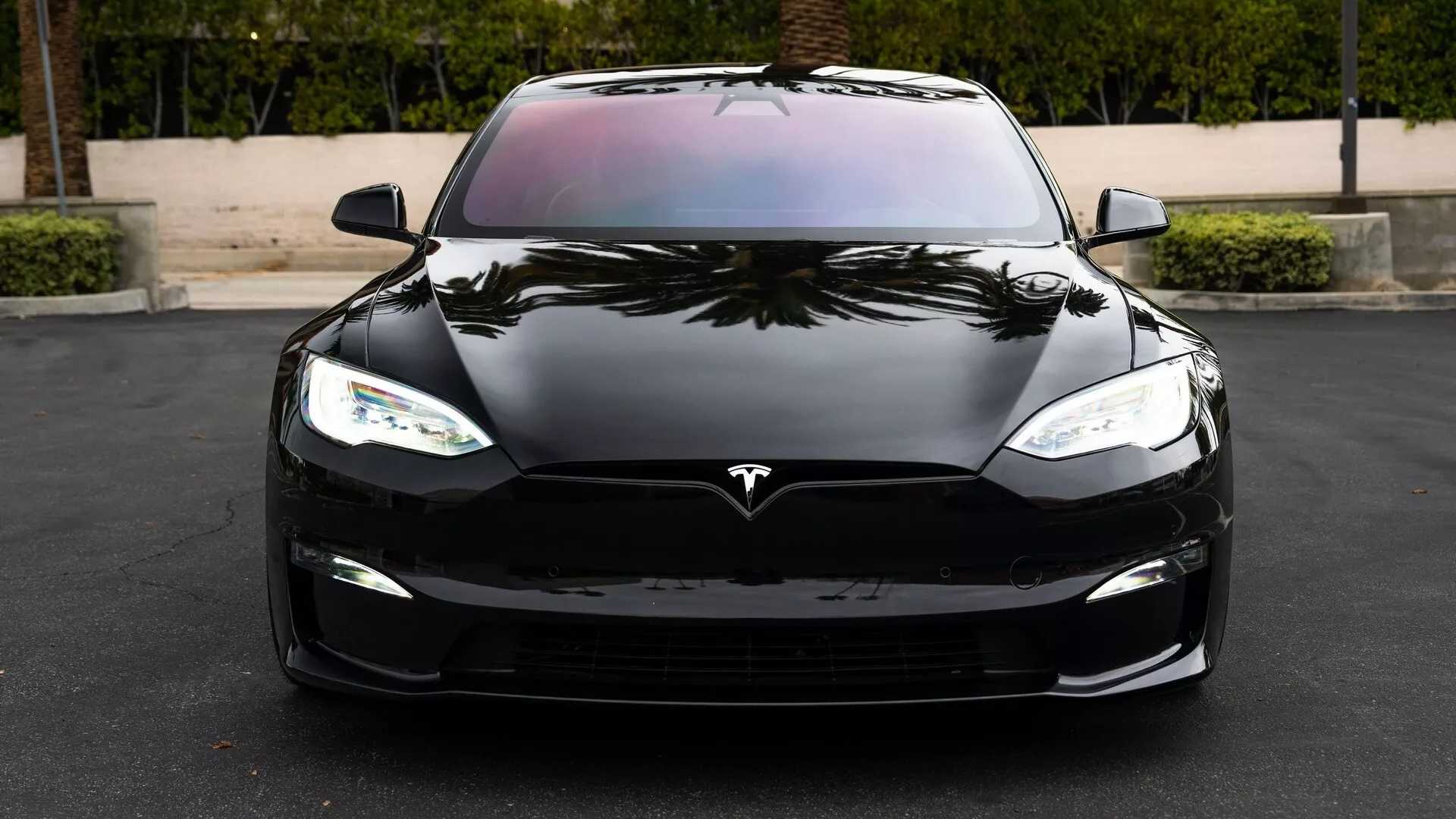
For years, the idea of a $25,000 Tesla, often referred to as the Model 2, captured global attention. It was supposed to be the turning point that would make electric vehicles truly accessible to the masses. Investors, enthusiasts, and everyday consumers all saw it as the vehicle that would push Tesla into a new era of high-volume dominance.
However, by early 2026, the dream was officially shelved.
This wasn’t just a product cancellation—it was a strategic pivot that signals a deeper transformation within Tesla. The company is no longer focused solely on selling cars. Instead, it is aggressively moving toward becoming an AI, robotics, and autonomous mobility powerhouse.
So what really happened?
Let’s break down the three real reasons behind the Model 2’s demise, and what it reveals about Tesla’s future.
I. The Three Pillars Behind the Model 2’s Cancellation
Despite years of hype and planning, the Model 2 ultimately became an unsustainable project. Three major factors made it clear that Tesla had to abandon the idea.
1. The Economic Reality and “Unboxed” Manufacturing Challenges
At its core, Tesla is not just an innovative company—it is a profit-driven business with industry-leading margins. Maintaining margins of around 20–25% has been one of Tesla’s biggest competitive advantages.
But here’s the problem:
Producing a $25,000 car while keeping those margins intact is extremely difficult.
To solve this, Tesla introduced the concept of “unboxed manufacturing.” Instead of assembling cars sequentially on a traditional production line, this method breaks the vehicle into modules that can be built simultaneously—almost like assembling Lego blocks.
Why It Didn’t Work (Yet)
While revolutionary in theory, the system faced major hurdles:
- Technological immaturity: The process wasn’t ready for large-scale, error-free production.
- Quality risks: Even small inconsistencies could lead to significant defects.
- Scaling issues: Transitioning from prototype to mass production proved more complex than expected.
In short, Tesla couldn’t guarantee low costs without sacrificing quality or efficiency—a tradeoff it wasn’t willing to make.
2. The Risk of Cannibalizing Existing Models
Another major issue was internal competition.
A high-quality $25,000 Tesla would have directly competed with the company’s best-selling models:
These vehicles generate higher profit margins, making them far more valuable to Tesla’s bottom line.
Why This Matters
Introducing a cheaper alternative could have:
- Reduced demand for premium models
- Lowered overall profitability
- Forced Tesla into a price war
From a business standpoint, this would mean entering a “race to the bottom”, where companies compete primarily on price rather than innovation.
Tesla made a clear decision:
👉 Prioritize profitability over volume.
Instead of chasing mass-market dominance at lower margins, Tesla chose to maintain premium positioning with controlled growth.
3. The Unbeatable Advantage of Chinese EV Makers
The global EV market has changed dramatically, especially in the budget segment.
Chinese manufacturers have already taken the lead with ultra-affordable electric vehicles priced as low as $10,000–$20,000.
Key Advantages of Chinese Competitors
- Lower labor costs
- Strong battery supply chains
- Government support and subsidies
- Massive production scale
This creates a harsh reality:
👉 Competing on price alone is nearly impossible for Tesla in this segment.
Even if Tesla managed to build a $25,000 car, it would still struggle to compete against $12,000 EVs produced at scale in China.
Rather than fighting a losing battle, Tesla chose to shift its focus to higher-value opportunities.
II. The Transformation: From Model 2 to Cyber Cab
The cancellation of the Model 2 doesn’t mean Tesla abandoned its research.
Instead, the company redirected its resources into a more ambitious project:
👉 The CyberCab — a fully autonomous robottaxi
The Rise of Autonomous Mobility as a Service
Tesla’s new strategy revolves around a powerful idea:
A personal car sits idle most of the time, but an autonomous taxi can generate income continuously.
Traditional Car Ownership vs Robot Taxi Model
| Factor | Personal Car | Cyber Cab |
|---|---|---|
| Usage | ~10% of time | Up to 24/7 |
| Revenue | None | Recurring income |
| Efficiency | Low | High |
| Ownership Model | Individual | Network-based |
This shift transforms Tesla from a car manufacturer into a mobility service provider.
Cyber Cab Design Innovations
Leaked footage and insider insights suggest that the Cyber Cab is radically different from traditional vehicles.
1. Minimalist Two-Seater Design
- Built specifically for urban transport
- Maximizes efficiency and reduces cost
2. No Steering Wheel or Pedals
- Fully autonomous operation
- Designed for a driverless future
3. First Front-Wheel Drive Tesla
- Optimized for space and affordability
- Simplifies engineering complexity
4. Advanced Camera Cleaning System
- Dedicated cleaning for all external cameras
- Ensures uninterrupted visibility in dust or rain
Why This Matters
The Cyber Cab represents a completely different economic model:
- Instead of selling cars once, Tesla can earn continuous revenue per vehicle
- Each unit becomes a profit-generating asset
- The system scales like a tech platform, not a traditional auto business
This is a far more lucrative long-term strategy than selling low-cost cars.
III. Tesla’s Bigger Bet: A Robotics-Driven Future
Tesla’s transformation doesn’t stop with robot taxis.
The company is now making bold moves toward humanoid robotics, signaling an even bigger shift.
The Plateau of Traditional Car Sales
By 2026, Tesla’s vehicle sales began to show signs of entering a mature phase:
- Slower growth rates
- Increased competition
- Market saturation in key regions
This forced Tesla to rethink its long-term strategy.
Factory Transformation
One of the most striking changes is happening at Tesla’s manufacturing facilities.
- Production of flagship vehicles has been scaled down
- Factory space is being reallocated
- Focus is shifting toward robot production
The Optimus Vision
Tesla aims to produce humanoid robots at massive scale.
Key Goals:
- Up to 1 million robots per year from a single factory
- Applications across industries:
- Manufacturing
- Logistics
- Domestic assistance
Why Robotics Could Dominate Tesla’s Future
According to internal projections:
👉 Up to 80% of Tesla’s future value could come from robotics, not cars
This is a staggering shift.
Reasons Behind This Bet
- Robotics offers higher scalability
- AI integration creates continuous improvement
- Demand spans across multiple industries
- Revenue potential far exceeds vehicle sales
In essence, Tesla is positioning itself as:
👉 An AI + Robotics company that happens to make cars—not the other way around
IV. Geopolitical Challenges Add New Risks
While Tesla is evolving technologically, it also faces external pressures.
In April 2026, geopolitical tensions in the Middle East introduced new risks for the company.
Why Tesla Is a Visible Target
Unlike software companies, Tesla operates physical infrastructure:
- Showrooms
- Charging stations
- Public-facing facilities
These assets are:
- Highly visible
- Easily accessible
- Symbolically significant
This makes Tesla more vulnerable during periods of geopolitical instability.
Impact on Operations
Regions such as:
- Saudi Arabia
- UAE
- Qatar
have extensive Tesla infrastructure, including dozens of superchargers in public areas.
Tesla’s Response
To maintain customer trust and support users during uncertain times, Tesla implemented:
- Free supercharging across affected regions
- Increased operational awareness
- Strategic monitoring of risks
This highlights an important reality:
👉 As Tesla expands globally, it must navigate both technological and geopolitical challenges.
Conclusion: Tesla Is No Longer Just a Car Company
The cancellation of the Model 2 marks a turning point in Tesla’s history.
What once looked like a setback is actually a strategic redirection toward a much bigger vision.
Key Takeaways
- The Model 2 was killed due to:
- Economic limitations
- Risk of internal competition
- Strong external competition from China
- Tesla is shifting toward:
- Autonomous robot taxis
- AI-driven mobility services
- Large-scale robotics production
- The company’s future may be dominated by:
- Recurring revenue models
- Software and AI ecosystems
- Humanoid robots
The Bigger Picture
Tesla is making a bold bet:
👉 The future is not about owning cars—it’s about intelligent machines providing services.
By abandoning the Model 2, Tesla is signaling that it no longer wants to compete in the low-cost vehicle market.
Instead, it aims to lead the next technological revolution powered by:
- Artificial Intelligence
- Automation
- Robotics
Final Thought
The decision may disappoint those who were waiting for an affordable Tesla, but from a strategic perspective, it reveals something much bigger:
👉 Tesla isn’t just building cars anymore—it’s building the infrastructure for an autonomous, AI-driven world.
And in that world, the Model 2 simply didn’t fit.
FAQs
1. Why was the Tesla Model 2 canceled?
The Model 2 was canceled due to economic challenges, risk of cannibalizing existing models, and strong competition from low-cost Chinese EV manufacturers.
2. What was the expected price of the Tesla Model 2?
The Model 2 was expected to cost around $25,000, making it Tesla’s most affordable electric vehicle.
3. What is “unboxed manufacturing” in Tesla?
“Unboxed manufacturing” is a production method where car components are built in parallel modules instead of a traditional assembly line, aiming to reduce costs and increase efficiency.
4. Why couldn’t Tesla make a $25,000 car profitably?
Maintaining Tesla’s 20–25% profit margins while producing a low-cost car proved too difficult due to high production and material costs.
5. How would the Model 2 affect Tesla’s existing cars?
It could have reduced sales of higher-margin vehicles like Model 3 and Model Y, hurting Tesla’s overall profitability.
6. Who are Tesla’s biggest competitors in the low-cost EV market?
Chinese automakers dominate this segment, offering electric cars priced between $10,000 and $20,000, making competition extremely tough.
7. What is the Cyber Cab?
The Cyber Cab is Tesla’s fully autonomous robot taxi, designed to operate without a driver and generate continuous revenue.
8. Does the Cyber Cab have a steering wheel?
No, the Cyber Cab is expected to have no steering wheel or pedals, as it is built for fully autonomous driving.
9. How does a robot taxi generate revenue?
Unlike personal cars, robot taxis can operate 24/7, providing rides and generating recurring income for Tesla or fleet owners.
10. Why is Tesla focusing on robot taxis instead of cheap cars?
Robot taxis offer higher long-term profits, scalability, and recurring revenue, making them more valuable than one-time car sales.
11. What is Tesla Optimus?
Optimus is Tesla’s humanoid robot project, designed to perform tasks in industries like manufacturing, logistics, and even household work.
12. How important are robots to Tesla’s future?
Tesla believes that up to 80% of its future value could come from robotics, not cars.
13. Are Tesla car sales declining?
Not exactly declining, but they are entering a mature phase with slower growth compared to earlier years.
14. Why is Tesla shifting away from traditional car manufacturing?
The company sees greater growth potential in AI, robotics, and autonomous systems than in the highly competitive car market.
15. What challenges does Tesla face globally?
Tesla faces geopolitical risks, competition, and infrastructure vulnerabilities, especially in regions with physical assets like charging stations.
16. Is Tesla still planning to make affordable cars in the future?
There’s no clear confirmation, but Tesla is currently prioritizing autonomous technology and robotics over low-cost vehicles.
17. What does this mean for the future of car ownership?
It suggests a shift toward shared, autonomous mobility services, where people rely less on owning cars and more on on-demand transportation solutions.
Read More:
- New Tesla Model 2 ALUMINUM-ION Battery? 10,000 Cycles, Non-Flammable, -25°C Efficiency (2026)
- Starship S39 with Raptor 3 Installed Ready to Firing! NASA Lunar Moonbase
- Tesla hit by Iranian missile debris in Israel and survives
- SpaceX to launch military missile tracking satellites through new Space Force contract
- Elon Musk reveals date of SpaceX Starship v3’s maiden voyage