
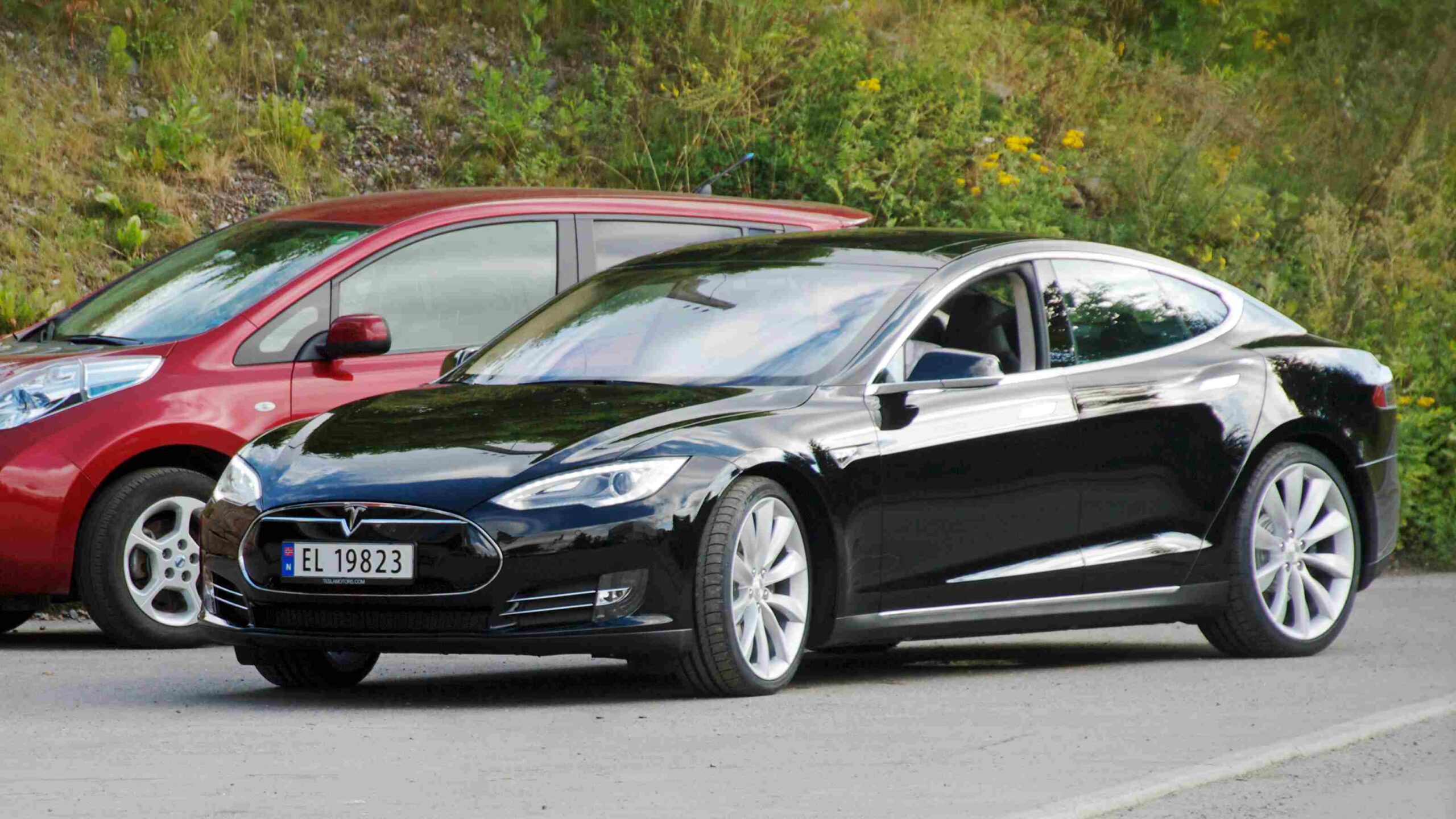
Elon Musk Touring New Car Assembly Line Destroys EV Industry: The electric vehicle (EV) industry is entering a new era, and Tesla is leading the transformation with a revolutionary manufacturing strategy. While most automakers focus on designing better cars, Elon Musk has shifted his attention toward building a better factory. His vision is simple yet groundbreaking: create the world’s most efficient manufacturing system capable of producing a car in as little as 40 seconds.
This isn’t just another improvement in battery technology or vehicle design. Instead, it’s a complete reimagining of how cars are built. If Tesla succeeds, traditional manufacturing methods that have dominated the automotive industry for over a century could become obsolete.
In this article, we’ll explore how Tesla’s Gigapress, Megacasting, and Unboxed Process could reshape the future of EV manufacturing.
The Traditional Car Manufacturing Process
For more than 100 years, almost every automobile manufacturer has relied on the same production philosophy introduced by Henry Ford.
The process involves:
- Manufacturing thousands of individual components
- Welding hundreds of metal parts together using robotic arms
- Assembling every section step-by-step on a long production line
- Completing the vehicle after passing through multiple factory stages
Companies like Toyota, Volkswagen, and General Motors have continuously refined this process, making it one of the most efficient industrial systems ever created.
However, Elon Musk believes the entire system is outdated.
Tesla’s New Goal: Build the Machine That Builds the Machine
Rather than simply producing better electric vehicles, Tesla wants to build the world’s most efficient factory.
Elon Musk often refers to this philosophy as:
“The machine that builds the machine.”
His reasoning is straightforward.
When manufacturing becomes dramatically more efficient:
- Production costs decrease
- Vehicle prices become cheaper
- Factories require fewer workers and robots
- Output increases significantly
- Profit margins improve
Instead of competing only through design or marketing, Tesla aims to compete through manufacturing efficiency.
Megacasting: Tesla’s Biggest Manufacturing Revolution
What Is Megacasting?
One of Tesla’s biggest innovations is Megacasting.
Instead of assembling dozens of steel components together through welding, Tesla creates entire structural sections using one enormous aluminum casting.
This is made possible through a giant machine known as the Gigapress.
How the Gigapress Works
The Gigapress is one of the largest die-casting machines ever built.
It works by:
- Melting aluminum.
- Injecting molten metal into a massive mold.
- Applying between 6,000 and 9,000 tons of pressure.
- Producing one complete structural component in a single shot.
Future versions are expected to generate up to 50,000 tons of clamping force, making even larger castings possible.
Benefits of Megacasting
Traditional manufacturing requires:
- Dozens of stamped metal parts
- Hundreds of robotic welds
- Thousands of alignment checks
Tesla replaces all of that with:
- One single structural casting
- Far fewer welds
- Reduced manufacturing complexity
- Greater structural strength
The result is:
- Lower production costs
- Fewer defects
- Higher manufacturing speed
- Improved vehicle safety
How Tesla Reduced Thousands of Welding Robots
One of the biggest impacts of Megacasting is the dramatic reduction in robotic infrastructure.
Tesla’s Gigafactory previously relied on well over 1,000 welding robots.
After implementing the Gigapress, nearly half of those robots were eliminated.
This provides several advantages:
Lower Factory Costs
Fewer robots mean:
- Less maintenance
- Lower electricity usage
- Reduced installation costs
Better Quality Control
Every welded joint represents a possible failure point.
With fewer joints, Tesla experiences:
- Better alignment
- Increased rigidity
- Reduced structural defects
Faster Production
Simplifying the manufacturing process naturally reduces production time while increasing factory output.
The Unboxed Process: Reinventing the Assembly Line
Why Traditional Assembly Lines Are Slow
Most car factories follow a linear production line.
Every vehicle moves from one station to another in sequence.
If one stage experiences delays, the entire assembly line slows down.
This creates manufacturing bottlenecks.
Tesla’s Parallel Manufacturing System
Tesla’s revolutionary Unboxed Process eliminates this problem entirely.
Instead of building the car sequentially, Tesla divides it into six major modules:
- Front structural section
- Rear casting
- Structural battery pack
- Lower body assembly
- Side panels
- Interior cabin
Each module is built simultaneously in separate production areas.
Only after every section is completed are they combined into the finished vehicle.
This dramatically reduces idle time across the factory.
Massive Efficiency Improvements
According to Tesla, the Unboxed Process delivers remarkable performance gains.
Expected Improvements
- 50% reduction in manufacturing costs
- 40% smaller factory footprint
- 30% increase in production efficiency
- Significantly faster vehicle assembly
Tesla believes this system will eventually allow a complete vehicle to be manufactured in approximately 40 seconds.
The Cybercab: Tesla’s First Fully Unboxed Vehicle
Tesla’s upcoming Cybercab is expected to become the first vehicle designed entirely around the new manufacturing system.
The company estimates production costs of roughly $30,000 per vehicle, with additional reductions expected as manufacturing scales.
Tesla plans to fully optimize this production model around 2027.
Inside Tesla’s Highly Automated Body Shop
The Body Shop is where Tesla’s massive castings become a complete vehicle frame.
Unlike final assembly, this area is dominated almost entirely by robotics.
Hundreds of robotic arms work continuously with incredible precision.
Tesla combines several advanced joining technologies:
Resistance Spot Welding
Traditional welding remains useful for connecting sheet metal in critical structural areas.
Laser Welding
Laser welding creates:
- Cleaner welds
- Greater strength
- Higher precision
- Improved cosmetic appearance
Structural Adhesives
Tesla also uses advanced industrial adhesives.
These improve:
- Body rigidity
- Passenger safety
- Noise reduction
- Crash energy distribution
This hybrid manufacturing approach contributes to Tesla’s excellent crash safety ratings.
Tesla’s Advanced Paint Shop
Painting a vehicle remains one of the most expensive parts of automobile production.
Tesla controls:
- Temperature
- Humidity
- Dust particles
- Air pressure
to maintain a perfectly clean painting environment.
The process includes:
Chemical Cleaning
Every body shell is thoroughly cleaned before painting.
E-Coating
The vehicle is submerged in an electrically charged anti-corrosion bath, protecting every surface—even hidden cavities—from rust.
Primer and Color Coats
Robotic sprayers apply highly consistent paint layers before adding a protective clear coat.
Thermal Baking
High-temperature ovens permanently cure the paint for maximum durability.
The Cybercab Could Eliminate Paint Shops Entirely
Perhaps Tesla’s boldest manufacturing idea is removing the paint shop altogether.
Instead of painting vehicles after assembly, Tesla plans to integrate color directly into the casting material.
Potential benefits include:
- Lower energy consumption
- Smaller factories
- Shorter production times
- Reduced manufacturing costs
If successful, this would remove one of the industry’s most expensive production stages.
The Lesson From Tesla’s “Automation Hell”
Tesla’s manufacturing journey wasn’t always successful.
During the 2018 Model 3 production ramp, Elon Musk attempted to automate almost every task.
The result became known as:
Automation Hell
Robots struggled with:
- Flexible wiring
- Rubber seals
- Interior fabrics
- Soft materials
Minor alignment errors caused repeated production stoppages.
Eventually, Musk admitted:
“Excessive automation at Tesla was a mistake. Humans are underrated.”
That experience fundamentally changed Tesla’s manufacturing philosophy.
The Perfect Balance Between Humans and Robots
Today’s Gigafactories combine automation with human expertise.
Robots Handle
- Gigapress casting
- Heavy lifting
- Laser welding
- Spot welding
- Material transport
Humans Handle
- Electrical wiring
- Interior installation
- Weather seals
- Quality inspections
- Final assembly adjustments
This balanced approach maximizes both efficiency and flexibility while avoiding costly production delays.
Why Tesla’s Factory Could Become Its Biggest Competitive Advantage
The future of the EV industry may no longer depend solely on:
- Battery range
- Acceleration
- Software
- Autonomous driving
Instead, the real competition is moving to the factory floor.
Manufacturers capable of:
- Reducing production costs
- Increasing manufacturing speed
- Simplifying vehicle architecture
- Scaling production efficiently
will dominate the next generation of electric vehicles.
Tesla’s innovations—including Megacasting, the Gigapress, and the Unboxed Process—could permanently change how automobiles are built.
Conclusion
Tesla is attempting to rewrite over a century of automotive manufacturing history. By replacing thousands of individual parts with single-piece castings, introducing the Unboxed Process, and combining robotic precision with human adaptability, Elon Musk is pursuing one of the most ambitious industrial transformations ever attempted.
If Tesla achieves its goal of producing a vehicle every 40 seconds, the company’s biggest innovation won’t be a new electric car—it will be the factory itself. As production costs fall and efficiency rises, the entire EV industry may be forced to rethink how vehicles are designed, assembled, and delivered. In the coming years, the companies that master advanced manufacturing could gain a decisive advantage, making the factory—not just the vehicle—the true engine of automotive innovation.
FAQs
1. What is Tesla’s new 40-second car manufacturing goal?
Tesla aims to reduce vehicle production time to as little as 40 seconds by using advanced manufacturing technologies like Megacasting, the Gigapress, and the Unboxed Process.
2. What is the Gigapress?
The Gigapress is a massive die-casting machine that injects molten aluminum into molds under thousands of tons of pressure to create large, single-piece vehicle components.
3. What is Megacasting in Tesla vehicles?
Megacasting is Tesla’s manufacturing technique that replaces dozens of welded metal parts with a single aluminum casting, making vehicles stronger, lighter, and easier to produce.
4. What is Tesla’s Unboxed Process?
The Unboxed Process is a new assembly method where different sections of a vehicle are built simultaneously in separate factory zones before being combined during final assembly.
5. How does the Unboxed Process improve manufacturing efficiency?
It reduces production bottlenecks by allowing multiple vehicle modules to be assembled in parallel, increasing efficiency while lowering manufacturing costs.
6. How much can Tesla reduce manufacturing costs with its new factory process?
Tesla estimates that its new production system could reduce overall vehicle manufacturing costs by up to 50%.
7. Why is Megacasting better than traditional car manufacturing?
Megacasting reduces the number of parts, minimizes welding, improves structural strength, lowers production costs, and speeds up vehicle assembly.
8. What is the benefit of reducing welding robots in Tesla factories?
Using fewer welding robots lowers factory costs, reduces maintenance, simplifies production, and decreases the chances of manufacturing defects.
9. Which Tesla vehicle will first use the Unboxed Process?
Tesla’s upcoming Cybercab is expected to be the first vehicle built entirely using the Unboxed manufacturing process.
10. What did Elon Musk mean by “The machine that builds the machine”?
Elon Musk believes the factory itself is Tesla’s biggest product. Improving manufacturing efficiency lowers production costs and gives Tesla a long-term competitive advantage.
11. Why did Tesla call its 2018 manufacturing experience “Automation Hell”?
Tesla attempted to automate nearly every production task during the Model 3 ramp-up, but robots struggled with flexible components like wiring and seals, causing major production delays.
12. Does Tesla still use human workers in its factories?
Yes. Tesla combines robotic automation with human expertise, allowing robots to perform repetitive heavy-duty tasks while humans handle complex assembly and quality inspections.
13. How does Tesla improve vehicle safety through Megacasting?
Single-piece castings reduce weak points created by welded joints, resulting in a stronger vehicle structure with better crash performance and durability.
14. Will Tesla eliminate traditional paint shops in the future?
Tesla plans to integrate color directly into future vehicle materials, potentially eliminating conventional paint shops and reducing energy consumption and production costs.
15. Why is Tesla’s manufacturing strategy important for the future of the EV industry?
Tesla’s innovations could dramatically reduce production costs, speed up manufacturing, and make electric vehicles more affordable, potentially reshaping the global automotive industry.
Read More:
- SpaceX reveals Starship Flight 13 launch date
- A New Upgraded Tesla Semi Truck Will Destroy Logistics
- SpaceX Starship Flight 13’s Launch Schedule is Beyond What You Expected! China is even Crazier
- Tesla shows rapid teardown of Model S and X lines, paving the way for Optimus at Fremont
- Elon Musk’s Giant $122B Tesla Terafab Outchip The Entire World
1 thought on “Elon Musk Touring New Car Assembly Line Destroys EV Industry”