
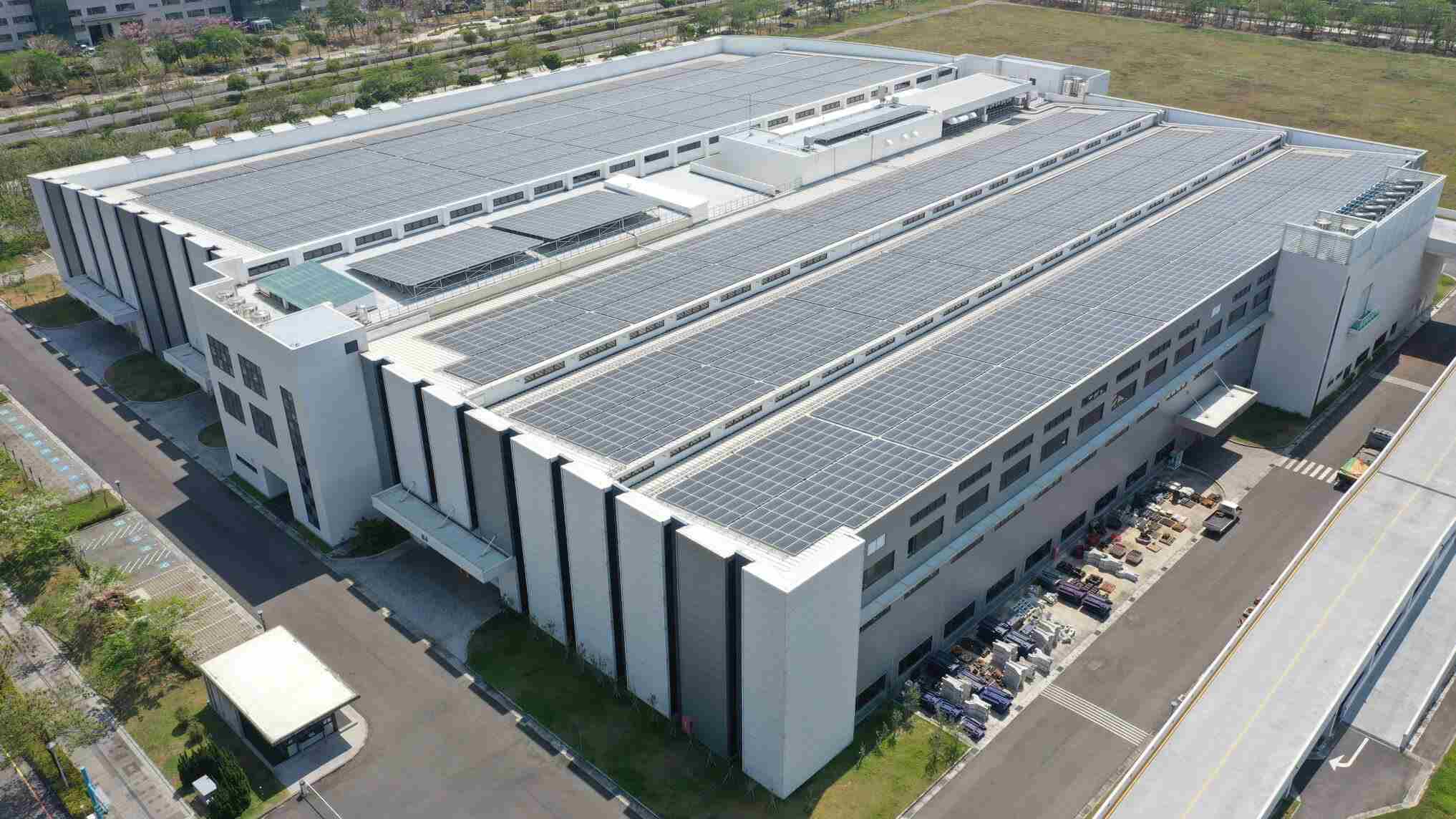
Elon Musk is no longer playing a conventional automotive game. With Tesla committing $250 million to expand battery production capacity at Gigafactory Berlin-Brandenburg from 8 GWh to 18 GWh, the company is signaling something much bigger than another factory expansion. This move represents a strategic push toward complete vertical integration, manufacturing dominance, and long-term control over the global electric vehicle ecosystem.
At the center of this strategy lies Tesla’s controversial 4680 battery cell and the revolutionary dry electrode manufacturing technology designed to transform how batteries are produced forever. While critics point to the underwhelming real-world performance of the 4680 cells, Tesla appears focused on a deeper objective: building the manufacturing foundation for autonomous transportation, AI infrastructure, robotics, and global energy systems.
This article explores how Tesla’s new European battery factory could redefine the future of electric vehicles, battery manufacturing, and industrial automation.
Tesla’s $250 Million Expansion: More Than a Factory Upgrade
Tesla’s investment in Gigafactory Berlin-Brandenburg is not simply about producing more batteries. It is about gaining strategic independence from suppliers like Panasonic and LG Energy Solution.
For years, Tesla relied heavily on external partners for battery production. However, Musk now wants Tesla to control every stage of the process:
- Raw material processing
- Electrode manufacturing
- Battery cell production
- Structural battery assembly
- Final EV integration
This type of end-to-end vertical integration allows Tesla to:
Benefits of Vertical Integration
- Reduce logistics costs
- Increase profit margins
- Respond faster to supply chain disruptions
- Accelerate production scalability
- Protect intellectual property
- Control battery innovation internally
By 2027, Tesla aims to significantly reduce dependency on third-party battery suppliers and establish itself as a fully self-sufficient battery manufacturing powerhouse.
Tesla’s Political and Global Market Strategy
Tesla’s aggressive manufacturing expansion also aligns with Musk’s broader geopolitical strategy.
Public appearances involving Donald Trump and diplomatic engagement with China indicate Tesla is actively protecting its interests in the world’s largest EV market.
This matters because Chinese manufacturers like:
- BYD
- NIO
are rapidly increasing pressure on Tesla through:
- Lower-cost EV production
- Advanced battery innovation
- Faster local manufacturing
- Government-backed industrial scaling
Tesla must maintain favorable regulatory relationships if it wants approval for technologies like:
- Full Self-Driving (FSD)
- Robotaxi fleets
- AI-driven transportation systems
The Berlin expansion therefore becomes both an industrial and geopolitical maneuver.
The 4680 Battery Problem
Why Tesla’s Flagship Battery Is Underperforming
Despite enormous hype during Tesla’s Battery Day 2020 presentation, the real-world performance of the 4680 battery cell has not met expectations.
Current 4680 Performance Data
| Battery Cell | Energy Density | Model Y Pack Capacity |
|---|---|---|
| Panasonic 2170 | 269 Wh/kg | Higher range |
| Tesla 4680 | 244 Wh/kg | 79 kWh |
The numbers reveal a difficult reality:
- Tesla’s 4680 cells currently deliver 13% lower energy density
- Vehicle range dropped from 661 km to 609 km
- Charging stability has reportedly worsened
- Charging speeds remain inconsistent
Even Tesla’s heavily marketed structural battery pack offers limited physical advantages, reducing chassis weight by only about 9 kilograms.
For many analysts, this creates an apparent contradiction:
Why is Tesla investing billions into a battery technology that currently performs worse than older supplier-produced cells?
The answer lies not in the battery itself, but in the manufacturing process behind it.
The Real Revolution: Dry Electrode Technology
Tesla’s Manufacturing Breakthrough
Tesla’s true innovation is not necessarily the 4680 cell chemistry.
It is the dry electrode manufacturing process.
Traditional lithium-ion battery production depends on a wet coating process involving chemical slurries and giant drying ovens.
Tesla wants to eliminate that entire system.
Traditional Battery Manufacturing Problems
Conventional battery factories rely on:
- Chemical solvents
- Slurry mixing systems
- Massive industrial drying ovens
- High energy consumption
- Huge factory footprints
The drying stage alone consumes more than 30% of a battery factory’s total energy usage.
Tesla’s dry electrode system removes this step entirely.
How Dry Electrode Processing Works
Instead of creating liquid slurry mixtures, Tesla processes battery materials as completely dry powders.
These powders are:
- Mechanically compressed
- Formed into ultra-thin films
- Cold-pressed onto metal foils
No solvents.
No giant ovens.
No energy-intensive drying systems.
This approach dramatically changes battery economics.
Advantages of Dry Electrode Manufacturing
- Smaller factory footprint
- Lower energy consumption
- Reduced capital expenditure
- Faster production speeds
- Lower cost per kWh
- Higher production scalability
This is why Musk repeatedly describes dry electrode processing as a manufacturing revolution rather than merely a chemistry improvement.
The Engineering Nightmare Behind Dry Electrodes
Why Dry Powder Is Extremely Difficult
While the concept sounds simple, dry electrode manufacturing is one of the hardest industrial engineering problems Tesla has ever attempted.
Liquid slurries naturally spread evenly.
Dry powders behave unpredictably:
- They clump together
- Crack under tension
- Resist adhesion
- Produce uneven surfaces
Tesla needed entirely new manufacturing systems to solve these issues.
The PTFE Binder Challenge
One of Tesla’s earliest obstacles involved PTFE (Teflon) binder materials.
PTFE helps hold battery particles together by forming microscopic fiber networks under mechanical stress.
However, PTFE introduces major disadvantages:
- It cannot store energy
- It reduces battery density
- It can chemically degrade over time
Early designs caused energy losses of nearly:
127 mAh/g
That level of capacity loss was completely unacceptable for modern EVs.
Tesla’s Binder Optimization Breakthrough
Tesla eventually experimented with advanced polymer blends involving:
- PTFE
- PVDF
- Polyethylene
This reduced losses dramatically.
Binder Optimization Results
| Engineering Stage | Capacity Loss |
|---|---|
| Early PTFE Systems | ~127 mAh/g |
| PTFE + PVDF Blends | ~30–50 mAh/g |
| Advanced Elastic Polymers | Near 0 mAh/g |
Tesla then shifted toward highly elastic polymers and acoustic mixing technologies.
Acoustic Mixing: Tesla’s Secret Weapon
Replacing Mechanical Mixers With Sound Waves
Traditional battery production uses steel-blade mixers that can fracture sensitive battery materials.
Tesla instead developed acoustic mixing systems using high-frequency sound waves.
Acoustic Mixing Benefits
- Protects fragile particles
- Creates uniform powder distribution
- Reduces material degradation
- Improves structural consistency
Tesla reportedly operates these systems at:
60% mixing intensity for 5 minutes
This precise control allows Tesla to push active material ratios close to:
99%
That means nearly the entire electrode contributes to energy storage.
Semiconductor-Level Precision Inside Tesla Factories
The Dry Cathode Bottleneck
Developing dry anodes was relatively manageable.
Dry cathodes became Tesla’s biggest obstacle.
Cathode materials are:
- Harder
- More abrasive
- Difficult to compress uniformly
Tesla had to redesign the microscopic structure of cathode particles themselves.
Tesla’s Solution
Tesla infused cathode materials with:
- Aluminum
- Boron
Then subjected them to:
800∘C → 700∘C
This transformed jagged particles into smooth spherical structures.
The result:
- Reduced machinery wear
- Better powder flow
- More stable electrode films
Tesla’s Advanced Calendering Systems
Tesla’s rolling systems now operate with extraordinary precision.
Key Manufacturing Specifications
| Process | Specification |
|---|---|
| Roller Temperature | 185°C |
| Mechanical Pressure | 450 kN |
| Gap Width | 1–30 micrometers |
| Inspection Pulses | 1–5 picoseconds |
Even microscopic vibrations can destroy battery uniformity.
Tesla therefore uses:
- Dynamic hydraulic balancing
- Real-time feedback loops
- Terahertz inspection systems
- Heavy-duty tapered bearings
These systems can detect defects as small as:
0.05 mm
This level of manufacturing precision resembles semiconductor fabrication more than traditional car assembly.
Tesla’s Bigger Vision: AI, Robotaxis, and Robotics
The 4680 Cell Is Not Just for Cars
Tesla does not see the 4680 as merely an EV battery.
It is the foundation for a future ecosystem involving:
- Autonomous Robotaxis
- Optimus humanoid robots
- AI data centers
- Grid-scale energy storage
Why This Matters
Consumer vehicles sit idle most of the time.
Robotaxis will operate:
- 24/7
- Under constant fast charging
- Across extremely high mileage cycles
Traditional batteries would degrade too quickly under these conditions.
Tesla therefore needs:
- Lower-cost batteries
- Longer cycle life
- Faster manufacturing scalability
The dry electrode system is designed for exactly this purpose.
Tesla’s Hybrid Battery Future
Tesla is also researching hybrid battery architectures combining:
- Lithium-ion cells
- Activated carbon supercapacitors
This hybrid structure could:
- Store massive energy
- Deliver rapid power bursts
- Reduce chemical wear
- Increase Robotaxi uptime
For autonomous fleets, uptime equals profitability.
That makes battery durability more important than raw consumer range numbers.
Silicon Anodes Could Change Everything
Tesla’s Next Massive Battery Leap
Tesla is also preparing for silicon-rich anodes inside future 4680 cells.
Silicon can theoretically store:
10×
more lithium ions than graphite.
That could dramatically increase EV range.
However, silicon expands violently during charging.
Silicon’s Biggest Problem
Silicon can swell by:
300%
during charging cycles.
This expansion causes:
- Cracking
- Electrical disconnection
- Rapid degradation
Tesla is developing several solutions.
Tesla’s Silicon Expansion Solutions
1. Silicon Nano-Weaves
Tesla converts silicon into microscopic spherical particles wrapped in conductive carbon nanotubes.
These structures flex without breaking.
2. Ladder Polymer Coatings
Tesla uses specialized polymer coatings cured between:
200∘C to 400∘C
to create rigid conductive support structures.
3. Roughened Copper Foils
Tesla engineers copper surfaces with enhanced microscopic roughness for stronger adhesion.
4. Internal Porosity Engineering
Tesla deliberately creates:
50% to 70% internal porosity
inside electrodes.
These microscopic voids provide expansion space for silicon particles.
Why Tesla’s Dry Electrode Strategy Matters Globally
If Tesla successfully scales dry electrode production globally, the implications extend far beyond electric vehicles.
The 4680 architecture could become the energy backbone for:
- AI infrastructure
- Robotics systems
- Autonomous transportation
- National power grids
- Large-scale energy storage
Tesla’s strategy is fundamentally about manufacturing dominance.
The company is willing to sacrifice short-term consumer battery performance in exchange for long-term industrial control.
That is the real purpose of the Berlin factory expansion.
Conclusion
Tesla’s new $250 million investment in Europe reveals a much deeper strategy than simply increasing EV battery output.
Elon Musk is attempting to reinvent battery manufacturing from the ground up through dry electrode technology, vertical integration, and semiconductor-level production precision.
Although Tesla’s 4680 cells currently lag behind Panasonic’s 2170 cells in several real-world performance metrics, Musk appears unconcerned with short-term optics. The company is betting on manufacturing efficiency, scalability, and future ecosystem dominance rather than immediate consumer specifications.
If Tesla succeeds, the dry electrode revolution could become one of the most important industrial transformations of the decade — powering not just electric vehicles, but also AI infrastructure, robotics, autonomous transportation, and global energy systems.
The race is no longer simply about making better cars.
It is about controlling the future energy infrastructure of the AI age.
FAQs
1. What is Tesla’s new $250 million factory expansion about?
Tesla is investing $250 million to expand battery production capacity at Gigafactory Berlin-Brandenburg from 8 GWh to 18 GWh. The project focuses heavily on scaling dry electrode battery manufacturing and increasing Tesla’s control over its entire supply chain.
2. What are Tesla 4680 battery cells?
Tesla’s 4680 battery cells are a larger cylindrical battery format introduced during Tesla Battery Day 2020. They were designed to improve:
- Manufacturing efficiency
- Structural battery integration
- Production scalability
- Cost reduction
The name “4680” refers to the cell dimensions:
- 46 mm diameter
- 80 mm height
3. Why are Tesla 4680 batteries controversial?
The controversy comes from the gap between Tesla’s original promises and real-world performance. Current data shows Tesla’s 4680 cells have:
- Lower energy density than Panasonic 2170 cells
- Reduced driving range
- Slower charging stability
- Minimal weight savings
Despite this, Tesla continues investing heavily because the company prioritizes manufacturing innovation over short-term specs.
4. What is dry electrode technology?
Dry electrode technology is a battery manufacturing process that eliminates liquid chemical slurries and industrial drying ovens.
Instead of wet coatings, Tesla compresses dry powder materials directly into thin battery films using mechanical pressure.
This reduces:
- Factory size
- Energy usage
- Production costs
- Manufacturing complexity
5. Why is dry electrode manufacturing important?
Dry electrode processing could revolutionize battery production because it enables:
- Faster manufacturing speeds
- Lower cost per kWh
- Smaller factories
- Reduced energy consumption
- Easier production scaling
Tesla believes this process is the future of mass battery production.
6. How does Tesla’s dry electrode system differ from traditional battery production?
Traditional battery factories use:
- Liquid chemical slurries
- Solvent evaporation
- Massive drying ovens
Tesla’s dry process skips those steps entirely by using dry powders that are mechanically compressed and rolled directly onto metal foils.
7. Why does Tesla want vertical integration?
Tesla wants complete control over battery manufacturing to:
- Reduce dependency on suppliers
- Increase profit margins
- Improve production speed
- Avoid supply chain disruptions
- Protect proprietary technology
This strategy also helps Tesla respond faster to market changes.
8. Which companies currently supply Tesla batteries?
Tesla still works with several battery partners, including:
- Panasonic
- LG Energy Solution
- CATL
However, Tesla aims to reduce dependence on external suppliers over time.
9. Why is Tesla expanding in Europe?
Europe is one of the world’s largest EV markets. Expanding production in Germany helps Tesla:
- Reduce shipping costs
- Produce vehicles locally
- Increase delivery speed
- Avoid import complications
- Compete with European automakers
The Berlin Gigafactory also strengthens Tesla’s global manufacturing footprint.
10. How does Tesla compare to BYD and NIO?
Chinese EV companies like:
- BYD
- NIO
are rapidly growing due to:
- Lower production costs
- Advanced battery technologies
- Aggressive scaling
- Strong domestic support
Tesla is responding through vertical integration and manufacturing innovation.
11. What is Tesla’s structural battery pack?
Tesla’s structural battery pack integrates the battery directly into the vehicle chassis.
This design aims to:
- Improve rigidity
- Simplify manufacturing
- Reduce parts count
- Lower vehicle weight
However, current real-world weight savings appear relatively small.
12. Why is Tesla using acoustic mixing systems?
Tesla’s acoustic mixing systems use high-frequency sound waves instead of aggressive steel-blade mixers.
This helps:
- Prevent particle damage
- Improve powder consistency
- Increase battery efficiency
- Reduce material degradation
The process is especially important for dry electrode manufacturing.
13. What role will 4680 batteries play in Robotaxis?
Tesla sees 4680 cells as the energy foundation for future autonomous fleets.
Robotaxis require batteries capable of:
- 24/7 operation
- Frequent fast charging
- High durability
- Long cycle life
Tesla’s manufacturing-first approach is designed to support these commercial fleet requirements.
14. What are silicon anodes and why do they matter?
Silicon anodes can theoretically store up to 10 times more lithium ions than graphite.
This could dramatically improve:
- EV range
- Energy density
- Battery efficiency
However, silicon expands heavily during charging, making it difficult to commercialize at scale.
15. What is Tesla Optimus?
Tesla Optimus is Tesla’s humanoid robot project designed for industrial and general-purpose tasks.
Tesla believes future battery technologies like the 4680 cell will also power robotics systems and AI-driven automation platforms.
16. What is Tesla’s long-term goal with battery manufacturing?
Tesla’s long-term goal is to dominate the future energy ecosystem through:
- Battery production
- Autonomous transportation
- AI infrastructure
- Robotics
- Grid-scale energy storage
The company views batteries not just as EV components, but as the foundation for the next generation of intelligent machines and energy systems.
Read More:
- Tesla Battery 2026: Only 10% Loss? Real-World Range, Resale Strength + Long-Term Savings
- NASA updated Artemis III and SpaceX’s role just got more complicated
- Elon Musk breaks silence on OpenAI trial decision
- SpaceX reveals date for maiden Starship v3 launch
- Starship Flight 12 ONE DAY Delayed due to…Final Preparations is Kind of Mind-Blowing
1 thought on “Elon Musk’s New $250M Factory Is Built For Dry Electrode Control”