
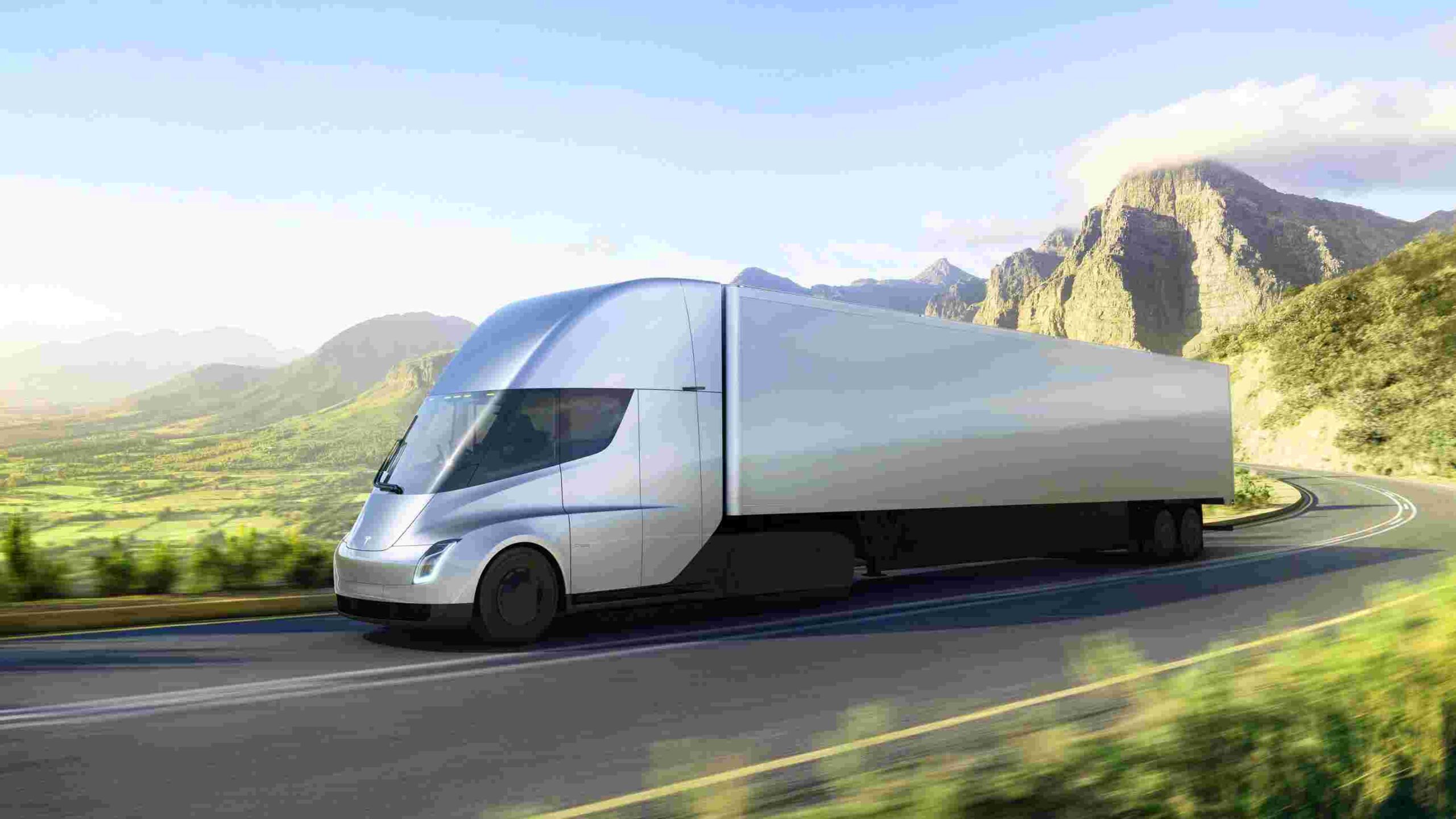
The moment the trucking and EV industries have been waiting for has finally arrived. After years of skepticism, delays, and bold promises, Tesla Semi mass production is officially beginning, marking one of the most disruptive shifts in the history of commercial transportation. Elon Musk himself has confirmed that the Tesla Semi Gen 2 is no longer a prototype or pilot experiment—it is a fully engineered commercial product designed for scale, autonomy, and long-haul efficiency.
In this in-depth, we break down what’s new with the Tesla Semi, why it’s different from every truck before it, how it’s already outperforming diesel rivals in real-world testing, and why logistics giants like DHL and PepsiCo are betting big on it.
Elon Musk’s Bold Vision for the Tesla Semi
Elon Musk has never been shy about ambitious predictions, and the Tesla Semi is no exception. According to Musk:
“Ultimately, we’ll make over a million Tesla Semis. You’ll see them everywhere.”
This statement alone signals Tesla’s confidence that the Semi is not a niche vehicle—it’s meant to replace diesel trucks at global scale. Musk has also emphasized that the Semi is being designed with full self-driving capability in mind, making it a cornerstone of Tesla’s autonomous future.
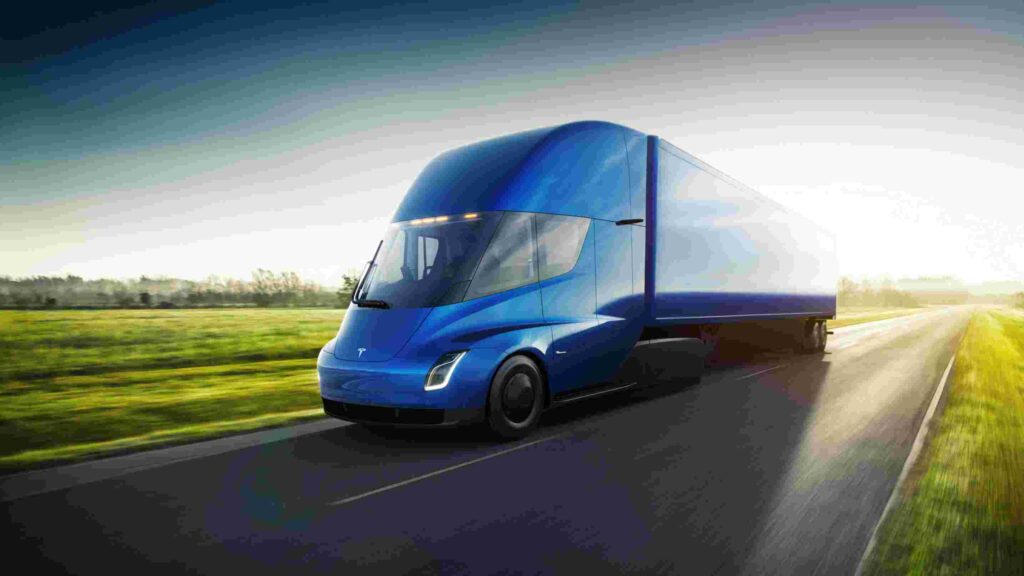
Among all Tesla programs, the Semi is often described as Elon Musk’s most challenging project. Why? Because conventional logic says an 80,000-pound electric truck shouldn’t work. Batteries are heavy, long-haul routes are demanding, and uptime is critical. Yet Tesla has spent years engineering a solution that challenges every one of those assumptions.
Why the Tesla Semi Faced Industry Skepticism
The Problem with Electric Heavy-Duty Trucks
For decades, the trucking industry has believed that electric powertrains simply can’t handle long-haul freight. Critics pointed to:
- Battery weight reducing payload
- Limited driving range
- Long charging times
- Poor efficiency at highway speeds
When compared to ships, planes, and diesel 18-wheelers, electric trucks were often dismissed as impractical experiments rather than real commercial solutions.
Tesla’s Response: Data, Not Hype
Instead of arguing theory, Tesla focused on real-world testing. While fewer than 500 Tesla Semis are currently operating, those trucks have already logged millions of miles under commercial conditions—and the results are changing minds fast.
Tesla Semi Gen 2: What’s New and Why It Matters
At Tesla’s 2025 Annual Shareholders Meeting, Musk confirmed that Tesla Semi Gen 2 directly addresses the three biggest challenges facing the program.
1. This Is the Official Production Version
The Gen 2 Semi is not a prototype. Unlike earlier pilot trucks, this version is designed for full-scale commercial deployment, with standardized parts, validated manufacturing processes, and optimized costs.
2. A Dedicated Tesla Semi Factory
Tesla has completed a brand-new Semi-focused factory, enabling a realistic production target of 50,000 trucks per year, with Musk suggesting output could eventually reach 200 trucks per day.
3. Full Self-Driving Optimization
The Semi’s design has been significantly updated to support advanced autonomy, including:
- New camera placements near the wheel arches
- Enhanced computing hardware
- Improved redundancy and safety systems
This positions the Semi as one of the first heavy-duty trucks built from the ground up for autonomy.
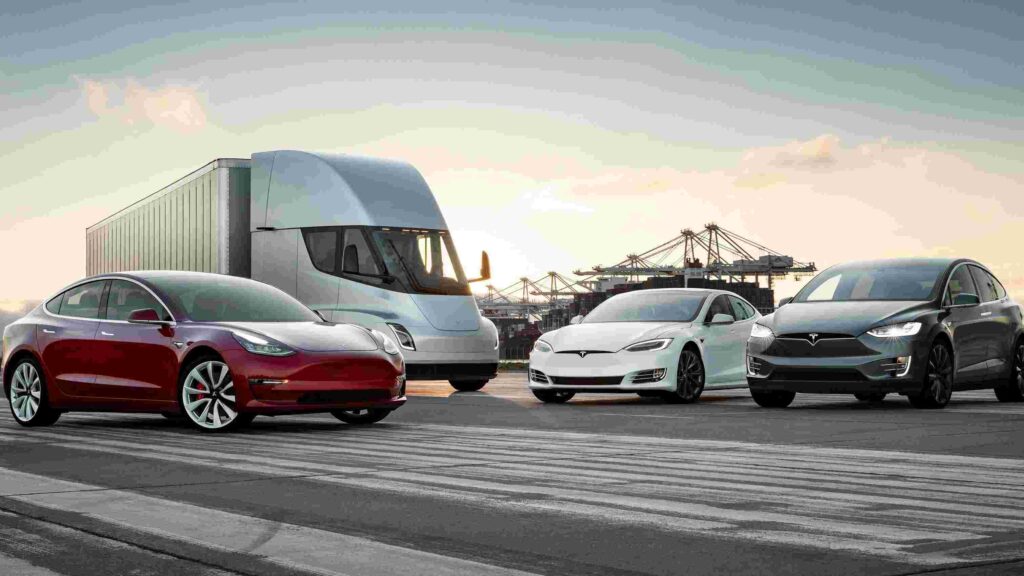
Real-World Testing: The Tesla Semi Exceeds Expectations
Before ramping up mass production, Tesla subjected the Semi to brutal real-world tests, including routes once considered impossible for electric trucks.
3,000-Mile Durability Test
The Tesla Semi successfully completed a 3,000-mile real-world durability test, proving:
- Exceptional stability
- Consistent performance
- Minimal degradation
Even Elon Musk admitted the results exceeded his expectations.
DHL’s Tesla Semi Test Results Shock the Industry
One of the most compelling validations comes from DHL, a global logistics leader with zero tolerance for underperforming equipment.
390-Mile Route on a Single Charge
DHL immediately deployed the Tesla Semi on a 390-mile long-haul route, carrying up to 75,000 pounds. The result?
- Completed the entire route on a single charge
- Energy remaining in the battery
- No performance degradation
Efficiency Numbers That Redefine the Market
Over a two-week period:
- 3,000 miles driven
- Average speed: 50+ mph
- Energy consumption: just 1.72 kWh per mile
That’s dramatically better than the 2.0–2.2 kWh per mile typical of other electric trucks.
According to DHL’s President of Transportation, the Tesla Semi “exceeded expectations by a wide margin.”
Why the Tesla Semi Is Perfect for U.S. Freight Routes
Over 70% of U.S. freight movement occurs under 500 miles, making the Tesla Semi an ideal solution for most trucking needs.
Lower Operating Costs
Companies report:
- Far lower energy costs per mile
- Reduced maintenance
- Longer vehicle lifespan (2–3x diesel trucks)
Reduced Emissions
DHL estimates that just one Tesla Semi can reduce 50 tons of CO₂ per year, a massive win for sustainability goals.
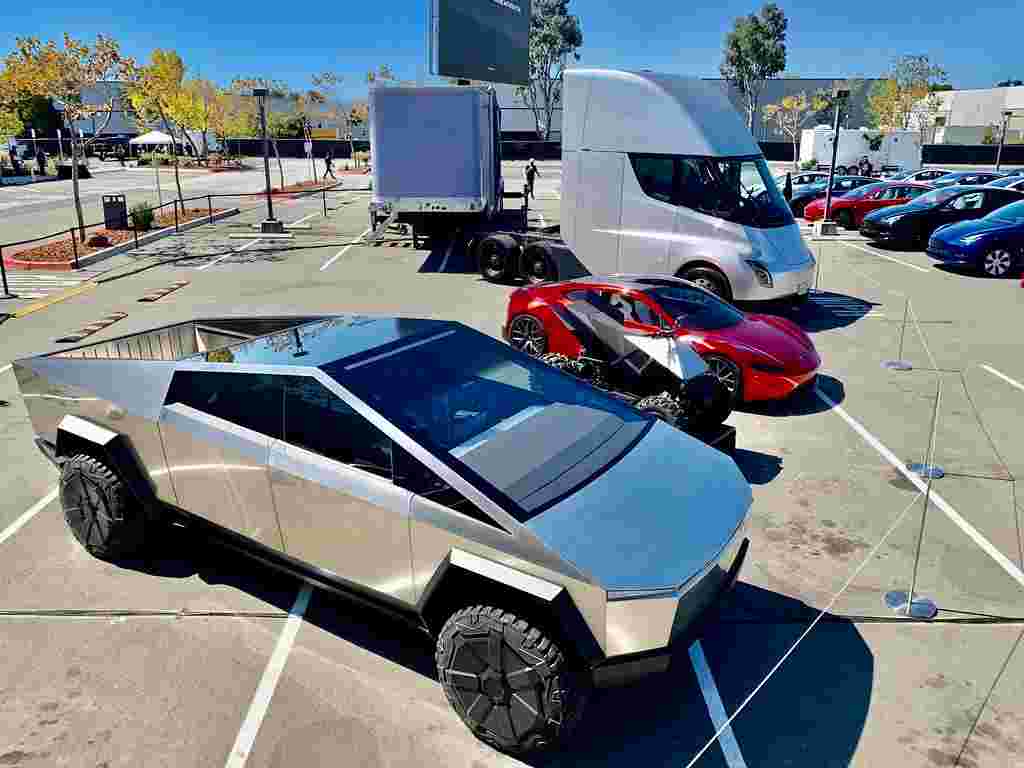
Truck Drivers Love the Tesla Semi
Veteran drivers are often resistant to new technology, yet the Semi is winning them over.
Driver Testimonials
Tom Sturba, a seasoned driver at Saiia, said:
- The navigation system is a major leap forward
- Charging for 40–60 minutes doesn’t impact arrival times
- He has no desire to return to diesel
Some drivers have even said they’d stay with the Tesla Semi until retirement.
Is Full Self-Driving Safe in an 80,000 lb Truck?
The idea of an autonomous semi-truck naturally raises concern—but the data tells a different story.
Why Human Error Is the Real Danger
Human drivers are responsible for the majority of the 500,000 trucking accidents per year in the U.S., largely due to:
- Fatigue
- Distraction
- Reaction time limitations
Tesla’s Full Self-Driving (FSD) system eliminates these variables.
Proven Safety Data
Tesla reports that FSD-supervised vehicles experience over 7x fewer major collisions than the U.S. average.
The system offers:
- 360-degree vision
- No fatigue
- Millisecond reaction times
Jackknife Prevention: A Game-Changer
Jackknife accidents are among the deadliest in trucking—and nearly impossible for humans to correct once they start.
Tesla’s Engineering Advantage
The Semi’s tri-motor architecture enables:
- Independent torque vectoring
- Instant stability corrections
- Active skid prevention
This isn’t just software—it’s physics-defying engineering, validated in winter and wet-condition testing.
PepsiCo’s 24/7 Stress Test
PepsiCo has been running Tesla Semis:
- Up to 500 miles per day
- Fully loaded to 82,000 lbs
- Across urban routes and mountain passes like Donner Pass
These trucks operate around the clock, proving Tesla’s thermal management, braking, and safety systems can handle real-world logistics demands.

Tesla’s Global Rollout Strategy
Tesla is taking a staged deployment approach:
- North America first
- Europe and Asia after validation
- Market-specific redesigns for regulations and infrastructure
This strategy shows Tesla views testing as a continuous process, not a one-time certification.
Tesla Semi vs Robo Taxi vs Optimus
While Tesla pushes forward on multiple fronts:
- Robo Taxi is the most imminent autonomous platform
- Optimus humanoid robot still relies heavily on teleoperation
- Tesla Semi is already delivering measurable results
This contrast highlights why the Semi may become Tesla’s most impactful product in the near term.
What the Tesla Semi Means for the Future of Logistics
If Full Self-Driving reaches maturity:
- Trucks could operate nearly 24/7
- Labor costs could drop dramatically
- Accidents caused by fatigue could plummet
This would fundamentally reshape global logistics, making freight faster, safer, and cheaper.
Final Verdict: Is the Tesla Semi the Real Deal?
The evidence is overwhelming. The Tesla Semi is:
- More efficient than expected
- Safer than diesel trucks
- Cheaper to operate
- Ready for mass production
Far from being an experiment, the Semi is emerging as the most scrutinized and validated heavy-duty electric vehicle ever built.
The age of diesel dominance is ending—and the Tesla Semi is leading the charge.
FAQs
1. What is the Tesla Semi?
The Tesla Semi is a fully electric Class 8 semi-truck designed for long-haul and regional freight transport, offering high efficiency, zero emissions, and advanced autonomous capabilities.
2. When does Tesla Semi mass production begin?
Tesla has confirmed that mass production begins in 2026, with the Gen 2 Tesla Semi being the first official production model, not a prototype or pilot vehicle.
3. How many Tesla Semi trucks can Tesla produce per year?
Tesla aims to produce up to 50,000 Tesla Semis per year, with Elon Musk suggesting production could eventually reach around 200 trucks per day.
4. What is the range of the Tesla Semi on a single charge?
The Tesla Semi is capable of traveling up to 500 miles on a single charge, even while carrying heavy loads close to maximum legal weight.
5. Can the Tesla Semi really carry 80,000 pounds?
Yes. The Tesla Semi has successfully hauled 75,000–82,000 lbs in real-world testing while maintaining strong efficiency and performance.
6. How efficient is the Tesla Semi compared to other electric trucks?
Real-world testing shows the Tesla Semi averages 1.72 kWh per mile, significantly better than most electric trucks, which typically consume 2.0–2.2 kWh per mile.
7. How long does it take to charge a Tesla Semi?
Fast charging typically takes 40 to 60 minutes, depending on battery level and charging infrastructure, while still allowing comparable trip times to diesel trucks.
8. Is the Tesla Semi suitable for long-haul routes?
Yes. Although many fleets planned to use it for short routes, real-world testing has proven the Tesla Semi is highly effective for long-haul freight under 500 miles.
9. Which companies are currently using the Tesla Semi?
Major companies including DHL, PepsiCo, and Saiia are already operating Tesla Semis in daily commercial service.
10. How much does it cost to operate a Tesla Semi?
Operators report significantly lower cost per mile compared to diesel trucks due to reduced fuel, maintenance, and longer vehicle lifespan.
11. Does the Tesla Semi support Full Self-Driving (FSD)?
Yes. The Tesla Semi is designed for Full Self-Driving capability, with hardware and software optimized for autonomous freight operations.
12. Is Full Self-Driving safe in an 80,000 lb truck?
Tesla data shows FSD-supervised vehicles have over 7x fewer major accidents than the U.S. average, significantly reducing risks caused by human error.
13. How does the Tesla Semi prevent jackknife accidents?
The Semi uses a tri-motor system with independent torque vectoring, allowing it to detect instability in milliseconds and prevent jackknifing before it occurs.
14. How long will a Tesla Semi last compared to a diesel truck?
According to drivers and operators, electric trucks like the Tesla Semi can remain in service 2–3 times longer than traditional diesel trucks.
15. How does the Tesla Semi reduce emissions?
A single Tesla Semi can reduce up to 50 tons of CO₂ emissions per year, helping fleets meet sustainability and regulatory goals.
16. Is the Tesla Semi being tested enough?
Yes. The Tesla Semi has undergone millions of miles of real-world commercial testing, making it one of the most validated heavy-duty electric vehicles ever built.
17. Will the Tesla Semi be available outside North America?
Tesla plans a phased global rollout, expanding to Europe and Asia after North American manufacturing, regulatory, and performance validation.
18. Why is the Tesla Semi considered a breakthrough for the trucking industry?
The Tesla Semi combines long range, heavy payload capacity, lower operating costs, advanced safety systems, and autonomy, fundamentally reshaping how freight is moved.
Read More:
- SpaceX revealed Genius Solution to Land first Starship on the Moon in 2026! Is it going to Happen?
- Tesla quietly flexes FSD’s reliability amid Waymo blackout in San Francisco
- Tesla’s Elon Musk gives timeframe for FSD’s release in UAE
- Tesla is not sparing any expense in ensuring the Cybercab is safe
- 2026 Tesla Pi Tablet: Elon Musk Announces SHOCKING Discount & Production Plan
- Elon Musk Announces 3 MAJOR Tesla AI Products Take Over ALL Industry 2026! This Is Huge