
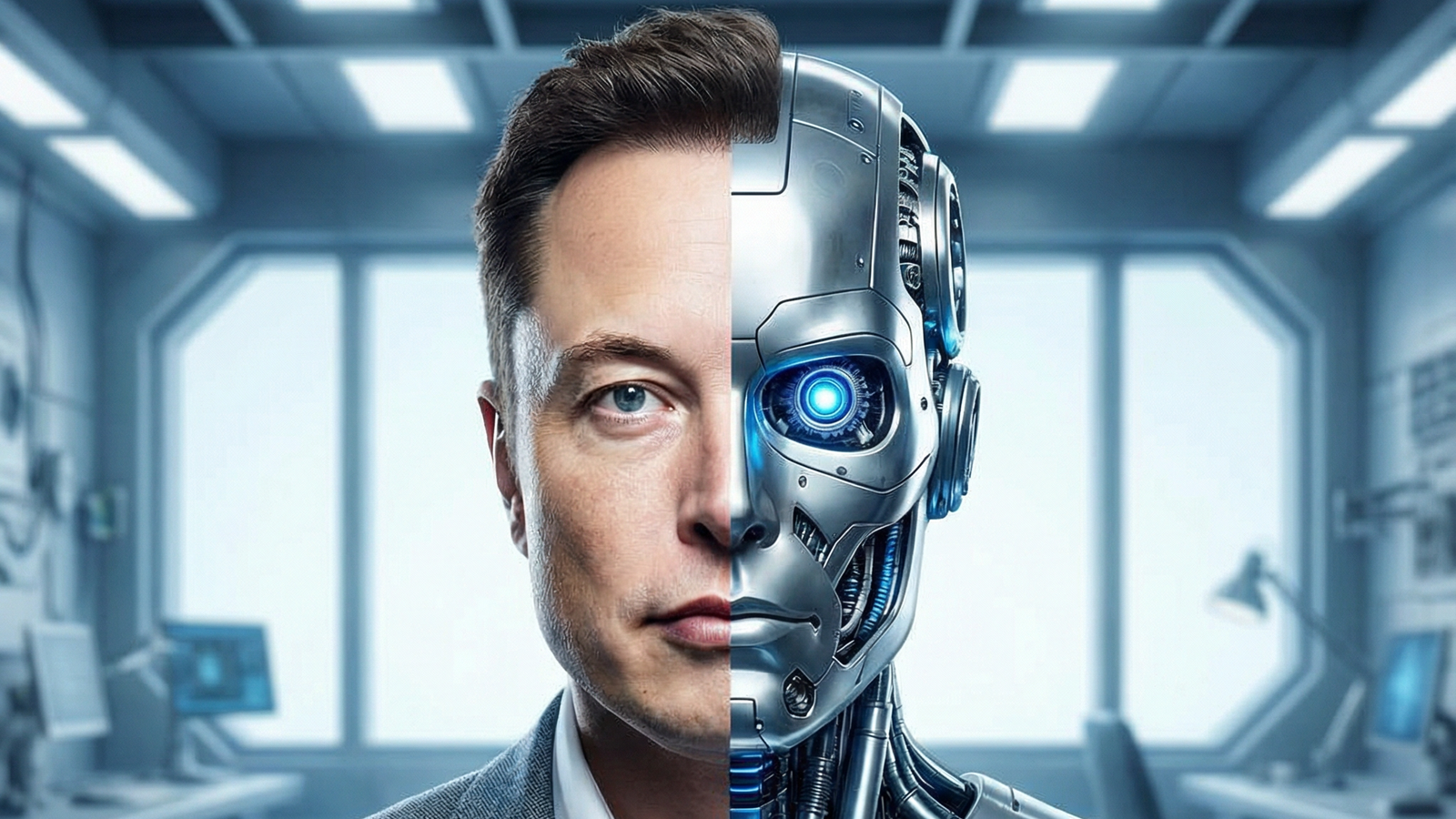
Major Tesla Bot Gen 3 Production UPDATE: Tesla is making a major shift from being primarily an electric vehicle manufacturer toward becoming a robotics, artificial intelligence, and autonomous technology company. The company’s Q2 2026 financial results revealed important updates about the future of Tesla Optimus, the Optimus Gen 3 production line, the Optimus Academy, and the next-generation Cybercab manufacturing system.
Beyond vehicle deliveries and traditional automotive financial metrics, Tesla leadership outlined how its factories, software systems, supply chains, and production technologies are being redesigned for a future dominated by AI-powered robots and autonomous vehicles.
One of the biggest developments is Tesla’s decision to transform part of its Fremont manufacturing infrastructure for Optimus Gen 3 production. At the same time, Giga Texas is preparing for the highly automated Optimus Gen 4 and Cybercab production programs.
Tesla Fremont Factory Gets Major Optimus Transformation
One of the most significant announcements from Tesla’s Q2 2026 update was the permanent removal of the long-running Model S and Model X production lines at Fremont.
In their place, Tesla has created its first dedicated Optimus humanoid robot production line.
Optimus Gen 3 Production Begins in Q3 2026
Tesla plans to begin initial Optimus Gen 3 production in Q3 2026. However, the company is not immediately targeting massive production volumes.
Instead, Tesla intends to use the early production phase as a learning process. Engineers will focus on validating manufacturing equipment, component reliability, assembly procedures, and robot durability.
This gradual ramp could be extremely important for Tesla because humanoid robots require a completely different manufacturing ecosystem compared with conventional electric vehicles.
The Fremont factory conversion therefore represents more than a simple production-line change. It signals a broader strategic shift toward robotics manufacturing.
Optimus Academy Will Train Tesla’s Humanoid Robots
The first Optimus Gen 3 robots produced at Fremont will not immediately be sold to consumers. Instead, Tesla plans to deploy many of these robots internally through an initiative called the Optimus Academy.
The goal is to create a continuous training and improvement cycle.
How the Optimus Academy Data Loop Works
The system can be viewed as a five-stage process:
- Human demonstrations and video data provide examples of how tasks are performed.
- Teleoperation and imitation learning allow robots to reproduce human movements.
- Robots are deployed inside Tesla facilities for real-world tasks.
- The resulting data is collected and used to improve Tesla’s central neural networks.
- Improved skills can eventually be distributed across the robot fleet through software updates.
This approach could give Tesla an important advantage because every deployed robot has the potential to become a source of additional training data.
Tesla Is Applying FSD-Style AI to Optimus
Tesla Autopilot software leadership has described Optimus as using an end-to-end AI architecture with similarities to the company’s Full Self-Driving system.
Tesla’s FSD technology processes visual information from cameras and converts it into driving decisions. Optimus takes a similar concept into the physical world.
Instead of controlling steering, braking, and acceleration, the humanoid robot must control hands, fingers, joints, motors, torque, balance, and object interaction.
Three Major Sources of Optimus Training Data
Tesla is using multiple sources to train Optimus.
Employee imitation: Human workers can demonstrate tasks while sensors or teleoperation systems capture detailed movement information.
Specialized demonstration teams: Highly trained operators can create precise, high-quality examples for difficult tasks.
Internet video data: Tesla can analyze large amounts of instructional and demonstration video to help Optimus understand how humans use tools and interact with objects.
This combination could help Optimus move beyond rigid, pre-programmed actions toward more flexible AI-based task execution.
Digital Optimus Could Accelerate Robot Development
Another major concept discussed by Tesla is the idea of a “Digital Optimus.”
Instead of testing every software improvement exclusively on physical robots, Tesla can create virtual environments where its neural networks learn and practice tasks.
This separates the development process into two areas.
Software development can scale rapidly in simulation, while physical robots can concentrate on testing mechanical durability, reliability, and real-world performance.
This could significantly reduce the time required to improve future Optimus generations.
Optimus Faces Major Engineering and Safety Challenges
A humanoid robot weighing approximately 154 pounds (70 kg) must operate safely around people while performing complex physical tasks.
Dexterity and Human-Like Hands
Optimus needs to perform tasks requiring both strength and precision. A robot may need enough force to hold heavy tools while simultaneously handling fragile objects without damaging them.
Achieving this level of robotic dexterity is one of the biggest technical challenges.
Durability and Reliability
Industrial robots may operate for many hours each day. Their actuators and joints must withstand millions of repetitive movements, impacts, friction, and mechanical stress.
Tesla therefore needs to develop components that provide high precision and long-term durability.
Advanced Safety Systems
A humanoid robot must also remain safe during unexpected situations such as power loss, imbalance, or mechanical failures.
Tesla’s approach involves systems for fault detection, balance control, center-of-gravity management, and safe-state transitions.
Tesla’s Optimus Supply Chain Is Completely Different
Unlike electric cars, humanoid robots do not have a mature global supply chain for every required component.
Tesla can purchase many automotive components from established suppliers. However, highly compact robotic actuators, dexterous hands, specialized electronics, and compact power systems are far less standardized.
Semiconductor Partnerships Are Critical
Tesla highlighted relationships with major semiconductor companies including TSMC, Samsung, and Micron.
These partnerships are important because Optimus requires substantial computing power while operating within strict limitations on battery capacity, heat generation, size, and weight.
Tesla is also pursuing greater vertical integration, including custom circuit boards, power electronics, and robotic actuators.
Optimus Gen 3 vs. Optimus Gen 4
Tesla’s development strategy involves using different generations to solve different problems.
Optimus Gen 3: Real-World Validation
The Optimus Gen 3 program at Fremont is primarily about learning. Tesla can test manufacturing equipment, components, assembly processes, and real-world robot performance.
These robots can also contribute to the Optimus Academy and internal Tesla operations.
Optimus Gen 4: Designed for Mass Production
The upcoming Optimus Gen 4 is expected to focus much more heavily on manufacturability.
Tesla is working to reduce the number of components, simplify assembly, shorten wiring harnesses, and integrate multiple functions into fewer electronic modules.
The objective is clear: create a humanoid robot that can eventually be produced at extremely high volume and lower cost.
Cybercab Introduces Tesla’s Unboxed Manufacturing Strategy
Tesla also provided important information about the Cybercab production system at Giga Texas.
Designed specifically for autonomous transportation, the Cybercab has a simplified architecture with two seats, no steering wheel, no pedals, and significantly fewer components than a Model 3.
Instead of relying on traditional linear vehicle assembly, Tesla is implementing an Unboxed manufacturing process.
How the Unboxed Process Works
Traditional factories move a vehicle through a long sequence of manufacturing stations. Tesla’s newer approach divides the vehicle into major sections that can be manufactured simultaneously.
These include:
- Front sub-assembly
- Rear sub-assembly
- Floor and battery structure
- Interior components
- Exterior panels
The modules are then brought together during final integration.
This parallel approach could improve factory efficiency, reduce production bottlenecks, and make future factories more compact.
Cybercab Uses Reaction Injection Molding
Tesla is also using Reaction Injection Molding (RIM) for Cybercab exterior panels.
RIM allows liquid polymer materials to be injected into molds, where they chemically react and harden into finished components.
Why RIM Could Change Vehicle Manufacturing
One major advantage is that the material can be produced with its color integrated into the component.
This can reduce dependence on conventional automotive paint shops, primers, e-coating, drying ovens, and paint-spraying systems.
The result could be a simpler manufacturing process with potentially lower energy consumption and fewer production bottlenecks.
Automated Cybercab Service Depots
Tesla’s autonomous fleet strategy extends beyond manufacturing.
The company is developing automated service facilities where Cybercabs could return for cleaning, charging, diagnostics, and maintenance without requiring extensive manual intervention.
Vehicles could potentially clean camera lenses while operating, return automatically to service depots, and use robotic systems to clean their interiors.
Automated service arms could perform tasks such as vacuuming, removing trash, wiping displays, and cleaning vehicle surfaces.
Conclusion: Tesla Is Building an Automation Ecosystem
Tesla’s Q2 2026 announcements point toward a much broader transformation than a new vehicle launch.
The shift from legacy Model S and Model X production toward Optimus Gen 3 manufacturing, the development of the Optimus Academy, the planned Gen 4 manufacturing architecture, and the Cybercab Unboxed production system all support the same long-term strategy.
Tesla appears to be building an integrated ecosystem combining artificial intelligence, humanoid robots, autonomous vehicles, advanced semiconductors, software updates, and highly automated factories.
If Tesla can successfully solve the challenges of robot dexterity, reliability, supply-chain scale, manufacturing cost, and autonomous operation, Optimus and Cybercab could become central components of Tesla’s next phase of growth.
FAQs
1. When will Tesla Optimus Gen 3 production begin?
Tesla plans to begin initial Optimus Gen 3 production in Q3 2026 at its Fremont factory. The early production phase is expected to focus on testing manufacturing equipment, component reliability, and assembly processes rather than immediately reaching high-volume production.
2. Where will Tesla Optimus Gen 3 be manufactured?
The first dedicated Optimus Gen 3 production line is being established at Tesla’s Fremont factory in California. Tesla has repurposed space previously associated with Model S and Model X production for its humanoid robot manufacturing program.
3. What is the Optimus Academy?
The Optimus Academy is Tesla’s internal training and deployment initiative for Optimus humanoid robots. Early robots are expected to be used inside Tesla facilities to perform tasks and generate valuable real-world training data for improving the robots’ AI capabilities.
4. How will Tesla train Optimus robots?
Tesla can train Optimus using a combination of human demonstrations, teleoperation, imitation learning, specialized operator data, real-world factory tasks, and internet video. This data can help the robot learn how humans interact with tools and objects.
5. Does Tesla Optimus use technology similar to Full Self-Driving?
Yes. Tesla has described Optimus as using an end-to-end neural network approach that is conceptually similar to its Full Self-Driving architecture. Instead of controlling a vehicle, Optimus uses visual information to generate complex physical movements involving its arms, hands, fingers, and joints.
6. What is a Digital Optimus?
A Digital Optimus refers to a virtual or simulated version of the humanoid robot. Tesla can use simulation environments to train and test neural networks before deploying software onto physical robots, potentially accelerating AI development.
7. What are the biggest challenges facing Optimus?
Major challenges include dexterity, durability, safety, battery efficiency, thermal management, computing power, and manufacturing cost. Optimus must be capable of performing delicate tasks while also handling demanding industrial work safely and reliably.
8. How much does Tesla Optimus weigh?
The Optimus robot discussed in the Q2 2026 material weighs approximately 154 pounds, or 70 kilograms. Operating a humanoid robot of this size safely around people creates significant mechanical and software engineering challenges.
9. What is the difference between Optimus Gen 3 and Gen 4?
Optimus Gen 3 is focused heavily on real-world validation, manufacturing learning, and internal deployment. Optimus Gen 4 is being designed with greater emphasis on mass production, including fewer components, simpler assembly, integrated electronics, and reduced wiring.
10. Why is Tesla developing custom Optimus components?
The traditional automotive supply chain does not provide all the specialized components required for a high-volume humanoid robot. Tesla is therefore pursuing greater vertical integration, including custom actuators, circuit boards, power electronics, and other robotic hardware.
11. Which semiconductor companies are important to Tesla’s Optimus program?
Tesla has highlighted relationships with major semiconductor manufacturers including TSMC, Samsung, and Micron. Semiconductor technology is important for providing the computing and memory capabilities required for advanced robotic AI while managing energy consumption and heat.
12. What is the Tesla Cybercab?
The Cybercab is Tesla’s purpose-built autonomous vehicle designed for driverless transportation services. Its simplified design includes two seats, no steering wheel, and no pedals, reflecting its intended use as an autonomous taxi.
13. What is Tesla’s Unboxed manufacturing process?
Tesla’s Unboxed manufacturing process is a production strategy that uses parallel vehicle sub-assemblies rather than moving an entire vehicle through a long, traditional linear assembly line. Different sections can be built simultaneously before being integrated during final assembly.
14. What is Reaction Injection Molding (RIM) in Cybercab production?
Reaction Injection Molding (RIM) is a manufacturing technique in which liquid polymer materials are injected into molds and chemically cured into finished components. For Cybercab, the process can help reduce reliance on conventional automotive paint-shop operations and simplify exterior panel production.
15. Will Tesla Cybercabs have automated cleaning and maintenance?
Tesla has outlined a vision for automated Cybercab service depots where autonomous vehicles could return for charging, diagnostics, washing, and interior cleaning. Robotic systems could potentially clean camera lenses, remove interior waste, vacuum cabins, wipe displays, and prepare vehicles for their next trip.
Read More:
- The Boring Company’s newest tunnel vehicle runs on Tesla parts and no one is driving it
- Elon Musk Reveals NEW Mars Timeline
- Elon Musk’s Terafab UPDATE Finally OutChip Entire The World
- Tesla’s mysterious Robovan makes a sneak peek with Optimus in Terafab video
- The Boring Company’s newest Vegas Station has a permit quietly waiting behind it
1 thought on “Major Tesla Bot Gen 3 Production UPDATE”