
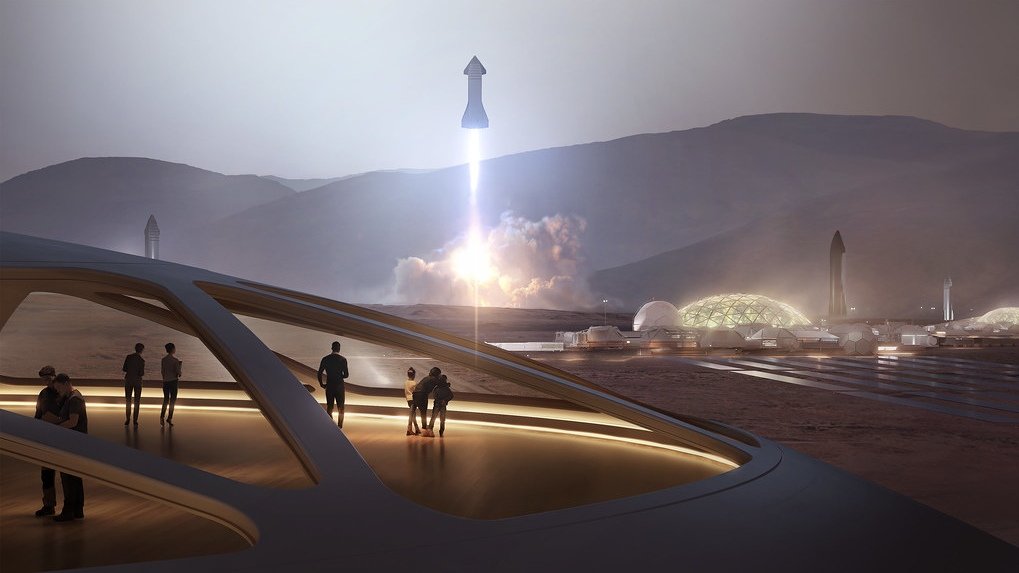
Elon Musk Reveals NEW Mars Timeline: Elon Musk has revealed a new timeline for humanity’s first crewed mission to Mars, suggesting that humans could potentially walk on the Red Planet within the next five to seven years. The ambitious projection comes as SpaceX continues developing the technology needed to make interplanetary travel more practical and repeatable.
According to Musk, an uncrewed Mars lander could arrive several years before humans, giving SpaceX an opportunity to test landing systems, deliver equipment, and prepare the Martian environment before astronauts make the journey.
Although Musk is well known for setting aggressive targets, the latest Mars vision is increasingly connected to hardware already under development. The strategy combines Starship, Optimus humanoid robots, large-scale manufacturing, and autonomous infrastructure to create an interconnected system capable of supporting long-duration exploration.
Elon Musk’s New Mars Timeline
Musk’s latest projection places the potential arrival of humans on Mars within approximately five to seven years. The timeline would first require successful uncrewed missions capable of reaching Mars, landing safely, and delivering essential equipment.
The biggest challenge is not simply reaching Mars. SpaceX must develop a system capable of launching, refueling, landing, returning, and flying repeatedly while dramatically reducing the cost of every mission.
This is where Starship becomes central to Musk’s Mars strategy.
Starship Is the Foundation of the Mars Mission
SpaceX’s Starship is designed as a fully reusable transportation system capable of carrying large amounts of cargo and eventually people to destinations beyond Earth.
For a Mars mission to become sustainable, Starship needs to achieve reliable reusability. A single vehicle would need to launch from Earth, reach orbit, receive additional propellant from tanker Starships, and then begin its journey toward Mars.
Flight 13 Marks an Important Step
SpaceX’s 13th Starship test flight represented an important milestone in the development program.
During the flight, Starship successfully traveled into space and deployed next-generation Starlink satellites. The vehicle then survived atmospheric reentry and completed a controlled splashdown in the Indian Ocean while continuing to transmit telemetry.
The achievement demonstrated progress in several critical areas, including flight control, reentry performance, structural survival, and landing precision.
For a future Mars mission, these capabilities will be essential. A spacecraft traveling millions of miles through space must eventually perform an accurate atmospheric entry and landing without depending on immediate human intervention.
Flight 14 and the Upper-Stage Catch
The next major objective involves attempting something even more ambitious: catching the Starship upper stage with the launch tower.
SpaceX has already demonstrated the ability to catch the Super Heavy booster using its massive launch tower and mechanical arms, commonly known as Mechazilla. Catching the upper stage would represent another major step toward full vehicle reusability.
The concept is straightforward but technically challenging. Instead of allowing the spacecraft to land conventionally, the launch tower would position itself to capture the returning vehicle.
If successful, this approach could dramatically simplify refurbishment and accelerate Starship turnaround times.
Optimus Could Build the First Mars Base
Getting astronauts to Mars is only one part of the challenge. Keeping them alive after arrival may be even more difficult.
Mars has no established infrastructure, electricity grid, roads, landing pads, or ready-made habitats. Human crews would therefore need to arrive with virtually everything required to establish a functioning settlement.
Musk’s broader vision involves using Optimus humanoid robots before humans arrive.
Robots Could Prepare Mars Before Astronauts
Under this concept, uncrewed Starship missions could deliver Optimus robots and other equipment to Mars ahead of the first crewed expedition.
The robots could potentially assist with tasks such as preparing landing areas, assembling structures, moving equipment, and establishing basic infrastructure.
This approach could reduce the amount of dangerous manual work required from astronauts during the earliest stages of a Martian settlement.
The proposed deployment strategy could therefore follow three broad phases:
- Uncrewed Starships deliver robots and construction equipment.
- Autonomous systems prepare landing pads, habitats, and infrastructure.
- Human astronauts arrive at a partially prepared Martian base.
While many technological challenges remain, autonomous construction could become an important component of future Mars exploration.
Tesla’s Optimus Manufacturing Plans
A Mars program involving large numbers of humanoid robots would require an enormous manufacturing operation.
Tesla is therefore working toward expanding Optimus production capacity, with development taking place at both its Fremont facility in California and its Gigafactory Texas campus.
Fremont Pilot Production
The Fremont factory has been used for pilot production and development work involving Optimus. These early production systems can provide valuable real-world data about movement, balance, manipulation, and robotic performance.
That data can then help improve future generations of humanoid robots.
A Dedicated Optimus Factory
Tesla is also developing a dedicated Optimus manufacturing facility at Giga Texas. The planned expansion highlights the potential scale of Tesla’s humanoid robot ambitions.
If Optimus eventually becomes capable of performing useful industrial and construction tasks autonomously, high-volume manufacturing could be crucial not only for Tesla’s commercial goals but also for Musk’s long-term Mars vision.
Tesla Reaches a Major Manufacturing Milestone
Tesla’s terrestrial manufacturing operation also provides an important piece of the broader story.
The company recently reached production of its 10 millionth vehicle, represented by a Diamond Black Model Y built at the Fremont factory.
The milestone demonstrates the dramatic increase in Tesla’s manufacturing scale over the years.
Tesla’s first million vehicles took roughly 12 years to produce, while its most recent million reportedly took only about seven months. That acceleration illustrates how rapidly large-scale manufacturing can expand once production systems mature.
The company’s vehicle production network now spans major factories in Fremont, Shanghai, Berlin, and Texas.
Gigafactory Nevada Enters Its Next Chapter
Tesla’s Gigafactory Nevada also marked its 10th anniversary.
The facility became especially important during Tesla’s rapid Model 3 production expansion, when battery manufacturing and automation created significant challenges. Over time, the factory developed into a major source of battery packs and drive units for Tesla vehicles.
Looking ahead, the Nevada facility is expected to play an important role in the company’s plans to increase Tesla Semi production.
Battery manufacturing capacity could also have broader implications for Musk’s long-term ambitions because energy storage is essential for both terrestrial infrastructure and potential future off-world settlements.
The Boring Company Expands Its Tunnel Network
Musk’s infrastructure ambitions extend beyond Tesla and SpaceX.
The Boring Company is expanding its tunneling operations, including work connected with the Nashville Music City Loop and the Las Vegas Loop.
Prufrock-MB3 Heads to Nashville
A new tunnel boring machine, Prufrock-MB3, is being assembled at The Boring Company’s facility in Bastrop, Texas.
The machine is expected to join MB1 and MB2 in Nashville, potentially allowing multiple machines to operate on the Music City Loop simultaneously.
The company is also expanding its workforce, seeking employees in areas such as welding, machining, mechanical work, and software engineering.
Las Vegas Loop Continues Growing
In Las Vegas, The Boring Company has continued expanding its underground transportation network, including a new station at Sahara.
The growing Loop network represents another example of Musk’s focus on building physical infrastructure at scale.
What Musk’s Mars Vision Means
The updated five-to-seven-year Mars timeline is ambitious, but it is supported by several interconnected technology programs.
Starship aims to provide reusable heavy-lift transportation. Optimus could eventually provide autonomous labor for construction and infrastructure. Tesla’s manufacturing network provides experience in mass production, while The Boring Company demonstrates another approach to large-scale physical infrastructure.
The biggest question is whether all these technologies can mature quickly enough to support a safe human mission to Mars.
For now, Musk’s prediction remains a target rather than a guaranteed schedule. However, with Starship testing, autonomous robotics, and high-volume manufacturing progressing simultaneously, the idea of sending humans to Mars is becoming increasingly tied to real engineering programs.
If these technologies continue advancing, the next five to seven years could become one of the most consequential periods in the history of space exploration.
FAQs
1. When could humans go to Mars according to Elon Musk?
Elon Musk has suggested that humans could potentially reach Mars within five to seven years. However, this is an ambitious target rather than a confirmed mission date, and several technological and operational challenges must be solved first.
2. Will SpaceX send an uncrewed mission to Mars first?
Yes. Musk has indicated that uncrewed Starship missions could reach Mars several years before humans. These missions would help test landing systems and deliver equipment and infrastructure ahead of crewed missions.
3. What is Starship’s role in the Mars mission?
SpaceX Starship is expected to serve as the primary transportation system for future Mars missions. Its large payload capacity and planned full reusability are intended to make transporting people, cargo, and equipment between Earth and Mars more practical.
4. Why is Starship reusability important for Mars?
Reusability could significantly reduce the cost and complexity of spaceflight. A reusable Starship could potentially launch multiple times, receive propellant through orbital refueling, and carry large payloads toward Mars without requiring an entirely new spacecraft for every mission.
5. What happened during Starship Flight 13?
Starship Flight 13 demonstrated several important capabilities, including spaceflight, satellite deployment, atmospheric reentry, and a controlled ocean splashdown. The test provided additional data for SpaceX as it works toward increasingly reliable Starship operations.
6. What is planned for Starship Flight 14?
One of the major goals associated with Flight 14 is an attempt to catch the Starship upper stage with the launch tower. SpaceX has already demonstrated tower-assisted catches of Super Heavy boosters, while catching the upper stage would be another major step toward complete reusability.
7. How could Optimus robots help build a Mars base?
Tesla Optimus humanoid robots could potentially be sent to Mars before astronauts arrive. They could assist with tasks such as moving equipment, preparing landing areas, assembling structures, and helping establish basic infrastructure in an environment that is extremely dangerous for humans.
8. Why would robots be sent to Mars before humans?
Sending robots first could allow essential infrastructure to be prepared before astronauts arrive. This could reduce the amount of hazardous construction work that human crews would need to perform immediately after landing.
9. What infrastructure would humans need on Mars?
A sustainable Mars settlement would require landing areas, habitats, power systems, communication equipment, life-support systems, storage facilities, and other essential infrastructure. Preparing some of these systems before human arrival could improve mission safety.
10. Where is Tesla developing Optimus robots?
Tesla has been developing Optimus at facilities including its Fremont factory in California and Giga Texas. The company is also working toward dedicated manufacturing capacity that could support higher-volume Optimus production.
11. How many vehicles has Tesla produced?
Tesla has reached the milestone of 10 million vehicles produced, highlighting the company’s growth from a relatively small automaker into a large-scale global manufacturing operation.
12. How quickly has Tesla’s vehicle production accelerated?
Tesla’s production has increased dramatically over time. According to the information discussed in the source material, its first million vehicles took around 12 years, while its most recent million took approximately seven months.
13. What is the importance of Gigafactory Nevada?
Gigafactory Nevada has become an important part of Tesla’s manufacturing network, particularly for battery packs and drive units. The facility has also been associated with Tesla’s plans to expand Semi production.
14. What is The Boring Company doing in Nashville?
The Boring Company is expanding its work on the Nashville Music City Loop. A new tunnel boring machine, Prufrock-MB3, is expected to join existing machines, potentially increasing the pace of tunnel construction.
15. What is the Las Vegas Loop?
The Las Vegas Loop is an underground transportation system developed by The Boring Company. Its expanding network includes additional stations designed to connect passengers with destinations around the Las Vegas area.
16. Is Elon Musk’s five-to-seven-year Mars timeline guaranteed?
No. The five-to-seven-year Mars timeline is an ambitious projection, not a guaranteed schedule. A human Mars mission depends on successful Starship testing, reliable orbital refueling, safe Mars landing technology, life-support systems, autonomous infrastructure, and many other technical and logistical factors.
Read More:
- Tesla’s mysterious Robovan makes a sneak peek with Optimus in Terafab video
- The Boring Company’s newest Vegas Station has a permit quietly waiting behind it
- Elon Musk and SpaceX shrugs off the trading day Wall Street feared most
- Tesla’s First Unmanned CyberTrain Will Destroy the Auto Industry
- Elon Musk Confirms The BEST Tesla Bot Gen 3 To COOK, CLEAN & Serve BEER For $1/Hour