
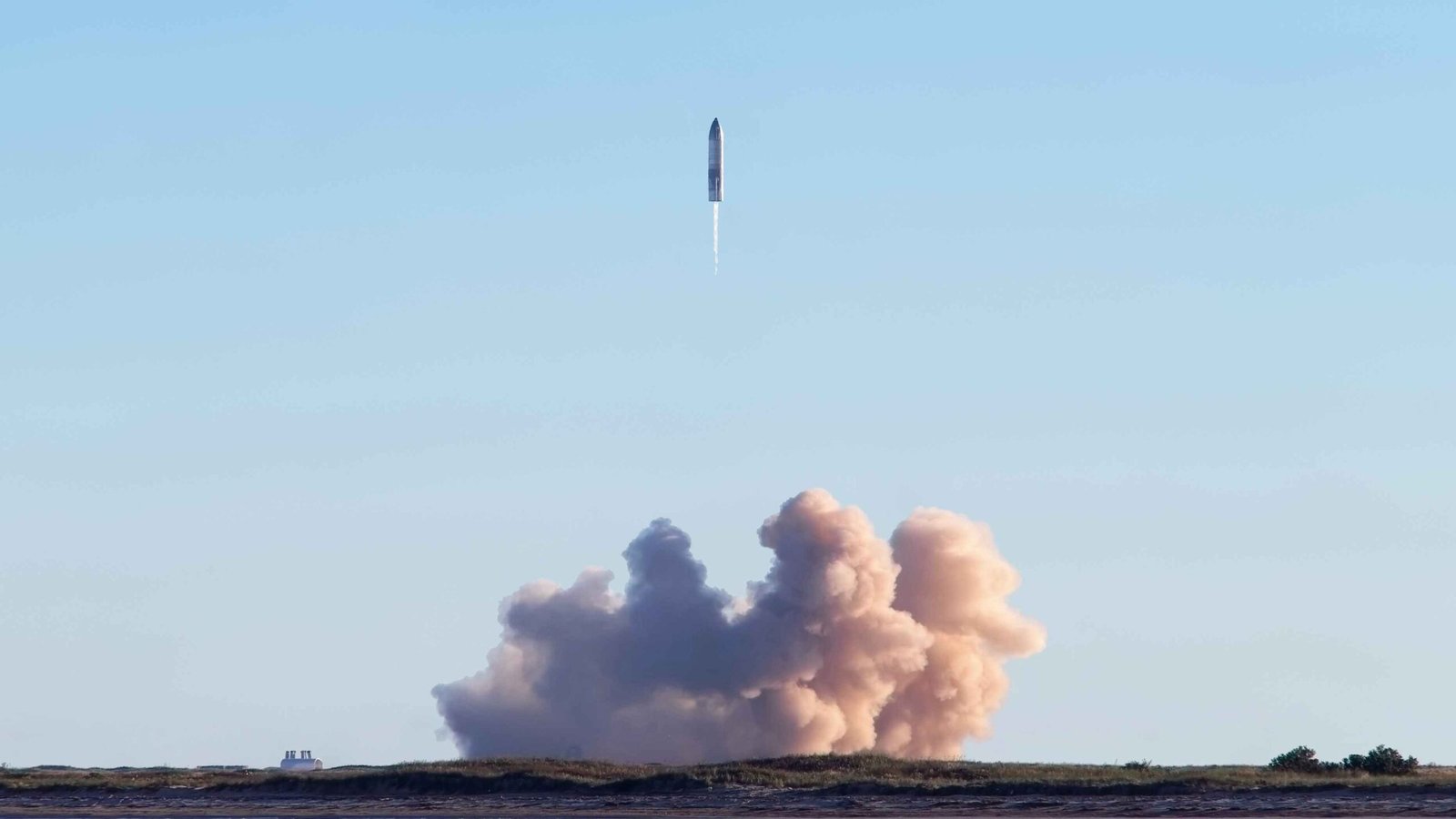
Raptor 3 Failed! SpaceX revealed All Secrets on Starship Flight 14 Problem: SpaceX’s Starship Flight 14 achieved a major milestone by reaching full Earth orbit and successfully deploying 26 Starlink V3 satellites. However, beneath the headline-making success, the mission revealed several important challenges involving the next-generation Raptor 3 engines.
Both the Super Heavy Booster B21 and Starship Ship 41 (S41) experienced multiple engine shutdowns during critical phases of flight. Despite these propulsion anomalies, Starship demonstrated an important characteristic of its architecture: system redundancy.
The ability to continue flying after multiple engine losses could become one of the most important features of Starship as SpaceX prepares for increasingly ambitious missions, including Flight 15 and future booster and ship catch attempts.
Raptor 3 Engine Problems During Starship Flight 14
The Raptor 3 represents a major evolution of SpaceX’s full-flow staged-combustion rocket engine. Unlike earlier versions, Raptor 3 is designed with a highly simplified architecture, including more internalized fluid channels and additive-manufactured components.
The goal is straightforward: reduce mass, simplify manufacturing, eliminate external plumbing, and lower production costs.
However, Flight 14 showed that simplifying a rocket engine does not eliminate the challenges associated with operating it under extreme conditions.
Super Heavy B21 Lost Multiple Engines
During the initial ascent, Super Heavy Booster B21 reportedly lost one Raptor engine at approximately T+1 minute and 20 seconds.
Normally, losing an engine during the most demanding portion of a rocket flight would be a serious problem. Starship, however, uses a large cluster of engines specifically designed to provide substantial redundancy.
The remaining engines were able to compensate for the lost thrust, allowing the booster to continue its planned trajectory.
A second engine shutdown occurred after hot-stage separation, during the booster’s boost-back burn. Even after this additional failure, the booster was able to complete the maneuver using the remaining operational engines.
The landing sequence created another challenge. Two additional engines reportedly failed during ignition, leaving the booster with fewer engines available than originally intended for the final phase.
This sequence provides SpaceX with valuable information about how Raptor 3 performs under real flight conditions, rather than only during controlled ground testing.
Starship S41 Also Experienced a Raptor Vacuum Shutdown
The problems were not limited to the Super Heavy booster.
After staging, Ship 41 experienced an issue involving one of its three Raptor Vacuum engines.
Starship S41 uses six engines in total. Three are sea-level Raptor engines, while three are larger-nozzle Raptor Vacuum (RVac) engines optimized for operation outside Earth’s atmosphere.
One Raptor Vacuum Engine Shut Down
During the orbital propulsion phase, one of the three Raptor Vacuum engines experienced a premature shutdown.
An upper-stage engine failure can be particularly important because the ship has far fewer engines than the Super Heavy booster. Losing one of three vacuum engines represents a significant percentage of the available propulsion system.
Yet Ship 41 continued operating.
The vehicle’s avionics and guidance systems compensated for the missing thrust by adjusting the propulsion profile. The remaining engines were able to provide additional performance, helping the spacecraft maintain its required trajectory.
This demonstrated the importance of Starship’s ability to dynamically adjust its flight plan when actual vehicle performance differs from the original prediction.
How Starship Reached Orbit Despite Engine Failures
One of the biggest lessons from Flight 14 is that engine failure does not necessarily equal mission failure when a spacecraft has sufficient redundancy.
SpaceX’s Starship architecture is built around multiple engines working together. This means the flight computer can potentially compensate for the loss of individual engines by adjusting thrust, burn duration, and trajectory.
| Parameter | Effect of Engine Loss | Potential System Response |
|---|---|---|
| Booster Thrust | Reduced available thrust | Automatic adjustment across active engines |
| Upper-Stage Performance | Lower propulsion margin | Extended burn duration |
| Orbital Insertion | Reduced velocity margin | Additional corrective propulsion |
| Guidance | Changing vehicle dynamics | Real-time trajectory adjustments |
During Flight 14, Ship 41 reportedly used a remaining center sea-level engine for a brief additional propulsion maneuver.
This provided the velocity needed to reach the targeted orbital profile of approximately 277 kilometers.
The achievement is significant because it demonstrated that Starship’s guidance architecture can respond to unexpected propulsion conditions instead of simply following a rigid pre-programmed flight profile.
What Caused the Raptor 3 Engine Shutdowns?
The exact causes of the engine anomalies require detailed telemetry analysis. SpaceX engineers can examine thousands of data points collected throughout the flight to identify when and why each engine stopped producing thrust.
Several technical possibilities could be investigated.
1. Acoustic and Vibrational Loads
Rocket engines operate in one of the most violent environments ever created by humans.
The enormous acoustic energy and vibration generated inside the Starship engine bay can affect sensors, electrical connections, valves, and other components.
Because Raptor 3 uses a more streamlined architecture, engineers will need to determine whether any components require additional protection or redesign.
2. Propellant Feed Instabilities
Another possibility involves the flow of liquid oxygen and liquid methane.
During high-G maneuvers, staging, boost-back, and landing operations, propellant can experience complex pressure and flow conditions.
Issues involving cavitation, pressure fluctuations, or temporary feed instability could potentially contribute to an engine shutdown.
3. Thermal Management
Thermal conditions are another major challenge.
Raptor engines operate with extremely hot combustion gases while simultaneously handling cryogenic propellants. During reignition and vacuum operation, managing temperatures becomes even more complicated.
SpaceX will likely study whether localized heating, chill-down behavior, or cryogenic fluid management contributed to any of the Flight 14 anomalies.
What Flight 14 Means for Starship Flight 15
The engine problems could have a direct influence on Starship Flight 15.
SpaceX is working toward increasingly ambitious recovery operations, including catching the Super Heavy booster with the massive mechanical arms installed on the Starship launch tower at Starbase.
Booster Catch Requires High Engine Reliability
B21’s ability to maintain control after losing engines demonstrates the value of Starship’s redundancy.
However, a successful pad catch requires extremely precise performance.
The booster must control its trajectory, perform its landing burn, and reach the correct position and velocity before the tower’s chopstick arms attempt to capture it.
Engine reliability therefore remains an important factor in determining how aggressively SpaceX can expand its recovery operations.
Raptor Vacuum Reliability Is Equally Important
For the Starship upper stage, resolving Raptor Vacuum engine shutdowns and relight performance could be particularly important before attempting more demanding recovery profiles.
Flight 14 generated valuable data from both propulsion performance and atmospheric re-entry. Engineers can use that information to refine future vehicles and mission procedures.
A Major Test for SpaceX’s Next Generation of Rockets
Despite the propulsion problems, Starship Flight 14 demonstrated why SpaceX continues to emphasize rapid testing and iteration.
The mission experienced multiple Raptor 3 engine anomalies, yet Starship still achieved major objectives, including orbital operations and Starlink V3 deployment.
That does not mean the engine failures can be ignored. Instead, they provide engineers with real-world data that can be used to improve the next generation of hardware.
For SpaceX, the ultimate objective is not simply to make one Starship reach orbit. The larger goal is to create a fully reusable launch system capable of flying frequently, carrying large payloads, and eventually supporting missions beyond Earth.
The Raptor 3 problems exposed during Flight 14 therefore represent both a challenge and an engineering opportunity.
If SpaceX can identify the causes of the shutdowns and improve Raptor 3 reliability, future Starship missions could operate with greater performance margins while moving closer to routine orbital launches and rapid reusability.
Flight 14 may have revealed weaknesses in the propulsion system, but it also demonstrated the strength of Starship’s overall architecture: multiple engines, adaptive guidance, and enough redundancy to continue the mission when individual components fail.
FAQs
1. What happened to the Raptor 3 engines during Starship Flight 14?
Several Raptor 3 engines experienced shutdowns during Flight 14. Both the Super Heavy booster and Starship upper stage continued operating despite these propulsion anomalies.
2. Did Starship Flight 14 successfully reach orbit?
Yes. According to the provided mission information, Starship Flight 14 achieved Earth orbit and successfully deployed 26 Starlink V3 satellites.
3. How many engines does Super Heavy use?
The Super Heavy booster uses a large cluster of Raptor engines, providing significant thrust and redundancy. During Flight 14, the booster continued flying after individual engine losses.
4. When did the first Super Heavy engine failure occur?
The first reported B21 engine shutdown occurred at approximately T+1 minute and 20 seconds during ascent.
5. Did Super Heavy lose another engine after staging?
Yes. A second engine reportedly shut down during the boost-back burn after hot-stage separation.
6. How did Super Heavy continue after losing engines?
Starship’s propulsion and guidance architecture can compensate for reduced thrust by adjusting the performance of the remaining operational engines and modifying the flight profile.
7. What happened to Starship Ship 41’s Raptor Vacuum engines?
One of the three Raptor Vacuum engines on Ship 41 reportedly shut down prematurely during the propulsion phase.
8. Why are Raptor Vacuum engines important?
Raptor Vacuum engines are optimized for operation outside Earth’s atmosphere. Their larger nozzles allow them to efficiently produce thrust during orbital and vacuum operations.
9. How did Ship 41 handle the loss of a Raptor Vacuum engine?
The vehicle’s avionics and guidance systems compensated for the reduced thrust. Remaining engines operated according to an adjusted propulsion profile to maintain the required trajectory.
10. What is Raptor 3?
Raptor 3 is a newer generation of SpaceX’s full-flow staged-combustion rocket engine. Its design emphasizes simplification, reduced mass, integrated components, and easier manufacturing.
11. Why did SpaceX simplify the Raptor 3 design?
The simplified architecture is intended to reduce engine mass, eliminate external plumbing, lower manufacturing complexity, and potentially increase production efficiency.
12. What could have caused the Raptor 3 engine shutdowns?
Potential areas of investigation include vibration and acoustic loads, propellant-feed instability, pressure fluctuations, electrical or sensor issues, and thermal-management challenges. The precise causes require analysis of flight telemetry.
13. Did the engine failures cause Starship Flight 14 to fail?
No. Despite multiple reported engine anomalies, the mission still accomplished major objectives, including orbital operations and Starlink V3 deployment.
14. What did Flight 14 teach SpaceX about Starship?
Flight 14 provided valuable real-world data about Raptor 3 reliability, engine redundancy, guidance systems, orbital operations, and vehicle performance under flight conditions.
15. Could the Raptor 3 problems affect Starship Flight 15?
Potentially. SpaceX can use Flight 14 telemetry to identify and address propulsion issues before subsequent missions. Engine reliability will be particularly important for increasingly demanding recovery and landing operations.
16. Will SpaceX eventually catch the Starship and Super Heavy?
SpaceX is developing recovery operations in which the Super Heavy booster and potentially the Starship upper stage can be captured by the launch tower’s mechanical arms. The timing of those attempts depends on vehicle readiness, mission objectives, and successful validation of the required systems.
Read More:
- Tesla Roadster event gets delayed due to unfavorable weather
- Watch Tesla’s “guardian angel” FSD feature take over for collision evasion
- Tesla showrooms picked clean ahead of Q3 end as demand looks strong
- Tesla Roadster’s new patent preps white-knuckle speeds, keeping it grounded
- SpaceX Confirmed a Massive Goals for Flight 14 Beyond What We Expected