
Something fundamental has shifted inside Tesla—and most people haven’t fully grasped it yet. What looks on the surface like a routine earnings call, a few discontinued models, or another ambitious Elon Musk announcement is actually something much bigger. Tesla is deliberately dismantling its identity as a car company and rebuilding itself as an AI, autonomy, robotics, and infrastructure powerhouse.
This isn’t incremental change. It’s not a pivot. It’s a controlled demolition of the old Tesla to make room for something far more radical.
Let’s break down exactly what’s happening, why it matters, and how Tesla, SpaceX, and xAI are quietly converging into a single, world-altering ecosystem.
Tesla Is No Longer a Car Company
During Tesla’s fourth-quarter earnings call, Elon Musk opened with a statement that redefined everything:
“I have updated the Tesla mission to amazing abundance.”
That wasn’t marketing fluff. It was a signal.
Elon didn’t frame Tesla as an automaker anymore. He framed it as a driver of an AI- and robotics-enabled future. And from that moment on, every announcement during the call reinforced the same message:
The Tesla we knew is over.
Tesla is now reorganizing its factories, capital allocation, and product roadmap around one core assumption:
👉 Autonomy will work.
And if it does, everything else becomes obsolete.
The End of the Model S and Model X Era
Why Killing Iconic Cars Is a Strategic Move
One of the most shocking announcements from the earnings call was that Tesla will end production of the Model S and Model X.
To understand why this matters, you have to remember what these vehicles represented.
The Cars That Made Tesla Possible
The Model S wasn’t just a car—it was proof.
It proved that an electric vehicle could outperform gas cars in:
- Range
- Speed
- Safety
- Technology
The Model X, with its falcon-wing doors and advanced driver features, pushed boundaries even further.
Together, these vehicles:
- Funded Tesla’s expansion
- Validated its battery and software technology
- Gave Tesla credibility with investors and consumers
Without the Model S and X, there is no Model 3.
Without Model 3, there is no Model Y.
Without Model Y, Tesla never becomes the world’s best-selling vehicle manufacturer across all powertrains.
Ending these programs isn’t about poor sales—it’s about direction.
From Luxury Vehicles to Humanoid Robots
The Fremont Factory Transformation
Here’s where things get truly strange—and exciting.
The Fremont factory space currently used to produce the Model S and X will be converted into an Optimus V3 humanoid robot production line.
Let that sink in.
Tesla expects this line to eventually produce up to 1 million humanoid robots per year.
Instead of building luxury sedans, Tesla is betting its future on:
- Humanoid robotics
- AI-driven labor
- Autonomous physical work
This is classic Elon Musk: high risk, absurd reward.
If autonomy fails, Tesla sacrifices its legacy.
If it succeeds, Tesla reshapes transportation, labor, and global productivity.
Autonomy Is No Longer Optional
Tesla isn’t hedging anymore. It’s going all in.
Cybertruck Goes Fully Autonomous
Elon confirmed that the Cybertruck platform will transition to a fully autonomous-only line.
No hybrid approach.
No optional human driving.
No safety net.
As Elon put it:
“There is a lot of cargo that needs to move locally within a city, and an autonomous Cybertruck could be very useful for that.”
This isn’t about consumer pickups anymore. It’s about logistics.
Tesla Is Quietly Building a Global Logistics Empire
When you zoom out, the pieces start to connect.
A Fully Autonomous Transportation Stack
- Tesla Semi → Long-haul freight
- Autonomous Cybertrucks → Regional and last-mile delivery
- Optimus robots → Warehouses, loading, handling
- AI routing and coordination → Zero-human logistics
Together, this forms a vertically integrated autonomous logistics system.
No drivers.
Minimal human labor.
Massive cost reductions.
Tesla isn’t competing with Ford or Toyota anymore.
It’s competing with Amazon, UPS, and global supply chains.
The Cybercab Is an All-or-Nothing Bet
No Steering Wheel. No Pedals. No Backup.
The most extreme example of Tesla’s conviction is the Cybercab.
Elon made it clear:
- No steering wheel
- No pedals
- No manual override
This vehicle either drives itself—or it doesn’t exist.
Tesla expects to produce several times more Cybercabs per year than all other vehicles combined.
That level of scale only works if autonomy is solved at the most fundamental level.
There is no Plan B.
The Battery Breakthrough Everyone Missed
While autonomy grabbed headlines, Tesla quietly confirmed something just as important.
The 4680 Dry Electrode Breakthrough
In Tesla’s Q4 and full-year update, the company revealed that it is now producing both the anode and cathode of its 4680 battery cells using a dry electrode process.
This is huge.
Tesla first introduced the dry electrode concept back in 2020, promising:
- Lower costs
- Faster production
- Smaller factories
- Higher energy density
But for years, it remained one of Tesla’s hardest technical challenges.
Now?
It’s real. And it’s working.
Tesla’s VP of 4680 batteries confirmed it publicly:
Both electrodes now use the dry process.
This removes one of the biggest bottlenecks in scaling next-generation batteries.
Tesla Is Building Its Own Energy Independence
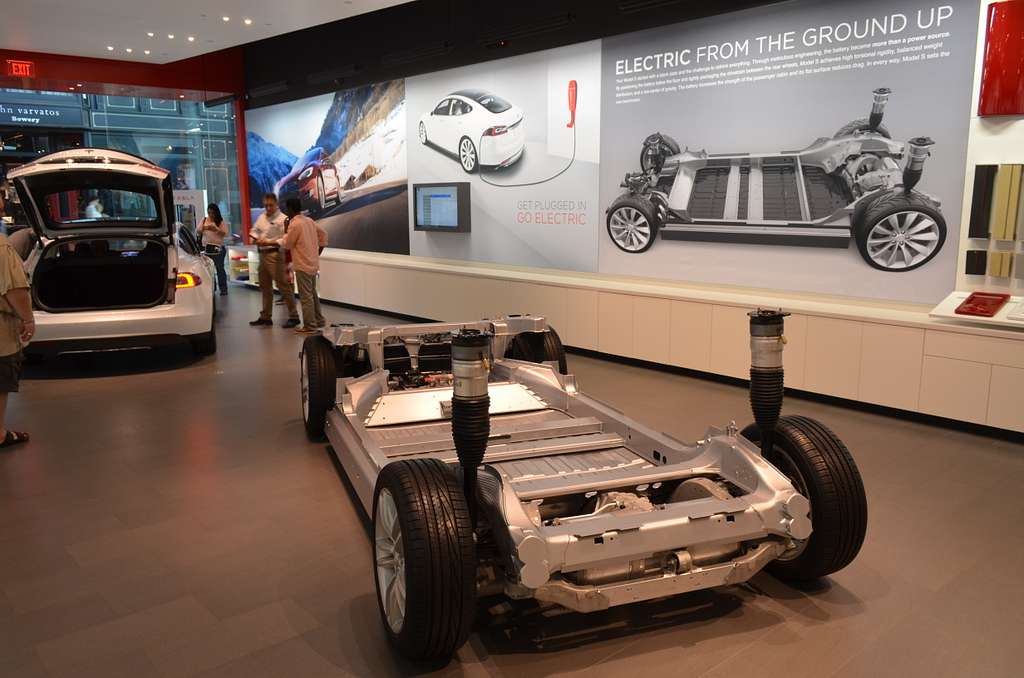
Tesla also confirmed that certain Model Y vehicles are now using in-house 4680 battery packs.
That means:
- Less dependence on suppliers
- Better margins
- Faster innovation cycles
Tesla is preparing to produce more vehicles than ever before, while simultaneously building the batteries that power them.
This isn’t a car strategy.
It’s an industrial strategy.
Why Autonomy Changes Everything
Tesla is no longer treating autonomy as a feature.
It’s treating it as:
- The foundation of its factories
- The justification for its capital spending
- The core assumption behind every product
This is what makes the current moment so dangerous—and so powerful.
Tesla is betting everything on AI working in the real world.
The Bigger Pattern Across Elon Musk’s Companies
Tesla’s transformation doesn’t exist in isolation.
Over the past year, a clear pattern has emerged across Elon Musk’s entire empire.
xAI and SpaceX Have Officially Merged
Elon confirmed that xAI has merged with SpaceX, forming a vertically integrated innovation engine spanning:
- Artificial intelligence
- Rockets
- Satellites
- Space-based internet
- Real-time data systems
This wasn’t about corporate efficiency.
It was about scaling AI beyond Earth’s physical limits.
Why Earth Can’t Power the AI Future
According to Elon, the future of AI is constrained by:
- Electricity demand
- Cooling requirements
- Land and water usage
He warned that:
“Global electricity demand for AI cannot be met on Earth without imposing hardship on communities and the environment.”
The solution?
Space-based AI compute.
Orbital Data Centers: Always Sunny in Space
In orbit:
- Solar power is constant
- Heat can radiate into the vacuum
- Cooling is vastly more efficient
By combining xAI’s models with Starlink satellites and SpaceX launch capacity, Elon is pushing toward orbital data centers.
SpaceX has already filed with the FCC to launch up to 1 million solar-powered satellites designed to operate as AI compute nodes.
This isn’t sci-fi anymore.
A Kardashev Type II Civilization in the Making
In its FCC filing, SpaceX framed the project as:
- A step toward becoming a Kardashev Type II civilization
- Harnessing the full energy output of the sun
- Ensuring humanity’s multi-planetary survival
This is infrastructure on a planetary scale.
Why Starship Is the Missing Piece
Even in humanity’s best year for space launches, we’ve only placed about 3,000 tons into orbit.
That’s nowhere near enough.
Starship changes the math:
- ~200 tons per launch
- Long-term goal of multiple launches per hour
- Millions of tons per year into orbit
Elon estimates that deploying 1 million tons of satellites per year could add 100 gigawatts of AI compute annually.
Eventually?
👉 1 terawatt per year.
At that scale, space-based AI becomes the lowest-cost compute solution on Earth.
Could Tesla Eventually Join the Merger?
For now, Tesla remains separate—but analysts are watching closely.
Many investors believe Tesla, SpaceX, and xAI are already functioning as parts of a single ecosystem.
- Andrew Rocco of Zacks noted that investors are increasingly betting on Elon Musk himself, not individual companies.
- Dan Ives of Wedbush suggested a broader merger could happen within 12 to 18 months.
Nothing is confirmed.
But the direction is unmistakable.
The Real Takeaway
Something weird is happening at Tesla.
But it’s not confusion.
It’s not chaos.
And it’s not desperation.
It’s convergence.
Tesla is becoming:
- An AI company
- A robotics manufacturer
- A logistics platform
- A pillar of a planetary-scale compute ecosystem
Cars were just the entry point.
The future Elon Musk is building doesn’t stop at roads—or even Earth.
And whether this vision succeeds or fails, one thing is already clear:
The old Tesla is gone forever.
FAQs
1. Why is Tesla no longer considered a car company?
Tesla is shifting its core focus from traditional vehicle manufacturing to artificial intelligence, autonomy, and robotics, reorganizing its factories, products, and capital around these technologies rather than human-driven cars.
2. Why is Tesla discontinuing the Model S and Model X?
Tesla is ending the Model S and Model X to free up factory capacity for Optimus humanoid robot production and to fully commit resources toward autonomy and robotics instead of legacy vehicle platforms.
3. What will replace Model S and Model X production?
The Fremont factory space will be converted into an Optimus V3 humanoid robot production line, with a long-term goal of producing up to 1 million robots per year.
4. What is Tesla Optimus and why is it important?
Optimus is Tesla’s humanoid robot designed for industrial, warehouse, and physical labor tasks, potentially transforming global labor economics by automating repetitive and dangerous work.
5. Is Tesla going all in on autonomous vehicles?
Yes. Tesla has made it clear that autonomy is no longer optional—it is the foundation of its future business, with vehicles like the Cybercab designed to operate without human controls.
6. What makes the Cybercab different from other Tesla vehicles?
The Cybercab has no steering wheel, pedals, or manual override, meaning it can only operate autonomously. Tesla considers it an all-or-nothing bet on self-driving technology.
7. How does the Cybertruck fit into Tesla’s autonomy strategy?
Tesla plans to transition the Cybertruck into a fully autonomous cargo and delivery vehicle, particularly for last-mile and regional logistics.
8. Is Tesla building a logistics network?
Yes. By combining Tesla Semi (long haul), autonomous Cybertrucks (local delivery), and Optimus robots (loading and handling), Tesla is creating a vertically integrated autonomous logistics system.
9. What is the 4680 battery and why does it matter?
The 4680 battery is Tesla’s next-generation cell designed to lower costs, increase energy density, and simplify manufacturing, enabling massive scale across vehicles and robotics.
10. What is the dry electrode battery breakthrough?
Tesla has successfully implemented a fully dry electrode process for both the anode and cathode, eliminating solvents and energy-intensive drying steps—one of the biggest hurdles in battery manufacturing.
11. Is Tesla using its own batteries in vehicles now?
Yes. Tesla has begun using in-house 4680 battery packs in certain Model Y vehicles, reducing reliance on suppliers and improving margins.
12. How does autonomy change Tesla’s business model?
Autonomy allows Tesla to move from selling cars to operating AI-powered transportation, logistics, and robot services, dramatically increasing lifetime value per vehicle.
13. What is the connection between Tesla, SpaceX, and xAI?
While Tesla remains separate, SpaceX and xAI have officially merged, forming an AI and space infrastructure ecosystem that many believe Tesla will eventually integrate with more closely.
14. Why does Elon Musk believe AI compute must move to space?
Elon argues Earth-based data centers face limits in power, cooling, land, and water, while space offers constant solar energy and natural heat dissipation.
15. What are orbital AI data centers?
Orbital AI data centers are satellites equipped with AI compute hardware, powered by solar energy and cooled by the vacuum of space, potentially delivering lower-cost computing at massive scale.
16. What role does Starship play in this strategy?
Starship enables massive payload capacity and frequent launches, making it possible to deploy millions of tons of AI infrastructure into orbit—something no other rocket can achieve.
17. Could Tesla merge with SpaceX and xAI in the future?
While unconfirmed, several analysts believe a broader merger is possible within the next 12 to 18 months, as investors increasingly view Elon Musk’s companies as a single interconnected AI ecosystem.
Read More:
- Tesla engineers deflected calls from this tech giant’s now-defunct EV project
- IT’S HERE! New Tesla MODEL 2 2026 Senior Edition! 48V + Octovalve + gigacasting, used cars crash
- Elon Musk Revealed Breakthrough Goals for Starship V4 & Raptor 4 Stunned the whole Rocket industry
- Tesla to a $100T market cap? Elon Musk’s response may shock you
- Where to Buy Tesla Optimus Robot 2026: Everything You Need to Know
1 thought on “Something Weird is Happening At Tesla”