
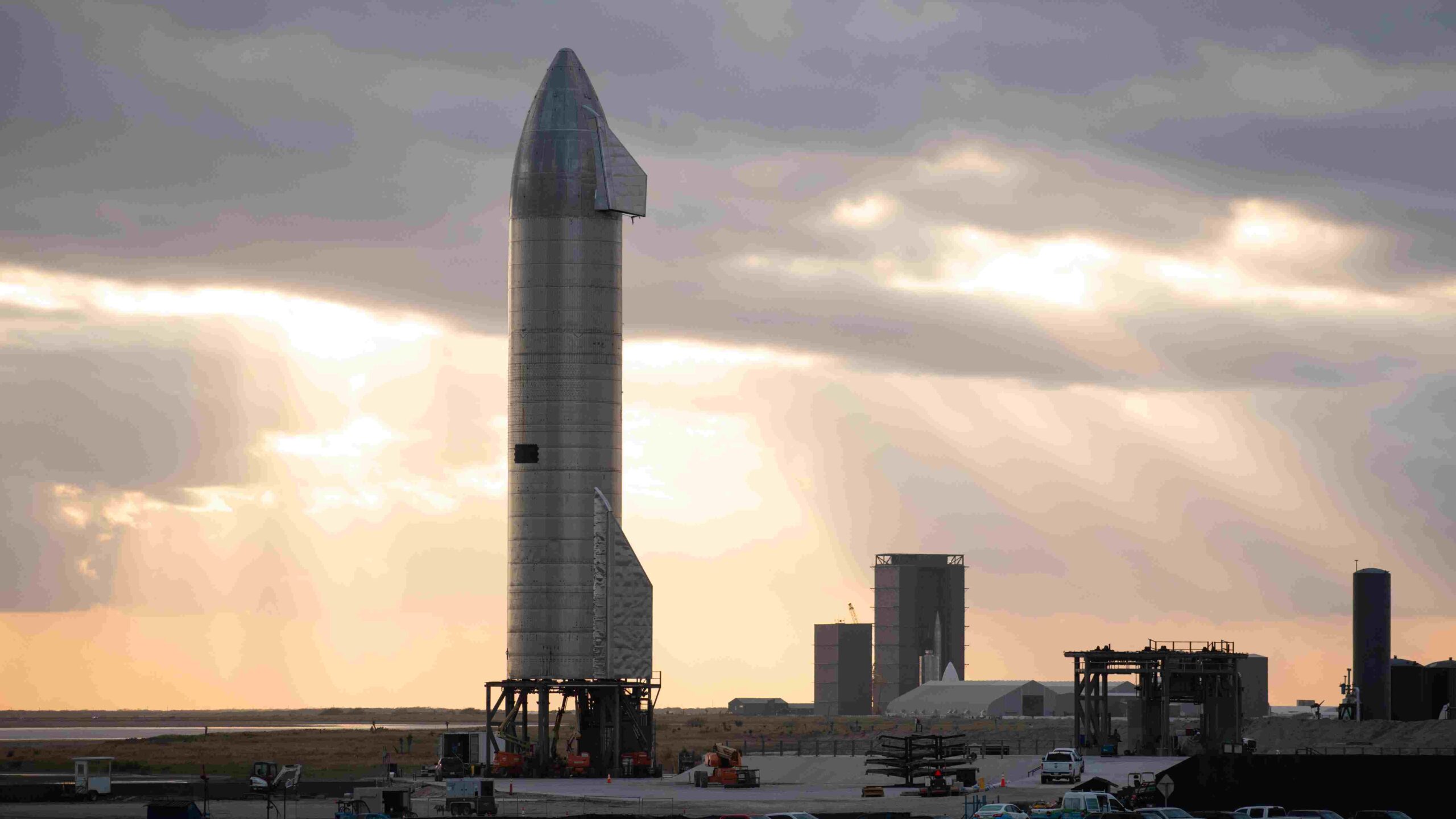
The space race of the 21st century has been marked by intense rivalry, political drama, and groundbreaking technological progress. At the center of it all stands SpaceX, led by Elon Musk, and their ambitious Starship Human Landing System (HLS) — the spacecraft designed to take humanity back to the Moon under NASA’s Artemis 3 mission.
But what happens when one of Starship’s earliest supporters — former NASA Administrator Jim Bridenstine — suddenly turns into one of its harshest critics?
Recently, Bridenstine’s public remarks questioning the viability of Starship have ignited a storm across the space community. His statements not only triggered backlash from fans and experts alike but also prompted a rare public response from SpaceX, calling out the former NASA chief directly.
Let’s break down what happened, why it matters, and how SpaceX’s bold reaction reshaped the narrative.

The Irony of Jim Bridenstine’s Criticism
It’s almost poetic. The same man who once handed SpaceX the Artemis 3 contract — officially making Starship the centerpiece of NASA’s return to the Moon — is now leading the charge against it.
Jim Bridenstine, NASA Administrator from 2018 to 2021, was once a vocal advocate for commercial partnerships in space exploration. During his tenure, he emphasized that NASA could no longer “go to the Moon alone,” and that private companies like SpaceX were key to making lunar exploration sustainable and affordable.
In March 2019, under the Trump administration, Bridenstine announced the Artemis program, designed to return astronauts to the lunar surface for the first time since 1972. He proudly declared at the International Astronautical Congress,
“We’re going to the Moon with commercial partners, and we’re not going to do it alone.”
At that moment, he positioned NASA and SpaceX as allies, united in the dream of rekindling lunar exploration.
SpaceX’s Rise Under Bridenstine’s Leadership
Under Bridenstine, NASA launched a new era of commercial space partnerships. In April 2020, three companies were chosen to develop prototype lunar landers:
- SpaceX with Starship HLS
- Blue Origin with Blue Moon
- Dynetics with Dynetics HLS
While Blue Origin received $579 million and Dynetics got $253 million, SpaceX received just $135.6 million. But this wasn’t a snub — it was a reflection of SpaceX’s low-cost, high-efficiency proposal.
Musk’s confidence in the fully reusable Starship architecture allowed SpaceX to bid far lower than its competitors. And when SpaceX successfully launched Crew Dragon Demo-2 in May 2020 — the first crewed U.S. launch since the Space Shuttle era — NASA’s trust in the company grew stronger than ever.
Then came the big moment.
In April 2021, NASA officially awarded SpaceX the sole Artemis 3 contract — a $2.89 billion deal to develop the Starship Human Landing System that would carry astronauts to the Moon’s surface.
Even as Bridenstine was preparing to leave NASA, he stood by that choice, calling Starship “the best technical and economic option” and praising its potential as the backbone of lunar and Martian exploration.
From NASA Administrator to Paid Lobbyist
After leaving NASA, Bridenstine made a career move that surprised many in the industry. In 2021, he launched a lobbying firm called The Artemis Group, representing aerospace giants like ULA (United Launch Alliance), Boeing, Lockheed Martin, and Blue Origin — all direct competitors of SpaceX.

By 2025, reports revealed that the Artemis Group had received nearly $1 million from ULA to influence NASA and Congress. And soon after, Bridenstine’s public stance began to shift dramatically.
At a Senate hearing in September 2025, he argued that Starship was too complex, citing the need for multiple in-orbit refuelings and potential safety risks. He warned that the U.S. might lose the lunar race to China if it continued relying on SpaceX’s ambitious design.
He even suggested invoking the Defense Production Act to force NASA to reopen the HLS contract — effectively giving his lobbying clients another chance to compete.
At the Von Braun Space Exploration Symposium a month later, Bridenstine doubled down. Alongside former NASA chief Charles Bolden, he called for reducing reliance on Starship and restructuring the Artemis 3 mission to “simplify” NASA’s approach — a thinly veiled move to benefit traditional contractors.
Why SpaceX Finally Fired Back
For a while, SpaceX stayed silent. But as Bridenstine’s criticism grew louder and spread across mainstream outlets, the company had had enough.
In a rare move, SpaceX’s official X (formerly Twitter) account issued a direct response — not once, but multiple times — posting a series of pointed statements that dismantled Bridenstine’s arguments piece by piece.
The first post seemed polite:
“Like many Americans, we are thankful for Mr. Bridenstine’s service leading NASA. At one point, he deserves credit for spearheading the creation of the Artemis program.”
But that was only the warm-up.
SpaceX followed up with a sharper message:
“Mr. Bridenstine’s current campaign against Starship is either misguided or intentionally misleading. SpaceX was selected to design and develop a Human Landing System during his tenure as NASA Administrator.”
To drive the point home, they attached the original NASA press release from 2020, signed by Bridenstine himself, announcing SpaceX’s selection for the HLS program.
It was a subtle but powerful way of saying:
“You picked us. Don’t pretend otherwise.”
Elon Musk’s Unfiltered Truth
Then came the post that changed everything.
From the same official account, SpaceX added:
“To be clear, he is a paid lobbyist. He represents clients’ interests and his comments should be seen for what they are — a paid effort to secure billions more in government funding for companies already years late and billions over budget.”
The blunt tone and unfiltered delivery had Elon Musk’s signature style written all over it.
While Musk didn’t directly confirm authoring the post, many observers believe he personally approved the message. Musk has a long history of responding to critics on social media — but this time, SpaceX’s corporate voice spoke with Musk’s conviction.
The response was a turning point. It not only defended SpaceX’s credibility but also exposed the financial motivations behind Bridenstine’s sudden reversal.

NASA’s Reaction and the Artemis 3 Update
Following the public feud, NASA found itself in a delicate position.
On October 20, 2025, acting NASA Administrator Sha Duffy confirmed that the agency had issued a Request for Information (RFI) to explore additional lunar lander concepts.
However, Duffy clarified that SpaceX’s Artemis 3 contract remains active and that the RFI was meant to increase redundancy and reduce risk, not replace Starship.
This means NASA is keeping SpaceX in charge, while also inviting other companies — possibly Blue Origin or Dynetics — to offer backup solutions for future missions.
The announcement made headlines, but insiders noted that no new contracts have been awarded yet. SpaceX continues to be the only company with a working prototype capable of landing humans on the Moon by the late 2020s.
Blue Origin’s Quiet Comeback
Amid the SpaceX–Bridenstine drama, Blue Origin finally showed signs of real progress.
After years of delays, its massive orbital rocket, New Glenn, is now preparing for its first test flight — currently targeting November 9–11, 2025.
On October 30, the company successfully completed a 38-second static fire test of all seven BE-4 engines at Launch Complex 36, Cape Canaveral. The engines roared to life, producing a combined 1,700 tons of thrust, marking a major milestone in Blue Origin’s history.
Both Jeff Bezos and new CEO Dave Limp praised the test, noting that engineers extended the burn to simulate landing conditions and study thrust transitions — a crucial step toward future booster recoveries.
The successful test restored confidence in the BE-4 engine, which has faced multiple setbacks since development began nearly a decade ago.
New Glenn’s maiden flight will carry NASA’s EscaPADE mission, a twin-satellite project to study Mars’ magnetosphere, and attempt a booster landing on a drone ship — much like SpaceX’s Falcon 9 operations.
The Politics Behind the Lunar Race
Behind the engineering triumphs lies a web of political and financial pressures.
Congress, under growing influence from lobbying groups and traditional contractors, has been pushing NASA to speed up the Artemis timeline and diversify contracts.
Lawmakers from states housing major aerospace firms — like Texas, Alabama, and Virginia — have been particularly vocal in urging NASA to support Blue Origin and ULA, whose facilities contribute to local economies.
At the same time, NASA faces a proposed 24% budget cut for FY 2026, even as the agency is under pressure to land astronauts before China.
As Duffy explained:
“The President wants us to get there within his term.”
That means a U.S. lunar landing before 2029, ahead of China’s planned 2030 mission using its Lanyu spacecraft.
The result? Mounting political tension, tighter budgets, and higher stakes for both SpaceX and NASA.
Why SpaceX Still Leads the Race
Despite the criticism and bureaucratic hurdles, SpaceX remains far ahead in the lunar lander race.
Here’s why:
1. Proven Reusability
Starship’s full reusability model dramatically reduces cost per flight. No other competitor has achieved similar levels of reusability at this scale.
2. Private Funding
While others rely on NASA contracts, SpaceX is investing billions of its own dollars into Starship’s development — without taxpayer bailouts.
3. Rapid Iteration
The company’s “build fast, fail fast, learn fast” philosophy allows it to conduct frequent tests and redesigns, accelerating progress beyond traditional aerospace timelines.
4. Integrated Architecture
Starship isn’t just a lunar lander. It’s a complete space transportation system — capable of carrying cargo, satellites, and humans from Earth orbit to the Moon, Mars, and beyond.
With each Starship test flight, SpaceX inches closer to proving that a fully reusable, scalable spacecraft can support long-term lunar and interplanetary exploration.

Public Opinion: SpaceX vs. the Old Guard
When SpaceX publicly responded to Bridenstine, the reaction was immediate — and overwhelming.
Industry experts, former NASA engineers, and space fans rallied behind Musk, praising SpaceX for standing up against what they saw as “old space politics.”
The online discourse turned into a broader debate:
Should NASA continue favoring legacy contractors who move slowly but safely, or embrace risk-taking innovators like SpaceX who push the boundaries of possibility?
For many, SpaceX represents progress, efficiency, and vision, while traditional aerospace firms symbolize bureaucracy and stagnation.
Looking Ahead: The Future of Artemis and Starship
The road to the Moon has never been smooth. Politics, budgets, and rivalries have always shaped space exploration — from the Apollo era to today.
Yet, despite the noise, SpaceX continues to deliver. The company’s focus remains on making Starship HLS ready for Artemis 3, conducting more orbital refueling tests, and perfecting Super Heavy booster recovery.
If successful, Starship could revolutionize not just lunar exploration but also Mars colonization, deep-space logistics, and even commercial space travel.
As for NASA, balancing innovation with oversight will be key. The agency’s decision to open future Artemis contracts to competition might reduce risk, but it also risks slowing momentum — especially if political interests outweigh technical merit.
Final Thoughts
The clash between SpaceX and Jim Bridenstine isn’t just personal — it’s symbolic. It reflects a deeper struggle between old space and new space, between traditional lobbying power and private innovation.
Bridenstine’s transformation from Starship supporter to critic might be fueled by politics and money, but SpaceX’s response has reignited public confidence in its mission.
By standing firm, SpaceX didn’t just defend its reputation — it reminded the world why it’s leading humanity’s next giant leap.
As we move closer to the next lunar landing, one thing is certain:
The future of space exploration won’t be decided in conference rooms or Senate hearings. It’ll be decided on the launch pad, under the fire and thunder of rockets like Starship and New Glenn, propelling us toward a new era beyond Earth.
FAQs
1. What is the SpaceX Starship HLS?
The SpaceX Starship HLS (Human Landing System) is a modified version of Starship designed to land astronauts on the Moon under NASA’s Artemis 3 mission. It will carry crew from lunar orbit to the Moon’s surface and back safely.
2. Why did NASA choose SpaceX for Artemis 3?
NASA selected SpaceX in April 2021 because Starship offered the best technical and economic solution — it was reusable, cost-efficient, and had a robust development plan supported by private funding.
3. Who is Jim Bridenstine?
Jim Bridenstine served as NASA Administrator from 2018 to 2021. He helped launch the Artemis program and initially supported SpaceX’s Starship before later criticizing its design and timeline.
4. Why is Jim Bridenstine now criticizing SpaceX?
After leaving NASA, Bridenstine founded a lobbying firm representing competitors like ULA, Boeing, and Blue Origin. Many believe his recent criticism of Starship is influenced by financial and political interests rather than engineering concerns.
5. How did SpaceX respond to Bridenstine’s criticism?
SpaceX issued multiple public posts on X (formerly Twitter), reminding the public that Bridenstine himself approved Starship for Artemis 3. They also called out his current lobbying ties and defended Starship’s progress.
6. Did Elon Musk personally write SpaceX’s response?
It hasn’t been confirmed, but many observers believe Elon Musk authorized or approved the company’s posts. The direct, no-nonsense tone closely matched Musk’s communication style.
7. What is the Artemis 3 mission?
Artemis 3 is NASA’s planned mission to return humans to the Moon — the first crewed lunar landing since Apollo 17 in 1972. SpaceX’s Starship HLS will play a critical role in transporting astronauts to and from the lunar surface.
8. Is NASA replacing SpaceX on Artemis 3?
No. NASA’s recent Request for Information (RFI) only aims to explore additional lander concepts to add redundancy. SpaceX remains the official contractor for Artemis 3.
9. What is Blue Origin’s role in the Artemis program?
Blue Origin, led by Jeff Bezos, is developing a lunar lander for Artemis 5. The company’s rocket, New Glenn, will also carry NASA’s EscaPADE Mars mission and aims for its first flight in late 2025.
10. How far along is Starship’s development?
SpaceX has conducted multiple Starship test flights, static fires, and Super Heavy booster recoveries. Each test brings the system closer to full operational readiness for NASA’s 2028–2029 lunar window.
11. What makes Starship unique compared to other rockets?
Starship is the first fully reusable, two-stage, heavy-lift spacecraft capable of carrying over 100 metric tons to orbit. Its versatility allows missions to the Moon, Mars, and beyond — reducing launch costs dramatically.
12. Why does Starship require in-orbit refueling?
Starship’s lunar missions depend on multiple refueling operations in Earth orbit to fill its massive tanks for lunar transfer. While complex, this approach enables greater payload capacity and long-term sustainability.
13. What is the main challenge SpaceX faces with Artemis 3?
The biggest challenges include perfecting orbital refueling, meeting NASA’s strict safety standards, and ensuring on-time delivery for the planned lunar landing later this decade.
14. How does the Artemis program differ from Apollo?
Unlike Apollo, Artemis is designed for sustainability. It relies on commercial partners like SpaceX and Blue Origin and aims to build a permanent human presence on the Moon as a stepping stone to Mars.
15. When will humans land on the Moon again?
If current timelines hold, NASA’s Artemis 3 — featuring SpaceX’s Starship HLS — could land astronauts on the Moon by 2028 or 2029, depending on development progress and funding.
16. What does this controversy mean for the future of space exploration?
The clash between SpaceX and Jim Bridenstine highlights the ongoing struggle between innovation and bureaucracy in the aerospace industry. Ultimately, it underscores how private innovation is reshaping humanity’s path to the Moon and beyond.
Read More:
- Tesla Cybertruck fleet takes over at SpaceX’s Starbase
- Elon Musk shuts down Tesla ‘AMG’ division speculation: ‘Focus is autonomy’
- SpaceX revealed New Breakthrough Upgrade on Raptor 3 Engine in 2026 Totally Ahead of Time
- Ex-NASA Chief’s new Insane Decision Against Starship HLS! SpaceX’s Fire Back
- The 2026 SpaceX Update Is Here: A New Era for Starship
What are athe requirments forgetting free Starlink with your new Pi Phone?