
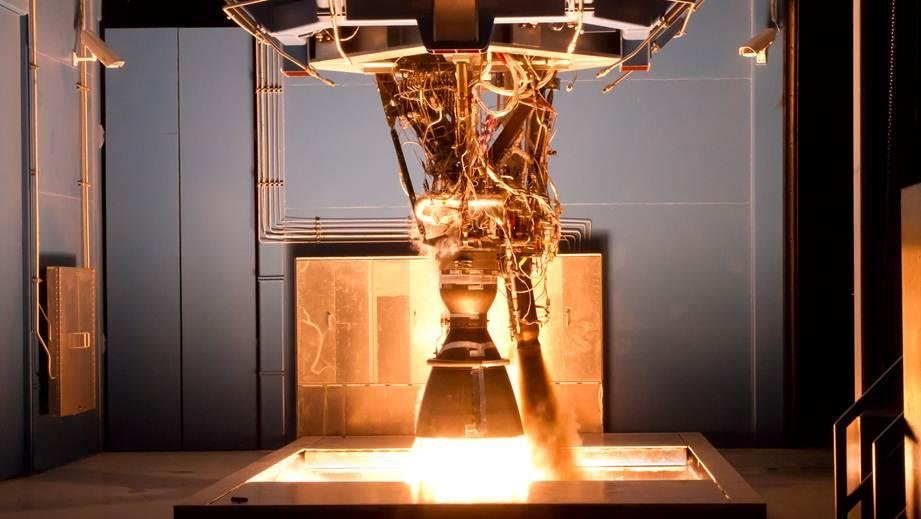
SpaceX just EXPOSED itself: SpaceX’s Starship program is pushing rocket engineering into territory that few companies have attempted before. Designed to carry massive payloads, support lunar missions, and eventually enable human missions to Mars, Starship depends on one critical technology above all: the Raptor rocket engine.
The Raptor is an extraordinarily advanced engine, but its complexity also creates significant engineering challenges. Recent flight testing and technical commentary, including discussions such as Alpha Tech’s “SpaceX just EXPOSED itself: Raptor BAD!!!”, have renewed attention on Raptor reliability, thermal management, engine restarts, and multi-engine operations.
Does this mean Raptor is fundamentally “bad”? Not necessarily. Instead, the evidence highlights how difficult it is to make an extremely powerful engine both high-performance and highly reusable.
Why the Raptor Engine Matters So Much
The Raptor engine is the technological heart of Starship and Super Heavy. Unlike conventional rocket engines, Raptor uses liquid methane (CH₄) and liquid oxygen (LOX) in a full-flow staged-combustion cycle.
This architecture is exceptionally ambitious because both the fuel and oxidizer are partially burned in separate preburners before driving their respective turbopumps.
Full-Flow Staged Combustion Explained
A simplified Raptor operating sequence looks like this:
- Liquid methane and LOX enter the engine.
- Separate preburners generate hot gases.
- Those gases drive the fuel and oxidizer turbopumps.
- The propellants enter the main combustion chamber.
- Extremely high pressure produces enormous thrust.
- Exhaust gases are expanded through the nozzle.
The advantage is impressive propellant efficiency and high specific impulse. However, the disadvantage is equally important: the engine contains an enormous number of tightly integrated components operating under extreme conditions.
The Problem With Extreme Chamber Pressure
One of the defining characteristics of Raptor is its very high chamber pressure.
Higher chamber pressure can contribute to greater engine performance and thrust density, but it also increases demands on turbopumps, injectors, valves, seals, combustion chambers, and plumbing.
At these operating conditions, even small imperfections can become major engineering problems.
The challenge becomes even greater when the objective is not simply to launch a rocket once, but to create a rapidly reusable launch system.
A disposable engine can tolerate a different maintenance philosophy than an engine expected to repeatedly launch, operate in space, restart, and potentially support controlled landing burns.
Super Heavy Makes Reliability Even More Important
The Super Heavy booster is designed around a remarkable engine architecture involving 33 Raptor engines.
       SUPER HEAVY ENGINE ARRANGEMENT

     [ Outer Ring: Fixed Raptors ]
              ↓
        Primary Lift

     [ Inner Ring: Gimbaling ]
              ↓
      Thrust Vector Control

     [ Center Raptors ]
              ↓
       Landing & Relight
Operating one sophisticated rocket engine is difficult. Operating dozens simultaneously creates another layer of engineering complexity.
Acoustic and Vibrational Loads
When multiple powerful engines operate together, the resulting acoustic energy and vibration can become significant.
Pressure oscillations and structural vibration can affect nearby components, sensors, plumbing, and engine hardware. Engineers therefore have to ensure that individual engines remain stable while operating as part of a much larger propulsion system.
Thermal Management
The bottom of Super Heavy becomes an extremely hostile environment during operation.
The engine compartment experiences intense heat, exhaust flow, vibration, and pressure fluctuations. Managing that environment is essential for protecting avionics, structural components, wiring, and propulsion hardware.
Engine Startup Complexity
Starting dozens of engines is another major challenge.
Each engine must reach the appropriate operating conditions within a carefully controlled sequence. An abnormal ignition, pressure spike, or delayed startup can create additional stresses within the propulsion system.
This makes engine-start reliability particularly important for Starship’s future operational goals.
Raptor Relight Is Another Major Challenge
Raptor engines are not only expected to produce enormous thrust during launch. They also need to support complex mission profiles involving engine shutdowns and restarts.
For the Super Heavy booster, engines must eventually support a controlled landing sequence. For Starship, future missions could require engine operation after long periods of coasting in space.
Propellant Management in Space
During microgravity, liquid propellant does not naturally remain exactly where engineers want it.
Propellant can move around inside tanks, creating conditions where gas or vapor could reach turbopumps. This can complicate engine restarts and potentially contribute to instability or cavitation.
Solutions involve carefully designed header tanks, pressurization systems, propellant-management hardware, and ignition systems.
Reliable relight capability will therefore be a critical milestone in making Starship genuinely reusable.
Raptor 3 Changes the Engineering Equation
One of SpaceX’s most important propulsion developments is Raptor 3.
Rather than simply increasing thrust, the newer engine architecture focuses heavily on simplification, integration, and mass efficiency.
Earlier Raptor versions included numerous external components, pipes, sensors, and protective structures. Raptor 3 aims to integrate more functionality directly into the engine.
Raptor 3 vs. Earlier Raptor Versions
| Feature | Earlier Raptor Versions | Raptor 3 |
|---|---|---|
| Engine Architecture | More external components | More integrated design |
| Plumbing | Greater external plumbing | More integrated fluid routing |
| Thermal Protection | Additional external protection | Greater integration of cooling |
| Mass Efficiency | Higher component complexity | Reduced hardware complexity |
| Thrust Development | Very high thrust | Higher thrust target |
| Manufacturing | More individual components | Greater consolidation |
This approach is important because fewer external components can mean fewer potential failure points, easier engine-bay integration, and potentially faster manufacturing.
Why Raptor Testing Can Look Worse Than It Really Is
Rocket-engine development is rarely a straight line.
SpaceX’s development strategy emphasizes rapid iteration and flight testing. Hardware can reveal problems that engineers simply cannot reproduce under every possible ground-test condition.
An engine shutdown or test anomaly can therefore provide valuable information about:
- Combustion stability
- Turbopump behavior
- Thermal loads
- Valve operation
- Engine vibration
- Propellant management
- Ignition and relight behavior
The key question is not whether problems occur during development. The more important question is whether engineers can identify the cause, redesign the hardware, and demonstrate improved performance in subsequent tests.
The Real Test Is Reusability
The ultimate challenge for Raptor is not simply achieving enormous thrust.
SpaceX wants Starship to become a fully reusable transportation system capable of frequent launches.
That requires engines that can survive repeated exposure to extreme temperatures, pressures, vibration, and mechanical loads.
A successful reusable Raptor architecture would need to combine:
High Thrust
The engine must generate enough thrust to move the enormous Starship and Super Heavy vehicle.
High Efficiency
Efficient propellant utilization is essential for achieving useful payload capacity and long-distance missions.
Reliability
The engine must operate consistently across repeated flights.
Rapid Turnaround
Reusability becomes far more valuable when vehicles can return to service quickly.
Maintainability
Engines should be inspected, repaired, and replaced without excessive complexity.
From Raptor Problems to Raptor Progress
The headline “Raptor BAD” may sound dramatic, but the engineering reality is more nuanced.
Raptor is an extraordinarily complicated propulsion system operating at extreme conditions. Its development naturally involves failures, anomalies, redesigns, and repeated testing.
The transition toward Raptor 3 demonstrates that SpaceX is not simply chasing higher thrust. The company is also attempting to simplify the engine, reduce exposed hardware, improve thermal management, and make large-scale production more practical.
That could ultimately matter more than any single thrust figure.
Conclusion: The Raptor Challenge Is Bigger Than Thrust
The Raptor engine represents both the strength and the challenge of Starship.
Its full-flow staged-combustion architecture provides tremendous performance potential, but that performance comes with extraordinary engineering demands. High chamber pressure, multiple turbopumps, complex combustion systems, thermal loads, engine clustering, and restart requirements all create difficult problems.
As SpaceX continues testing Starship and refining Raptor, the focus will increasingly shift from simply proving that the engine can produce enormous power to proving that it can do so reliably, repeatedly, and economically.
If SpaceX can solve those problems, Raptor could become one of the most important rocket engines ever developed—not because it is free from problems, but because its eventual maturity could make large-scale reusable space transportation practical.
FAQs
1. What is the Raptor engine?
The Raptor engine is SpaceX’s advanced methane-fueled rocket engine designed to power Starship and Super Heavy. It uses a full-flow staged-combustion cycle for high performance and efficiency.
2. Why is the Raptor engine considered so complex?
Raptor combines dual preburners, turbopumps, extremely high chamber pressure, complex plumbing, and regenerative cooling. Integrating these systems while maintaining reliability makes the engine highly challenging to develop.
3. Is the Raptor engine actually bad?
Calling Raptor “bad” is an oversimplification. The engine has faced development challenges and testing anomalies, but it is also an extremely powerful and sophisticated propulsion system that continues to evolve through iterative testing.
4. How many Raptor engines does Super Heavy use?
The Super Heavy booster is designed with 33 Raptor engines. Their combined thrust allows the massive booster to lift Starship from the launch site.
5. What fuel does the Raptor engine use?
Raptor uses liquid methane (CH₄) as fuel and liquid oxygen (LOX) as the oxidizer. Methane is particularly attractive for future Mars missions because it can potentially be produced from locally available resources.
6. What is full-flow staged combustion?
Full-flow staged combustion is a rocket-engine cycle in which both the fuel and oxidizer pass through separate preburner systems before entering the main combustion chamber. This can provide excellent efficiency but requires a highly complex engine architecture.
7. Why does Raptor operate at such high chamber pressure?
High chamber pressure can increase engine performance and thrust density. However, it also places greater mechanical and thermal demands on components such as turbopumps, injectors, valves, and combustion chambers.
8. What problems can occur when 33 Raptor engines operate together?
Operating 33 engines simultaneously can create challenges involving vibration, acoustic loads, thermal management, startup synchronization, and propulsion-system interactions. Engineers must ensure that individual engines remain stable within the larger booster system.
9. Why is engine relighting important for Starship?
Engine relighting is essential for missions that require engines to restart after shutdown. Super Heavy needs reliable engine operation for landing maneuvers, while Starship may require multiple engine starts during future orbital, lunar, or interplanetary missions.
10. What is Raptor 3?
Raptor 3 is a newer generation of SpaceX’s Raptor engine designed with greater integration, simplified external hardware, improved thermal management, and increased performance. The design aims to reduce complexity while making the engine more efficient to manufacture and operate.
11. How is Raptor 3 different from earlier Raptor engines?
Raptor 3 incorporates more systems directly into the engine structure, reducing some external plumbing, sensors, and protective hardware. This can improve mass efficiency and simplify integration into the Starship propulsion system.
12. Why is thermal management important for Raptor?
Raptor engines generate enormous amounts of heat and energy. Effective thermal management protects the combustion chamber, engine components, avionics, plumbing, and surrounding structures from excessive temperatures during operation.
13. Can Raptor engines be reused?
Yes. Reusability is a central objective of the Starship program. The engines must be capable of surviving demanding launch, flight, landing, and potentially repeated-flight environments while requiring manageable inspection and maintenance.
14. Why does SpaceX use rapid testing for Raptor development?
Rapid testing allows SpaceX to collect real-world flight and engine data. Problems discovered during testing can reveal information about combustion, vibration, thermal loads, turbopumps, propellant management, and other systems that can then guide future hardware improvements.
15. Why is Raptor reliability important for Starship’s future?
Raptor reliability is critical because Starship’s entire mission architecture depends on its propulsion system. Reliable engines will be necessary for frequent launches, booster landings, orbital operations, lunar missions, and eventually long-duration Mars transportation.
Read More:
- Elon Musk follows Trump’s lead, says a SpaceX name change is coming
- Tesla’s Giga Press 4.0 INSANE Speed, Cars Are Made So Fast
- Tesla Bot Gen 3 NEW DESIGN! Elon Musk Drops MASSIVE UPDATE 1,000/Week
- 2026 Tesla Model Q Finally Revealed – Official Information | Interior and Exterior Details
- $6,789 Tesla Flying Car FINALLY HIT The Market! What’s Inside in First Look?
1 thought on “SpaceX just EXPOSED itself: Raptor BAD”