
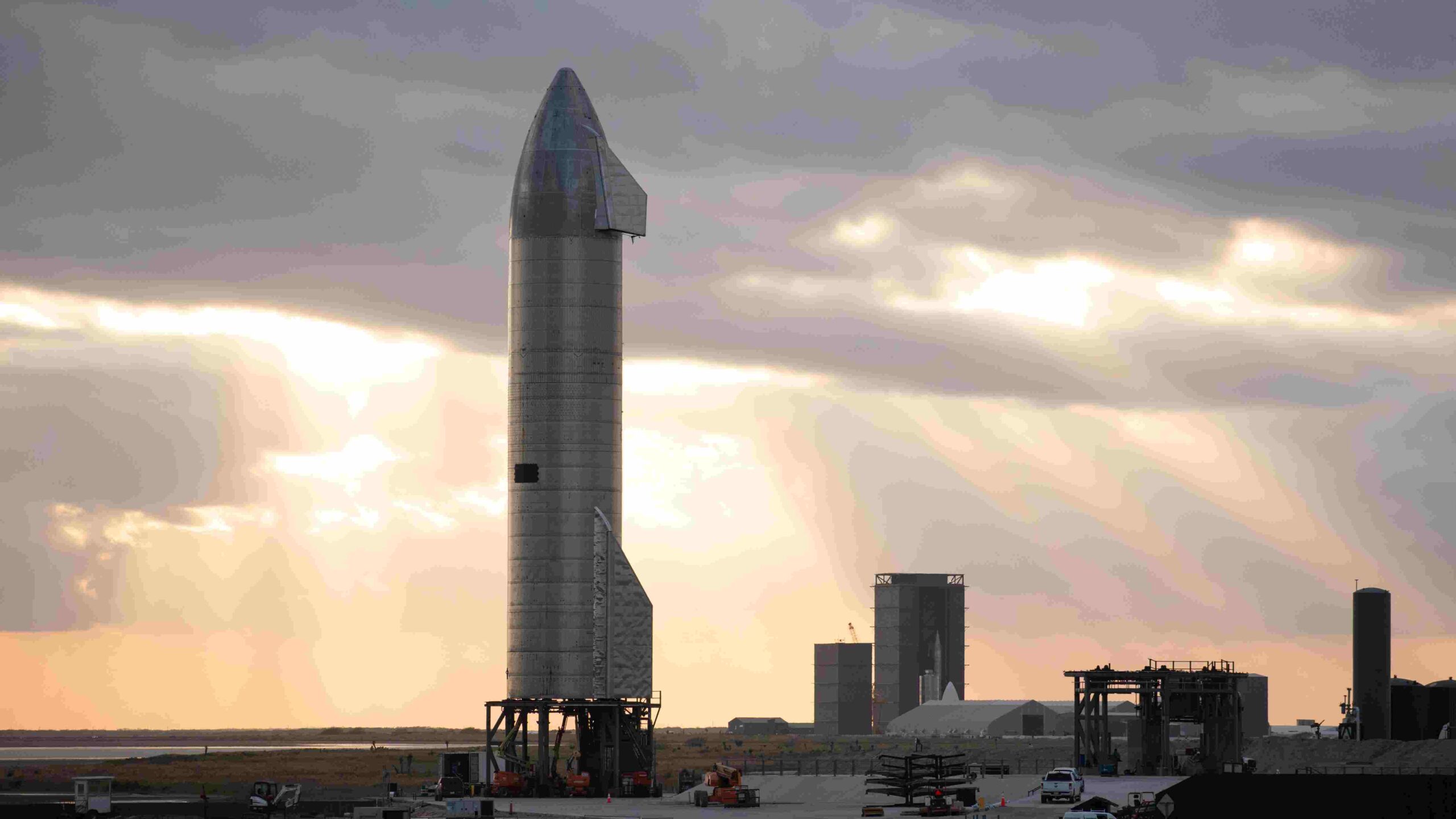
SpaceX just Revealed New STRANGE Upgrades on Starship Nosecone! S40 Static Fire Test Abort: SpaceX has once again captured the attention of the global aerospace community. As preparations for Starship Flight 13 accelerate, several major developments have emerged from both Starbase, Texas, and Florida’s Space Coast. These updates include a mysterious S40 static fire test interruption, newly discovered Starship nose cone modifications, rapid construction at Space Launch Complex 37, and a growing $1 billion infrastructure challenge facing NASA.
Each of these developments provides valuable insight into how SpaceX is preparing its next-generation launch system for future lunar and Mars missions. While some events appear unexpected, they also demonstrate the company’s rapid testing philosophy, where failures and adjustments are considered part of the engineering process.
In this article, we’ll explore every major update and explain what these changes could mean for the future of the Starship program.
The S40 Static Fire Test Ends Earlier Than Expected
One of the biggest developments occurred when Starship Ship 40 (S40) rolled out for testing at Massey’s Test Site in Starbase.
After several days of anticipation, engineers began loading the vehicle with super-cooled liquid oxygen (LOX) and liquid methane (CH₄).
The test looked completely normal during its early stages.
Large clouds of vapor surrounded the vehicle while thick frost formed across the stainless-steel hull—a clear sign that the cryogenic tanks had reached operational temperatures.
Observers expected all six Raptor engines to ignite.
Instead, something unusual happened.
A brief flash appeared inside the engine section before SpaceX immediately initiated an automatic detanking procedure, ending the test before any full static fire occurred.
Test Timeline
S40 Rollout
⬇️
Cryogenic Fuel Loading
⬇️
Heavy Frost Formation
⬇️
Brief Engine Skirt Flash
⬇️
Automatic Test Abort
⬇️
Vehicle Detanking
Although visually dramatic, the event appeared highly controlled, suggesting that onboard safety systems functioned exactly as designed.
Why Did SpaceX Abort the Static Fire?
SpaceX has not released an official explanation, but aerospace analysts believe there are two likely possibilities.
1. Automated Countdown Abort
Modern launch vehicles rely heavily on automated health monitoring systems.
In the final seconds before ignition, hundreds of sensors continuously examine:
- Fuel pressure
- Engine valve positions
- Methane flow rates
- Oxygen delivery
- Ignition timing
- Temperature variations
Even a tiny anomaly can immediately trigger an automatic abort.
This prevents unnecessary engine damage while protecting expensive flight hardware.
Rather than risking catastrophic failure, the software simply cancels the ignition sequence.
This approach allows engineers to diagnose the issue before attempting another test.
2. Cryogenic Proof Test
Another possibility is that a full engine firing was never planned.
SpaceX frequently performs cryogenic proof tests to validate:
- Tank strength
- Structural weld integrity
- Thermal contraction
- Fuel plumbing performance
During these tests, engineers simulate flight conditions without actually igniting all engines.
The brief flash observed underneath S40 could have been nothing more than an isolated igniter system verification rather than the beginning of a full static fire.
If true, the test may actually have been successful.
What Happens Next for Ship 40?
Despite the interrupted sequence, there is little indication that S40 has suffered serious damage.
If engineers simply need software adjustments or minor inspections, Ship 40 could quickly return for another static fire attempt.
Current expectations still point toward a possible July launch window for Starship Flight 13, assuming remaining qualification tests proceed as planned.
SpaceX has demonstrated repeatedly that rapid iteration allows it to recover from testing interruptions remarkably quickly.
Strange New Starship Nose Cone Spotted Inside Starfactory
Perhaps the most exciting discovery came from inside Starfactory, where observers noticed an entirely different type of Starship nose cone under construction.
Unlike conventional Starships, this version lacks exterior heat shield tiles and includes several highly unusual structural modifications.
These changes strongly suggest that this vehicle has a very specialized mission.
Mysterious Structural Changes
Engineers spotted several distinctive features.
Reinforced Access Opening
A large rectangular cutout appears midway up the nose section.
Unlike temporary manufacturing openings, this one includes substantial reinforcement plating.
Its location places it directly beneath the internal liquid oxygen header tank, suggesting an important engineering purpose.
External Pipe Extension
Technicians later installed a thick pipe-like structure extending outward from the reinforced opening.
The assembly terminates in a circular mechanical ring containing numerous precision connection ports.
This is far more sophisticated than ordinary maintenance plumbing.
Six Hidden Circular Openings
After workers removed a protective reflective cover, six perfectly circular openings became visible underneath the structural framework.
Their symmetrical arrangement immediately fueled speculation throughout the aerospace community.
These openings appear intentionally designed to accommodate specialized hardware installations.
What Could These Upgrades Be For?
Although SpaceX has remained silent, several engineering theories have emerged.
Orbital Refueling Docking System
One possibility is that the hardware supports orbital propellant transfer.
Future Mars missions require multiple Starships to dock together in Earth orbit before transferring hundreds of tons of cryogenic propellant.
Such operations require:
- Extremely rigid structural connections
- Leak-free fuel transfer interfaces
- High-pressure plumbing
- Precision alignment systems
The reinforced nose section may serve as the docking interface connecting tanker Starships with deep-space vehicles.
If this interpretation is correct, these modifications represent a major step toward routine orbital refueling.
Artemis Human Landing System (HLS)
Another compelling explanation connects the new hardware to NASA’s Human Landing System (HLS).
Unlike standard Starships, the lunar lander version cannot rely entirely on engines positioned at the base.
During lunar landings, powerful exhaust could blast dangerous clouds of debris across the Moon’s surface.
Instead, engineers have proposed mounting high-altitude maneuvering thrusters much higher on the spacecraft.
The six circular openings align remarkably well with this concept.
Possible functions include:
- Landing control
- Attitude adjustments
- Hover stabilization
- Precision lunar descent
- Safe ascent from the Moon
Interestingly, the location also matches conceptual crew window positions shown in earlier HLS illustrations.
Is This a Prototype?
Current evidence suggests this nose cone is likely an engineering test article rather than a finished flight vehicle.
Prototype hardware allows SpaceX engineers to evaluate:
- Structural loads
- Docking mechanisms
- Plumbing systems
- Cryogenic fuel routing
- Manufacturing techniques
Lessons learned from these early prototypes will almost certainly influence operational vehicles scheduled for later orbital testing.
SpaceX Expands Construction at Space Launch Complex 37
While Starbase remains the primary testing center, Florida is rapidly becoming another major Starship hub.
Construction activity at Space Launch Complex 37 (SLC-37) has entered a completely new phase.
Following demolition of older launch infrastructure, crews have begun stacking massive steel tower sections.
One enormous tower segment recently arrived after being transported past nearby NASA facilities.
This marks one of the most visible milestones in the site’s transformation.
Construction Progress
Legacy Launch Pad Removal
⬇️
Tower Foundation
⬇️
Tower Segment Installation
⬇️
Chopstick Hardware Delivery
⬇️
Orbital Launch Mount Construction
Why SLC-37 Matters
SpaceX’s long-term strategy involves operating multiple Starship launch pads simultaneously.
Having more launch sites offers several advantages:
- Higher launch frequency
- Reduced scheduling delays
- Greater operational flexibility
- Improved mission redundancy
- Support for lunar and Mars campaigns
The SLC-37 facility will eventually complement Launch Complex 39A, dramatically increasing Starship launch capacity from Florida.
The Massive Infrastructure Challenge Facing NASA
While SpaceX continues building rockets at an extraordinary pace, another challenge is becoming increasingly apparent.
According to NASA’s Office of Inspector General, existing launch infrastructure is struggling to keep up with growing demand.
This issue extends beyond SpaceX.
It also affects:
- Blue Origin
- United Launch Alliance (ULA)
- NASA’s Artemis Program
Launch Activity Has Exploded
The number of NASA-supported launches in Florida has grown dramatically.
In 2020:
31 launches
By 2025:
109 launches
Future projections indicate launch activity could increase by another 150% before 2030.
Such rapid growth places enormous pressure on facilities originally built during the Apollo era.
Aging Infrastructure Creates Serious Bottlenecks
Many essential systems remain decades old.
These include:
- Industrial gas pipelines
- Electrical grids
- Road networks
- Fuel distribution systems
- Nitrogen supply infrastructure
These utilities were never designed to support multiple heavy-lift rockets preparing for launch simultaneously.
One particularly difficult issue involves shared industrial nitrogen systems.
Current infrastructure cannot fully support concurrent countdowns for:
- NASA’s Space Launch System
- SpaceX Starship
- Blue Origin New Glenn
If two launch providers require the same resources simultaneously, one mission may face delays lasting weeks—or even months.
Starship’s Future Demands Even More Infrastructure
The challenge becomes even greater when considering NASA’s lunar ambitions.
A single Artemis lunar mission may require approximately 15 Starship tanker launches to refuel one lunar-bound spacecraft in orbit.
That means launch infrastructure must support an unprecedented operational tempo.
Without significant upgrades, logistics—not rocket technology—could become the limiting factor.
NASA May Need a $1 Billion Upgrade
The Office of Inspector General recommends investing roughly $1 billion to modernize:
- Gas pipeline networks
- Electrical infrastructure
- Transportation systems
- Launch support facilities
These improvements would help accommodate the next generation of commercial and government launch vehicles.
However, balancing infrastructure investments alongside spacecraft development remains a major budgetary challenge.
What These Developments Mean for Starship Flight 13
Taken together, these four developments paint a fascinating picture of SpaceX’s current progress.
Although the S40 test ended unexpectedly, it appears to reflect the company’s cautious approach to flight safety rather than a major setback.
Meanwhile, the mysterious nose cone modifications suggest that SpaceX is already preparing advanced technologies needed for orbital refueling and lunar exploration.
Construction in Florida continues at an impressive pace, expanding Starship’s future launch capabilities.
At the same time, NASA’s infrastructure concerns highlight that the future of space exploration depends not only on building better rockets but also on modernizing the facilities that support them.
Final Thoughts
SpaceX continues to move faster than nearly any aerospace company in history.
From rapid hardware development inside Starfactory to expanding launch infrastructure across two states, the Starship program remains on an aggressive path toward fully reusable deep-space transportation.
The S40 static fire interruption may only be a temporary pause in testing, while the mysterious nose cone upgrades hint at revolutionary capabilities that could transform orbital refueling and lunar landings.
As Flight 13 approaches, every new test and every newly spotted hardware modification offers another glimpse into the future of human spaceflight.
If current progress continues, the coming months could become some of the most significant in the history of the Starship program—and perhaps in the future of space exploration itself.
FAQs
1. Why was the Starship S40 static fire test aborted?
The Starship S40 static fire test was halted after a brief flash was observed near the engine skirt. SpaceX likely initiated an automatic safety abort due to a detected anomaly or completed a planned cryogenic proof test instead of a full engine ignition.
2. What is a static fire test?
A static fire test is a ground test where a rocket’s engines are ignited while the vehicle remains securely attached to the launch mount. It allows engineers to verify engine performance, fuel systems, and flight readiness before launch.
3. What caused the flash during the S40 test?
The exact cause has not been officially confirmed. Experts believe it could have been a brief igniter system test, an automated abort triggered by onboard sensors, or part of a planned verification procedure.
4. Will the S40 static fire test delay Starship Flight 13?
At the moment, there is no indication of a significant delay. If only minor inspections or software adjustments are required, Starship Flight 13 could still launch within its expected schedule.
5. What are the strange upgrades spotted on the new Starship nose cone?
The newly spotted nose cone features reinforced structural openings, external plumbing, a mechanical interface ring, and six circular mounting points, suggesting it is designed for a specialized Starship variant.
6. Why is the new Starship nose cone different from previous versions?
Unlike standard Starships, this nose cone lacks heat shield tiles and includes unique structural modifications that could support orbital refueling, docking systems, or lunar landing hardware.
7. Could the upgraded nose cone be for NASA’s Human Landing System (HLS)?
Yes. Many analysts believe the modifications closely match the requirements of the Human Landing System (HLS) being developed for NASA’s Artemis missions, including locations for high-mounted landing thrusters.
8. What is orbital propellant transfer?
Orbital propellant transfer is the process of moving liquid oxygen and methane from one Starship to another while both spacecraft are docked in orbit. This technology is essential for future Moon and Mars missions.
9. Why does Starship need orbital refueling?
Starship requires orbital refueling because a fully fueled spacecraft capable of reaching the Moon or Mars is too heavy to launch directly from Earth. Multiple tanker launches refill the spacecraft after it reaches orbit.
10. What is Space Launch Complex 37 (SLC-37)?
Space Launch Complex 37 (SLC-37) is a launch site on Florida’s Space Coast that SpaceX is redeveloping into a future Starship launch facility with a new launch tower and catch system.
11. What are the Starship “chopsticks”?
The chopsticks are giant mechanical arms attached to the launch tower. They are designed to catch returning Super Heavy boosters and assist in stacking Starship onto the launch mount.
12. Why is SpaceX building multiple Starship launch pads?
Multiple launch pads allow SpaceX to increase launch frequency, reduce turnaround times, support rapid testing, and prepare for high-cadence missions to the Moon and Mars.
13. Why is NASA concerned about launch infrastructure?
NASA’s infrastructure—including roads, power systems, pipelines, and industrial gas networks—was built decades ago and is struggling to support the rapidly increasing number of commercial and government launches.
14. Why does NASA estimate a $1 billion infrastructure upgrade is needed?
NASA’s Office of Inspector General recommends investing approximately $1 billion to modernize aging launch infrastructure, improve electrical systems, expand gas distribution networks, and support future launch demand.
15. How many Starship launches are required for a single Artemis lunar mission?
Current mission concepts suggest that approximately 15 Starship tanker launches may be required to refuel a single lunar-bound Starship in Earth orbit before it travels to the Moon.
16. What is Starfactory?
Starfactory is SpaceX’s advanced Starship production facility at Starbase, Texas, where engineers manufacture and assemble Starship components at a much higher production rate than previous facilities.
17. What is the significance of Starship Flight 13?
Starship Flight 13 is expected to test additional hardware improvements, validate engineering upgrades, and move SpaceX one step closer to operational orbital refueling, lunar missions, and eventually human exploration of Mars.
Read More:
- One of Tesla’s biggest threats just got banned in the U.S.
- Tesla looks keen to bring larger Model Y L to the U.S.
- New $20,748 Tesla Model 2 Senior Edition: 65+ Control, 8 Key Buttons & Easy Entry
- SpaceX just Made History after 1st Starfall Reentry Capsule Launch Demo! S40’s Fire test in Hours
- Tesla plans production boost at Giga Berlin following rebound in Europe