
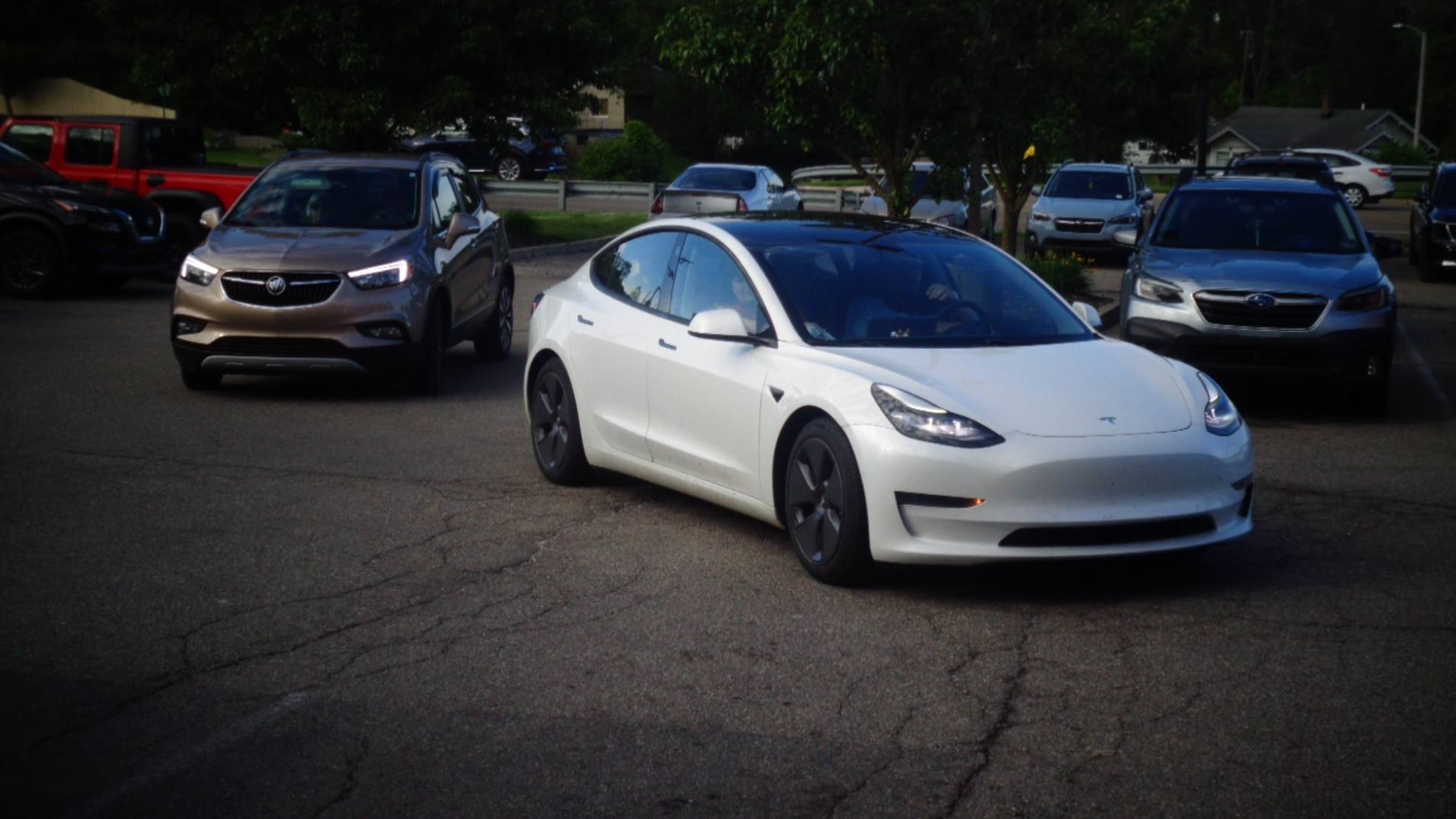
New $20,748 Tesla Model 2 Senior Edition: The global electric vehicle market has spent years chasing a familiar formula: lower prices, longer battery range, higher battery density, and more advanced manufacturing techniques. Every new EV launch is judged by how far it can travel on a single charge, how quickly it accelerates, and how aggressively it cuts production costs.
Yet as discussions continue around the highly anticipated Tesla Model 2, expected to arrive as Tesla’s most affordable electric vehicle, a more important question is beginning to emerge:
Can an affordable EV be designed for real human needs rather than just technical specifications?
For millions of drivers aged 65 and older, the answer could determine whether they embrace electric vehicles or avoid them altogether. While affordability matters, many senior drivers place a higher value on control, comfort, accessibility, predictability, and independence.
A vehicle can have impressive specifications and still create frustration if everyday functions require navigating complicated touchscreens, learning new software systems, or dealing with difficult entry and exit positions.
This is where the concept of a Tesla Model 2 Senior Edition becomes especially compelling. Instead of focusing exclusively on futuristic minimalism, this vision prioritizes driver confidence, physical comfort, and simple operation.
The Shift From Traditional EV Priorities to Senior-Centric Design
Most EV manufacturers focus on a narrow set of engineering targets:
- Battery energy density
- Maximum driving range
- Gigacasting manufacturing efficiency
- Minimalist interior design
- Software-driven controls
While these innovations are important, older drivers often evaluate vehicles through a completely different lens.
What Senior Drivers Actually Value
For drivers over 65, the key priorities often include:
- Mechanical and cognitive control
- Easy-to-use physical interfaces
- Comfortable entry and exit height
- Predictable software behavior
- Long-term repair affordability
- Low maintenance stress
The difference may seem subtle, but it fundamentally changes how a vehicle should be designed.
A retirement-age driver doesn’t necessarily want a car that feels like a smartphone on wheels. Instead, they want a vehicle that works consistently, responds predictably, and helps preserve their independence.
The Hidden Cognitive Tax of Modern Automotive Minimalism
Why Touchscreen-Only Interiors Can Increase Driver Stress
One of the biggest trends in modern automotive design is the removal of physical controls.
Buttons disappear.
Knobs vanish.
Switches are replaced by software menus.
At first glance, these minimalist interiors look futuristic and elegant. They photograph beautifully and create a premium showroom experience.
However, once the vehicle enters real-world traffic conditions, the experience changes dramatically.
For many drivers, especially seniors, touchscreen-based controls create what can be described as a cognitive tax.
Instead of relying on decades of muscle memory, drivers must:
- Look away from the road.
- Find the correct menu.
- Read on-screen options.
- Select the desired function.
- Verify that the command was accepted.
This process demands additional mental effort and attention.
Why Physical Controls Matter
Physical controls offer something software never fully can:
Tactile feedback.
A driver can find a knob, switch, or stalk without looking.
Their fingers recognize the shape.
Their muscles remember the movement.
The action becomes automatic.
That automatic response can be crucial during:
- Heavy rain
- Dense traffic
- Night driving
- Foggy conditions
- Highway emergencies
In these situations, every second of visual attention matters.
The 8 Essential Physical Buttons Every Senior-Friendly Tesla Model 2 Should Include
A truly accessible Tesla Model 2 should preserve physical controls for the functions drivers use most frequently.
1. Windshield Wiper Controls
Sudden rainstorms require immediate action.
Drivers should be able to adjust wiper speed instantly using a dedicated stalk or tactile dial.
2. Front Defroster Button
Fogged windows can quickly become a safety issue.
A dedicated defroster button allows instant activation without searching through climate menus.
3. Rear Defroster Control
Rear visibility remains essential during rain and cold weather.
Physical access reduces distraction.
4. Audio Volume Knob
Volume adjustment is one of the most commonly used vehicle functions.
A traditional mechanical knob remains the fastest and safest solution.
5. Audio Mute Function
Unexpected phone calls, navigation prompts, or loud music should be muted instantly.
A dedicated button provides immediate control.
6. Hazard Light Button
Every vehicle should maintain a large, clearly visible hazard button.
During emergencies, confusion is unacceptable.
7. Cabin Temperature Up Control
Simple climate adjustments should never require multiple touchscreen interactions.
8. Cabin Temperature Down Control
Dedicated temperature controls help drivers maintain comfort without distraction.
The Safety Advantage of Tactile Interfaces
The goal isn’t to reject technology.
Instead, it is to ensure that critical functions remain accessible under all conditions.
Physical controls reduce distraction, lower stress, and improve confidence behind the wheel.
Why Easy Entry and Exit Could Be the Most Important Feature
The Overlooked Challenge of Vehicle Accessibility
Many vehicle reviews focus on horsepower, battery range, and acceleration.
Few discuss one of the most important daily experiences:
Getting in and out of the vehicle.
For older drivers, this simple action can become increasingly difficult.
Joint stiffness, reduced flexibility, and balance concerns can transform routine movements into physical challenges.
The Problem With Low Sedans
Vehicles with extremely low seating positions force occupants to:
- Bend deeply
- Lower body weight significantly
- Twist their torso
- Push upward when exiting
This creates unnecessary strain on knees, hips, and lower back muscles.
The Problem With Large SUVs
Large SUVs create a different challenge.
Drivers must:
- Step upward
- Climb into the cabin
- Maintain balance during entry
For many seniors, this can be equally uncomfortable.
The Ideal Tesla Model 2 Seating Height
A senior-focused Model 2 would benefit from a carefully engineered mid-height seating position.
Think of sitting in a sturdy dining chair rather than climbing into an SUV or dropping into a sports sedan.
Benefits of Mid-Height Entry
- Reduced knee strain
- Easier hip movement
- Improved balance
- Less effort during exit
- Greater daily comfort
This approach supports long-term mobility while preserving independence.
Door Design Matters More Than Most People Realize
Wide-Opening Doors Improve Accessibility
Door architecture plays a major role in usability.
Wider opening angles allow drivers to:
- Swing legs comfortably
- Adjust posture easily
- Enter without twisting awkwardly
This becomes especially valuable in crowded parking lots where door movement is restricted.
Strong Support Points Increase Stability
Well-positioned grab handles and support structures help drivers maintain balance during entry and exit.
These features are simple yet incredibly effective.
Non-Collapsing Seat Edges
Seat cushion design also matters.
When seat edges collapse excessively, drivers lose a stable pivot point.
Firm seat bolsters create a reliable platform for movement and support.
Humble Autonomy: How Driver Assistance Should Actually Work
Technology Should Assist, Not Dominate
Many senior drivers are not afraid of technology.
In fact, most regularly use:
- Smartphones
- Online banking
- Video calling platforms
- Health monitoring devices
The issue is not technology itself.
The issue is losing control.
Why Some Driver Assistance Systems Create Anxiety
Problems arise when systems behave unpredictably.
Examples include:
- Sudden steering corrections
- Loud warning sounds
- Automatic feature reactivation
- Confusing visual indicators
These behaviors can create uncertainty and stress.
Instead of feeling assisted, drivers may feel challenged by the vehicle itself.
Building Trust Through Predictable Software
Plain Language Communication
Vehicle alerts should be straightforward.
Instead of displaying cryptic warnings, the system should communicate clearly.
For example:
“Please take control of steering now. Lane markings are obscured by rain.”
This message is simple, understandable, and actionable.
Permanent Driver Preferences
One of the biggest frustrations among drivers is software that resets preferences.
If a driver disables a feature, that choice should remain active.
A vehicle should respect the driver’s decisions.
This simple principle dramatically improves trust.
Mechanical Honesty During Real-World Emergencies
What Happens When Conditions Aren’t Perfect?
Marketing materials often showcase ideal conditions.
Real ownership involves:
- Winter weather
- Extreme heat
- Dead batteries
- Power interruptions
- Unexpected repairs
Senior drivers value honesty regarding these situations.
Transparent Range Estimates
Cold weather affects battery performance.
A senior-friendly Model 2 should clearly explain expected range reductions before a trip begins.
Transparency reduces anxiety and helps drivers plan confidently.
Low Battery Emergency Mode
When battery levels become critically low, the vehicle should automatically prioritize essential functions.
Critical Systems That Should Remain Active
- Hazard lights
- Emergency communications
- Door access systems
- Basic windshield defrosting
- Exterior signaling functions
This approach ensures safety while minimizing panic.
The Importance of Visible Manual Door Releases
Why Hidden Emergency Controls Create Risk
Many modern vehicles rely heavily on electronic door mechanisms.
If electrical systems fail, manual releases become essential.
The problem is that these releases are often hidden.
In an emergency, hidden controls can create confusion.
A Better Solution
An accessible EV should feature:
- Clearly visible emergency release handles
- Simple operation
- Mechanical cable activation
- Easy passenger access
The driver should never need to search the owner’s manual during an emergency.
Repair Accessibility and Long-Term Ownership Costs
The Fear of Service Lock-In
Many retirees carefully evaluate long-term ownership expenses.
A low purchase price means little if repairs become expensive and complicated.
Proprietary Systems Increase Costs
When simple issues require factory-only servicing, owners face:
- Higher repair bills
- Longer wait times
- Increased inconvenience
This creates uncertainty for budget-conscious drivers.
The Value of Open Repairability
A senior-friendly Tesla Model 2 should prioritize:
- Standardized components
- Accessible diagnostics
- Available replacement parts
- Independent repair options
This approach helps maintain affordability throughout ownership.
Why the Tesla Model 2 Could Redefine Electric Vehicle Accessibility
The future of affordable electric vehicles is not simply about reducing costs.
It is about improving everyday usability.
The most successful mass-market EV may not be the one with the longest range or the fastest acceleration.
Instead, it may be the vehicle that best understands human needs.
The Four Pillars of Senior-Friendly EV Design
1. Physical Accessibility
Mid-height seating protects mobility and reduces physical strain.
2. Cognitive Simplicity
Tactile controls eliminate unnecessary distractions.
3. Reversible Autonomy
Software remains supportive, optional, and respectful.
4. Mechanical Transparency
Visible overrides and accessible maintenance build long-term trust.
Final Thoughts: Engineering Independence for the Next Generation of Drivers
The proposed Tesla Model 2 Senior Edition represents a powerful shift in how electric vehicles could be designed.
Rather than assuming every driver wants maximum automation and touchscreen-driven interactions, this concept recognizes the importance of independence, comfort, and confidence.
A truly successful affordable EV should do more than lower transportation costs.
It should help people maintain freedom.
It should reduce stress.
It should respect established driving habits.
And most importantly, it should work with the human body instead of forcing drivers to adapt to technology.
If Tesla embraces these principles in the upcoming Model 2, it could create one of the most accessible and practical electric vehicles ever built—especially for the rapidly growing population of drivers aged 65 and older.
The future of electric mobility may not be defined solely by batteries, software, or manufacturing innovations. It may ultimately be defined by how effectively a vehicle empowers people to remain independent, capable, and confident throughout every stage of life.
FAQs
1. What is the Tesla Model 2 Senior Edition?
The Tesla Model 2 Senior Edition is a conceptual version of Tesla’s upcoming affordable EV that prioritizes easy entry and exit, physical controls, predictable software behavior, and senior-friendly ergonomics for drivers aged 65 and older.
2. What is the expected price of the Tesla Model 2?
Industry rumors and reports suggest Tesla’s affordable EV platform could start around $20,748 to $25,000, making it one of the most affordable electric vehicles from Tesla.
3. Why are physical buttons important for senior drivers?
Physical buttons provide tactile feedback and allow drivers to operate essential functions without looking away from the road, reducing distractions and improving safety.
4. Which controls should have dedicated physical buttons?
The most important controls include windshield wipers, front and rear defrosters, audio volume, audio mute, hazard lights, and cabin temperature adjustments.
5. How does touchscreen-only design affect older drivers?
Touchscreen-only systems can increase cognitive load because drivers must navigate menus and visually confirm selections, which may be distracting during driving.
6. What is meant by the “cognitive tax” of modern vehicles?
The cognitive tax refers to the additional mental effort required to operate touchscreen-based controls instead of using familiar physical switches and knobs.
7. Why is easy vehicle entry and exit important for seniors?
As people age, mobility, flexibility, and joint strength may decrease. A vehicle with an optimized seating height can significantly reduce strain on the knees, hips, and back.
8. What is the ideal seating height for a senior-friendly EV?
The ideal seating position is a mid-height entry point that allows occupants to slide in naturally, similar to sitting in a firm chair rather than climbing up or dropping down.
9. How can door design improve accessibility?
Wide-opening doors provide additional clearance, making it easier for drivers to enter and exit without twisting awkwardly or losing balance.
10. What are non-collapsing seat bolsters?
Non-collapsing seat bolsters use firmer materials that maintain their shape, giving drivers a stable support point when sitting down or standing up.
11. How should driver-assistance technology behave for older drivers?
Driver-assistance systems should act as a supportive co-pilot, offering gentle assistance and clear communication while allowing the driver to remain in control.
12. Why is predictable software important in electric vehicles?
Predictable software builds trust by ensuring that settings remain consistent and that vehicle behavior does not unexpectedly change between trips.
13. Should disabled driver-assistance features remain off permanently?
Yes. If a driver chooses to disable a feature, the vehicle should respect that preference until the driver manually decides to reactivate it.
14. How can electric vehicles reduce range anxiety for seniors?
EVs can reduce range anxiety by providing accurate range estimates, clear battery information, and advance warnings when weather conditions affect battery performance.
15. Why are visible manual door releases important?
Visible manual door releases ensure passengers can quickly exit the vehicle during electrical failures or emergencies without searching for hidden controls.
16. What is service lock-in, and why does it concern retirees?
Service lock-in occurs when repairs require exclusive factory servicing. This can increase ownership costs and create inconvenience for drivers on fixed retirement incomes.
17. Could a senior-focused Tesla Model 2 attract a large market?
Absolutely. With aging populations worldwide, a senior-friendly EV that prioritizes comfort, accessibility, safety, affordability, and independence could appeal to millions of drivers seeking practical transportation solutions.
Read More:
- SpaceX just Made History after 1st Starfall Reentry Capsule Launch Demo! S40’s Fire test in Hours
- Tesla plans production boost at Giga Berlin following rebound in Europe
- Tesla Cybercab stands to gain from new Trump autonomy rules
- New Tesla Vehicle Launching in 2026
- CATL’s 12,000 Wh/kg Battery May Be Tesla’s Next Big Leap