
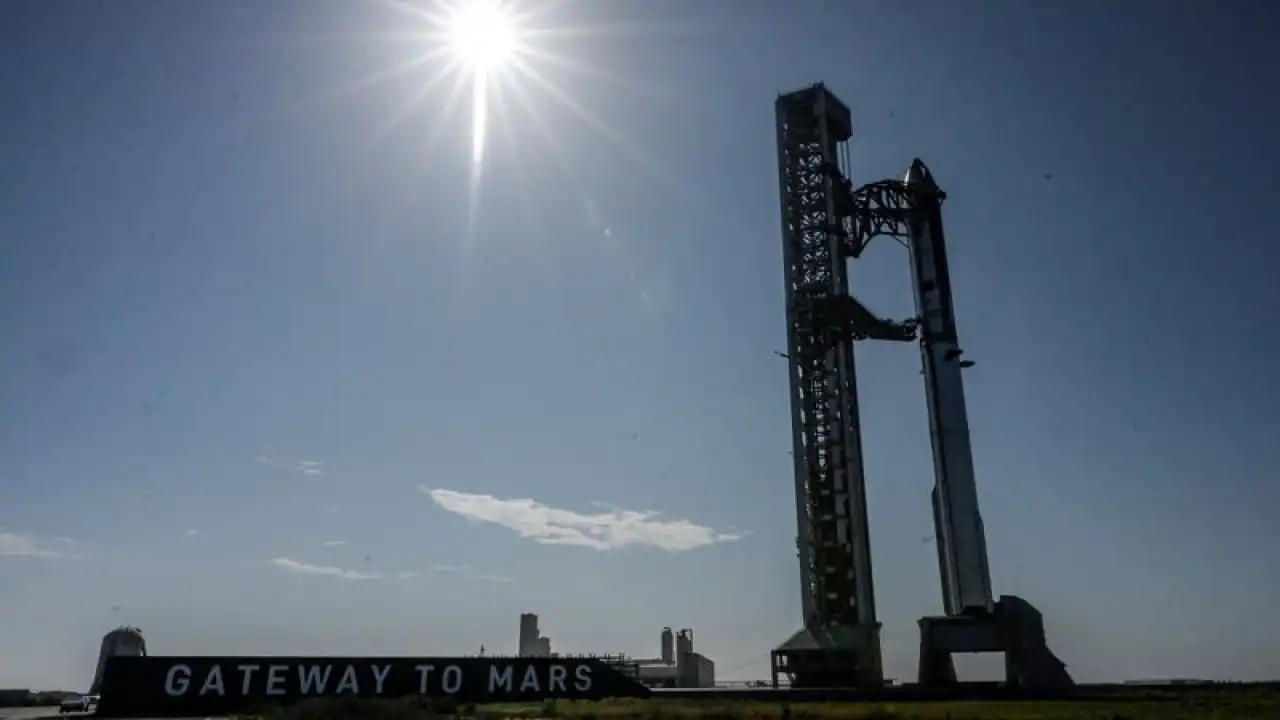
The SpaceX Starship program has entered one of the most critical phases in its history. Following the conclusion of Starship Flight 12, attention has shifted from the dramatic visuals of test flights to the engineering data, manufacturing expansion, and operational milestones that will define the future of humanity’s most ambitious space transportation system.
While public discussions often focus on launch successes and failures, SpaceX continues to pursue a development strategy centered on rapid iteration, data-driven engineering, and mass-scale production. Flight 12 provided valuable insights into vehicle performance, helping engineers refine key systems while laying the groundwork for future missions.
As regulatory reviews progress, SpaceX is simultaneously accelerating vehicle production, expanding launch infrastructure, and preparing for the next generation of Starship missions. The company’s objective is clear: transform Starship from an experimental rocket into a fully reusable orbital transportation network capable of supporting lunar missions, Mars colonization, and a new era of commercial space operations.
Flight 12 Analysis: A Mission Built Around Data Collection
The importance of Flight 12 cannot be measured solely by whether every mission objective was achieved. Instead, its true value lies in the vast amount of engineering data collected throughout the mission profile.
SpaceX engineers now have access to detailed telemetry covering propulsion systems, flight dynamics, thermal performance, structural loads, and booster recovery operations. This information will be used to improve future vehicles and eliminate potential weaknesses before operational deployment.
Progress Across Key Systems
Compared to earlier Starship flights, Flight 12 demonstrated notable improvements in multiple areas:
- Enhanced vehicle stability during ascent
- Improved engine performance
- Better overall mission duration
- More reliable flight control systems
- Expanded telemetry collection capabilities
Each test flight helps SpaceX refine its hardware at an unprecedented pace, allowing engineering teams to make rapid adjustments between missions.
FAA Investigation and Regulatory Review
As with previous Starship test flights, the Federal Aviation Administration (FAA) is conducting a standard post-flight investigation before authorizing the next launch.
The primary focus of the review centers on a boost-back burn anomaly involving the Super Heavy booster. The issue affected the booster’s planned return profile before splashdown and will undergo extensive analysis.
Key Investigation Areas
- Boost-back burn initiation sequence
- Multi-engine reignition reliability
- Flight control response during return operations
- Recovery trajectory management
Fortunately for SpaceX, no significant damage occurred to Starbase launch infrastructure. Because similar recovery issues have appeared during previous developmental flights, industry observers generally believe a prolonged grounding period remains unlikely.
Current expectations suggest that regulatory clearance could be achieved once corrective measures are validated, potentially allowing Flight 13 preparations to move forward rapidly.
Flight 13 to Flight 15: The Next Major Milestones
While regulatory processes continue, SpaceX has not slowed hardware development. Vehicle assembly and testing remain active across the company’s production facilities.
Starship S40 and Booster B20 Progress
Recent updates indicate that:
- Starship S40 has completed cryogenic proof testing.
- Super Heavy Booster B20 is progressing through final processing stages.
- Integration activities continue in preparation for future launch campaigns.
The upcoming series of flights will focus on achieving several transformational objectives that move Starship closer to full operational capability.
1. Stable Orbital Insertion
One of the most important goals is demonstrating precise orbital insertion performance.
This includes:
- Accurate velocity targets
- Correct orbital vectors
- Long-duration flight stability
- Validation of navigation systems
Achieving reliable orbital insertion is essential for future commercial and government missions.
2. Active Payload Deployment
Future flights are expected to test payload deployment mechanisms under true orbital conditions.
This milestone will validate:
- Payload bay door operation
- Thermal performance in space
- Satellite deployment procedures
- Mission readiness for Starlink launches
Successful demonstrations would open the door to commercial payload missions and revenue-generating operations.
3. Full Vehicle Recovery
Perhaps the most ambitious objective is achieving recovery of both stages.
The long-term vision involves:
- Returning the Super Heavy booster to the launch site
- Recovering the Starship upper stage
- Executing dual catches using the Mechazilla tower arms
If SpaceX successfully demonstrates this capability, it would mark the first fully reusable two-stage orbital launch system in history.
Why Orbital Refueling Is the Key to Starship’s Future
While launch and recovery receive the most public attention, orbital refueling remains the single most important technology required for Starship’s deep-space ambitions.
Without refueling, Starship functions as a powerful heavy-lift rocket.
With orbital refueling, it becomes an interplanetary transportation platform capable of carrying massive payloads to the Moon and Mars.
The Orbital Refueling Process
The mission architecture involves several carefully coordinated steps.
Step 1: Launching a Propellant Depot
A dedicated Starship will enter Low Earth Orbit (LEO) and serve as a propellant storage depot.
The vehicle will collect valuable data regarding:
- Cryogenic boil-off rates
- Thermal control systems
- Long-duration orbital operations
Step 2: Tanker Rendezvous Operations
A second Starship configured as a tanker will launch and perform an automated rendezvous sequence.
This process requires:
- Precision orbital navigation
- Autonomous docking systems
- Real-time guidance corrections
Step 3: Propellant Transfer
Once connected, the two spacecraft will transfer:
- Liquid Methane (LCH4)
- Liquid Oxygen (LOX)
These super-cooled propellants must be transferred safely while both vehicles orbit Earth.
The Engineering Challenge of Moving Cryogenic Fuel in Space
Orbital refueling sounds straightforward in theory but represents one of the most difficult engineering problems in modern aerospace.
Microgravity Changes Everything
On Earth, gravity naturally settles liquids at the bottom of a tank.
In orbit, however, liquids float freely throughout the container.
This creates challenges such as:
- Fluid sloshing
- Pressure instability
- Uneven distribution
- Thermal fluctuations
SpaceX must develop methods to precisely position propellants before transfer operations begin.
Settling Maneuvers
To move fuel correctly, spacecraft may use small propulsion impulses that gently force liquids toward desired tank locations.
These settling techniques help:
- Maintain transfer efficiency
- Prevent pressure loss
- Protect transfer hardware
- Ensure safe propellant movement
Successfully solving this challenge would represent a major breakthrough for long-duration spaceflight.
Starship V3: A Bigger and More Efficient Architecture
Critics of the current refueling architecture often point out that deep-space missions may require multiple tanker launches.
Some mission profiles estimate that lunar operations could require between 10 and 15 tanker flights.
SpaceX aims to reduce that complexity through the development of Starship V3.
What Makes Starship V3 Different?
The upgraded design is expected to feature:
- Larger propellant tanks
- Increased payload capacity
- Stronger structural components
- Enhanced mission flexibility
By increasing tanker capacity, fewer launches may be needed to support lunar and Mars missions.
Economic Advantages
A larger vehicle provides several benefits:
- Lower mission costs
- Reduced launch frequency
- Faster mission preparation
- Improved operational efficiency
For SpaceX, Starship V3 could significantly improve the economics of interplanetary transportation.
NASA Artemis Program and Lunar Mission Requirements
SpaceX’s development schedule is closely linked to its responsibilities within NASA’s Artemis program.
The company’s Starship Human Landing System (HLS) has been selected to support future lunar missions.
Artemis 3 Objectives
Before astronauts can land on the Moon using Starship, several milestones must be completed.
Required Demonstrations
- Orbital refueling validation
- Long-duration cryogenic storage testing
- Uncrewed lunar landing demonstration
- Lunar ascent capability verification
- Human-rated mission certification
Only after these objectives are achieved can the crewed Artemis 3 mission proceed.
Why SpaceX Holds a Strategic Position
Recent delays affecting competing lunar programs have increased the importance of SpaceX within NASA’s long-term planning.
As a result, Starship now serves as a central component of America’s near-term lunar exploration strategy.
This places significant pressure on SpaceX to maintain development momentum while meeting increasingly ambitious milestones.
Starfactory: The Manufacturing Revolution Behind Starship
One of the most overlooked aspects of the Starship program is the dramatic transformation occurring inside SpaceX’s production facilities.
The company is moving away from prototype-focused manufacturing and toward true industrial-scale production.
Introducing Starfactory
Starfactory represents SpaceX’s attempt to apply high-volume manufacturing principles to rocket production.
The facility incorporates concepts similar to those used in advanced automotive factories.
Continuous Production Flow
The manufacturing process has been designed to maximize efficiency.
Key Features
- Automated welding systems
- Continuous material movement
- High-speed ring production
- Streamlined assembly operations
Raw steel enters one side of the facility and gradually progresses through multiple automated production stages.
Simultaneous Vehicle Construction
Unlike early Starship prototypes, which often required sequential assembly processes, Starfactory enables multiple vehicles to be built simultaneously.
Benefits include:
- Increased output
- Reduced bottlenecks
- Faster vehicle delivery
- Greater manufacturing consistency
SpaceX Production Goals for the Coming Year
Elon Musk has indicated that production resources are already being directed toward future Starship V3 vehicles.
Current targets reportedly include:
- Approximately 10 Starship upper stages
- Around 5 Super Heavy boosters
Achieving this production rate would represent a major leap compared to earlier phases of the program.
From Rocket Factory to Transportation Industry
The ultimate goal extends far beyond occasional rocket launches.
SpaceX envisions:
- Hundreds of annual flights
- Rapid vehicle turnaround
- Airline-style operational models
- Continuous orbital logistics networks
This philosophy represents a fundamental shift in how humanity approaches space transportation.
Launch Infrastructure Expansion Across the United States
Building dozens of rockets means little if launch facilities cannot support high flight rates.
To prevent infrastructure constraints, SpaceX is aggressively expanding its launch capabilities.
Starbase, Texas
Starbase remains the heart of Starship development.
Its primary roles include:
- Research and development
- Prototype testing
- Rapid iteration campaigns
- Vehicle integration activities
Additional launch towers and support infrastructure continue to expand operational capacity.
Kennedy Space Center LC-39A
Florida’s LC-39A is being upgraded for future Starship operations.
Enhancements include:
- Launch tower construction
- Expanded propellant storage
- Improved ground support equipment
The site is expected to play a major role in NASA-related missions.
Cape Canaveral SLC-37
Future plans call for conversion of SLC-37 into another Starship-capable facility.
Potential uses include:
- Commercial launch services
- Tanker mission support
- High-cadence refueling operations
Why Launch Pad Redundancy Matters
Multiple launch locations provide significant operational advantages.
Reduced Risk
If one facility experiences issues, operations can continue elsewhere.
This reduces vulnerability to:
- Equipment failures
- Weather disruptions
- Maintenance shutdowns
- Unexpected anomalies
Higher Flight Cadence
With multiple operational pads, SpaceX can launch more frequently while maintaining safety standards.
This capability becomes increasingly important as Starship transitions toward routine operations.
The Bigger Picture: From Experimental Rocket to Global Logistics Network
Flight 12 represents far more than another test mission.
It serves as a bridge between Starship’s experimental past and its operational future.
The data collected during the mission will directly influence:
- Flight 13 preparations
- Booster recovery improvements
- Orbital refueling development
- Manufacturing optimization
At the same time, Starfactory continues ramping production, new launch pads are being prepared, and NASA’s lunar ambitions remain heavily dependent on Starship’s success.
The Road Ahead
The next three Starship flights may ultimately determine how quickly the program transitions into a fully operational system.
If SpaceX successfully demonstrates:
- Reliable orbital operations
- Payload deployment capability
- Dual-stage recovery
- Microgravity propellant transfer
then Starship will no longer be viewed merely as an experimental spacecraft.
Instead, it will become the foundation of a new space transportation era capable of supporting commercial spaceflight, lunar exploration, and future missions to Mars.
Final Thoughts
SpaceX stands at a defining moment in the Starship program. Flight 12 provided critical engineering insights, while upcoming missions aim to validate the technologies necessary for true reusability and deep-space travel.
The combination of rapid hardware iteration, industrial-scale manufacturing, orbital refueling technology, and expanding launch infrastructure positions SpaceX to move faster than any aerospace company has before.
If the company successfully clears its remaining technical hurdles, the coming years may witness Starship evolve from a groundbreaking prototype into the backbone of the global space economy. The transition is already underway—and the world is watching closely.
FAQs
1. What was the main objective of SpaceX Starship Flight 12?
The primary objective of Starship Flight 12 was to collect critical flight data, test vehicle performance, evaluate booster recovery systems, and validate improvements made since previous Starship test missions.
2. Why is Flight 12 considered important despite the booster anomaly?
Flight 12 provided valuable telemetry data that helps SpaceX improve future Starship designs. The mission demonstrated progress in several key systems, making it a significant step toward full reusability.
3. What caused the issue during the Flight 12 mission?
The main focus of the post-flight investigation is a boost-back burn anomaly involving the Super Heavy booster’s engine reignition sequence during its planned return trajectory.
4. When could Starship Flight 13 launch?
The next Starship flight depends on FAA approval and completion of corrective actions. Industry expectations suggest that Flight 13 could move forward once the regulatory review is finalized.
5. What are the main goals of Starship Flights 13, 14, and 15?
The upcoming flights aim to achieve:
- Stable orbital insertion
- Payload deployment in orbit
- Recovery of both Starship stages
- Successful Mechazilla tower catches
6. What is orbital refueling and why is it important?
Orbital refueling allows Starship to replenish its fuel tanks in space. This capability is essential for missions to the Moon, Mars, and other deep-space destinations because it significantly increases payload capacity and mission range.
7. How will SpaceX perform orbital refueling?
SpaceX plans to launch a propellant depot Starship into orbit and then send tanker versions of Starship to transfer liquid methane and liquid oxygen through automated docking and fuel transfer operations.
8. Why is transferring fuel in space so difficult?
In microgravity, liquids do not naturally settle at the bottom of tanks. Engineers must carefully manage fluid movement, pressure changes, and thermal conditions to safely transfer cryogenic propellants.
9. What is Starship V3?
Starship V3 is the next-generation version of Starship expected to feature larger propellant tanks, increased payload capacity, and improved mission efficiency for lunar and Mars operations.
10. How many tanker launches could a lunar mission require?
Current estimates suggest some lunar missions may require approximately 10 to 15 tanker launches, though future Starship V3 upgrades could reduce that number.
11. What role does Starship play in NASA’s Artemis program?
Starship serves as NASA’s Human Landing System (HLS) for the Artemis program and is expected to transport astronauts from lunar orbit to the Moon’s surface during future Artemis missions.
12. What milestones must SpaceX complete before Artemis 3?
Before Artemis 3, SpaceX must demonstrate:
- Orbital refueling
- Long-duration cryogenic storage
- An uncrewed lunar landing
- Lunar ascent capabilities
- Human-rated mission certification
13. What is Starfactory?
Starfactory is SpaceX’s advanced manufacturing facility designed to mass-produce Starship vehicles using automation and high-volume production techniques similar to those used in modern automotive factories.
14. How many Starship vehicles does SpaceX plan to build?
SpaceX aims to significantly increase production, with plans to manufacture multiple Starship upper stages and Super Heavy boosters annually as it scales operations.
15. Why is SpaceX building multiple launch pads?
Multiple launch sites provide redundancy, increase launch frequency, reduce operational bottlenecks, and ensure that issues at one location do not halt the entire Starship program.
16. When could Starship become fully operational?
If SpaceX successfully demonstrates orbital refueling, dual-stage recovery, payload deployment, and routine launch operations over the next several flight cycles, Starship could begin transitioning from a test vehicle to an operational space transportation system later this decade.
Read More:
- New $12,749 Tesla Model 2 Will DESTROY Gas Cars Forever For Seniors 55+
- Tesla Full Self-Driving v14.3.3 driver monitoring: We tested it
- Tesla Full Self-Driving v14.3.3 driver monitoring: We tested it
- Tesla adds new Supercharger feature for a better idea of what to expect
- Tesla adds new Supercharger feature for a better idea of what to expect