
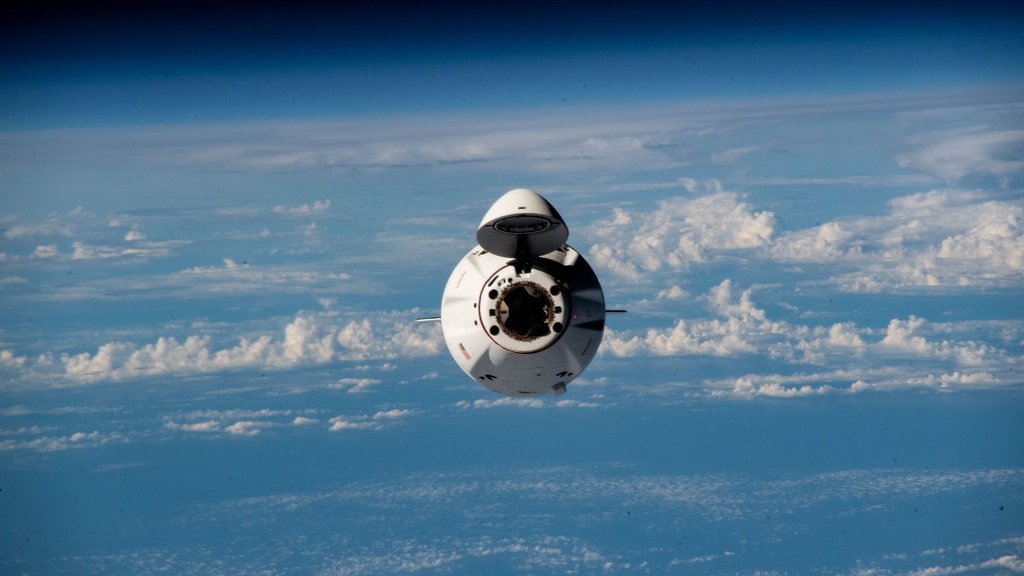
SpaceX’s NEW Crew Dragon Interior Is Too Advanced Destroy Its Rivals: The modern era of human spaceflight is defined by three major crewed spacecraft platforms: SpaceX Crew Dragon, Boeing CST-100 Starliner, and Roscosmos Soyuz MS series.
All three spacecraft were designed to transport astronauts safely to the International Space Station (ISS), but their engineering philosophies reveal a dramatic difference in cabin design, astronaut ergonomics, flight controls, safety systems, and operational reliability.
Among these spacecraft, SpaceX Crew Dragon stands out with its futuristic interior architecture, advanced human-machine interface (HMI), autonomous flight systems, and integrated safety technology. While Soyuz represents decades of proven engineering and Starliner introduces a modern hybrid approach, Crew Dragon pushes crewed spacecraft design toward a more digital and efficient future.
This detailed comparison explains why the Crew Dragon interior and spacecraft architecture represent one of the biggest technological leaps in human spaceflight history.
Crew Dragon Interior vs Soyuz and Starliner: The Battle of Cabin Efficiency
Why Spacecraft Volume Matters for Astronauts
Inside a spacecraft, every cubic meter matters. Cabin volume directly affects astronaut comfort, medical operations, equipment storage, emergency response, and mission efficiency during long-duration orbital missions.
The biggest difference between Crew Dragon and Soyuz is the way each spacecraft uses internal space.
The Soyuz MS spacecraft follows a traditional capsule design. Its descent module provides only around 4 cubic meters of pressurized space during launch and re-entry. With three crew members inside, each astronaut has roughly 1.33 cubic meters of personal space during the most demanding mission phases.
Although Soyuz includes an additional orbital module with extra room, that section is discarded before atmospheric re-entry. Astronauts must return inside the smaller descent capsule, where movement becomes highly restricted.
In comparison, SpaceX Crew Dragon provides approximately 9.3 cubic meters of continuous pressurized volume. The spacecraft maintains this usable space throughout launch, docking, orbital operations, and re-entry.
Crew Dragon’s Spacious Futuristic Cabin Design
The Crew Dragon interior eliminates the traditional cramped spacecraft environment. Astronauts can move vertically and horizontally inside the capsule, allowing better body positioning and easier access to equipment.
The spacecraft supports four astronauts on standard missions and up to seven crew members depending on configuration.
Boeing’s CST-100 Starliner sits between Soyuz and Dragon, offering approximately 11 cubic meters of pressurized volume with a wider 4.6-meter diameter capsule. However, Crew Dragon’s advantage comes from maintaining a simple, continuous interior layout combined with advanced automation.
For astronauts, this means less physical restriction, improved mission workflow, and better psychological comfort.
SpaceX Crew Dragon’s Revolutionary Touchscreen Cockpit
From Hundreds of Switches to Digital Spacecraft Controls
One of the most visible differences between spacecraft generations is the cockpit philosophy.
The Soyuz MS spacecraft represents traditional aerospace engineering, using more than 800 physical switches, circuit breakers, analog instruments, and mechanical controls. Astronauts must memorize extensive procedures to manually operate the spacecraft.
This approach has advantages because physical controls can remain reliable during emergencies. However, it creates a complex environment requiring extensive training.
Crew Dragon’s Advanced Human-Machine Interface
The SpaceX Crew Dragon cockpit completely changes spacecraft operation.
Instead of hundreds of switches, Crew Dragon uses three large multi-touch displays that provide astronauts with spacecraft information, navigation controls, docking systems, and mission data.
The spacecraft relies heavily on autonomous software systems to handle:
- Orbital maneuvering
- Rendezvous operations
- Docking procedures
- Flight monitoring
- Re-entry sequences
Critical emergency controls remain physical, ensuring astronauts can quickly override automated systems when required.
This combination of software intelligence and physical safety controls creates a modern spacecraft interface similar to next-generation aircraft technology.
Boeing Starliner’s Hybrid Approach
The CST-100 Starliner cockpit uses a middle-ground solution. It combines touchscreen displays with traditional physical switches.
This hybrid system provides digital advantages while maintaining familiar aerospace controls. However, Crew Dragon’s cleaner interface demonstrates how spacecraft operations can become simpler through advanced software integration.
Crew Dragon Safety Systems: Advanced Abort and Recovery Technology
Integrated SuperDraco Launch Escape System
Astronaut safety is the highest priority in crewed spacecraft engineering.
Traditional spacecraft such as Soyuz use an external escape tower that pulls the capsule away from a failing rocket during launch emergencies.
Crew Dragon uses a different approach.
The spacecraft contains eight integrated SuperDraco engines built directly into the capsule walls. These engines provide a powerful push-based launch abort system capable of moving astronauts away from danger during different phases of ascent.
SpaceX demonstrated this capability during its successful In-Flight Abort Test, proving that Crew Dragon could protect astronauts during a real launch emergency scenario.
Different Landing Philosophies
The three spacecraft also use different recovery strategies.
Soyuz MS:
- Uses parachutes
- Performs land landing in Kazakhstan
- Uses retro-rockets shortly before touchdown
Boeing Starliner:
- Uses parachutes
- Lands in the American Southwest
- Uses airbags for impact reduction
Crew Dragon:
- Uses four main parachutes
- Performs ocean splashdowns
- Is recovered by dedicated recovery ships
Crew Dragon’s ocean recovery system allows flexible landing locations and rapid spacecraft retrieval.
Commercial Crew Competition: Why Crew Dragon Pulled Ahead
NASA’s Commercial Crew Program
NASA created the Commercial Crew Program to develop independent American spacecraft capable of transporting astronauts to the ISS.
Both SpaceX and Boeing received major contracts:
- Boeing Starliner: approximately $4.2 billion
- SpaceX Crew Dragon: approximately $2.6 billion
The goal was to create two reliable crew transportation systems.
However, operational results developed very differently.
SpaceX Crew Dragon’s Operational Success
Crew Dragon became a fully operational spacecraft, completing numerous crewed missions for NASA and commercial customers.
Its achievements include:
- Regular astronaut transportation to the ISS
- Commercial astronaut missions
- Emergency crew transportation capability
- High-frequency operational flights
The spacecraft has become a central part of NASA’s human spaceflight strategy.
Starliner’s Development Challenges
Boeing Starliner experienced several technical challenges during development and testing.
Major issues included:
- Software timing problems during early orbital testing
- Thruster performance concerns
- Helium leak problems
- Mission reliability investigations
During the Crew Flight Test campaign, concerns regarding spacecraft propulsion systems resulted in the capsule returning without astronauts onboard.
The astronauts originally assigned to the mission later returned to Earth using a Crew Dragon spacecraft.
Technical Comparison: Crew Dragon vs Starliner vs Soyuz
Spacecraft Architecture Summary
| Feature | Soyuz MS | Boeing Starliner | SpaceX Crew Dragon |
|---|---|---|---|
| Capsule Diameter | ~2.2 meters | ~4.6 meters | ~4.0 meters |
| Pressurized Volume | ~4 m³ re-entry | ~11 m³ | ~9.3 m³ |
| Crew Capacity | 3 | 4-7 | 4-7 |
| Controls | 800+ switches | Hybrid cockpit | Three touchscreen displays |
| Abort System | Escape tower | Base engines | SuperDraco engines |
| Landing Method | Land recovery | Land recovery | Ocean splashdown |
Why Crew Dragon Represents the Future of Human Spaceflight
The success of SpaceX Crew Dragon is not only about size or speed. Its greatest achievement is combining automation, astronaut-friendly design, reusable technology, and advanced safety systems into one spacecraft platform.
Soyuz remains one of the most reliable spacecraft designs ever created, while Boeing Starliner represents an important new American spacecraft effort. However, Crew Dragon demonstrates what happens when spacecraft engineering embraces modern software, digital interfaces, and innovative recovery methods.
The Crew Dragon interior is a symbol of the next generation of human space exploration—a spacecraft designed not only to survive space but also to make space travel safer, smarter, and more comfortable for astronauts.
As humanity prepares for future Moon and Mars missions, technologies developed through Crew Dragon’s architecture may influence the spacecraft that carry humans beyond Earth orbit.
FAQs
1. What makes SpaceX Crew Dragon different from Soyuz and Starliner?
SpaceX Crew Dragon is different because it combines advanced automation, a touchscreen-based cockpit, reusable spacecraft technology, and an integrated launch abort system. Unlike Soyuz’s traditional mechanical controls and Starliner’s hybrid cockpit, Crew Dragon uses modern software-driven systems to simplify spacecraft operations.
2. How much bigger is Crew Dragon’s interior compared to Soyuz?
Crew Dragon provides around 9.3 cubic meters of pressurized interior volume, while the Soyuz re-entry capsule provides about 4 cubic meters. This gives astronauts significantly more room for movement, equipment access, and comfort during missions.
3. Why is Crew Dragon considered more comfortable for astronauts?
Crew Dragon offers a larger continuous cabin layout that allows astronauts to move more freely during all mission phases. Unlike Soyuz, which loses its orbital module before re-entry, Crew Dragon maintains the same usable interior volume from launch through landing.
4. How many astronauts can SpaceX Crew Dragon carry?
SpaceX Crew Dragon can typically carry four astronauts on NASA missions and can be configured to support up to seven crew members depending on mission requirements.
5. Does Crew Dragon have traditional spacecraft buttons and switches?
No. Crew Dragon replaces hundreds of traditional switches with three multi-touch displays. However, essential emergency controls remain physical buttons to provide astronauts with direct manual control when needed.
6. How does the Crew Dragon touchscreen cockpit work?
The Crew Dragon cockpit uses software-based controls that display spacecraft status, navigation information, docking procedures, and mission controls on digital screens. Many operations are automated, reducing astronaut workload.
7. How is Soyuz’s cockpit different from Crew Dragon’s cockpit?
Soyuz uses a traditional aerospace cockpit with more than 800 physical switches, analog instruments, and manual controls. Crew Dragon uses a simplified digital interface designed around automation and touchscreen technology.
8. What is the launch abort system on Crew Dragon?
Crew Dragon uses eight SuperDraco engines integrated into the spacecraft walls. These engines can quickly push the capsule away from a failing rocket during launch emergencies, protecting astronauts during critical flight phases.
9. How is Crew Dragon’s abort system different from Soyuz?
Soyuz uses an external escape tower that pulls the spacecraft away from danger, while Crew Dragon uses integrated SuperDraco engines that push the capsule away. Both systems are designed to protect crews during launch failures.
10. How does Crew Dragon return to Earth?
Crew Dragon returns through atmospheric re-entry using heat shielding, parachutes, and ocean splashdown recovery. Four main parachutes slow the capsule before recovery teams retrieve it from the Atlantic Ocean or Gulf of Mexico.
11. Does Crew Dragon land on the ground like Soyuz?
No. Crew Dragon uses water landings, while Soyuz performs land recoveries in Kazakhstan using parachutes and retro-rockets. Boeing Starliner also uses land recovery with parachutes and airbags.
12. Is Crew Dragon reusable?
Yes, Crew Dragon is designed for reuse. SpaceX refurbishes and flies spacecraft components again, helping reduce costs and increase the frequency of human spaceflight missions.
13. Why did NASA choose both Crew Dragon and Starliner?
NASA selected both spacecraft through the Commercial Crew Program to create independent crew transportation systems and maintain mission redundancy. Having multiple spacecraft options improves operational flexibility for ISS missions.
14. Which spacecraft has flown more crewed missions: Crew Dragon, Starliner, or Soyuz?
Soyuz has the longest operational history, but Crew Dragon has rapidly become one of the most active modern crewed spacecraft. Starliner has completed fewer crewed flight campaigns due to development and testing challenges.
15. What problems affected Boeing Starliner during testing?
Starliner experienced several technical challenges, including software issues, propulsion system concerns, and helium leaks. These problems affected mission schedules and required additional investigation and testing.
16. Why is Crew Dragon important for future Moon and Mars missions?
Crew Dragon introduced technologies that are valuable for future deep-space spacecraft, including advanced automation, digital interfaces, reusable systems, and improved crew ergonomics. These concepts may influence future exploration vehicles.
17. Which spacecraft is the most advanced: Crew Dragon, Starliner, or Soyuz?
Crew Dragon is often considered the most technologically advanced in terms of automation, cockpit design, and reusable spacecraft architecture. However, Soyuz remains one of the most proven spacecraft designs in human spaceflight history.
18. Will Crew Dragon replace Soyuz and Starliner completely?
No. Each spacecraft serves different strategic purposes. Soyuz continues to provide reliable international crew transportation, Starliner remains part of NASA’s commercial crew plans, and Crew Dragon continues expanding its role in human spaceflight operations.
Read More:
- Tesla stock tumbles after earnings, one of its sharpest single-day declines
- SpaceX Starship Flight 13 faces wrath of the Texas skies
- Tesla door handle saga gets its latest chapter and a big change is coming
- Tesla short sellers win big after shares fall after earnings
- Tesla’s Supercharger Diner probably just secured more locations