
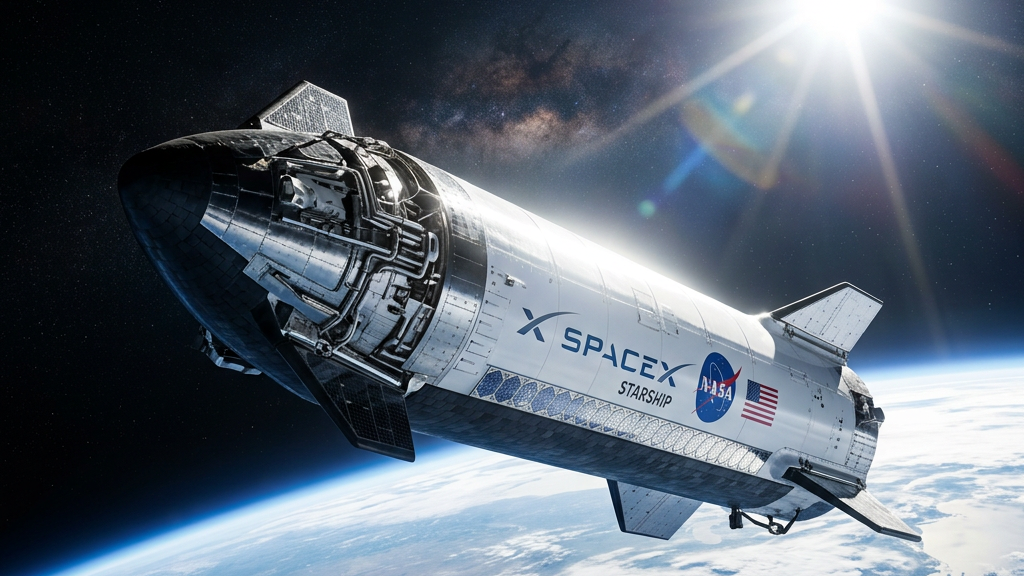
Starship Flight 13’s New Timeline to Do Something Insane. Can They Make It Succeed?: The countdown to Starship Flight 13 has begun, and it could become one of the most important test flights in SpaceX history. After gathering valuable lessons from Flight 12, SpaceX has introduced major hardware upgrades, improved engine reliability, enhanced thermal protection, and faster launch operations to push Starship closer to becoming a fully operational reusable spacecraft.
Flight 13 isn’t just another launch test. It represents a critical step toward reliable orbital missions, massive Starlink deployments, and eventually replacing the legendary Falcon 9 rocket. If everything goes according to plan, this mission could accelerate humanity’s journey toward the Moon, Mars, and beyond.
In this article, we’ll explore everything you need to know about Starship Flight 13, including its engineering upgrades, mission objectives, launch timeline, payload deployment, and why SpaceX is preparing to retire Falcon 9.
What Makes Starship Flight 13 So Important?
Unlike previous flights that focused primarily on reaching orbit and surviving re-entry, Flight 13 aims to prove Starship is becoming a dependable launch system.
The mission is designed to repeat the successful portions of Flight 12 while eliminating the problems that prevented a perfect mission.
The biggest objectives include:
- Improved Raptor 3 engine reliability
- Better heat shield performance
- Successful deployment of Starlink V3 satellites
- In-space Raptor engine relight
- Faster propellant loading
- More accurate booster landing sequence
Every successful milestone brings SpaceX closer to regular commercial Starship missions.
Flight 13’s Biggest Engineering Upgrades
Following Flight 12, engineers made several important improvements across both the Super Heavy Booster and the Starship upper stage.
Super Heavy Booster Improvements
The booster suffered an engine failure shortly after liftoff during Flight 12.
To prevent that from happening again, Flight 13 includes:
- Upgraded Raptor restart hardware
- Improved engine relight systems
- New multi-engine warning software
- Revised abort logic
- Better hot-staging ignition timing
These modifications are expected to significantly improve engine reliability during ascent and boostback.
Raptor Vacuum Engine Fixes
One of Flight 12’s vacuum engines shut down unexpectedly after stage separation.
For Flight 13, SpaceX has introduced:
- Updated Raptor Vacuum hardware
- Improved operational software
- Better ignition reliability
- Reduced shutdown risk
A successful orbital burn is essential for future deep-space missions.
New Heat Shield Technology
Perhaps one of the most noticeable changes on Flight 13 is the appearance of white thermal protection tiles scattered across Starship.
These tiles are not cosmetic.
They serve two major purposes:
Simulating Missing Tiles
Engineers intentionally placed white tiles to simulate different thermal conditions and evaluate how the heat shield behaves if damage occurs.
Camera Calibration Targets
Flight 13 will carry specialized camera satellites that will capture high-resolution images of Starship during flight.
The bright white tiles provide perfect reference points for image calibration.
Stronger Tile Attachments
SpaceX also upgraded:
- Tile attachment mechanisms
- Aft flap protection
- Thermal shielding
- Rear skirt insulation
Another major objective is eliminating the small coolant leaks that remained after Flight 12.
Achieving a leak-free heat shield would move SpaceX much closer to catching Starship using the Mechazilla launch tower instead of splashdowns.
Flight Profile Changes
Although Flight 13 follows a similar mission profile to Flight 12, several key changes have been introduced.
Improved Booster Flip
During Flight 12, small engine timing differences caused the booster to rotate nearly 90 degrees off target.
Flight 13 introduces:
- More precise ignition timing
- Improved flight software
- Cleaner 180-degree flip maneuver
This greatly improves the chances of a stable boostback burn.
Earlier Landing Burn
Another issue during Flight 12 occurred during landing.
The booster began its landing burn too late and struck the ocean at roughly 1,400 km/h.
To solve this problem, Flight 13 starts the landing burn earlier, giving the booster additional time to slow down before splashdown in the Gulf of Mexico.
Historic Payload Deployment
Flight 13 is expected to deploy operational payloads for the first time.
Starlink V3 Satellites
The mission plans to release:
- 20 Starlink V3 satellites
These satellites are significantly larger and more capable than previous Starlink versions.
Their size demonstrates why Starship’s enormous payload bay is essential for the future of the constellation.
Camera Satellites
Another exciting addition includes:
- 6 specialized camera satellites
Their mission is to capture detailed footage of Starship throughout the mission.
The collected imagery will help engineers inspect:
- Heat shield performance
- Tile condition
- Re-entry heating
- Overall vehicle health
In-Space Raptor Relight
One of the most anticipated milestones is a single Raptor engine restart while in orbit.
This capability is essential for:
- Orbital maneuvering
- Future Moon missions
- Mars missions
- Controlled deorbit burns
- Satellite deployment accuracy
A successful relight would mark another huge achievement for the Starship program.
A Faster Launch Than Ever Before
SpaceX continues pushing rapid launch operations.
One of Flight 13’s biggest innovations is reducing propellant loading to approximately 30 minutes.
Around 3,650 metric tons of:
- Liquid Oxygen (LOX)
- Liquid Methane (LCH4)
will be loaded into the vehicle in just half an hour.
Why This Matters
Fast fueling provides several major advantages:
- Less propellant boil-off
- Shorter countdowns
- Higher launch cadence
- Reduced operational costs
- Preparation for airline-like launch frequency
This is exactly the type of efficiency required for future Mars transportation systems.
Upgraded Launch Pad Infrastructure
Flight 13 also showcases improvements at Starbase.
The launch pad now features an upgraded dual-sided water deluge system.
The system sprays enormous volumes of water from:
- Both sides of the flame trench
- The Orbital Launch Mount
This reduces acoustic energy and protects launch infrastructure from Starship’s nearly 20 million pounds of thrust.
Why Falcon 9 Is Approaching Retirement
For more than a decade, Falcon 9 has dominated commercial spaceflight.
It has:
- Launched astronauts
- Delivered satellites
- Supported national security missions
- Built the Starlink constellation
Yet SpaceX is quietly preparing for its eventual retirement.
Signs the Transition Has Already Begun
Industry reports suggest SpaceX is no longer accepting certain Falcon 9 Transporter rideshare bookings for late 2028 and 2029.
Other signs include:
- Launch Complex 39A being redesigned for Starship
- Recovery assets being evaluated for future Starship operations
- Growing dependence on Starship for larger Starlink V3 satellites
This indicates Starship is becoming SpaceX’s long-term launch platform.
Falcon 9 vs Starship V3
The differences between the two rockets are enormous.
| Feature | Falcon 9 | Starship V3 |
|---|---|---|
| First Stage Thrust | ~1.7 million lbs | ~20 million lbs |
| Payload to LEO | ~22.8 metric tons | 100–150+ metric tons |
| Reusability | Booster only | Fully reusable |
| Fuel | RP-1 & LOX | Liquid Methane & LOX |
| Primary Payload | Starlink V2 Mini | Starlink V3 |
These numbers explain why SpaceX sees Starship as the future of orbital transportation.
Starfactory: Building Rockets Like Airplanes
A rocket capable of replacing Falcon 9 must also be produced at an unprecedented rate.
That’s where Starfactory comes in.
The facility is designed to:
- Mass-produce Starships
- Automate inspections
- Speed up assembly
- Reduce manufacturing costs
- Support rapid launch schedules
Meanwhile, Florida is rapidly expanding into a second Starship launch hub with additional launch towers under construction.
Eventually, SpaceX hopes to conduct launches from both Texas and Florida at an incredibly high frequency.
Can Flight 13 Really Succeed?
Flight 13 has one of the most ambitious objectives ever attempted by SpaceX.
It combines:
- Improved engines
- Better heat shields
- Operational satellite deployment
- In-space engine restart
- Rapid fueling
- More accurate landing operations
Each of these milestones brings Starship closer to becoming the fully reusable spacecraft needed for future lunar missions, Mars exploration, and large-scale commercial space transportation.
While challenges remain, every test flight significantly improves the vehicle. If Flight 13 accomplishes even most of its goals, it will mark another major step toward making Starship the world’s most capable launch system.
Final Thoughts
Starship Flight 13 is far more than another prototype test—it is a demonstration of how quickly SpaceX is iterating toward a fully reusable, high-capacity launch system. From Raptor engine upgrades and advanced thermal protection to 30-minute fueling and the first deployment of operational Starlink V3 satellites, the mission showcases technologies that could redefine access to space.
At the same time, the gradual transition away from Falcon 9 signals a new era in commercial spaceflight. If Starship continues meeting its objectives, it has the potential to transform satellite deployment, support NASA’s future exploration missions, and lay the groundwork for sustained human presence on the Moon and Mars.
For space enthusiasts, Flight 13 is one of the most exciting missions to watch, offering a glimpse into the future of reusable rocketry and humanity’s next giant leap into deep space.
FAQs
1. What is Starship Flight 13?
Starship Flight 13 is the latest test mission of SpaceX’s Starship Version 3 (V3). The flight is designed to validate major upgrades, including improved Raptor engines, enhanced heat shield technology, rapid fueling operations, and the deployment of operational payloads.
2. When will Starship Flight 13 launch?
SpaceX has not officially confirmed the final launch date. The mission will launch after all testing, regulatory approvals, and vehicle readiness checks are successfully completed.
3. What are the primary objectives of Flight 13?
The mission aims to:
- Test upgraded Raptor 3 engines
- Deploy 20 Starlink V3 satellites
- Release 6 camera satellites
- Perform an in-space Raptor engine relight
- Validate improved thermal protection
- Demonstrate faster propellant loading
4. What improvements have been made since Flight 12?
SpaceX has introduced several upgrades, including:
- More reliable Raptor engine restart hardware
- Improved engine warning systems
- Stronger heat shield tile attachments
- Enhanced aft flap thermal protection
- Earlier landing burn timing
- Better hot-staging ignition sequence
5. Why are there white tiles on Starship Flight 13?
The white thermal protection tiles are used to simulate different heat shield conditions and serve as highly visible calibration targets for onboard camera satellites that will inspect the spacecraft during flight.
6. How many Starlink satellites will Flight 13 carry?
Flight 13 is expected to deploy 20 operational Starlink V3 satellites, marking one of the first operational payload deployments from Starship.
7. What are the camera satellites for?
The mission includes 6 specialized camera satellites that will capture high-resolution images and videos of Starship’s heat shield, tile performance, and overall condition throughout the mission.
8. Why is the in-space Raptor relight important?
An in-space Raptor engine relight is essential for future orbital maneuvers, controlled deorbit burns, lunar missions, Mars missions, and deep-space exploration.
9. How much propellant does Starship Flight 13 use?
The fully fueled Starship system carries approximately 3,650 metric tons of liquid oxygen (LOX) and liquid methane (LCH4).
10. How long will fueling take for Flight 13?
SpaceX aims to complete fueling in approximately 30 minutes, significantly reducing countdown time and propellant boil-off compared to previous launches.
11. Where will the Super Heavy booster land?
The Super Heavy booster is expected to perform a controlled splashdown in the Gulf of Mexico after completing its flight profile.
12. Where will the Starship upper stage land?
The upper stage is planned to splash down in the eastern Indian Ocean, off the coast of Western Australia, after completing its orbital objectives.
13. Is SpaceX retiring Falcon 9?
Not immediately. However, SpaceX is gradually preparing to transition from Falcon 9 to Starship as Starship becomes fully operational and capable of handling larger payloads with full reusability.
14. Why is Starship expected to replace Falcon 9?
Starship offers several major advantages:
- 100–150+ metric tons to low Earth orbit
- Fully reusable design
- Much larger payload capacity
- Lower long-term launch costs
- Ability to launch larger Starlink V3 satellites
15. What is Starfactory?
Starfactory is SpaceX’s advanced manufacturing facility at Starbase, designed to mass-produce Starships and Super Heavy boosters using highly automated assembly processes for rapid launch operations.
16. Why is Starship Flight 13 considered so important?
Flight 13 is a crucial milestone because it combines multiple high-priority tests into a single mission. Success would demonstrate improved engine reliability, advanced heat shield performance, operational satellite deployment, rapid fueling, and in-space engine relight—bringing Starship significantly closer to becoming the world’s first fully reusable heavy-lift launch system for routine orbital and deep-space missions.
Read More:
- Tesla Cybercab Robotaxi Massive UPDATE, Next-Gen Production
- Ron DeSantis calls out media bias in Tesla crash coverage
- Tesla Reveals Major New Optimus Robot Update
- SpaceX Even Ready for Flight 14 Double Catching for the First Time Next Month Shocked China
- SpaceX Starship Flight 13 aborted at Zero and Musk just told us what broke