
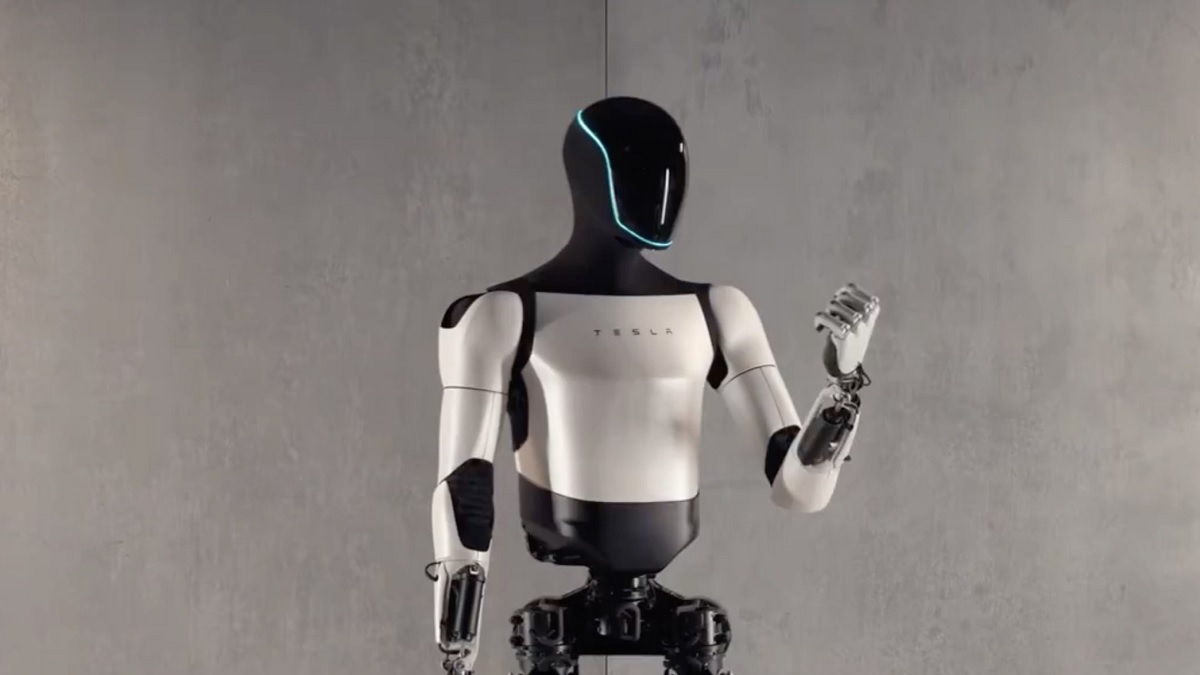
Tesla Reveals Major New Optimus Robot Update: Tesla and SpaceX continue to push the boundaries of innovation, and the latest developments show that Elon Musk’s vision is rapidly moving from concept to real-world deployment. From the next-generation Tesla AI5 chip designed for the Optimus humanoid robot, to the revolutionary CyberCab manufacturing process, and SpaceX Starship Flight 13 carrying live satellites, these breakthroughs represent a major leap forward in robotics, artificial intelligence, sustainable manufacturing, and space exploration.
In this article, we’ll explore how these latest milestones could reshape the future of AI-powered robotics, autonomous transportation, and interplanetary missions.
Tesla AI5 Chip Marks a Major Optimus Robot Breakthrough
Tesla has officially reached a significant manufacturing milestone for its next-generation AI5 processor, a chip expected to become the brain of the Tesla Optimus robot and future AI infrastructure.
Samsung Foundry recently completed the production tape-out of the AI5 chip, signaling that the processor is now ready to enter physical manufacturing.
What Does Tape-Out Mean?
In semiconductor manufacturing, tape-out is the stage where engineers finalize the chip design before mass production begins.
There are actually two important milestones:
- April 2026: Tesla finalized the AI5 chip design.
- July 2026: Samsung completed the manufacturing preparation required to fabricate the processor.
This achievement is part of Tesla’s $16.5 billion semiconductor partnership with Samsung, with production taking place at Samsung’s advanced factory in Taylor, Texas.
Why Tesla Built AI5 for Optimus Instead of Cars
Unlike previous Tesla processors that focused primarily on Full Self-Driving (FSD), the AI5 chip has a much larger mission.
According to Elon Musk, Tesla’s existing AI4 computer already provides sufficient computing power for fully autonomous driving. Tesla is already validating this through unsupervised Robotaxi testing in Texas and Miami.
Instead, AI5 is designed to power:
- Tesla Optimus humanoid robots
- Large-scale AI training clusters
- Future AI infrastructure
This marks Tesla’s transition from becoming just an automotive company into a leader in physical artificial intelligence.
Why Optimus Requires Far More Computing Power
Driving a car is complex, but operating a humanoid robot is dramatically more difficult.
A vehicle follows structured environments including:
- Roads
- Traffic lights
- Lane markings
- Speed limits
The Tesla Optimus robot, however, must function inside unpredictable human environments.
It must continuously:
- Recognize thousands of different objects
- Interact safely with people
- Adapt to constantly changing surroundings
- Manipulate tools and equipment
- Navigate warehouses, factories, and eventually homes
This requires enormous amounts of real-time AI processing.
Tesla Solves the Biggest Optimus Battery Challenge
One of the largest engineering challenges for humanoid robots is battery efficiency.
Consider the difference:
| Device | Battery Capacity |
|---|---|
| Tesla Model Y | 75 kWh |
| Tesla Optimus | 2.3 kWh |
The Optimus robot carries only a tiny fraction of the energy available in a Tesla vehicle.
If its computer consumed as much power as a vehicle’s processor, the robot would require constant recharging.
Tesla Redesigned AI5 for Maximum Efficiency
Rather than using a conventional processor, Tesla removed unnecessary hardware including:
- Traditional GPU components
- Image Signal Processors (ISP)
- Graphics rendering hardware
Instead, engineers dedicated nearly all silicon resources toward deep-learning neural network acceleration.
The result is impressive.
Reports suggest the AI5 processor consumes roughly 250 watts, nearly cutting power consumption in half compared to previous expectations.
This dramatically improves Optimus’ operating time and makes all-day commercial use much more realistic.
Tesla’s Long-Term AI Chip Roadmap
Tesla’s custom silicon strategy extends well beyond AI5.
AI4
Currently powers:
- Tesla vehicles
- Full Self-Driving
- Robotaxi testing
AI5
Focused on:
- Optimus robots
- AI infrastructure
- Improved power efficiency
AI6
Expected to expand AI capabilities for:
- Advanced robotics
- Massive AI training systems
AI7
Elon Musk has even suggested deploying future Tesla AI chips into space using satellites powered by solar energy, reducing pressure on Earth’s electrical grid.
Project Terralabs Could Become the World’s Largest Chip Factory
Tesla is also collaborating with:
on an ambitious semiconductor project called Project Terralabs.
The proposed Texas facility could span nearly 100 million square feet, making it one of the largest semiconductor manufacturing complexes ever planned.
Its goal is simple:
Produce enough AI chips to support millions of robots, autonomous vehicles, and future AI data centers.
CyberCab Introduces a Revolutionary Manufacturing Process
Tesla’s upcoming CyberCab isn’t just another autonomous vehicle.
Its manufacturing process itself may be one of the biggest innovations.
Reaction Injection Molding Eliminates Traditional Painting
Traditional automotive painting is one of the most expensive and environmentally harmful stages of vehicle production.
It requires:
- Multiple paint coats
- Massive paint booths
- Industrial baking ovens
- Hazardous chemical emissions
Tesla is replacing that process using Reaction Injection Molding (RIM).
Instead of painting the vehicle afterward, colored polymers are injected directly into molds.
The finished body panel comes out:
- Already colored
- Extremely durable
- Ready for assembly
Environmental Benefits
According to Tesla’s Impact Report, this manufacturing process offers major improvements:
- 35% lower paint-related carbon emissions
- Nearly eliminates harmful Volatile Organic Compounds (VOCs)
- Reduces manufacturing time from hours to minutes
This could become one of Tesla’s most environmentally friendly production methods.
Why CyberCab Only Has Two Seats
Tesla analyzed millions of ride-hailing trips.
The results showed:
85% of rides carry only one or two passengers.
Rather than designing another five-seat vehicle, Tesla optimized CyberCab specifically for urban transportation.
Removing unnecessary components like:
- Rear seats
- Steering wheel
- Pedals
- Side mirrors
allowed engineers to reduce weight while improving aerodynamics.
Record-Breaking Energy Efficiency
Tesla’s Vice President of Vehicle Engineering confirmed that CyberCab achieves approximately:
165 Wh per mile
That makes it Tesla’s most energy-efficient passenger vehicle ever built.
Because CyberCab is expected to operate continuously as an autonomous taxi instead of sitting parked for most of the day, Tesla also estimates significantly lower greenhouse gas emissions per mile compared to privately owned vehicles.
SpaceX Starship Flight 13 Begins a New Era
While Tesla advances robotics, SpaceX is preparing another historic mission.
Starship Flight 13 represents the first time the newest Starship V3 design will carry real commercial payloads.
Major Upgrades in Starship V3
The newest Starship includes several major improvements:
- Enhanced Raptor engines
- Stronger heat shield mounting
- Larger payload capacity
- Improved structural durability
These upgrades move Starship closer to becoming a reliable cargo transportation system.
First Operational Starlink V3 Deployment
Flight 13 will deploy:
20 Starlink V3 satellites
Although the satellites will eventually re-enter Earth’s atmosphere during this test mission, they will perform valuable engineering experiments beforehand.
These satellites feature:
- Faster internet capability
- Lower latency
- Greater bandwidth
- Advanced laser communication links
Testing Starship’s Heat Shield Using Satellites
One of the mission’s most fascinating experiments involves six specially equipped Starlink satellites carrying external cameras.
These cameras will photograph Starship during atmospheric re-entry.
Engineers intentionally painted several heat shield tiles white to simulate damaged tiles.
The objective is to determine whether automated inspection systems can accurately identify potential heat shield issues during flight.
This technology could dramatically improve safety for future reusable Starship missions.
Critical Raptor Engine Restart Test
Another major objective is restarting a vacuum-optimized Raptor engine in space.
Restarting rocket engines in microgravity is extremely difficult because fuel floats freely inside the tanks instead of settling naturally.
Success is essential for future missions involving:
- Orbital refueling
- Controlled deorbit burns
- Lunar missions
- Mars exploration
Flight 13 Also Fixes Previous Problems
SpaceX engineers have addressed several issues identified during Flight 12, including:
- Booster rotation during stage separation
- Multiple engine restart failures
- Improved fault detection software
- Updated ignition systems
Flight 13 will verify whether these improvements perform successfully during real mission conditions.
Conclusion
The latest announcements from Tesla and SpaceX clearly demonstrate that both companies are entering a new phase of large-scale deployment rather than experimentation.
The Tesla AI5 chip represents a massive leap toward making the Optimus humanoid robot practical for full-day commercial work. Meanwhile, the CyberCab showcases how sustainable manufacturing can reduce emissions while improving production efficiency. At the same time, SpaceX Starship Flight 13 brings the world’s most powerful rocket closer to becoming a dependable cargo vehicle capable of supporting future missions to the Moon, Mars, and beyond.
Together, these innovations highlight how artificial intelligence, autonomous robotics, electric transportation, semiconductor technology, and reusable spaceflight are converging to shape the next generation of global infrastructure. As Tesla and SpaceX continue accelerating development, the vision of an automated, AI-driven, and multi-planetary future appears closer than ever before.
FAQs
1. What is Tesla’s AI5 chip?
Tesla’s AI5 chip is the company’s next-generation custom AI processor designed to power the Optimus humanoid robot, future AI infrastructure, and advanced artificial intelligence applications.
2. What does “tape-out” mean in semiconductor manufacturing?
A tape-out is the final stage of chip design where engineers complete and approve the processor design before it moves into physical manufacturing.
3. Who is manufacturing Tesla’s AI5 chip?
Samsung Foundry will manufacture Tesla’s AI5 chip at its advanced semiconductor facility in Taylor, Texas, under a multi-billion-dollar agreement with Tesla.
4. Why isn’t Tesla using the AI5 chip for Full Self-Driving vehicles?
Tesla believes its current AI4 computer already has enough processing power for autonomous driving. The AI5 chip is instead optimized for more demanding applications like the Optimus robot and AI training systems.
5. Why does the Optimus robot need more computing power than a Tesla car?
Unlike cars that operate on structured roads, the Optimus robot must recognize objects, interact safely with humans, and perform complex tasks in constantly changing environments, requiring significantly more AI processing.
6. What is the battery capacity of the Tesla Optimus robot?
The Tesla Optimus robot has a battery capacity of approximately 2.3 kWh, compared to around 75 kWh in a Tesla Model Y.
7. How does the AI5 chip improve Optimus battery life?
Tesla redesigned the AI5 chip by removing unnecessary hardware and focusing on AI acceleration, reducing power consumption to around 250 watts, allowing the robot to operate for much longer.
8. What is Project Terralabs?
Project Terralabs is a proposed massive semiconductor manufacturing facility in Texas involving Tesla, SpaceX, xAI, and Intel to produce next-generation AI chips at unprecedented scale.
9. What is Tesla’s CyberCab?
The Tesla CyberCab is a fully autonomous, purpose-built two-seat robotaxi designed for maximum efficiency, sustainability, and low operating costs.
10. What is Reaction Injection Molding (RIM)?
Reaction Injection Molding (RIM) is Tesla’s manufacturing process that creates body panels with color built directly into the material, eliminating the need for traditional automotive paint shops.
11. Why did Tesla design CyberCab as a two-seater?
Tesla’s data showed that 85% of ride-hailing trips involve one or two passengers, making a compact two-seat design more energy-efficient and practical.
12. How energy-efficient is the Tesla CyberCab?
The CyberCab is expected to achieve approximately 165 Wh per mile, making it Tesla’s most energy-efficient passenger vehicle to date.
13. What is SpaceX Starship Flight 13?
Starship Flight 13 is the second test flight of the upgraded Starship V3 and the first to carry live Starlink V3 satellites, marking an important step toward operational missions.
14. Why are Starlink V3 satellites important?
The Starlink V3 satellites are larger and more capable than previous versions, offering faster internet speeds, lower latency, greater bandwidth, and improved laser communication between satellites.
15. Why is Flight 13 important for future Moon and Mars missions?
Flight 13 will test critical technologies such as Raptor engine restarts in space, heat shield inspections, and payload deployment, all of which are essential for future lunar, Martian, and deep-space missions.
Read More:
- SpaceX Starship FULL STACKED to Launch For Its 13th Time in Hours! Critical Moments Coming
- 2027 Next-Gen Giga Press 4.0: The Biggest Upgrade Yet
- NTSB findings on fatal Tesla crash tell a very different story
- Tesla has to fix a big problem with its old headlights, NHTSA says
- Elon Musk secretly acquires $1B energy company to power the AI future
1 thought on “Tesla Reveals Major New Optimus Robot Update”